

San Francisco is the most beautiful city in America and the one that most consistently surprises visitors who arrive expecting California summer warmth and find themselves in a 14-degree fog wearing everything they packed.
Disclosure: This post contains affiliate links. If you buy through them, Roman Trail earns a small commission at no extra cost to you.
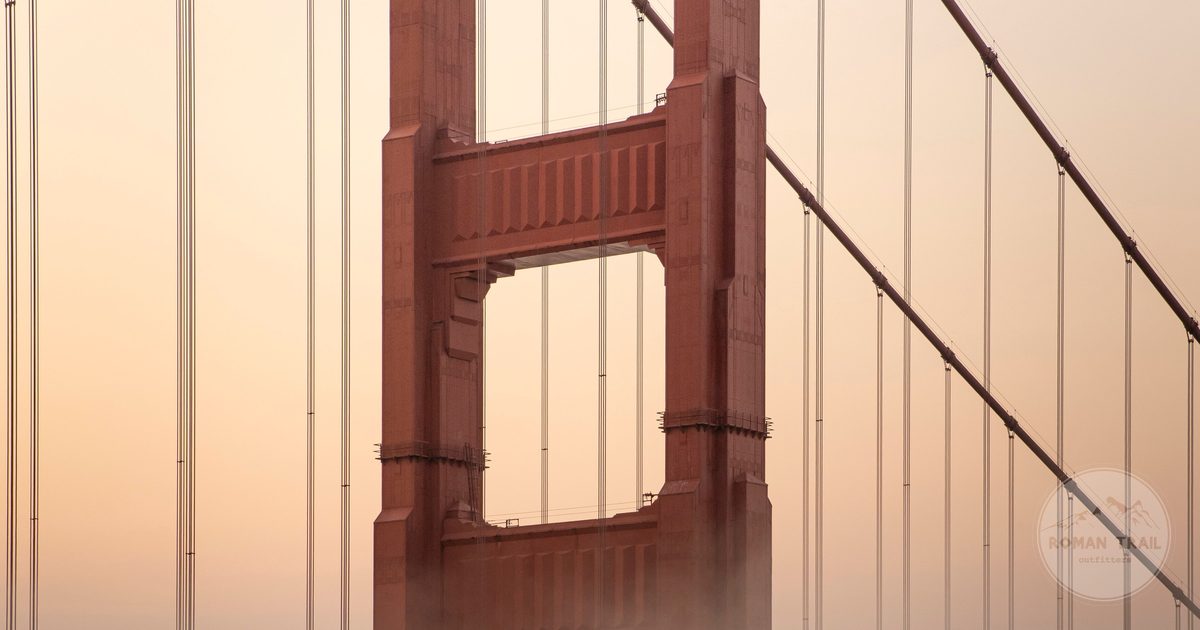
Mark Twain's famous attribution, that the coldest winter he ever spent was a summer in San Francisco, may be apocryphal but it captures something true about the city's climate. The Golden Gate fog that rolls in off the Pacific in the afternoon is one of the most dramatic and most beautiful weather phenomena in American geography, and it makes San Francisco genuinely cold in July in a way that visitors who packed for California sun are not prepared for.
The city of 875,000 people on the tip of a peninsula between the Pacific Ocean and San Francisco Bay has an extraordinary concentration of extraordinary things in a compact urban area. The Golden Gate Bridge, the most recognizable bridge in the world, best walked or cycled across in the morning before the afternoon fog obscures it. Alcatraz Island in the bay, where the former federal penitentiary receives more visitors than any national park in California. The Mission District, where the concentration of taquerias serving the finest Mission-style burritos in the world sits alongside the galleries and coffee shops of Valencia Street and the Victorian architecture around Dolores Park. North Beach, the historic Italian neighborhood where City Lights Bookstore has been selling poetry and literature since Lawrence Ferlinghetti opened it in 1953, beside the espresso bars that sustained the Beat Generation writers. The Ferry Building Marketplace on the Embarcadero, where the farmers market on Tuesday, Thursday, and Saturday mornings is the finest produce market in California.
The San Francisco Climate Reality
The single most important thing to know about packing for San Francisco is this: bring layers in every season.
The fog zone: the Richmond and Sunset Districts on the west side of the city near the ocean are fogged in for more days than not throughout the year. Ocean Beach is cold. The Golden Gate is often invisible from the Marin Headlands.
The warm zone: the Mission, the Castro, and the South of Market area on the sheltered east side of the peninsula are warmer and sunnier than the rest of the city.
The microclimate principle: San Francisco has more distinct microclimates per square mile than any other American city. A 20-minute walk from a sunny Mission afternoon to a foggy Haight afternoon is a 10-degree temperature change.
Summer from June through August: the foggiest season. Average temperatures 14 to 18 degrees Celsius. The coldest summer in America. Many visitors are genuinely shocked.
Autumn from September through November: the warmest and sunniest season. Indian summer brings the finest weather of the year in September and October. Temperatures from 16 to 22 degrees.
Winter from December through February: rainy season with temperatures from 8 to 14 degrees. Rain but rarely severe cold.
Spring from March through May: warming gradually with the fog returning as spring advances toward summer.
The other thing the temperature numbers hide is wind. San Francisco's fog arrives with a steady wind off the Pacific, and 15 degrees with a 30 kilometer per hour wind on the Golden Gate Bridge deck feels like 8. Windproofing matters more here than insulation.
Recommended Tours and Experiences
The Layering System for San Francisco
Base Layer
The Roman Trail Women's Merino Wool Base Layer ($49-59) is non-negotiable for San Francisco. The microclimate variation of a single San Francisco day requires a base layer that handles genuine cold in the fog zone and comfortable warmth in the sunny Mission without requiring a clothing change between neighborhoods. Merino manages this temperature range continuously.
Bring two and rotate them. Merino has one further advantage that matters specifically in a damp coastal city: it insulates when wet, which wool does and cotton emphatically does not. San Francisco fog is not rain, but it soaks a cotton layer over the course of a morning, and a wet cotton shirt in a Pacific wind is genuinely miserable.
Mid Layer
San Francisco requires a mid layer every single day of the year without exception. The Columbia Women's Fast Trek II Jacket ($65) handles most San Francisco conditions. For the coldest fog days and the winter, the Columbia insulated hooded jacket ($279) handles the sustained damp cold that San Francisco's fog produces.
Rain Shell
The Marmot Women's PreCip Eco Rain Jacket ($110) handles San Francisco's winter rain and the windproof layer needed on the Golden Gate Bridge walk, which is always significantly windier and colder than the city below it. Treat it as a wind shell first and a rain shell second, and keep it with you every day regardless of the forecast.
Footwear for San Francisco
San Francisco's hills are the defining physical feature of the city. The climb from the Embarcadero to Nob Hill gains 100 meters. The climb from the Castro to Twin Peaks requires sustained effort. The Salomon Women's X Ultra 4 GTX ($165) handles San Francisco's hills and the Marin Headlands trails across the Golden Gate in all weather. One dressier pair for the Hayes Valley restaurant evenings. Two pairs total.
For socks the Darn Tough Women's Hiker Micro Crew Merino Socks ($28) handle San Francisco's hill climbing without blisters. Grip matters here more than in a flat city: San Francisco sidewalks are steep, often smooth concrete, and slick in fog and drizzle, and the descent is harder on feet and knees than the climb.
Clothing List
Two merino wool base layer tops. Two quality casual tops. One quality evening outfit for the excellent restaurant scene in Hayes Valley and the Mission. Down or fleece mid layer every season. Compact rain shell. Comfortable hiking shoes with grip for hills. Dressier shoes for evening. Three merino socks. Two casual socks.
Add a light scarf or neck gaiter. It is the smallest and most useful item you can carry in San Francisco, because the wind at the bridge, at Ocean Beach, and on the ferry to Alcatraz is the part of the cold that gets through everything else.
What Not to Bring to San Francisco
Leave the shorts and the sundresses if you are visiting in summer. This is the single most common packing mistake in San Francisco and the reason the Fisherman's Wharf souvenir shops sell so many overpriced fleece sweatshirts to visitors in July.
Leave the heels. San Francisco's hills, cable car tracks, and steep sidewalks make anything but a flat or block heel genuinely difficult. Leave the umbrella, which loses to the wind here as reliably as it does in New York.
And leave the assumption that California means warm. It does, 600 kilometers south. It does not here.
San Francisco by Neighborhood
The Mission District is the cultural heart of contemporary San Francisco. Valencia Street has the galleries, bookshops, and restaurants. 24th Street has the finest Mexican food in the city. Dolores Park is the finest park gathering space in San Francisco on a sunny afternoon, and because the Mission sits in the warm zone, it is sunny there more often than anywhere else in the city.
North Beach, the Italian neighborhood, has City Lights Bookstore, Caffe Trieste where the Beats wrote and the local Italians still play cards, and the Columbus Avenue espresso culture that has been continuous since the 1950s.
Hayes Valley between the Civic Center and the Western Addition has the finest restaurant concentration in San Francisco and the Victorian architecture of Alamo Square with the Painted Ladies, the row of Victorian houses photographed against the downtown skyline.
The Castro, the LGBTQ neighborhood, has the Castro Theatre, the finest repertory cinema in America, the most concentrated independent retail in San Francisco, and Harvey Milk Plaza.
The Haight-Ashbury, the historic counterculture neighborhood, has the Victorian houses, the Amoeba Music record store, and the Golden Gate Park entrance with the Conservatory of Flowers and the de Young Museum.
What to Wear for the Bridge and for Alcatraz
The Golden Gate Bridge walk is 2.7 kilometers each way on an exposed deck 67 meters above the water, and it is reliably the coldest and windiest place you will stand in San Francisco. Add one layer beyond what the city temperature suggests, wear something with a hood or bring the neck gaiter, and secure anything loose, because hats genuinely blow off here. Morning is the best time: the fog usually holds off until early afternoon, and the light is better from the Marin side looking back.
Alcatraz is a boat trip and an outdoor site. The ferry deck is cold and wet with spray in any season, the island itself is exposed with almost no shelter, and the cellhouse is unheated. The audio tour takes about 90 minutes and most of it is spent standing still, which is when the cold arrives. Book tickets weeks ahead through the official operator; they sell out consistently, and the resellers charging more are not offering earlier availability.
San Francisco Packing FAQ
Is San Francisco safe for solo women travelers?
San Francisco requires more awareness than some American cities. The Tenderloin neighborhood around Civic Center has significant open drug use and street-level crime. The tourist areas of Fisherman's Wharf, North Beach, the Mission, Hayes Valley, and the Castro are generally comfortable. Research current conditions, as the downtown and Tenderloin situation has been variable.
What is the best time to visit San Francisco?
September and October for the warmest weather, clearest skies, and the Indian summer that locals consider the true San Francisco summer. Avoid June through August if you want warmth, because that is the foggiest and coldest period.
Do I really need a jacket in July?
Yes. Average July temperatures in San Francisco are 14 to 18 degrees Celsius with fog and wind, and evenings drop further. A base layer, a mid layer, and a wind shell is the correct July kit. This is not overpacking; it is the single thing every returning visitor says they wish they had known.
What food should I try in San Francisco?
A Mission burrito from La Taqueria or El Farolito on Mission Street, meaning the foil-wrapped, rice-filled, properly proportioned San Francisco original. Sourdough bread from Tartine Bakery in the Mission. Dim sum in the Richmond District on Clement Street. The Ferry Building farmers market on Saturday morning. Dungeness crab in season from October through June from any Fisherman's Wharf vendor.
For the full city plan, including safety, the microclimates, Alcatraz and the bridge, getting around, costs, and where to stay, see the San Francisco travel guide for women.
You can read more about building a merino-first travel wardrobe on the Roman Trail merino wool base layer guide. Browse the full collection at Roman Trail women's merino base layers, available in eight colors with free two-day shipping and a two-year satisfaction guarantee.
Related Reading
San Francisco is the way into a great deal of this library. Across the bay, the Oakland packing list covers the warmer, sunnier city twelve minutes away under the water, and the Sausalito packing list the ferry town and the headlands to the north. South down the coast, the Monterey packing list covers the aquarium and the bay. East in the Sierra Nevada, the Sequoia National Park packing list covers the largest trees on Earth about four hours away. And this is the mainland departure point for Hawaii, where the Hanalei packing list covers the north shore of Kauai, the Kailua packing list the windward side of Oahu and the Kailua-Kona packing list the leeward coast of the Big Island. For the country, the United States travel guide for women carries the transport, the health insurance question and the regions in full, and every destination we cover is indexed at the travel packing guide for women.
If the outer journey is calling you, the inner one usually is too. Explore SoulMap at romantrail.com/blogs/soulmap.


