Best Merino Wool Base Layers for Women: The Complete Guide (2026)
If you're looking for the best merino wool base layer for women, the answer comes down to one thing: fiber purity. Most brands blend merino with synthetic fibers to cut costs. That shortcut eliminates the very properties that make merino worth buying: breathability, odor resistance, and comfort against the skin.
This guide covers everything you need to know to choose, use, and care for a women's merino wool base layer, from fabric specs to layering systems to the specific activities where merino outperforms every other material.
The short answer: Roman Trail Outfitters makes 100% Australian merino wool base layers for women, with no synthetic fibers, starting at $49.99. Shop the collection →

What Is a Merino Wool Base Layer?
A base layer is the garment worn directly against your skin. It is the most important layer in any layering system because it controls moisture, temperature, and comfort at the source: your body.
If you are starting from the beginning, what a base layer is and why you need one covers the idea itself before the fibre: what the layer is for, where it sits, and why the garment next to your skin decides whether everything over it works.
Merino wool base layers are made from the fleece of Merino sheep, primarily raised in Australia and New Zealand. The fiber is ultra-fine, typically between 15 and 19 microns in diameter, which makes it soft enough to wear directly against bare skin without itching, unlike traditional wool.
A merino base layer does three things simultaneously that no other fabric can match:
- Wicks moisture away from your skin and releases it into the air
- Regulates temperature in both cold and warm conditions
- Resists odor naturally, without chemical treatments, for multiple days of wear
- Merino wool weight guide: find the right GSM for your climate and activity
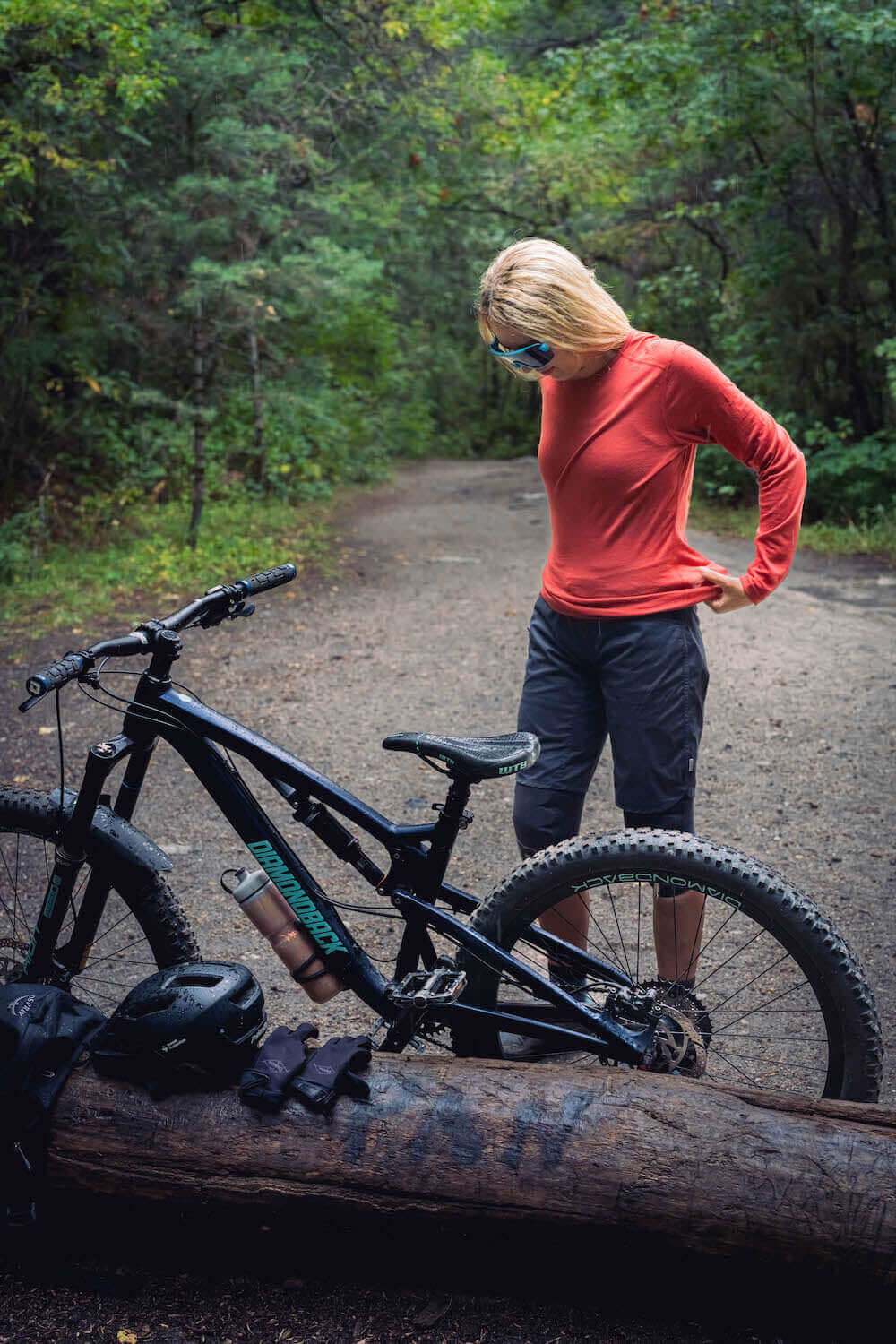
These three properties make merino the material of choice for women who hike, travel, camp, run, snowshoe, or simply want a base layer they can rely on across seasons.
Why 100% Merino Wool Matters
Most base layers sold as "merino wool" contain synthetic fibers, typically polyester or nylon blended with merino to reduce cost or add durability. These blends compromise every advantage merino offers.
A synthetic core wrapped in merino:
- Traps odor the way polyester always does
- Reduces breathability by blocking the natural fiber structure
- Sheds microplastics into waterways with every wash
- Loses the temperature-regulating properties that make merino unique
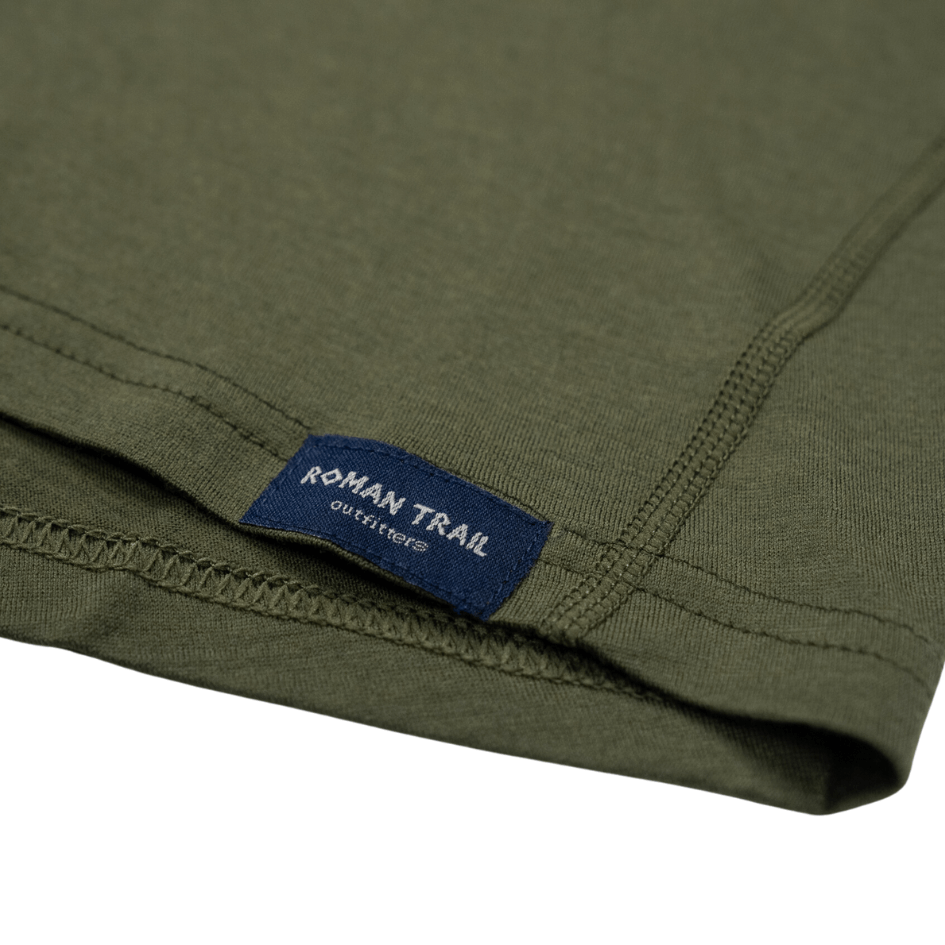
Roman Trail Outfitters uses 100% Australian merino wool with no synthetic content whatsoever. The tagline is simple: No plastic. Just merino. This matters because the benefits women feel (the softness, the odor resistance, the all-day comfort) come entirely from the fiber. Dilute the fiber and you dilute the result.
Fabric specifications:
- Fiber: 100% Australian Merino Wool
- Micron count: 17.5 microns (superfine, next-to-skin soft)
- Weight: 160 gsm (lightweight, three-season)
- Yarn count: 88 NM/2 (interlock knit)
- Care: Machine washable, cold; hang dry
Key Properties of Merino Wool for Women
Temperature Regulation
Merino wool is one of the few materials that actively responds to your body's temperature rather than just insulating passively. When you are cold, the fiber traps warm air close to your skin. When you heat up during a climb or a run, the fiber opens up and releases that heat. The result is a narrower range of discomfort across a wider range of conditions, what most women describe simply as "I just forget I'm wearing it."
Moisture Wicking
Merino wool can absorb up to 30% of its own weight in water vapor before it feels damp against your skin. As you sweat, the fiber pulls moisture away from your body and moves it to the outer surface of the fabric where it evaporates. Unlike synthetic wicking fabrics, merino continues to insulate even when wet, the property that makes it the non-negotiable choice for cold-weather outdoor use.
Odor Resistance
Odor develops when bacteria break down sweat compounds. Synthetic fibers trap bacteria in their structure and become permanently odor-retaining after a few uses. Merino wool contains keratin and lanolin, which naturally inhibit bacterial growth. Many Roman Trail customers report wearing their base layer three to five days before washing, with no odor.
Softness and Skin Comfort
At 17.5 microns, Roman Trail merino is classified as superfine, a fiber diameter well below the threshold at which wool fibers cause skin irritation. The fabric does not itch, scratch, or irritate. Women with sensitive skin who have avoided wool their entire lives consistently report that superfine merino feels nothing like the wool they grew up avoiding.
Sustainability
Merino wool is a renewable, biodegradable natural fiber. Merino sheep grow a new fleece each year. At the end of its life, a merino garment decomposes. It does not shed microplastics. Roman Trail sources its wool from Australian farms that follow ethical and sustainable practices, and the brand uses eco-friendly packaging.
Who Should Wear a Merino Wool Base Layer

Women Who Hike and Backpack
A merino base layer is the single most impactful piece of clothing a woman can carry on a multi-day hike. It manages sweat during exertion, keeps warmth during rest stops, and does not accumulate odor the way synthetics do. One shirt can realistically cover three to five days of hiking without washing, reducing pack weight and laundry stops significantly.
Travellers are a case of their own, and why women choose merino wool base layers for winter travel sets out the reasons that apply on the road rather than on a hill: multiple days between laundry, cold aircraft and warm terminals, and one layer that covers both.
Women Who Camp in Cold Conditions
Cold-weather camping creates a specific challenge: the temperature swings between active camp setup (when you overheat) and stationary evenings (when you get cold quickly). Merino manages both phases without requiring a change of base layer. For women who run cold at night, which is more common physiologically in women than in men, starting with a merino base layer inside a sleeping bag provides meaningfully better warmth retention than synthetic alternatives.
Women Who Travel
A long-sleeve merino top can be worn on the plane, worn hiking, worn to a casual dinner, worn for three days without washing, and packed into a corner of any bag without wrinkling. Women who pack one carry-on for a week or more frequently report that two merino tops replace four or five conventional shirts.
Women in Active Service and Physically Demanding Roles
Women in roles that involve physical exertion, outdoor exposure, or long hours in variable temperatures benefit from the same properties that serve hikers: moisture management, odor resistance, and all-day comfort. Whether the role involves fieldwork, emergency services, outdoor education, or physical training, a merino base layer performs reliably without the odor accumulation that synthetic layers develop quickly.
Women Who Run Cold
Women experience cold hands, feet, and core differently than men, due to physiological differences in circulation, muscle mass, and hormonal response to cold. Superfine merino worn directly against the skin retains significantly more warmth than cotton or synthetic alternatives at the same apparent weight.
How to Choose the Right Merino Base Layer
Understand Fabric Weight
- Lightweight (120 to 175 gsm): Best for mild to moderate conditions, high-output activities, and year-round use. Roman Trail's 160 gsm falls here.
- Midweight (200 to 230 gsm): Best for cold conditions and lower-output activities.
- Heavyweight (250+ gsm): Best for extreme cold and very low output.
Check Micron Count
- 15 to 17.5 microns: Superfine. Softest available. No itching.
- 17.5 to 19 microns: Fine. Still comfortable against skin for most people.
- 20 to 24 microns: Standard merino. May cause mild irritation for sensitive skin.
- Above 24 microns: Traditional wool. Not suitable for base layers.
Verify Fiber Content
Read the label carefully. If it says "merino blend" or lists polyester, nylon, or elastane in the fiber content, the garment contains synthetic fibers. Look for 100% merino wool with no blended content.
Consider Fit
A base layer should fit close to the body, not compression-tight, but snug enough that there is no loose fabric bunching under outer layers. Roman Trail base layers are designed with an athletic regular fit with extra back length for coverage. Available in XS, S, M, and L.
Women's Sizing and Fit: What the Measurements Do Not Tell You
A size chart gives you a chest measurement. It does not tell you how a base layer behaves once a sports bra, a mid layer and a pack are involved, which is where most fit disappointment actually comes from. Roman Trail base layers run XS, S, M and L in an athletic regular fit with extra back length.
Why back length is the measurement that matters most
The failure point on most women's base layers is not the chest, it is the hem. A standard tee length rides up the moment you reach overhead, shoulder a pack or bend to adjust a boot, and it exposes the lower back at exactly the point where a pack's hipbelt has already compressed your mid layer. Extra back length keeps the hem tucked through that full range of movement. If you have ever finished a climb with a cold band across your lower back, that is the cause.
Close fitting is not compression
A base layer works by contact. Moisture transfers from skin to fibre where the two touch, so loose fabric with an air gap moves less moisture and insulates less predictably. What you want is continuous light contact with no bunching, not the squeeze of a compression garment. Compression fits restrict at the shoulder and armpit during sustained overhead movement and offer no thermal advantage.
Layering over a sports bra
Fit over a bra is the practical test. A base layer that fits smoothly over a racerback but pulls across a wider band will chafe at the ribcage over a long day. Two things reduce that: a flatlock or minimal seam at the side body, and enough width across the ribs to sit over a band without stretching taut. If you are between sizes and wear a supportive band, size up rather than down.
Between sizes, and what happens after washing
If you are between sizes, the deciding question is what the garment is for. For active use under layers, take the smaller size for better contact and moisture transfer. For travel, sleeping and wear as a visible top layer, take the larger for comfort across a longer day. Merino cared for correctly does not shrink appreciably, so do not size up expecting shrinkage to correct a loose fit. What does cause shrinkage is heat: a hot wash or a hot dryer will felt the fibre and shrink it permanently, and no amount of stretching brings it back.
Sleeve length and cuffs
Long sleeve cuffs should sit at the wrist bone without riding back when you extend your arms. A cuff that pulls back exposes the wrist, which is one of the places where blood runs close to the surface and heat leaves fastest. This is a small detail with a disproportionate effect on how warm your hands feel, for the same vasoconstriction reason covered in the women's merino physiology and layering guide.
How to Build a Women's Layering System Around Merino
- Layer 1: Base layer (Roman Trail merino): Manages moisture, regulates temperature, provides a soft next-to-skin foundation.
- Layer 2: Mid layer: Provides insulation. Fleece for breathable active warmth, down or synthetic puffy for stationary warmth.
- Layer 3: Outer shell: Blocks wind and precipitation. Softshell for wind resistance, hardshell for waterproofing.
The merino base layer makes the entire system work more efficiently. By managing the moisture that would otherwise accumulate against your skin, it keeps the insulating layers dry, and dry insulation is the only insulation that works.
Merino Wool vs. Other Base Layer Materials
Merino vs. Cotton
Cotton absorbs moisture and holds it against your skin. In cold conditions, a wet cotton base layer accelerates heat loss and creates genuine hypothermia risk, the origin of the outdoor guideline "cotton kills." Merino wicks moisture away, retains warmth when damp, resists odor naturally, and regulates temperature in both directions.
Merino vs. Polyester
Polyester dries faster and is typically less expensive. However, polyester accumulates odor permanently, sheds microplastics with every wash, and does not feel comfortable against skin the way superfine merino does. For a base layer worn against bare skin for hours at a time, merino is meaningfully superior.
Merino vs. Synthetic Blends
A merino-polyester or merino-nylon blend attempts to combine softness with cost efficiency. In practice, synthetic content compromises odor resistance and breathability. A 70% merino / 30% polyester blend will still develop odor faster than 100% merino. For multi-day outdoor use or travel, 100% merino outperforms any blend.
Care and Maintenance
- Washing: Machine wash cold, gentle cycle. Mild detergent. No fabric softeners. Turn inside out to minimize pilling.
- Drying: Hang dry or lay flat. If using a dryer, lowest heat setting only. Remove while slightly damp.
- Frequency: Wash every three to five wears. Air out between uses.
- Storage: Store clean and dry, folded in a breathable bag for seasonal storage.
Longevity: How Long a Merino Base Layer Lasts, and What Ends It
A merino base layer worn and cared for normally lasts several hundred wears. Because it is worn between three and five times per wash rather than once, that translates into years rather than seasons. The cost per wear calculation is what makes merino defensible against a cheaper synthetic: a $55 garment worn 300 times costs about 18 cents per wear, and it replaces two or three synthetic tops over the same period.
What actually ends a merino garment
Abrasion. This is the most common cause by a wide margin. Merino is a protein fibre and it is less abrasion resistant than nylon. Pack straps, hipbelts and climbing harnesses wear thin patches at the shoulders and hips over time. Nothing prevents this entirely, but rotating two garments roughly doubles the life of both because the wear points are not always loaded.
Heat. Hot water and tumble dryers felt wool, which means the scales on the fibre surface interlock irreversibly. The garment shrinks, stiffens and loses its drape and its moisture handling in one go. This is the single most avoidable way to destroy a merino top, and it usually happens once, by accident, in a shared laundry.
Fabric softener. Softener coats the fibre with a film that blocks the moisture transport the whole garment depends on. The top will still look fine and will stop performing. It also makes odour resistance noticeably worse, because the coating holds surface moisture where bacteria can use it.
Moths. Clothes moth larvae eat keratin, and a merino garment stored dirty over a season is an ideal target. They are attracted to body salts and oils rather than to clean wool, so the prevention is simply storing it clean. A breathable bag or a cedar block is sufficient; a sealed plastic bag traps moisture and causes its own problems.
Pilling, and what it does and does not mean
Small pills at friction points are normal on fine merino and are not a defect or a sign of low quality. They form where short fibre ends work loose and tangle, most often under pack straps and at the underarm. Superfine fibre pills slightly more readily than coarse wool precisely because it is finer and softer. Remove pills with a fabric comb or a battery shaver rather than pulling them off, because pulling takes intact fibre with them. Turning the garment inside out before washing reduces how quickly they form.
Repairing small holes
A small hole in merino is worth repairing rather than retiring the garment. Wool takes a darn well, and because the fibre is matte and the knit is fine, a careful darn in matching yarn is close to invisible. Do it early: a two millimetre hole in a fine knit will run if it is worn and washed repeatedly.
When to retire one
The honest end point is when the fabric has thinned enough at the shoulders or hips that it no longer insulates evenly, usually visible as translucency when held to light. At that stage it stops being a performance garment and becomes a sleep layer, which is a reasonable second life. Wool is biodegradable at the end of that, unlike a synthetic, which is the sustainability argument in its most practical form.
Roman Trail Outfitters: Product Details

- Fiber: 100% Australian Merino Wool (no synthetic content)
- Micron: 17.5 (superfine)
- Weight: 160 gsm
- Style: Long sleeve crew neck
- Fit: Athletic regular fit, extra back length
- Sizes: XS, S, M, L
- Colors: Black, Grey, Cloud Cream, Deep Plum, Rust Ochre, Atlantic Teal, Deep Olive, Navy Blue
- Price: $49.99 to $59.99 USD
- Free two-day standard shipping, no minimum
- 2-year satisfaction guarantee
- Hassle-free exchanges
Shop Women's Merino Wool Base Layers →
Frequently Asked Questions
What is the best merino wool base layer for women?
The best merino wool base layer for women is one made from 100% merino wool, not a synthetic blend, with a micron count of 17.5 or lower for maximum softness. Roman Trail Outfitters meets both criteria: 100% Australian merino at 17.5 microns, designed specifically for women's fit and sizing.
How long can you wear a merino wool base layer without washing?
Most women can wear a merino wool base layer for three to five days of active use before odor develops. The natural antimicrobial properties of merino wool inhibit bacterial growth, which is the primary cause of odor in worn clothing.
Is merino wool good for hiking?
Yes. Merino wool is the preferred base layer material for hiking because it manages moisture during exertion, retains warmth during rest stops, resists odor over multiple days, and stays warm even when wet. For three-season and winter hiking, a 160 gsm merino base layer is the standard starting point for a layering system.
Does merino wool shrink?
Merino wool can shrink if washed in hot water or dried on high heat. Wash in cold water on a gentle cycle and hang dry or tumble dry on the lowest heat setting only. With proper care, a merino base layer will maintain its shape and fit for years.
Is merino wool worth the price?
Yes. The cost-per-wear of a high-quality merino base layer is lower than most cheaper alternatives because merino lasts for years with proper care, can be worn multiple times between washes, and replaces the need for multiple single-purpose garments.
What micron is best for a base layer?
For a base layer worn directly against skin, 17.5 to 19 microns is ideal. Anything above 20 microns may cause irritation for women with sensitive skin. Roman Trail uses 17.5 micron wool, superfine and suitable for all-day wear.
Can you wear merino wool in summer?
Yes. The temperature-regulating properties of merino work in both directions: the fiber wicks sweat and releases heat in warm conditions, keeping you cool and dry. A lightweight 160 gsm merino base layer is suitable for mild summer conditions.
Related Guides
- Why Women Choose Merino Wool Base Layers for Outdoor Comfort and Performance
- Why Merino Wool Base Layers Are the Ultimate Choice for Outdoor Enthusiasts
- How to Layer for Subzero Temperatures: Women's Guide
- What to Wear for Snowshoeing: Women's Layering Guide
- Merino Wool for Women Who Run Cold: Physiology, Layering, and What to Buy
- Merino Wool Micron Count Explained: What 17.5 Microns Means for Skin Comfort
- Winter Hiking Microclimates: How Terrain Changes What You Wear
- The Complete Winter Hiking Gear Checklist for Women
- How to Choose the Right Base Layer Weight for Women
- Frequently Asked Questions
Roman Trail Outfitters: 100% Australian Merino Wool Base Layers for Women. No plastic. Just merino. Free two-day shipping. 2-year guarantee. Shop now →
Blog posts
View all-

Packing List for Tucson, Arizona: What Women Sh...
What to pack for Tucson: a 1797 Spanish mission, giant saguaros, a UNESCO food city and a summer monsoon that fills dry washes in minutes.
Packing List for Tucson, Arizona: What Women Sh...
What to pack for Tucson: a 1797 Spanish mission, giant saguaros, a UNESCO food city and a summer monsoon that fills dry washes in minutes.
-

Packing List for Sequoia National Park: What Wo...
What to pack for Sequoia National Park: the largest trees on Earth, 13,000 feet of elevation range, mandatory bear lockers and a road with a length limit.
Packing List for Sequoia National Park: What Wo...
What to pack for Sequoia National Park: the largest trees on Earth, 13,000 feet of elevation range, mandatory bear lockers and a road with a length limit.
-

Packing List for St Augustine, Florida: What Wo...
What to pack for St Augustine: a Spanish fort built of shell stone, the oldest continuously occupied European settlement in the continental United States.
Packing List for St Augustine, Florida: What Wo...
What to pack for St Augustine: a Spanish fort built of shell stone, the oldest continuously occupied European settlement in the continental United States.


Contact form

Roman Trail Outfitters
Merino Wool Women's Long Sleeve Top | Crew Neck Shirt | Deep Olive