Women's Travel Packing Guide: Destination Guides by Roman Trail Outfitters
You are planning a trip. You want to pack light, stay comfortable in unpredictable weather, and not spend the first three days of every destination hunting for laundry. This guide exists for that. It covers every destination Roman Trail Outfitters has researched in depth: what to pack, what the weather actually does, and how to move through each region without a bag full of regrets.
How this travel library works
Each destination guide is written for a woman who is seriously planning the trip. Not a first-draft itinerary full of obvious advice, but specific information about terrain, temperature swings, cultural context, and what actually fits in a carry-on for two weeks.
Every guide covers:
- Best time to visit and what the weather means for packing
- Top regions and what each one requires underfoot and in your bag
- Hiking, camping, and activity-specific gear notes
- A complete packing list structured by category
- Safety, logistics, and practical information for women traveling solo or in groups
- External links to official visa, safety, and tourism sources
The merino wool base layer appears in every guide because it belongs in every bag. One piece that manages sweat in desert heat, insulates in mountain cold, and packs to the size of a rolled sock. That is not marketing: it is the reason experienced women travelers pack one regardless of destination.
Middle East and North Africa
- Jordan Travel Guide for Women: Petra, Wadi Rum, Amman, Dead Sea. Temperature swings from 0C nights to 38C afternoons. Complete packing list and safety guide for 2026.
- Morocco Travel Guide for Women: Atlas Mountains, Marrakech, Sahara. What to pack, what to wear in a Muslim-majority country, and how to hike in North Africa without overpacking.
More MENA destinations coming: Egypt, Oman, Turkey.
Europe
- Iceland Travel Guide for Women: Laugavegur Trail, midnight sun, F-roads, and packing for weather that changes every hour. Northern lights season through highland hiking covered.
- Ireland Travel Guide for Women: Wild Atlantic Way, Cliffs of Moher, Connemara, Ring of Kerry, and the Wicklow Mountains. What to pack for Atlantic weather, where to stay, and how to walk Ireland without a car.
- Scotland travel guide for women: West Highland Way (96 miles), Isle of Skye, Fife Coastal Path, and what to pack for unpredictable Highland weather in summer.
- Norway Travel Guide for Women: Trolltunga, Preikestolen, Kjeragbolten, midnight sun fjord hiking, and the ultimate coolcation for Americans escaping summer heat.
- Switzerland Travel Guide for Women: Grindelwald and Jungfrau, Zermatt and the Matterhorn, Tour du Mont Blanc Swiss sections, Swiss National Park, and how to use cable cars to reach 3,800 meters without a technical climbing background.
More Europe destinations coming: Scottish Highlands, Dolomites, Pyrenees, Camino de Santiago.
Asia and the Pacific
- New Zealand Travel Guide for Women: South Island Great Walks, Tongariro Alpine Crossing, Aoraki Mount Cook, Milford Sound, Queenstown and Wanaka. The merino homeland and the most overlooked winter hiking window for American women.
More Asia and Pacific destinations coming: Nepal, Japan, Kyrgyzstan.
The Americas
- Patagonia Travel Guide for Women: Torres del Paine W Trek, El Chalten and Mount Fitz Roy, Perito Moreno glacier, refuges and the 14-day Chile-Argentina itinerary that most American women run.
- Peru Travel Guide for Women: Machu Picchu, the classic Inca Trail, Salkantay alternative, Cusco and the Sacred Valley acclimatization plan, Rainbow Mountain, and how to pack for the Andes altitude swing.
More Americas destinations coming: Canadian Rockies, Alaska, Costa Rica.
What goes in every bag
Across every destination in this library, one item appears on every packing list: a 100% merino wool base layer. Not because Roman Trail Outfitters sells one, but because experienced travelers who move through multiple climates in a single trip have already figured this out.
Merino wool at 160gsm handles the sweat-to-cold cycle that kills synthetic base layers. It wicks moisture during exertion and insulates when wet, a combination no synthetic replicates without odor buildup. For multi-day travel where laundry access is inconsistent, a single merino base layer worn under any top performs across four to five days between washes without the smell that ends that experiment with synthetics on day two.
Specific use cases from destinations in this library:
- Jordan (Wadi Rum): 0C predawn, 38C by noon. A 160gsm merino worn at sunrise, removed mid-morning, worn again at dusk. One piece, full range.
- High altitude trekking: Temperature drops 6C per 1,000m gained. A base layer is the first line of defense when a microclimate change arrives faster than you expected.
- Long-haul transit: Airplane cabins, overnight buses, airport layovers. Merino does not trap odor through 30-hour travel days. Synthetic does.
Roman Trail Outfitters: 100% Merino Wool Women's Base Layer
17.5 micron superfine merino. 160gsm. Machine washable. Every destination in this guide has been packed with one. No synthetics. No blends. 2-year guarantee.
SHOP THE BASE LAYERPacking principles that apply everywhere
Every destination guide in this library is different. The terrain is different, the climate is different, the cultural context is different. But the underlying packing logic is the same.
Pack for the temperature floor, not the average
Weather apps report averages. You will experience the outliers. A Wadi Rum night in March is 3C. A highland lake in Patagonia in January is 8C with 60kph wind. Pack for the cold end of the range. You can always remove a layer.
One bag, multiple climates
If your trip crosses climate zones, desert to mountain, coast to highland, winter departure to warmer destination, the math only works with layering. A base layer, a mid layer, and a shell cover every scenario from 0C to 30C without adding bulk that exceeds carry-on limits.
Reduce laundry pressure, not clothes count
The goal is not to pack fewer items: it is to pack items that extend between washes. Merino wool base layers worn three to five days between washes is not a hygiene compromise. It is the design. Destination guides in this library note exactly where laundry facilities exist, and what to expect when they do not.
Cultural context changes the bag
A conservative dress region changes what functions as a base layer versus an outer layer. Jordan, Morocco, parts of Southeast Asia: the merino base layer in those contexts becomes a long-sleeve layer worn as the primary piece, not just a thermal underneath. Destination guides note this explicitly.
Bag choice, and why it decides everything else
The bag is the only packing decision that cannot be revised mid trip, and it silently sets every other limit. Standard carry on allowances sit around 55 by 40 by 20 centimetres, which is roughly 40 litres, and most European budget carriers enforce them with sizers at the gate while most long haul carriers do not. A 40 litre bag holds two weeks of merino based clothing comfortably. A 55 litre bag holds the same two weeks plus the things you will not use.
The wheels question resolves by destination rather than preference. Wheels win on paved cities, airports and trains, which covers most of Europe, Japan and North America. Straps win wherever you will carry the bag over cobbles, sand, stairs without lifts, or between a bus stop and a guesthouse, which covers most of Southeast Asia, the Andes and much of Africa. A bag that does both does neither especially well, and the honest answer is to pick for the majority of your days.
The second bag matters more than people expect. A packable daypack that compresses into its own pocket serves as your personal item on the plane, your day bag at the destination, and your hand luggage when the main bag is checked.
The laundry calculus
Garment count is not a function of trip length. It is a function of how often you can wash, and that single realisation is what separates a carry on trip from a checked bag trip.
Work it backwards. If you can wash every three days, you need three days of clothing plus one set in reserve, regardless of whether the trip is nine days or six weeks. The variables are access to laundry, which is cheap and ubiquitous across Southeast Asia and Latin America and expensive in Western Europe and Japan, and how many wears each garment gives you before it needs washing.
That second variable is where fabric choice pays. Cotton gives one wear. Synthetic gives one, sometimes two. Merino gives three to five in active use and longer in cool dry conditions, because the fibre absorbs moisture into its core rather than leaving it on the surface where odour bacteria multiply. Two merino tops and a three day wash cycle cover a month.
The practical habit is washing one or two items each evening rather than a batch weekly. It takes five minutes, uses a sink, and removes the deadline entirely.
Layering as a system rather than a pile
Three thin layers outperform one thick garment across almost every trip, and the reason is adjustability rather than warmth. A single heavy coat gives you two states, on and off, and most days need five.
Each layer has one job. The base layer manages moisture, moving sweat away from skin so the layers above stay dry and keep working. The mid layer provides insulation by trapping air, which is why fleece and down are bulky and why bulk is the point. The shell blocks wind and water, and contributes almost no warmth on its own.
Get the roles wrong and the system fails in predictable ways. A cotton base layer holds sweat against your skin and no amount of insulation above it will keep you warm. A shell worn without a mid layer feels cold because there is nothing to insulate. Insulation worn without a shell loses its trapped air to the first gust of wind.
The corollary for packing is that you need one of each rather than three of one, and that the base layer is the piece worth spending on, because everything above it depends on it working.
Footwear is the hardest constraint
Shoes are heavy, bulky and unforgiving of mistakes, which makes footwear the tightest limit in any bag. The workable rule is two pairs, worn and packed, and occasionally three when a trip genuinely spans hiking and formal evenings.
Wear the bulkiest pair on travel days. Boots on your feet cost nothing in luggage and a great deal in a bag.
Break in anything new before you leave, and understand that break in means walking distance rather than wearing them around the house. Twenty to thirty kilometres is a realistic minimum for hiking boots. Blisters on day two of a two week trip shape the whole trip.
The wet weather question deserves an honest answer. Waterproof footwear keeps water out until water gets in, at which point it keeps water in, and a fully soaked waterproof boot takes two days to dry. In sustained heat and rain, quick draining shoes and wet feet are frequently more comfortable than waterproof boots and wetter feet.
Documents, money and the redundancy rule
Every important thing should exist in two places, one of which is not your bag. That single rule covers most of what goes wrong.
Passport, visas, insurance policy and vaccination certificates: photographed on your phone and emailed to yourself, so a stolen bag is an inconvenience rather than a crisis. The yellow fever certificate in particular is checked at borders, so it travels with your passport rather than in your luggage.
On money, carry two cards from two different networks in two different places, because a single card that gets blocked or swallowed by a machine on a Saturday can strand you until Monday. Tell your bank where you are going. Carry a modest amount of cash in a major currency as a floor, and note the exceptions: Cuba does not accept US issued cards at all, and several countries still run substantially on cash.
Offline copies matter too. Download maps, your accommodation addresses and your first day's directions before you arrive, because the moment you most need them is usually the moment before you have a working SIM.
Electronics and power, by region
Plug types matter less than they used to and voltage still matters. Almost all phone, laptop and camera chargers now accept 100 to 240 volts, which means a plug adapter is sufficient. Anything with a heating element, a hairdryer, a travel kettle, a curling iron, frequently does not, and plugging a 110 volt device into 230 volt power destroys it.
The adapter you want is a single universal one rather than a set of regional ones. Type C covers most of continental Europe, Type G the UK and Ireland and much of Southeast Asia, Type A and B North America and Japan, Type I Australia and New Zealand, and Type D and M parts of South Asia and southern Africa.
Two practical additions. A short multi socket or a three way splitter turns one hotel outlet into three, which matters in older accommodation with a single accessible socket. And airlines require power banks in cabin baggage rather than checked, with a typical limit around 100 watt hours.
What actually causes overpacking
Overpacking is rarely a failure of discipline. It is a failure of forecasting, and it has three recognisable sources.
The first is the contingency item, packed for a scenario that will probably not happen. One formal outfit for a dinner that is not booked. Hiking boots for a walk you are considering. These are individually reasonable and collectively the reason the bag does not close. The test is whether you could buy or rent the item at the destination, and for most contingencies you can.
The second is packing by day rather than by system. Seven days does not mean seven outfits. It means a set of pieces that combine, worn in rotation and washed.
The third is aspiration. The running kit for the runs you will not do on a city trip, the book you will not open, the camera lens you will not change. Pack for how you actually travel rather than how you intend to.
The honest benchmark from most travellers who track it: you will wear roughly five things repeatedly and carry the rest home unworn.
Insurance, and the exclusions that catch people out
Travel insurance is bought once and read never, which is how people discover at the worst moment that the activity they were doing is excluded. Three exclusions account for most of the surprises.
Altitude. Many standard policies cap trekking cover at 3,000 or 4,000 metres, which quietly excludes Everest Base Camp at 5,364, most of the Andes, Kilimanjaro at 5,895 and even the Inca Trail's Dead Woman's Pass. If your itinerary goes high, the policy needs to say so explicitly.
Motorbike and scooter hire, which is how a great many travellers move around Southeast Asia and the Greek islands. Cover frequently requires a licence valid for that category in your home country, and riding without one voids both the travel policy and any rental insurance.
Anything the policy classes as an extreme sport, a list that routinely includes via ferrata, glacier walking, scuba below a certain depth, and occasionally ordinary winter sports.
The related item is medical evacuation cover, which is the expensive part. Repatriation from a remote region runs into tens of thousands, and it is the one figure worth checking a number for rather than assuming.
About this guide
Roman Trail Outfitters is a women's outdoor apparel brand based in Austin, Texas. We make one thing: a 100% merino wool base layer for women who hike, travel, and move through unpredictable conditions. This travel library exists because the women who buy our base layers keep telling us they took it on trips where the advice online was generic and the packing lists were written by people who had never been there.
Every destination guide in this library is written from field research and primary sources. We link to official government travel advisories, national park sites, and embassy resources, not to rank for keywords, but because that is what you actually need before you go.
If there is a destination you want covered, let us know. We are building this library destination by destination.

One base layer. Every destination in this library.
Free two-day shipping. 2-year guarantee. 100% merino, no synthetics.
More destinations are added on a rolling basis. Bookmark this page or get in touch if you want a specific destination covered before we get to it. Every guide in this library is built to the same standard: specific, sourced, and written for women who are actually going.
Merino Wool Guides
Not sure which base layer to pack? These guides answer the two questions we hear most from women planning active trips.
- Best merino base layer for women who run cold: why women retain less body heat, and why 160gsm at 17.5 micron closes the gap that lighter base layers leave open.
- Merino wool micron count explained: what micron measures, why 17.5 is superfine, and why the 22-micron itch threshold changes what to look for on a merino label.
Related reading: Best Merino Wool Base Layers for Women | Shop the Collection
Blog posts
View all-

Packing List for Hakuba, Japan: What Women Shou...
What to pack for Hakuba, Japan: the deepest reliable powder in the country, the onsen etiquette, the summer valley and advice for women travelling alone.
Packing List for Hakuba, Japan: What Women Shou...
What to pack for Hakuba, Japan: the deepest reliable powder in the country, the onsen etiquette, the summer valley and advice for women travelling alone.
-

Packing List for Phan Rang, Vietnam: What Women...
What to pack for Phan Rang, Vietnam: the Cham towers, the driest coast in the country, the red rock and honest advice for women travelling alone.
Packing List for Phan Rang, Vietnam: What Women...
What to pack for Phan Rang, Vietnam: the Cham towers, the driest coast in the country, the red rock and honest advice for women travelling alone.
-

Packing List for Vrindavan, India: What Women S...
What to pack for Vrindavan: the Krishna temples, the Holi crowds, the dress expectations and honest advice for women travelling alone.
Packing List for Vrindavan, India: What Women S...
What to pack for Vrindavan: the Krishna temples, the Holi crowds, the dress expectations and honest advice for women travelling alone.


Contact form

Roman Trail Outfitters
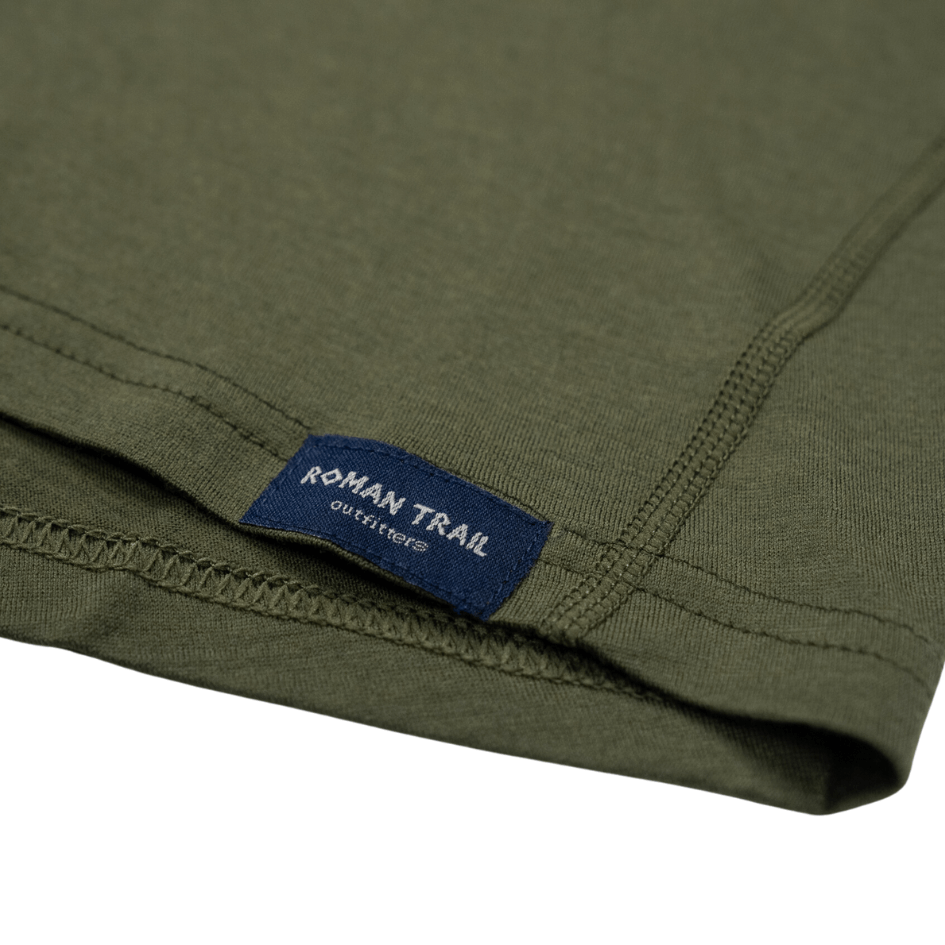
Merino Wool Women's Long Sleeve Top | Crew Neck Shirt | Deep Olive