Switzerland Travel Guide for Women: Hiking the Alps, Jungfrau, and the Tour du Mont Blanc

Switzerland in June and July is one of the great summer hiking destinations for American women. The combination of alpine scenery, Swiss efficiency, and exceptional transport infrastructure makes it more accessible than almost any mountain destination at this scale. You arrive at Zurich or Geneva airport, buy a rail pass, and the country delivers: punctual trains to every valley, gondolas to every summit, and trails maintained to a standard that will reframe what you thought a well-managed footpath could look like. The challenge of Switzerland is not logistics. The challenge is choosing which landscape to spend your limited days in.
This guide covers Switzerland for American women planning a summer trip in 2026, specifically June and July. It focuses on four zones: the Grindelwald and Jungfrau region (where searches are up 60 percent year over year), Zermatt and the Matterhorn area for non-technical hikers, the Swiss National Park as the underrated solo-travel option, and the Swiss sections of the Tour du Mont Blanc as the hero multi-day trek. It covers costs honestly in USD, addresses solo travel safety (Switzerland holds a US State Department Level 1 advisory), and explains how Switzerland's cable car and mountain railway network makes high-alpine terrain accessible to hikers of every fitness level.
If you are building a broader European hiking itinerary, this page connects with the Norway travel guide for women and the Scotland travel guide for women, which cover comparable cool-weather hiking in different terrain and at different price points. Full packing context for all European destinations lives on the women's travel packing hub. Official Switzerland trip planning resources are at myswitzerland.com.
Disclosure: This post contains affiliate links. If you buy through them, Roman Trail earns a small commission at no extra cost to you.
Is Switzerland safe for women travelers?
Switzerland holds a US State Department Level 1 travel advisory: exercise normal precautions. It consistently ranks among the safest countries in the world for solo female travelers. Swiss cities (Zurich, Geneva, Bern, Basel) are safe at any hour. Public transport is clean, reliable, and used by all demographics. Street harassment is not a feature of Swiss public life in the way it is in some other European cities.
The honest risks in Switzerland are environmental, not human. Alpine weather is the primary concern for women hiking independently. Thunderstorms build fast in the Alps, particularly in July, and can move from clear sky to lightning in under 30 minutes. The standard guidance is to start high-altitude hikes before 8am and be off exposed ridges by early afternoon. This is not excessive caution. It is how Swiss hikers manage the terrain.
Practical safety notes for solo women in Switzerland:
- Cities: safe at any hour. Zurich and Geneva both have active late-night public transport. You can walk alone without concern in virtually all neighborhoods.
- Mountain trails: well-signed and well-maintained. Swiss trail markers (white-red-white for alpine trails, yellow for walking paths) are reliable. Download the Swisstopo app before any serious hike for offline topographic maps.
- Mountain rescue: Rega (Swiss Air-Rescue) is the mountain rescue service. Their emergency number is 1414 and they operate 24 hours. Every hiking area in Switzerland has Rega coverage. Register your trip at rega.ch before multi-day routes.
- Weather monitoring: MeteoSwiss is the official weather authority at meteoswiss.ch. Check the Alpine forecast specifically (not the valley forecast) before any hike above 2,000 meters. Lightning risk is displayed as a clear warning layer.
- Solo women on the TMB: SAC mountain huts on the Tour du Mont Blanc Swiss section are mixed-gender dormitories. They are well-managed and generally safe. Book in advance and note your solo status when reserving.
Best time to visit Switzerland for summer hiking
June and July are the primary hiking months for American women visiting Switzerland. Here is what those months actually mean in each zone.
June: Lower trails are fully open by early June. High-alpine routes and the full TMB circuit typically open by mid-June depending on snowpack. June is the month of wildflowers: the meadows around Grindelwald and in the Val Ferret on the TMB are at their best. Crowds are lower than July, especially at the Jungfraujoch railway station. Expect temperatures of 18 to 24 degrees Celsius in the valleys and 5 to 12 degrees above 2,000 meters. Afternoon thunderstorm frequency is slightly lower in June than July, making early-morning summit starts a bit more forgiving.
July: Peak season. Jungfraujoch and Zermatt are at maximum visitor density. Book accommodation, gondola passes, and the Jungfraujoch railway at least six to eight weeks in advance for July travel. The weather window is wider, the days are long (sunset after 9pm), and the full TMB circuit is reliably open. The tradeoff is that popular viewpoints and hut systems require advance planning that June does not.
Temperature and altitude reality for Americans: Valley temperatures in Switzerland feel similar to a mild New England summer. Comfortable in a T-shirt at midday, cool in the evening. Above 2,500 meters, conditions change significantly. A gondola ride from Grindelwald at 22 degrees Celsius to the First summit station at 2,168 meters can drop 10 degrees with added wind chill. The same merino base layer that you wear for the approach handles the summit in a way that a cotton shirt does not. Plan for a 15 to 20 degree temperature differential between valley floor and any high-alpine destination.
Altitude awareness: Several Swiss destinations sit above 3,000 meters (Jungfraujoch at 3,454m, Klein Matterhorn at 3,883m). At these elevations, altitude sickness is possible for visitors coming from sea level. Ascend via cable car or train rather than hiking to extreme altitude on day one. Allow 30 to 60 minutes at high elevation before any physical exertion. Drink water, avoid alcohol. Symptoms of altitude sickness (headache, nausea, dizziness) should be taken seriously: descend if they appear.

Top regions for women hikers: what each one requires
Grindelwald and the Jungfrau region
Grindelwald has seen a 60 percent year-over-year increase in search interest from American travelers, and the appeal is easy to understand. The village sits at 1,034 meters in the shadow of the Eiger's north face, flanked by the Jungfrau (4,158m) and Monch (4,099m). The combination of dramatic scenery, well-developed gondola infrastructure, and a range of hiking difficulty levels from easy to technical makes it the most versatile base in Swiss alpine hiking.
Day hikes accessible from Grindelwald without a guide or technical skill:
- Bachalpsee lake: 6km round trip, 270m elevation gain, highly manageable. The lake reflects the peaks and is one of the most-photographed spots in the Bernese Oberland. Start early to avoid the mid-morning crowds.
- Eiger Trail: 15km point-to-point from Eigergletscher to Grindelwald Grund, running directly below the Eiger north face. Moderate difficulty, some scrambling sections, not exposed. One of the best intermediate hikes in Switzerland.
- First Cliff Walk: an elevated walkway suspended on the cliff face above the First summit station (accessible by gondola). Not a hike in the traditional sense but an extraordinary experience with no technical requirement. Suitable for any fitness level.
The Jungfraujoch railway ("Top of Europe") runs from Grindelwald or Lauterbrunnen to the highest railway station in Europe at 3,454 meters. The journey takes approximately two hours and costs between $150 and $200 USD round trip depending on booking timing. It is worth doing once. Book at least two to three weeks in advance for July travel through the Jungfrau Railways website. At the top: a glacier plateau, a science station, and views to the Aletsch Glacier (the longest glacier in the Alps). The cold and altitude will disorient you briefly after the gondola. Give yourself 20 minutes to adjust before walking outside.
Zermatt and the Matterhorn area
Zermatt is a car-free village at 1,620 meters in the Valais canton, accessible only by train from Visp or Brig. The absence of cars changes the character of the place in ways that matter for solo women: you walk everywhere, the village feels genuinely pedestrian, and the focus shifts entirely to the mountain environment. The Matterhorn (4,478m) dominates the skyline from every direction. It is not a beginner climb, but non-technical hikers can reach extraordinary viewpoints at well above 3,000 meters using the village's gondola and railway network.
Key non-technical routes from Zermatt:
- 5-Lakes Trail (5-Seenweg): 15km with 400m of climbing, connecting five alpine lakes each reflecting the Matterhorn on a clear day. This is the most celebrated day walk in the Zermatt area. Moderate fitness required. Start from Blauherd station (accessible by gondola) and walk back to Zermatt.
- Gorner Gorge (Gornergorge): a 45-minute round-trip walk through an ice-carved gorge directly from the village. Suitable for any fitness level. Cool, shaded, and dramatic.
- Riffelberg: accessible by Gornergrat Railway to Riffelberg station (2,582m). Short walks from here deliver Matterhorn views without significant hiking. The Riffelsee lake at 2,757m reflects the peak in conditions that produce the most reproduced photograph in Swiss tourism.
The Klein Matterhorn gondola (Matterhorn Glacier Ride) reaches 3,883 meters, making it the highest cable car destination in the Alps. At this altitude you are standing on a glacier. Bring your base layer, insulation, and shell regardless of the valley temperature. The wind at 3,883 meters is not seasonal.

Swiss National Park: the underrated solo option
The Swiss National Park is Switzerland's only national park and one of the least-visited major hiking destinations in the country. It sits in the Engadine valley in canton Graubunden, near the village of Zernez, roughly three hours by train from Zurich. Where Grindelwald and Zermatt are heavily developed and internationally famous, the Swiss National Park is quiet, well-signed, and genuinely wild by European standards.
Wildlife is the primary draw: the park has one of the highest concentrations of ibex in Europe, along with chamois, red deer, golden eagles, and bearded vultures. You will see animals on most full-day hikes. The trail network is well-maintained and clearly marked, with distances and difficulty levels posted at every junction. There is no designated camping inside the park boundaries; base yourself in Zernez or S-chanf and day-hike in.
For solo women travelers, the Swiss National Park offers something the more famous zones do not: predictable solitude. You will share trails with other hikers, but not with the volume that characterizes Grindelwald on a July weekend. The terrain is lower-consequence than the Eiger area or Zermatt's high routes, and the well-signed trails reduce navigation risk for independent hikers. It is an excellent destination for a woman who wants serious alpine walking without the infrastructure overhead of the major resort areas.
Tour du Mont Blanc: the Swiss sections
The Tour du Mont Blanc is a 170-kilometer circuit through France, Italy, and Switzerland, typically completed in 10 to 12 days with a total of approximately 10,000 meters of elevation gain. The full circuit is one of the most celebrated long-distance walks in Europe. The Swiss sections run through the Val Ferret, over the Col de la Balme, through Trient, over the Fenetre d'Arpette (the most demanding pass on the route), and down to Champex-Lac.
The Swiss stages are widely considered the most scenically diverse portion of the circuit. The Val Ferret in particular delivers a combination of high glaciated peaks, lower meadow walking, and the feeling of genuine remoteness that the French sections near Chamonix do not have. The Fenetre d'Arpette (2,665m) is the hardest single stage of the TMB: a steep, rocky climb with significant exposure near the top. It requires good fitness, solid footwear, and clear weather. There is an alternative via Bovine that is less demanding in poor conditions.

Practical TMB notes for women hiking independently:
- Book SAC huts and gites at least 8 to 10 weeks before your start date for July travel. The Swiss huts (Champex, Trient, La Fouly) book out fastest.
- The standard direction is counterclockwise from Chamonix. You can start from any point and complete the Swiss section as a standalone if the full circuit is not in your itinerary.
- Hiking poles make a meaningful difference on the Col de la Balme and Fenetre d'Arpette descents. The waterproof hiking boots suited to TMB terrain need ankle support and solid grip on wet rock and scree.
- Weather windows on the TMB can change rapidly. Build a rest day or alternate-route buffer into your schedule for the Swiss stages.
What to pack for Switzerland: women's packing list

Switzerland is a layering environment where temperature changes are rapid and significant. The valley floor in Grindelwald in July can reach 25 degrees Celsius. The summit of First two gondola rides above it sits at 8 degrees with wind. The packing system needs to manage both without excess weight, because Swiss trails involve real elevation gain and pack weight matters.
Base layers
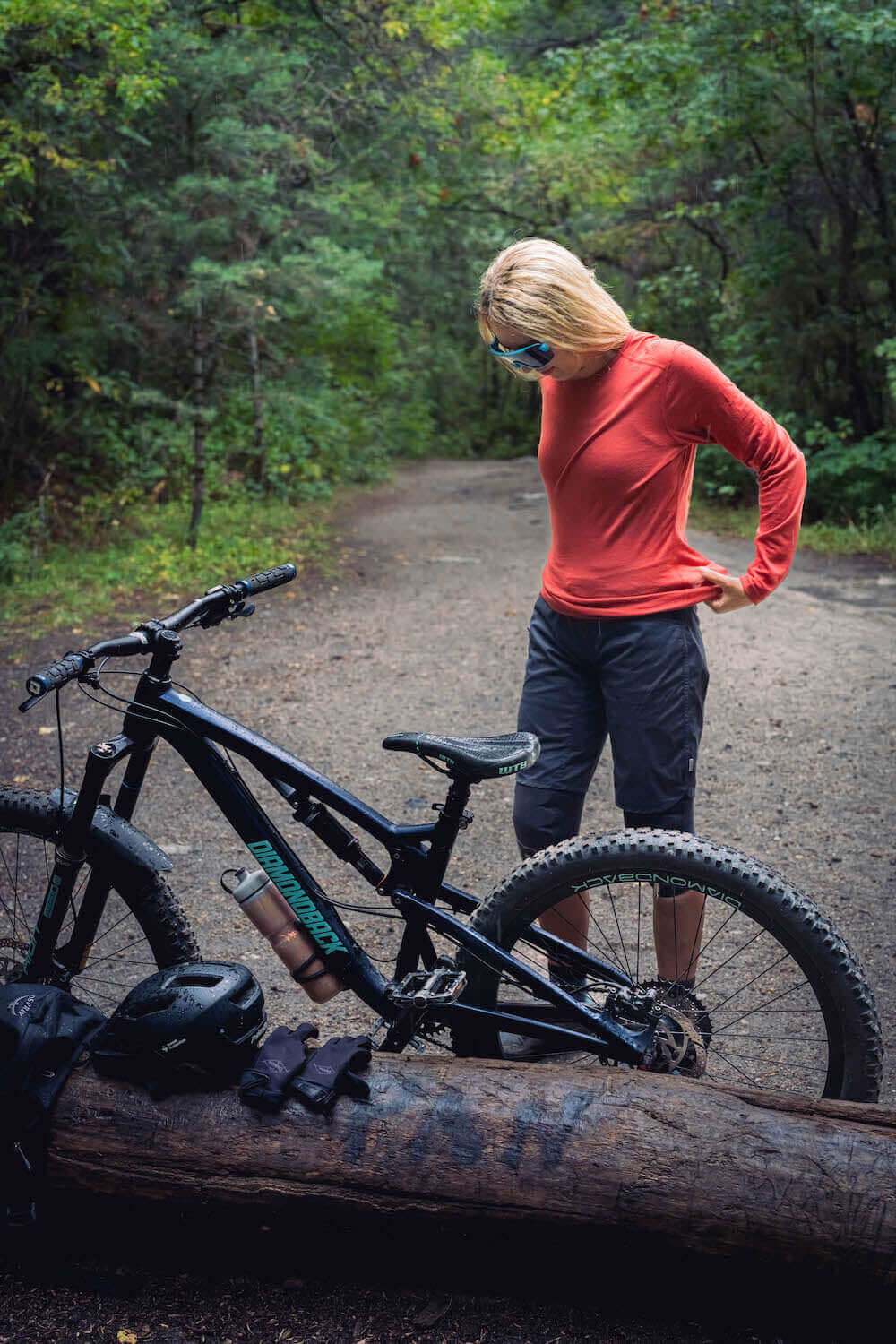
The foundation of any Swiss Alps packing list is a merino wool base layer. Merino manages the sweat-to-cold transition better than any synthetic at this use case: you sweat on the Eiger Trail ascent, the wind picks up near the ridge, and merino keeps you warm rather than clammy. At 17.5 micron and 160gsm, a Roman Trail merino base layer goes directly against skin without irritation and carries odor resistance through multiple hiking days without laundering. Pack two. Swiss huts on the TMB do not have dryer facilities, and having a dry base layer for the second morning is not a luxury. It is how you stay warm and healthy over a multi-day route.
Insulation layer
A packable synthetic or down jacket is mandatory for any high-alpine day hike or TMB stage. The Arc'teryx Women's Atom LT Hoody is one of the best options for Swiss hiking because it performs in both dry cold and light moisture, compresses into a daypack side pocket, and handles the temperature drop between a valley base camp and a gondola summit without requiring you to stop and reorganize your pack. At 3,454 meters on the Jungfraujoch or 3,883 meters at Klein Matterhorn, you will wear this layer. In Grindelwald village in the evening, you will wear it again.
Shell layer
A waterproof hardshell or quality rain jacket is non-negotiable. Alpine thunderstorms in Switzerland can move from blue sky to heavy rain in 20 minutes. Your shell needs taped seams and at minimum a 10,000mm waterproof rating. Bring it on every hike regardless of morning conditions. This is not over-preparation. This is standard operating procedure for the Swiss Alps in summer.
Footwear
For the TMB Swiss sections and the Swiss National Park: waterproof mid-height hiking boots with ankle support. The Fenetre d'Arpette and the descent from Col de la Balme involve scree and wet rock that trail runners do not handle safely. For Zermatt day hikes and Grindelwald village trails: waterproof trail shoes with serious grip are sufficient and lighter for the lower-consequence terrain. Bring both if your itinerary spans all zones, or choose one based on your primary destination.
Hiking pants and bottoms
Lightweight, quick-dry hiking pants are the right choice for Swiss summer hiking. Stretch hiking pants that move well on uneven terrain and dry within a few hours of a rain shower are the practical standard. Denim and cotton are not appropriate for alpine hiking in any season. They hold moisture, restrict movement on steep terrain, and create a hypothermia risk if you get caught in unexpected weather above 2,000 meters.
Accessories
A lightweight merino beanie for summit temperatures and SAC hut mornings. Liner gloves for the Jungfraujoch and Klein Matterhorn (glacier temperatures are cold year-round). Sunscreen rated SPF 50 or higher: UV exposure at alpine altitude is significantly higher than at sea level. Quality sunglasses with UV protection. A 20 to 25 liter daypack with a hip belt for full-day hikes. Trekking poles for the TMB and any route with significant descent.
What not to pack
Cotton clothing in any form. Jeans for hiking. Sandals as your primary footwear above village level. More than you can carry comfortably for 8 hours at 1,500 meters of daily elevation gain. Swiss huts on the TMB do not have luggage storage services and do not accept oversized bags.
The base layer the Swiss Alps demand.
Roman Trail's 100% Australian merino wool base layer (17.5 micron, 160 gsm) handles the Eiger Trail ascent and the gondola summit wind without missing a beat. No synthetic fibers. No microplastics. Machine washable. 2-year guarantee. Free two-day shipping.
SHOP THE BASE LAYERGetting around Switzerland
Switzerland has the best public transport network in Europe by most measures of punctuality and coverage. For women traveling independently, this is one of the defining advantages of the country. You do not need a car. You do not need to rent one. The SBB (Swiss Federal Railways) connects every major city and alpine valley, and the regional bus, gondola, and mountain railway networks reach every hiking destination described in this guide.
Swiss Travel Pass: The most efficient option for visitors spending more than four days in Switzerland. It covers unlimited travel on SBB trains, PostBus routes, and most lake ferries, plus free or discounted access to many gondola and mountain railway systems (including partial discounts on the Jungfraujoch railway). Prices in 2026 start at approximately $265 USD for a 3-day pass and $350 for an 8-day pass. Buy before arriving in Switzerland through myswitzerland.com or Rail Europe.
SBB trains: Run on time to a degree that will surprise visitors used to other rail networks. Zurich to Zermatt takes approximately 3.5 hours with one change at Visp. Geneva to Grindelwald takes approximately 3 hours with changes at Interlaken. Download the SBB Mobile app for real-time timetables and ticket purchase. First class is worth the upgrade on scenic routes: the Glacier Express and the Bernina Express both run panoramic first-class cars at modest price differentials.
Gondolas and cable cars: The majority of Switzerland's gondola systems are included or discounted with the Swiss Travel Pass. Key systems: Grindelwald First gondola (open June to October), Männlichen gondola from Grindelwald (for the panoramic route to Kleine Scheidegg), Zermatt's Gondola network to Schwarzsee and Matterhorn Glacier Ride, and the Klein Matterhorn system. All gondola operators publish real-time operational status online. Check before the day of travel as high-wind closures are common.
Jungfraujoch railway: This is not covered in full by the Swiss Travel Pass (a significant discount applies, but the base fare remains high). Budget $80 to $100 USD for the Jungfraujoch after the pass discount. Book your departure time slot at jungfrau.ch at least two to three weeks in advance for July. Departure before 8am gives you the summit before the afternoon cloud builds.
Zermatt transport: Zermatt has no private motor vehicles. Arrivals park at Tasch (the last rail stop before Zermatt) and travel the final leg by train. The Zermatt electric shuttle taxis operate within the village. You walk everywhere. This is a feature, not a limitation.
PostBus: The yellow PostBus network covers mountain valleys not served by rail, including access routes to the Swiss National Park from Zernez. Fully integrated with the SBB timetable and covered by the Swiss Travel Pass.
Costs: what to budget for Switzerland
Switzerland is consistently ranked as one of the most expensive countries in the world for daily travel costs. American travelers frequently underestimate this. The figures below are in USD for 2026 and assume a solo traveler. They are honest ranges, not optimistic minimums.
Budget: $120 to $180 per day. Achievable with hostel dorm beds ($50 to $70 per night), self-catering from Migros or Coop supermarkets (the budget chains), and a Swiss Travel Pass for transport. Hiking the national trails is free. Skip guided tours. Cook most of your own meals. This budget works but requires discipline: Switzerland's supermarkets are good, and self-catering is a legitimate way to travel here.
Mid-range: $220 to $320 per day. Private room in a guesthouse or budget hotel ($100 to $150 per night), one restaurant meal per day ($30 to $55 for a main course), Swiss Travel Pass, occasional gondola upgrades not covered by the pass. This is the realistic range for most American women traveling alone who want privacy and don't want to cook every meal.
Luxury: $400 to $600 or more per day. Design hotels in Zermatt or Grindelwald ($250 to $450 per night), fine dining, private guided hiking days, spa access. Completely achievable and Switzerland does this well.
Specific costs to build into your budget:
- Hostel dorm bed: $50 to $70 per night
- Coffee at a cafe: $5 to $7
- Beer at a bar: $8 to $12
- Supermarket lunch (bread, cheese, cold cuts): $12 to $18
- Restaurant main course: $30 to $55
- Jungfraujoch railway (after Swiss Travel Pass discount): $80 to $100
- Swiss Travel Pass 8-day: approximately $350
- Grindelwald First gondola return (if not covered): $40 to $55
- Gornergrat Railway return from Zermatt: $50 to $70
The single most effective cost-control strategy in Switzerland is to engage seriously with Migros and Coop. Both chains have locations in every town including Zermatt and Grindelwald. A supermarket dinner from Coop runs $15 to $22 and is genuinely good: Switzerland produces exceptional cheese, cold cuts, bread, and chocolate that make self-catering feel less like a compromise. Build your lunch from the supermarket every hiking day. A packed lunch for a full Eiger Trail day saves $25 to $40 versus anything sold at trail-side restaurants.
Currency is Swiss Francs (CHF). In June 2026 the USD-CHF rate fluctuates around 0.90 to 0.95, meaning one Swiss Franc costs roughly $1.05 to $1.10 USD. ATMs are widely available and Visa is accepted almost everywhere. Tipping is not expected; rounding up on a restaurant bill is appreciated. For official cost guidance see myswitzerland.com budget planning.
Where to stay: hostels, guesthouses, and hotels for women
Switzerland has a strong youth hostel network (Swiss Youth Hostels, affiliated with HI) with female-only dorm options at most major locations. These hostels are clean, well-run, and equipped for hikers: boot drying rooms, laundry facilities, and common kitchens are standard.
Grindelwald: Grindelwald Youth Hostel is the HI affiliate and sits within walking distance of the gondola stations. It has female-only dorm options, a kitchen, and staff who know the trails in detail. Book two to three months in advance for July. Guesthouse options in the village range from $80 to $130 per night for private rooms; look for properties that include breakfast (Fruhstuck) as it meaningfully changes the morning logistics of an early-start hiking day.
Zermatt: Matterhorn Hostel is Zermatt's primary budget option with a social atmosphere and female-only dorms. It books out for July by April. The SANA Hostel is the backup option with similar amenities. Both are within walking distance of the Gornergrat Railway station. Budget guesthouses in Zermatt are priced higher than in most Swiss villages because of the car-free premium and the destination's international profile: expect $100 to $150 for a private room at the budget end.
Geneva: If you are arriving or departing through Geneva, the Geneva City Hostel at the international quarter is the recommended base. It has strong security, female-only dorms, a 24-hour reception, and is a 10-minute walk from the Cornavin rail station. Geneva is expensive even by Swiss standards: budget for $70 to $90 for a hostel dorm bed.
On the Tour du Mont Blanc (Swiss sections): SAC mountain huts provide dormitory accommodation and dinner along the route. Book through the SAC website (sac-cas.ch) or the TMB online booking platform at autourdumontblanc.com. Hut capacity on the Swiss sections ranges from 30 to 100 beds. The Refuge du Col de la Balme, Cabane du Trient, and Auberge de Champex are the key Swiss stops. Most charge $50 to $70 USD for bed-and-dinner.
When reviewing any Swiss accommodation, look for: key card access to rooms, lockers in dorm areas, proximity to the relevant railway or gondola station, and reviews specifically from solo women travelers. Booking.com and Hostelworld both serve Switzerland well. The SBB website sometimes lists partner accommodation with bundled transport packages that reduce overall costs.

Essential resources for women in Switzerland
Emergency numbers: Police 117, Ambulance 144, Fire 118. Mountain rescue (Rega): 1414, or internationally +41 333 333 333. All operators speak English.
US Embassy in Bern: Sulgeneckstrasse 19, CH-3007 Bern, Switzerland. Phone: +41 31 357 70 11. For after-hours consular emergencies, call the main number and ask for the duty officer. Website: ch.usembassy.gov.
STEP enrollment: Register your trip at step.state.gov before departure. This connects you to the US Embassy in Bern in the event of an emergency and ensures the Embassy knows your travel dates and itinerary.
Main hospital in Bern: Inselspital Bern (Bern University Hospital), Freiburgstrasse 18, CH-3010 Bern. Phone: +41 31 632 21 11. This is the primary trauma and emergency hospital for the Swiss capital region.
Main hospital in Zurich: Universitatsspital Zurich (University Hospital Zurich), Ramistrasse 100, CH-8091 Zurich. Phone: +41 44 255 11 11.
Official health authority: Federal Office of Public Health at bag.admin.ch. Includes health information for visitors in English.
US State Department travel advisory: Switzerland: Level 1, Exercise Normal Precautions.
UK FCDO travel advice: FCDO Switzerland travel advice. The safety and security section carries the detail that the landing page only summarises, and it is the page to read before you travel.
Official tourism authority: myswitzerland.com. Comprehensive official resource for trail conditions, gondola schedules, and regional planning.
Solo women safety assessment: Switzerland is among the safest countries in the world for solo female travelers. The realistic concerns are entirely environmental: alpine weather changes fast, altitude affects visitors from sea level more than expected, and the three most demanding hikes (Fenetre d'Arpette on the TMB, the Eiger Trail, any route above 3,500 meters) require solid preparation and should not be attempted in poor visibility. Check the MeteoSwiss Alpine forecast at meteoswiss.ch before every high-altitude day. Descend from exposed ridges if thunderstorm warnings are posted. Outside of mountain-specific hazards, Switzerland is straightforward: cities are safe, transport is reliable, strangers are helpful without being intrusive, and the culture does not produce the street harassment that characterizes some other European destinations. Solo women consistently rate Switzerland as low-stress and high-confidence for independent travel.
Built for the Alps. Made from the mountains.
One Roman Trail merino base layer handles the Eiger Trail ascent, the gondola summit, and the hut dormitory without complaint. 100% Australian merino wool. No synthetic fibers. No microplastics. 2-year satisfaction guarantee. Free two-day shipping.
SHOP MERINO BASE LAYERSRelated reading
- Norway Travel Guide for Women: The closest European equivalent for dramatic hiking scenery, at a comparable cost level. Norway's fjord hikes (Trolltunga, Preikestolen) and Switzerland's alpine routes attract the same type of traveler. The key difference is that Norway has the midnight sun advantage in June and July, while Switzerland has the cable car and mountain railway infrastructure that makes high-alpine access genuinely easy.
- Scotland Travel Guide for Women: If Switzerland's costs are a barrier, Scotland covers cool-weather mountain hiking at roughly half the daily budget. The West Highland Way and the Cairngorms offer comparable hiking culture in a more accessible price range for American women on a tighter schedule or budget.
- Iceland Travel Guide for Women: For women who have Switzerland on the itinerary and are considering adding a Nordic destination, Iceland's Landmannalaugar and Fimmvorduhals routes offer a completely different terrain type at similar cost levels. The combination of Switzerland and Iceland over three weeks is a serious European hiking trip.
- Women's Travel Packing Hub: The complete index of destination guides, packing lists, and regional resources for women planning international trips, organized by region and season.
- The Complete Guide to Merino Wool Base Layers for Women: The fiber science, weight comparisons (160gsm vs. heavier and lighter options), care instructions, and buying guide behind the most important single item in a Swiss Alps packing list. If you are hiking above 2,000 meters, read this before you pack.
Destination Guides for Switzerland
Every Roman Trail destination article for Switzerland, each with the packing detail specific to that city or valley rather than a repeat of the country list.
- Switzerland packing list for women for a multi region trip across the country.
- Zurich packing list for women the largest city and the usual arrival point.
- Basel packing list for women the Rhine city on the German and French border.
- Schaffhausen packing list for women oriel windows, the Munot and the Rhine Falls.
- Bern packing list for women the capital and its arcaded old town.
- Geneva packing list for women the western end of the lake.
- Lausanne packing list for women French speaking Switzerland on a steep slope.
- Montreux packing list for women the sheltered eastern end of Lake Geneva.
- Gruyeres packing list for women the walled cheese town on its hill in Fribourg.
- Lucerne packing list for women the lake, the covered bridge, Pilatus and Rigi.
- Interlaken packing list for women the Bernese Oberland base between two lakes.
- Grindelwald packing list for women under the Eiger, for the Jungfrau region.
- Lauterbrunnen packing list for women the waterfall valley and the Schilthorn side.
- Zermatt packing list for women the Matterhorn and the car free village.
- Saas-Fee packing list for women car free, glaciered, ringed by thirteen four thousanders.
- Verbier packing list for women the 4 Vallees, serious off piste and serious prices.
- Appenzell packing list for women the Alpstein, Aescher and the most traditional canton.
- St Gallen packing list for women the abbey library, and the felt slippers it requires.
- Chur packing list for women the oldest town in Switzerland and the Rhaetian Railway junction.
- Davos packing list for women the highest town in the Alps, its snow science and its skiing.
- St Moritz packing list for women the high Engadine, dry cold and the Bernina line.
- Bellinzona packing list for women three castles in Ticino, and the Verzasca valley.
- Locarno packing list for women Lake Maggiore, palm trees and the Verzasca behind.
- Lugano packing list for women Italian speaking Ticino on a subtropical lake.
- Aletsch packing list for women the largest glacier in the Alps, a UNESCO site reached by cable car.
- Zug packing list for women a medieval lakeside old town twenty five minutes from Zurich.
- Thun packing list for women a castle above a turquoise river and the gateway to the Bernese Oberland.
- Brienz packing list for women the woodcarving town, a steam cog railway and a waterfall you walk behind.
- Kandersteg packing list for women a dead end valley with a UNESCO lake above it and a car train through the mountain.
- Mount Pilatus packing list for women the steepest cogwheel railway in the world, above Lucerne.
- Rigi packing list for women Europe's first mountain railway and a summit that stands above the winter fog.
- Arosa packing list for women a Graubunden resort at the end of 365 bends, with a bear sanctuary above it.
- Oeschinensee packing list for women a UNESCO lake under the Bluemlisalp, reached by gondola and a walk.
- Blausee packing list for women a small privately owned lake whose water is genuinely that blue.
- Spiez packing list for women a castle on a bay of Lake Thun, with vineyards above the water.
- Engelberg packing list for women a Benedictine monastery, a revolving cable car and year round glacier snow.
- Sion packing list for women two hills with castles above the driest, sunniest valley in Switzerland.
- Crans Montana packing list for women a sun terrace a thousand metres above the Rhone valley, facing the Alps.
- Stein am Rhein packing list for women painted facades on every house of one medieval square, upstream of the Rhine Falls.
Blog posts
View all-

Packing List for Tucson, Arizona: What Women Sh...
What to pack for Tucson: a 1797 Spanish mission, giant saguaros, a UNESCO food city and a summer monsoon that fills dry washes in minutes.
Packing List for Tucson, Arizona: What Women Sh...
What to pack for Tucson: a 1797 Spanish mission, giant saguaros, a UNESCO food city and a summer monsoon that fills dry washes in minutes.
-

Packing List for Sequoia National Park: What Wo...
What to pack for Sequoia National Park: the largest trees on Earth, 13,000 feet of elevation range, mandatory bear lockers and a road with a length limit.
Packing List for Sequoia National Park: What Wo...
What to pack for Sequoia National Park: the largest trees on Earth, 13,000 feet of elevation range, mandatory bear lockers and a road with a length limit.
-

Packing List for St Augustine, Florida: What Wo...
What to pack for St Augustine: a Spanish fort built of shell stone, the oldest continuously occupied European settlement in the continental United States.
Packing List for St Augustine, Florida: What Wo...
What to pack for St Augustine: a Spanish fort built of shell stone, the oldest continuously occupied European settlement in the continental United States.


Contact form

Roman Trail Outfitters
Merino Wool Women's Long Sleeve Top | Crew Neck Shirt | Deep Olive