Best Merino Wool Base Layer for Women Who Run Cold

If you have always felt colder than everyone else on the trail, colder than your hiking partner, colder at camp, colder on the morning flight, you are not imagining it. There is a real physiological reason women run cold, and there is a specific kind of base layer designed to address it. This guide explains both.
The outdoor industry has historically written its cold-weather advice around men's bodies. Most base layer weight recommendations assume a male metabolic rate, male hormone profile, and male body composition. For women, these recommendations often miss the mark by a meaningful margin, leaving you underdressed for your actual thermal needs.
Understanding why you run cold, and why the standard 150gsm lightweight base layer often falls short, will help you make the one gear decision that changes every cold-weather experience you have going forward.
Why Women Run Colder: The Physiology
Five distinct physiological factors explain why women consistently feel colder than men in the same conditions. These are not minor differences. They compound on each other, meaning a woman in identical clothing to a man is genuinely less warm, not just more cold-sensitive.
1. Surface Area to Body Mass Ratio
Women have a higher ratio of skin surface area to body mass than men. More surface area per kilogram means more heat is radiated away from the body relative to how much heat the body can generate. This is a structural characteristic that applies across all fitness levels and body types. The physics of heat loss work against women regardless of how fit or experienced they are.
2. Peripheral Blood Flow Restriction
When core temperature drops, the body responds by restricting blood flow to the extremities, hands and feet first, then arms and legs. This is a survival mechanism that prioritizes keeping vital organs warm. In women, this vasoconstriction response tends to activate earlier and more aggressively than in men. The result is colder hands and feet at higher ambient temperatures, and less warmth available to the limbs during moderate cold exposure.
This is why you pull on gloves twenty minutes before your male hiking partner does. It is not a preference. It is peripheral circulation responding differently to the same stimulus.
3. Lower Resting Metabolic Rate
Body heat comes primarily from metabolism. The basal metabolic rate in women is 20 to 30 percent lower per kilogram of body weight than in men at equivalent fitness levels. Less metabolic activity means less internal heat generation throughout the day, including during low-intensity activities like hiking at a moderate pace, standing at a summit, or sleeping in a tent. The gap widens when activity slows, which is exactly when base layer performance matters most.
4. Hormonal Variation
Estrogen affects peripheral vasoconstriction, reducing blood flow to the skin in ways that amplify heat loss from the surface. Estrogen levels fluctuate across the menstrual cycle, which means thermal comfort also fluctuates. Many women notice they feel colder at particular points in their cycle, and there is a documented physiological basis for that experience. Progesterone raises basal body temperature slightly in the luteal phase, but this does not cancel the increased cold sensitivity driven by estrogen.
5. Lower Muscle Mass
Muscle is the body's primary heat generator. Muscle tissue generates approximately four times more heat per unit of weight than fat tissue. Women carry proportionally less muscle mass than men of similar overall body weight. Less muscle means less heat generated at rest, less heat generated during low-intensity activity, and a faster rate of cooling when exercise stops. This factor directly affects how cold you feel during the rest phases of any hike, the summit, the lunch break, the late afternoon descent.
Why Standard Layering Advice Falls Short for Women
The most common base layer recommendation you will find in gear guides and outdoor retailer websites is a 150gsm lightweight merino top. For men who run warm, who generate more heat at rest, who have lower surface area ratios and stronger peripheral circulation, 150gsm works well across three seasons. It breathes well when working hard and provides modest insulation at rest.
For women who run cold, 150gsm has a fundamental limitation: it does not retain enough heat during low-intensity periods. When you stop moving, that thin layer stops working. Your body is already generating less heat than the gear was designed to handle, and the insulation is insufficient to bridge the gap between activity and rest.
The response to this problem is often to add more layers, which adds bulk, weight, and complexity. You end up carrying a heavier pack to compensate for a base layer that was not right in the first place.
At the other end, 200gsm to 260gsm base layers solve the warmth problem but create a new one. They overheat during moderate aerobic effort. Women who run cold at rest do not necessarily run cold when working hard, and a heavy base layer traps too much heat when pace increases, leading to sweating and the moisture management challenges that follow.
The gap between these two options is where most women who run cold end up spending money on gear that does not quite work.
The 160gsm Solution
A 160gsm base layer sits at a carefully considered point between lightweight and midweight. It retains meaningfully more heat than 150gsm when you stop moving, without trapping excess heat when you are working at moderate effort. For women who run cold, this weight difference closes the gap between activity and rest comfort without requiring an additional layer in most three-season conditions.
The insulation difference sounds small in the numbers, but in practice it is the difference between being comfortable at a summit and needing to dig into your pack for a fleece every time you stop.
Why Micron Count Matters
The 17.5 micron rating indicates superfine merino. This matters for two reasons specific to women who run cold.
First, fine merino fibers create more surface area per gram of fiber, which traps more still air and creates better insulation at the same weight compared to coarser merino. A 160gsm top at 17.5 micron insulates better than 160gsm at 19 or 21 micron, because the finer fibers create a denser thermal barrier at the same stated weight.
Second, 17.5 micron is below the threshold where most people experience itch or prickling from wool. Women with sensitive skin, or anyone who has been put off by coarser wool in the past, typically find superfine merino at 17.5 micron comfortable directly against skin all day without irritation. This matters because a base layer only works if you actually wear it.
Why 100% Merino Outperforms Blends
Most mid-range merino base layers blend wool with nylon, polyester, or elastane. The blend ratios vary, but any synthetic component reduces the thermal and moisture management properties that make merino effective for women who run cold.
Pure merino fiber is hygroscopic: it can absorb up to 35 percent of its weight in moisture vapor before it feels wet, and it continues to insulate while doing so. When moisture is absorbed into the fiber structure rather than sitting on the surface, the fabric stays warm even as you sweat. This is the mechanism that makes merino useful across a wide range of intensities.
Synthetic fibers, including the nylon or polyester used in merino blends, do not absorb moisture in the same way. They wick it away from the skin, which is effective for high-intensity activities but less effective for the variable effort levels of hiking. As moisture sits on synthetic fibers rather than being absorbed, it creates a cooling effect. For women who already run cold, that cooling effect happens at the wrong time.
Additionally, synthetic fibers do not retain warmth when wet. Merino does. In rain, in fog, or in conditions where you are generating less sweat than the ambient humidity demands, a 100% merino layer continues to insulate. A synthetic blend begins to lose that property as the synthetic component increases.
Comparing Your Options Side by Side
| Option | Weight | Active Warmth | Rest Warmth | Best For |
|---|---|---|---|---|
| 150gsm 100% merino | Lightweight | Excellent | Moderate | Women who run warm, high output summer activities |
| 160gsm 100% merino (17.5 micron) | Mid-light | Excellent | Strong | Women who run cold, three-season use, travel |
| 200gsm 100% merino | Midweight | Moderate (overheats) | Very strong | Very cold climates, low activity, winter camping |
| 150gsm merino/synthetic blend | Lightweight | Good | Weak | High-intensity running, gym use |
How to Wear It Across Seasons
A 160gsm base layer at 17.5 micron covers three seasons well for most women who run cold. Here is how to use it across different conditions.
Spring and Fall Hiking
In shoulder seasons with daytime highs between 45 and 65 degrees Fahrenheit, the base layer handles temperature swings on its own in the morning and evening, and remains comfortable when worn with a light shell during midday if conditions are cool or breezy. For sustained aerobic effort in this range, no additional layer is needed until rest periods.
Winter Layering
In conditions below 40 degrees Fahrenheit, the base layer works as the foundation of a three-layer system: base plus midlayer (fleece or insulated jacket) plus shell. The merino base regulates moisture against your skin while the midlayer traps warm air. This system handles a wider range of output levels than a synthetic base layer system because the merino continues to insulate even as moisture accumulates.
Travel
Merino's odor resistance means a single base layer worn for seven to ten days of travel does not require washing mid-trip. This is a practical advantage that changes how you pack entirely. One base layer that works across flight, layover, cold-weather sightseeing, hiking, and camp meals reduces your packing list significantly. The 160gsm weight is warm enough for air-conditioned cabins and cool evenings without being too heavy for city walking.
Cold-Weather Running and Snowshoeing
For activities with continuous high output in cold conditions, the base layer manages moisture during exertion and insulates immediately when pace drops. The transition from moving to stopped, which is the hardest moment for cold-sensitive women to manage, is where the 160gsm weight advantage is most noticeable.
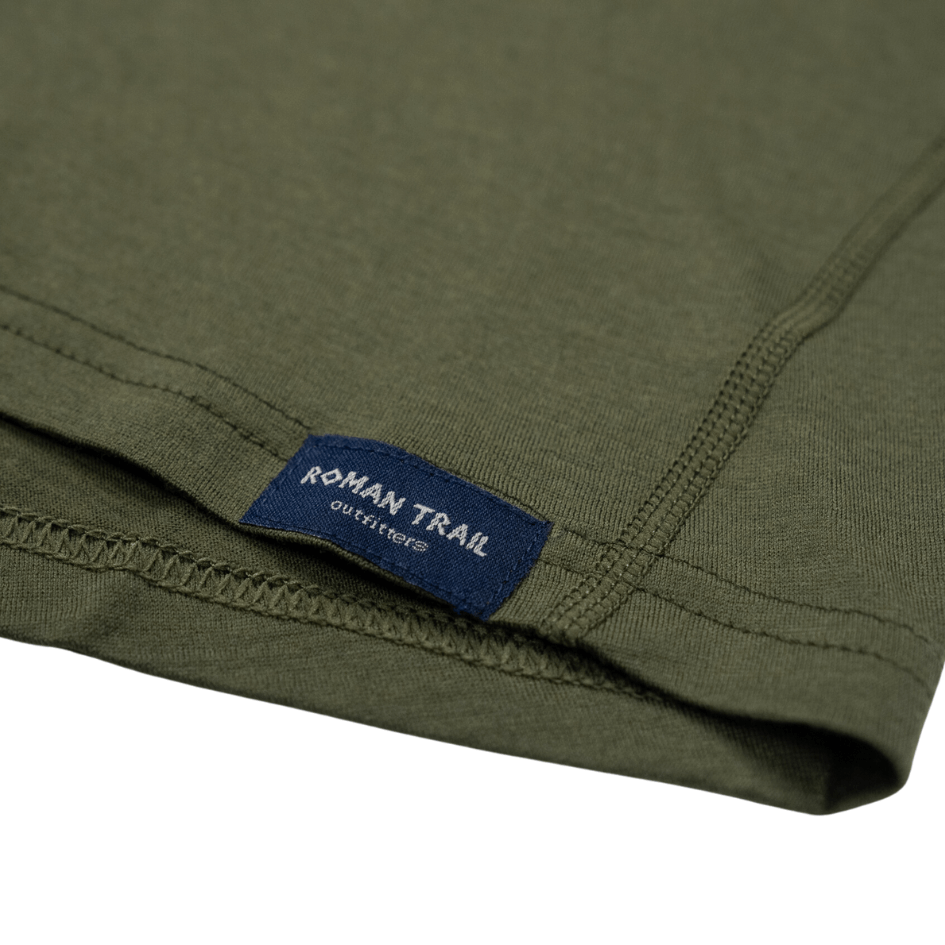
Roman Trail Outfitters Merino Base Layer
160gsm / 17.5 micron / 100% Australian Merino Wool. No synthetics. Women-specific fit with extra back length. Free two-day shipping. 2-year satisfaction guarantee.
SHOP WOMEN'S BASE LAYERS
What Makes Roman Trail Different
Most merino brands compromise on materials to reduce cost or improve stretch: adding nylon for durability, polyester for shape retention, or elastane for fit. Roman Trail does not. Every base layer is 100% Australian merino wool, no synthetic fibers, no plastic blends.
The wool is sourced from superfine Merino sheep in Australia, where fiber fineness standards are among the most consistent in the world. At 17.5 micron, it meets the superfine classification, which means it is soft enough for direct skin contact without irritation even for people who have had bad experiences with coarser wool.
The fit is designed specifically for women. The extra back length keeps the base layer tucked during dynamic movement, prevents cold air from entering at the waist during a reach or a stretch, and accommodates the proportional differences in torso length that standard unisex cuts do not account for.
Sizes run XS through L, with prices starting at $49.99. Machine washable cold, hang dry. The 2-year satisfaction guarantee means that if the base layer does not perform as described, it is covered.
Frequently Asked Questions
Why do women run colder than men?
Women run colder due to five physiological factors: a higher surface area to body mass ratio (more heat loss per kilogram), earlier and stronger peripheral vasoconstriction (restricts blood to hands and feet sooner), a lower resting metabolic rate (20 to 30 percent less heat generated per kilogram), hormonal effects of estrogen on vasoconstriction, and lower average muscle mass (muscle is the primary source of body heat). These factors compound: a woman in identical clothing to a man of similar fitness is genuinely less insulated for her body's heat output.
What base layer weight is best for women who run cold?
160gsm is the best base layer weight for most women who run cold across three seasons. It retains meaningfully more heat at rest than 150gsm lightweight tops, without overheating during moderate aerobic effort the way 200gsm or heavier options do. At 17.5 micron superfine, the fiber creates a denser insulating structure per gram of weight than coarser merino at the same gsm. For very cold climates or low-activity use, 200gsm is appropriate. For high-intensity summer activities, 150gsm works well. For the gap in between, which covers most hiking, travel, backpacking, and shoulder-season use, 160gsm at 17.5 micron is the answer.
Is 100% merino warmer than a merino blend for women who run cold?
Yes, for women who run cold. 100% merino absorbs moisture into the fiber structure rather than leaving it on the surface, which allows it to continue insulating even as you sweat. Synthetic blends wick moisture away from the skin, which is effective for high-output activities but reduces warmth at rest and in transition phases. For the variable effort levels of hiking, camping, and travel where you move between active and inactive states repeatedly, 100% merino provides more consistent warmth than blends. Additionally, 100% merino has no synthetic microplastic shedding, which matters for both the environment and for fabric longevity.
Can I wear a 160gsm merino base layer in summer?
Yes, in cooler summer conditions. Merino's natural temperature regulation means it works in a broader range than its weight suggests. In summer temperatures above 75 degrees Fahrenheit at sustained effort, a 160gsm layer may be too warm. But for cool summer mornings in the mountains, summer backpacking at elevation, or air-conditioned travel, the 160gsm weight is appropriate. Women who run cold often find that conditions others consider warm are still comfortable in a 160gsm merino top, because their body's lower heat output means the fabric is not trapping excess warmth the way it would on someone who runs warm.
For the science behind why 17.5 micron matters for women with sensitive skin, see the merino wool micron count guide. For a complete overview of how to choose and use merino across all conditions, see our guide to the best merino wool base layers for women.
Built for Women Who Run Cold
100% Australian Merino. 160gsm. 17.5 micron. No synthetics. Free two-day shipping.
SHOP NOWBlog posts
View all-

Packing List for Hakuba, Japan: What Women Shou...
What to pack for Hakuba, Japan: the deepest reliable powder in the country, the onsen etiquette, the summer valley and advice for women travelling alone.
Packing List for Hakuba, Japan: What Women Shou...
What to pack for Hakuba, Japan: the deepest reliable powder in the country, the onsen etiquette, the summer valley and advice for women travelling alone.
-

Packing List for Phan Rang, Vietnam: What Women...
What to pack for Phan Rang, Vietnam: the Cham towers, the driest coast in the country, the red rock and honest advice for women travelling alone.
Packing List for Phan Rang, Vietnam: What Women...
What to pack for Phan Rang, Vietnam: the Cham towers, the driest coast in the country, the red rock and honest advice for women travelling alone.
-

Packing List for Vrindavan, India: What Women S...
What to pack for Vrindavan: the Krishna temples, the Holi crowds, the dress expectations and honest advice for women travelling alone.
Packing List for Vrindavan, India: What Women S...
What to pack for Vrindavan: the Krishna temples, the Holi crowds, the dress expectations and honest advice for women travelling alone.


Contact form

Roman Trail Outfitters
Merino Wool Women's Long Sleeve Top | Crew Neck Shirt | Deep Olive