Ireland Travel Guide for Women
Ireland is one of the best trips an American woman can plan for the summer of 2026. It is English-speaking, politically stable, walkable, and built around an outdoor culture that takes solo women travelers seriously. The Wild Atlantic Way runs 2,500 kilometers along the western coast from County Donegal to County Cork. The Kerry Way, the Wicklow Way, and the Beara Way are three long-distance trails you can walk independently without a guide. Dublin is a 90-minute flight from London and a 7-hour flight from the US East Coast. What Ireland is not is dry. The climate is the packing challenge, and merino wool is the answer.
This guide covers Ireland for women planning a June or July 2026 trip, with a focus on the Wild Atlantic Way, the Ring of Kerry, Connemara, and the Wicklow Mountains. You will get up to 17 hours of useable daylight in mid-June, the best trail conditions of the year, and a country that is fully geared up for independent travel. You will also get rain on most days, wind on every exposed coast, and the possibility of needing every layer you packed within a single afternoon. Plan accordingly.
What follows is a specific, practical guide to planning an Ireland trip: where to go, what to expect in summer, what to pack, how to get around without a car (yes, it is possible), what it costs, and where to stay as a solo woman traveler. All costs are in USD with euro equivalents where useful. Official trip planning resources are at discoverireland.ie (Failte Ireland, the national tourism authority).
This guide includes affiliate-compatible recommendations. If links are added in future, we may earn a small commission at no extra cost to you. Roman Trail product references are our own.

Is Ireland Safe for Women Travelers?
Yes. Ireland is consistently ranked one of the ten safest countries in the world for solo women, and the US State Department maintains a Level 1 advisory (exercise normal precautions). The crime rate is low by any international standard. Violent crime against tourists is rare. The Garda Siochana, Ireland's national police service, is professional, English-speaking by default, and approachable. The emergency number is 112 (or 999, both work).
Urban safety in Dublin requires the same awareness you would apply in any city of one million people. The areas to be more careful in at night are the north inner city around Sheriff Street and parts of Mountjoy, and the quieter Liffey quays west of O'Connell Bridge after midnight. Temple Bar is busy with tourists and stag parties and is well-lit but loud after 11pm. The Docklands, Stephen's Green, Trinity, and the south Georgian quarter are calm and safe at any hour. Use rideshare (Free Now is the Irish equivalent of Uber, with regulated taxis) for late returns rather than walking unfamiliar streets alone.
In Galway, Cork, and Limerick the same rules apply with even less to worry about. Galway in particular is one of the most welcoming cities in Europe for women traveling alone. The compact medieval center is walkable at any hour, the pub culture is famously inclusive, and the festival calendar in July (Galway International Arts Festival, Galway Film Fleadh) is genuinely worth planning a trip around.
On the Wild Atlantic Way and in the national parks, the risk profile is mostly environmental. The trails are well-marked, the community of walkers is friendly, and the weather is the real concern. The Cliffs of Moher cliff walk and the Slieve League cliffs in Donegal have both seen accidents from people walking too close to unstable edges. Stick to marked paths. Carry waterproofs. Do not summit Carrauntoohil (Ireland's highest peak at 1,038 meters) in low cloud without navigation experience.
Hitchhiking is still part of rural Irish culture and is generally safe in daylight in Connemara, Kerry, and Donegal. That said, women traveling alone should use buses or pre-booked car services in preference. The Local Link rural bus network is reliable and very cheap (most routes are 3 euros or less).
Best Time to Visit Ireland in June and July
June and July are the optimal months for hiking Ireland. Daylight runs from approximately 4:55am to 10pm at the summer solstice in mid-June, giving you the flexibility to start early and finish late without a headlamp. July statistically delivers the warmest temperatures of the year, with averages in Dublin of 19 degrees Celsius (66 Fahrenheit) and in the west of Ireland slightly cooler at 17 degrees Celsius (63 Fahrenheit). The Atlantic-facing west coast is consistently a few degrees colder than the east and significantly wetter.
What June and July do not give you is reliable weather. Ireland sits in the path of the Atlantic westerlies and the weather changes by the hour, not by the day. A typical west-coast day in July: overcast and cool at 7am, brightening by mid-morning, sunny for two or three hours in the early afternoon, and back to drizzle by 4pm. Temperatures drop quickly with wind, and exposed coastal sections can feel 10 degrees colder than the sheltered valleys. If your itinerary includes hill walking in the MacGillycuddy's Reeks (Kerry) or the Twelve Bens (Connemara), plan for mountain conditions regardless of the calendar date.
July is also Ireland's peak tourism month, especially the second and third weeks. Accommodation in Killarney, Galway, Dingle, and the popular Wild Atlantic Way stops sells out by April for July arrivals. Lock in your accommodation early. The Cliffs of Moher visitor center sees 5,000 to 8,000 visitors per day in July. Arrive before 9am or after 5pm to avoid the worst of the coach tour traffic.
The midges in Ireland are not at Scottish or Norwegian levels but are present in summer in boggy ground in Connemara, Donegal, and Wicklow. They are most active at dawn and dusk in calm, humid conditions. A small bottle of Smidge or Avon Skin So Soft handles them without issue. A midge head net is unnecessary for most Ireland itineraries unless you are camping in the western bogs.
If your dates are flexible, late May and early September are quieter alternatives with similar daylight and similar temperatures. The trade-off is that some of the coastal boat operators (Skellig Michael landings in particular) only run May through September with reduced capacity at the shoulders.
Top Regions: Wild Atlantic Way, Wicklow, Connemara, and Kerry

The Wild Atlantic Way: 2,500 Kilometers of West Coast
The Wild Atlantic Way is the defining drive (or cycle) of modern Irish tourism. It is a signposted coastal route from Malin Head in County Donegal in the north to Kinsale in County Cork in the south, covering 2,500 kilometers (1,553 miles) of cliffs, beaches, peninsulas, harbors, and fishing villages. Most women complete a representative section in 8 to 12 days rather than driving the entire route. The most rewarding stretches for first-time visitors are the Causeway Coast (technically Northern Ireland but often combined), the Donegal cliffs around Slieve League, the Connemara coast from Clifden to Roundstone, the Burren and Cliffs of Moher in County Clare, and the Dingle and Iveragh peninsulas in Kerry.
The infrastructure is straightforward. Roads are mostly two-lane with passing places on the smaller routes. Petrol stations are frequent enough that you do not need to ration fuel, but plan for a longer gap (40 to 60 kilometers) on the more remote Donegal headlands. The N-roads (national) are well-maintained; the R-roads (regional) and L-roads (local) get narrower, with stone walls right against the asphalt in many places. If you are not used to driving on the left, build in extra time and stay off the smallest L-roads for the first day until your reflexes adjust.
Without a car: the Wild Atlantic Way is doable by public bus and local rural transport, but it is slower. Bus Eireann route 51 runs Dublin to Galway in 2 hours 30 minutes. From Galway, regional buses reach Clifden, Letterfrack (Connemara National Park), and Roundstone. Bus Eireann route 50 reaches Doolin and the Cliffs of Moher from Galway. To reach Kerry without driving, take the train from Dublin Heuston to Killarney (3 hours 15 minutes), then connect by local bus. The Wild Atlantic Way bus pass from Bus Eireann is the cleanest option if you are doing multiple legs.
The Cliffs of Moher and the Burren: County Clare
The Cliffs of Moher rise 214 meters above the Atlantic at their highest point (Knockardakin) and run for 14 kilometers from Hag's Head to Doolin. The main visitor center near Liscannor is the entry point most coach tours use; it has parking, toilets, food, and the safest viewing platform with railings. The walking trail north and south of the visitor center is mostly unfenced and follows the cliff edge closely. Wind can be severe on exposed sections. Stay on the path and back from the edge.
The serious walk here is the Doolin Cliff Walk, an 8-kilometer one-way route from Doolin village to the visitor center along the clifftop. Most walkers do it Doolin to visitor center (with views opening up gradually) rather than the reverse. Allow 3 to 4 hours. The path is rough in places and exposed throughout; in high wind it can be closed by the council. The Burren Way connects from here and continues for 123 kilometers across the karst limestone landscape of the Burren, which is itself one of the most unusual walking environments in Europe.
Doolin is the practical base for this area. It has a small grocery, two pubs (Gus O'Connor's and McDermott's) that are genuinely as good as their reputation, traditional music sessions most nights from June through September, and ferry connections to the Aran Islands (45 minutes to Inisheer). Accommodation here is mid-range; the Doolin Hostel has female dorms with good reviews. Book by April for July nights.
Connemara and Galway: Atlantic Highlands and Festival City
Connemara is the wildest landscape in Ireland that you can reach without a car. It is the western half of County Galway, with the Twelve Bens mountain range, Connemara National Park, the Maam Turks, and a 90-kilometer coastline of coves, headlands, and small Gaeltacht (Irish-speaking) villages. The light here is extraordinary, especially in late June when the sun stays above the Atlantic until 10pm.
Connemara National Park covers 2,957 hectares of mountain, blanket bog, grasslands, and woodland on the southern slopes of the Twelve Bens. The main visitor center is in Letterfrack. From there, the Diamond Hill walk is the standard half-day route: a well-engineered loop of 7 kilometers with 442 meters of elevation gain, taking 3 to 4 hours. The path is rough but well-marked, with stone steps on the steeper sections. The summit ridge gives 360-degree views over Tully Mountain, Inishbofin, and the Twelve Bens. This is one of the best half-day walks in Ireland and is appropriate for any reasonably fit walker.
For a longer day, the Glencoaghan Horseshoe is a serious mountain walk of 18 kilometers and 1,400 meters of ascent across six peaks of the Twelve Bens. It requires navigation capability, full mountain kit, and good weather. Not a beginner objective.
Galway city itself is the gateway to Connemara and is worth two to three days. The medieval Latin Quarter (Quay Street, Shop Street, High Street) is car-free and densely packed with restaurants, pubs with live trad music, and independent shops. The Galway Saturday Market in front of St Nicholas Church is the best market in the west of Ireland. The Galway International Arts Festival runs the last two weeks of July; book accommodation in February if you want to attend. The Salthill Promenade is a 3-kilometer seafront walk from the city center to Salthill that locals do every day and is a useful warm-up walk if you are arriving with stiff legs from a flight.
Killarney, Ring of Kerry, and the Iveragh Peninsula
Killarney is the southwest's busiest tourist town and the practical base for the Ring of Kerry, the Killarney National Park, and the MacGillycuddy's Reeks. Killarney National Park covers 26,000 acres of lakes, mountains, and ancient oak woodland, all within walking or cycling distance of the town center. The Muckross Lake loop is a 16-kilometer flat walk (or cycle) on traffic-free paths that takes in Muckross House, Torc Waterfall, and the shore of Muckross and Lough Leane. It is the easiest serious walk in the park and gives the broadest sample of the landscape.
The Ring of Kerry is a 179-kilometer circular driving (or cycling) route around the Iveragh Peninsula, starting and ending in Killarney. Most visitors drive it in a single day; this is doable but rushed. A more rewarding plan is two days, with an overnight in Caherdaniel or Waterville. The route runs counter-clockwise to avoid coach traffic (coaches go clockwise). Key stops are Ladies View (the classic photograph), Moll's Gap, Sneem village (one of the prettier Kerry villages), the Skellig viewpoint near Waterville, Caherdaniel's Derrynane Beach (a strong contender for the best beach in Ireland), and Killorglin (where the August Puck Fair runs three days a year).
Carrauntoohil is the highest mountain in Ireland at 1,038 meters. The Devil's Ladder route is 12 kilometers round trip with 950 meters of ascent. It is a serious mountain walk that has seen fatalities in poor weather. Do not attempt it in low cloud or high wind. The descent down the Devil's Ladder is the most accident-prone section: loose scree on a steep ramp. Many women hire a guide for Carrauntoohil through Kerry Climbing or one of the local outfits; a guided day costs 95 to 130 USD per person and is worth it if you are not used to Irish hill conditions.
For Skellig Michael, the UNESCO monastic island 12 kilometers off the Kerry coast, boats run from Portmagee, Ballinskelligs, and Derrynane from May through September. The landing is weather-dependent and not all boats run every day. Tickets sell out months in advance for July; book by January. The site has 600 steep rock-cut steps to the monastic complex. It is not safe in wet weather and is closed at the operator's discretion. Plan an extra day in the area in case your first booking is canceled.
The Wicklow Mountains and Glendalough: An Hour from Dublin
The Wicklow Mountains National Park is the closest serious upland to Dublin, with the trailheads only an hour from the city by car. Glendalough is the showpiece site: a sixth-century monastic settlement in a glacial valley with two lakes, a round tower, and several stone churches in good preservation. The Glendalough visitor center is the start of the most popular walking routes. The Spinc and Glenealo loop is 9 kilometers, takes 4 hours, and includes a spectacular ridge walk above the upper lake. The Wicklow Way long-distance trail (130 kilometers from Marlay Park in south Dublin to Clonegal in County Carlow) passes through Glendalough; a strong walker can take a self-contained section between Glendalough and Glenmalure.
For women based in Dublin without a car, the St Kevin's Bus runs twice daily from St Stephen's Green to Glendalough (1 hour 20 minutes each way). Day-trip viable. Pack waterproofs even if Dublin is dry; Wicklow weather is a category up from Dublin weather.
What to Pack for Ireland: Women's Packing List
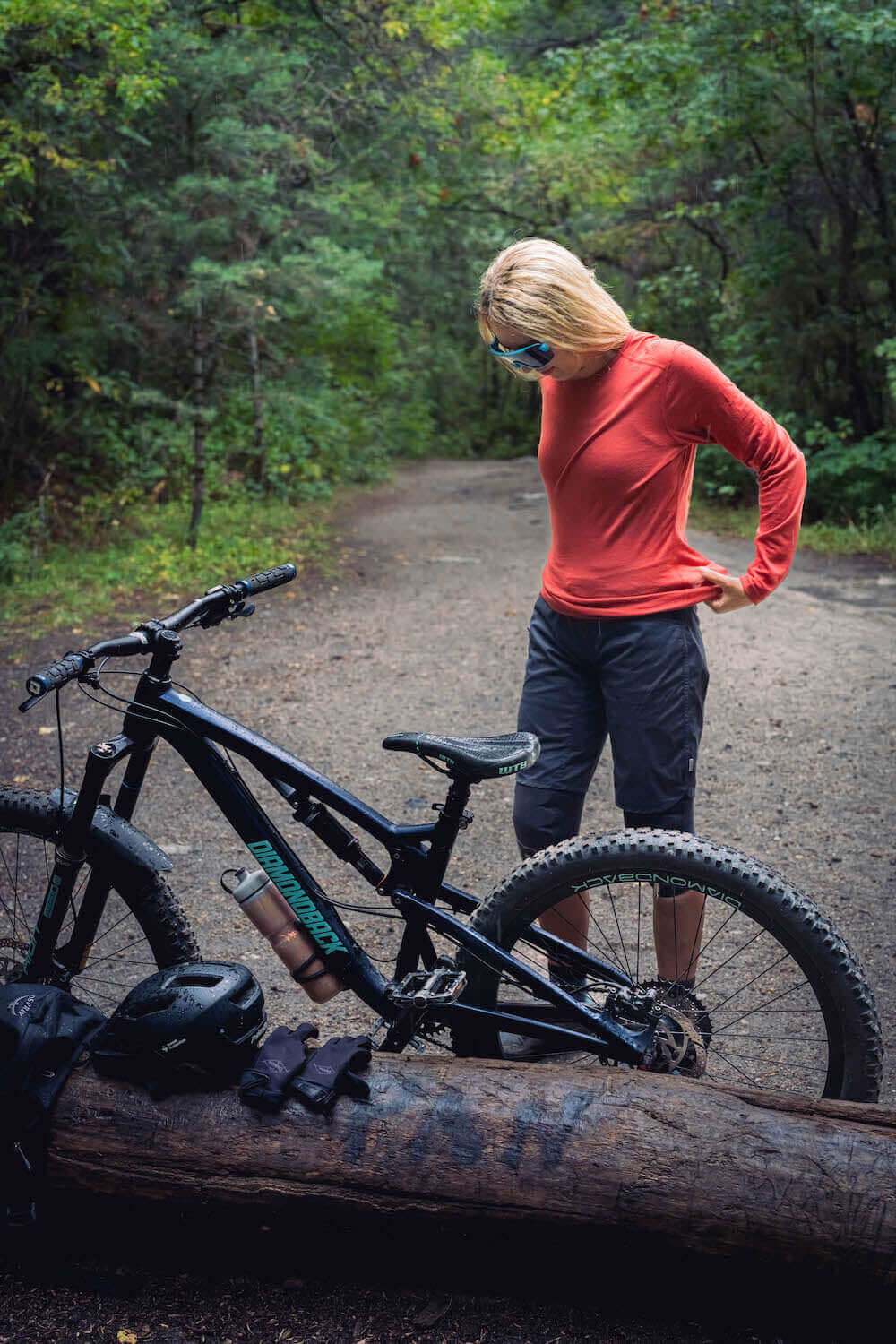
Ireland packing is fundamentally a wet-weather and layering problem. You are not packing for warmth alone and not packing for heat either. You are packing for both 12 degrees and rain at 9am, and 18 degrees and sun at 2pm, with the possibility of either at any time. The base layer is the foundational decision because it determines how everything else performs.
Base Layers
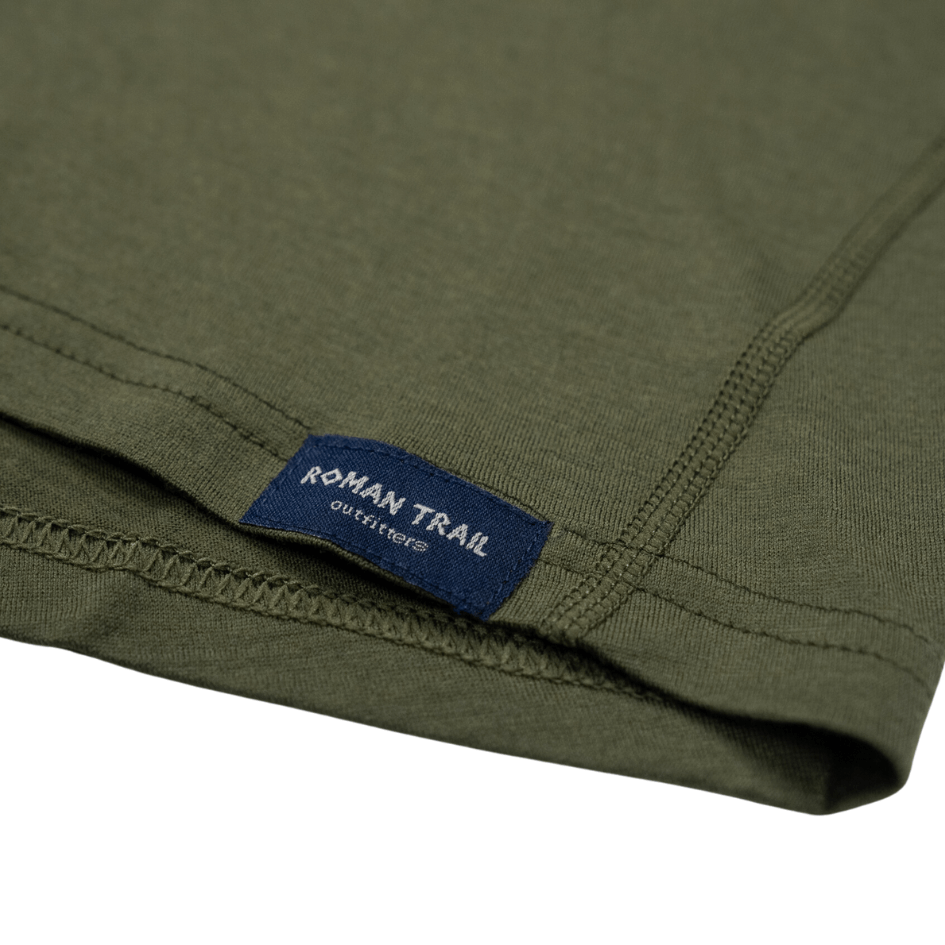
One 100% merino wool base layer top, long sleeve, 160gsm weight. This handles Irish weather from May through September. At 160gsm, merino is warm enough for a 6am start at Carrauntoohil and cool enough to wear in a Galway pub at noon when the sun comes out. It wicks sweat on the climbs, insulates when damp (unlike cotton), and stays odor-free across three to five days of continuous wear. At 17.5 microns, our merino is fine enough to wear directly against skin without irritation across a full day of walking. Synthetic base layers trap odor within 24 hours, making them a poor choice for any multi-day trip without daily washing. In Ireland, with humid air and rain on most days, your base layer needs to manage moisture without retaining smell.
Two base layer tops is the right number for an 8 to 12 day trip. One to wear, one to wash. Irish B&Bs almost universally have heated towel rails or radiators that dry merino overnight; hostels have drying rooms.
Mid Layers
One lightweight fleece or a packable down jacket. Ireland in summer averages 15 to 19 degrees Celsius at sea level and drops fast in elevation and wind. On any walk above 400 meters with weather closing in, a mid layer is not optional. A 100-gram down jacket packs to grapefruit size and adds 250 grams to your pack. For Wicklow day walks, a fleece is sufficient. For the Twelve Bens or the MacGillycuddy's Reeks, bring both: a fleece for active climbing and a down jacket for summit rests and weather delays.
Outer Layers
A waterproof shell jacket with a hood. This is the single most important garment in your Ireland pack. Ireland is not a rainforest, but it is wet, and the wind that drives the rain is what makes you cold. A 2.5-layer shell in a packable form factor is the practical choice: lighter than a 3-layer hardshell, more protective than a softshell. Make sure the hood adjusts to your face properly and stays in place in wind. Waterproof overtrousers are optional for most Irish day-walking but essential if you are doing the Burren Way, the Kerry Way, or any multi-day route where you cannot easily change.
Footwear
Waterproof hiking boots with a stiff midsole for the Wild Atlantic Way coastal walks, the Wicklow Way, and the Kerry hills. The trail surface ranges from good gravel path to wet peat bog to coastal limestone. Trail runners are adequate for the well-maintained sections (Killarney National Park flat trails, Cliffs of Moher visitor center) but the unmade peat sections in Connemara and Donegal will soak through trail runners within an hour. Bring blister prevention: Compeed plasters, moleskin, or your preferred method. The Wicklow Way and Kerry Way produce blisters on people who have never had them, simply because of mileage and wet conditions.
Camp shoes or flip flops for B&B and hostel use are optional but appreciated, especially in shared bathrooms.

Accessories
- Merino wool beanie: temperatures drop fast on coastal headlands at dawn and dusk
- Merino liner gloves or lightweight gloves for high sections in Wicklow, Connemara, and Kerry
- Buff or merino neck gaiter: cuts wind, adds warmth when needed, doubles as ear cover
- Smidge or Avon Skin So Soft: the standard midge repellents that work in Irish bogs
- Sun protection SPF 30: yes, even in Ireland, especially on Atlantic coastlines where the UV index can hit 7 in July
- Trekking poles: optional but useful on the Devil's Ladder descent on Carrauntoohil and the steep sections of Diamond Hill
- Headlamp: needed only if you are starting a long walk before 5am or finishing after 10pm
- Reusable water bottle: Irish tap water is excellent throughout; no need to buy bottled
Documents and Administration
- US passport: valid for the duration of your trip (Ireland is part of the Common Travel Area with the UK but is not in Schengen; passport entry is straightforward but required)
- No visa required for US citizens for stays under 90 days
- Travel insurance: essential for any mountain walking; include mountain rescue coverage and medical evacuation
- UK and Ireland health systems do not have a reciprocal agreement with the US; your travel insurance must cover medical costs
- Printed copies of accommodation bookings and ferry tickets (Skellig Michael, Aran Islands)
- Offline maps downloaded: OSi MapApp or Komoot offline tiles for the routes you plan to walk; signal is spotty in Connemara, Wicklow, and Donegal
Health and Hygiene
- Ibuprofen and paracetamol: standard over-the-counter analgesics, available in all Irish pharmacies if you forget
- Blister kit: Compeed, moleskin, sterile needle, antiseptic wipes
- Electrolyte tablets for long hill walking days
- SPF 30 sunscreen minimum; reef-safe formulations are widely available
- Wet wipes for hostel days between showers
- Feminine hygiene: every brand widely stocked in Irish supermarkets and pharmacies; tampons and pads VAT-free in Ireland since 2022
- Birth control: bring your full supply; Irish pharmacies cannot fill foreign prescriptions
The Foundation of Your Ireland Kit
Ireland is a wet country with a famously mild climate. June and July temperatures sit between 12 and 19 degrees Celsius (54 to 66 degrees Fahrenheit) and rain falls on roughly half the days of the month. A 160gsm merino wool base layer is the single most useful item you can pack. Roman Trail's 100% Australian merino wicks sweat on a climb up Carrauntoohil, insulates when the wind picks up on the Cliffs of Moher coast walk, and stays odor-free across three to five days of wear in damp bunkhouses where things do not dry quickly. No synthetic blends. No microplastics. Machine washable cold.
Getting Around Ireland Without a Car (and With One)
Ireland has a real public transport network, especially compared to the rest of the rural British Isles. You can plan an Ireland trip without ever renting a car and reach 80 percent of the destinations a driver would. The trade-off is time and flexibility.
Trains
Irish Rail (Iarnrod Eireann) runs the inter-city services. The main lines from Dublin go to Belfast, Cork, Galway, Limerick, Tralee, Sligo, and Westport. Key travel times: Dublin to Cork is 2 hours 30 minutes, Dublin to Galway is 2 hours 25 minutes, Dublin to Killarney is 3 hours 15 minutes (with one change in Mallow). Trains are reliable, comfortable, and Wi-Fi-equipped on most inter-city services. Fares range 25 to 65 USD one-way; book online in advance for the cheapest tickets. Eurail Ireland passes are available but rarely a good deal unless you are doing several long routes.
Buses
Bus Eireann runs the national bus network. Expressway routes cover the gaps the train network leaves: Galway to Donegal, Cork to Killarney, Galway to Westport. Regional and Local Link services reach the rural corners (Doolin, Roundstone, Letterfrack, Caherdaniel, Cleggan for the Inishbofin ferry). Most rural Local Link routes are 3 to 5 euros for any single ride within their area. Aircoach and CityLink are private operators with cheaper, often faster service between major cities than Bus Eireann. CityLink Dublin to Galway is 16 to 22 USD one-way.
Car hire
Car hire is the most flexible option and the right choice if you are visiting multiple Wild Atlantic Way locations on a tight schedule. Daily rates for a compact manual are 35 to 55 USD in summer (automatic is 60 to 90 USD). Dublin Airport is the cheapest pickup point; Shannon is similar; Cork is slightly more expensive. Drive on the left. Roads narrow as they go west; the L-roads in Connemara and Donegal are single-lane with passing places. Petrol is 1.70 to 1.85 USD per liter (approximately 6.50 USD per gallon). All Irish car hire is insured for Ireland and Northern Ireland; some companies require a fee to cross into Northern Ireland (10 to 25 USD).
Bicycle
The west of Ireland is excellent cycling country if you have the legs for short, rolling climbs. The Great Western Greenway from Westport to Achill Island (42 kilometers, traffic-free) is the standout for women cycling without traffic stress. The Waterford Greenway from Waterford to Dungarvan (46 kilometers, traffic-free) is similar. Bike hire is 30 to 40 USD per day with most operators offering one-way drop-off for an extra fee.
Ferries
Aran Islands ferries from Doolin (Doolin Ferry) and Rossaveal (Aran Island Ferries) run multiple times daily from April through October. Inisheer is closest to Doolin (30 minutes), Inishmore is the largest island and the standard day-trip destination (45 minutes from Rossaveal). The Killimer-Tarbert ferry across the River Shannon estuary saves an hour on any Clare to Kerry drive (6 USD per car, 30 minutes). The Inishbofin ferry from Cleggan in Connemara runs three times daily in summer.
Costs: What to Budget for Ireland in 2026
Ireland is not a cheap country. It is meaningfully more expensive than Spain, Italy, or Eastern Europe, and roughly comparable to France, Germany, and the UK. The euro has been trading around 1.07 to 1.10 USD through early 2026, which is favorable for American travelers. The numbers below reflect summer 2026 prices and have a small buffer for inflation.
Daily budget ranges
Budget: 75 to 110 USD per day. Hostels with female dorms, a mix of supermarket food and one pub meal per day, public transport, and free or low-cost outdoor activities. This is a real number for a woman who is comfortable in hostels and packs sandwiches for lunch most days.
Mid-range: 140 to 220 USD per day. B&Bs or boutique guesthouses, two restaurant or pub meals per day, occasional taxis, and paid attractions (Cliffs of Moher, Skellig Michael, Killarney boats). This is the most common range for women traveling Ireland independently.
Comfort or splurge: 280 to 500 USD per day. Hotels in city centers and country house properties in rural areas, all meals at restaurants, private transfers or chauffeured tours, guided day hikes, and entry to all major attractions. Realistic for women who want more comfort and less logistics.
Accommodation
- Hostels (Dublin, Galway, Cork city centers): 35 to 55 USD per dorm bed
- Hostels (rural Wild Atlantic Way): 28 to 45 USD per dorm bed
- B&Bs (rural): 85 to 130 USD per night including a full Irish breakfast
- B&Bs (Killarney, Dingle, Galway): 110 to 165 USD per night in summer
- Mid-range hotels (Dublin city): 160 to 260 USD per night
- Boutique hotels: 220 to 380 USD per night
- Country house hotels (Dromoland, Ashford, Adare Manor): 480 USD and up per night
Food and drink
- Supermarket lunch (sandwich, fruit, water): 8 to 12 USD
- Pub lunch (soup and brown bread, or sandwich): 14 to 22 USD
- Restaurant lunch: 22 to 35 USD
- Pub dinner (fish and chips, beef stew, lamb): 22 to 35 USD
- Restaurant dinner (mid-range): 38 to 65 USD per person without wine
- Pint of Guinness in a pub: 6 to 8 USD (Dublin) or 5.50 to 7 USD (rural)
- Coffee from a cafe: 4.50 to 6 USD
- Bottle of supermarket wine: 12 to 22 USD
Attractions and activities
- Cliffs of Moher visitor center: 12 USD adult
- Killarney National Park: free entry, optional jaunting car (horse and trap) 30 to 50 USD per person
- Connemara National Park: free entry
- Skellig Michael landing tour: 130 to 165 USD per person, including boat
- Cliffs of Moher cruise from Doolin: 35 to 45 USD per person
- Trinity College Book of Kells and Long Room: 22 USD adult (book online to avoid queues)
- Guinness Storehouse tour: 30 USD adult (book online; in-person tickets cost more)
- Guided Carrauntoohil day: 95 to 130 USD per person
- Aran Islands return ferry: 38 to 45 USD per person
- Bike hire in Westport for the Great Western Greenway: 30 to 40 USD per day
Currency, ATMs, and tipping
The euro is used throughout the Republic of Ireland. Northern Ireland uses pounds sterling. Credit and debit cards are accepted almost everywhere; contactless is standard. American Express is less widely accepted than Visa or Mastercard, especially in small rural businesses. Bring a no-foreign-transaction-fee card if possible. ATMs (called cashpoints) are available in every town. Tipping in Ireland is appreciated but not mandatory at restaurants; 10 to 12 percent for good service is generous. Pubs do not expect tips on drinks orders. Taxi drivers expect rounding up to the nearest euro or 10 percent on longer fares. Hairdressers, hotel housekeepers, and tour guides take small tips happily but do not demand them.
Where to Stay in Ireland: Hostels, B&Bs, and Guesthouses for Women
Ireland's B&B (bed and breakfast) tradition is one of the country's genuine strengths. Independent rural B&Bs run by Irish women have been the backbone of independent travel here for fifty years, and the standard is consistently higher than equivalent properties in most other countries. Failte Ireland operates an approval scheme that filters out the worst properties. Look for the green shamrock approval logo when booking.
Hostels with good female-dorm options
- Generator Dublin: large modern hostel in Smithfield, female-only dorms with private bathrooms in some rooms, secure key card access
- Kinlay House Dublin (Temple Bar): good for first-time hostel travelers, lively but safe, female-only rooms available
- Snoozles Galway: friendly hostel in the city center, female-only dorms, good for solo women who want a social environment
- Sleepzone Connemara (Recess): rural hostel base for hiking Connemara, female dorms, mountain location
- Doolin Hostel: small clifftop hostel, female-only dorms, walking distance to the Cliffs
- Black Sheep Hostel Killarney: well-reviewed, female-only rooms, central to the national park
Mid-range guesthouses and B&Bs
- Number 31 Dublin: Georgian townhouse near Stephen's Green, women-run, breakfast is famous
- Wilton House Galway: walking distance to the Latin Quarter, friendly to solo travelers
- Earls Court House Killarney: family-run, mid-range, central
- Greenmount House Dingle: hilltop view over Dingle harbor, family-run for three generations
- Ardmore Country House Westport: stop on the Great Western Greenway, women-run
- Avoca Manor Wicklow: rural B&B with hill-walking access
What to look for in accommodation
- Lock on the room door that operates from inside as well as outside
- Solid reviews from women travelers on Booking.com or Hostelworld (filter for solo female traveler reviews)
- Location within a 15-minute walk of public transport if you are not driving
- Wifi quality if you are working remotely; rural Irish wifi can be slow
- Drying facilities (radiators, drying rooms, washer access) for wet hiking gear
- Breakfast included; the Irish full breakfast is genuinely useful before a hiking day
- Cancellation policy that allows flexibility if your route changes
Essential Resources for Women in Ireland
The following contacts are current as of May 2026. Save them to your phone before you fly and keep a paper copy in your daypack.
Emergency numbers: 112 (or 999) reaches police, ambulance, fire, mountain rescue, and coast guard. Both numbers work from any Irish phone, including no-credit international SIMs. Operators speak English.
Garda Siochana (Irish police): Non-emergency contact is 1800 25 25 25. The Garda Tourist Office at Pearse Street Garda Station in Dublin handles lost passports, theft reports, and tourist-specific issues; +353 1 666 9000.
Mountain Rescue Ireland: Reached via 112. Specify "mountain rescue" to the operator. Ireland has 11 regional mountain rescue teams covering the Wicklow, Kerry, Mayo, Donegal, and Galway uplands. Activation is free.
Coast Guard: Reached via 112. Specify "coast guard" or "marine emergency." Critical for incidents on cliff coastal walks or sea kayaking.
US Embassy Dublin: 42 Elgin Road, Ballsbridge, Dublin 4. Phone +353 1 668 8777 (24-hour after-hours emergency line for US citizens via the same number). Website ie.usembassy.gov. The consular section is open Monday through Friday for routine services (passport replacement, notarial services). Walk-in service for emergencies including stolen passports.
Smart Traveler Enrollment Program (STEP): Free service from the US State Department that lets the embassy reach you in an emergency and lets US officials alert you to security or natural disaster issues. Enroll at step.state.gov before you fly.
Main hospitals in major cities: St James's Hospital Dublin (James Street, Dublin 8, +353 1 410 3000) is Ireland's largest acute hospital. University Hospital Galway (Newcastle Road, Galway, +353 91 524 222) covers the west. University Hospital Kerry (Tralee, +353 66 718 4000) covers Kerry. Cork University Hospital (Wilton, Cork, +353 21 492 2000) covers the southwest. Walk-in emergency rooms are called Accident and Emergency (A&E) in Ireland. Treatment of US citizens is provided at full cost; bring your travel insurance details.
Official health authority: The Health Service Executive (HSE) is the Irish public health body. The HSE Live helpline is 1800 700 700 for non-emergency health questions in English. www2.hse.ie.
US State Department travel advisory for Ireland: travel.state.gov travel advisory. Current level is 1 (exercise normal precautions). Check before you fly.
UK Foreign, Commonwealth and Development Office (FCDO) travel advice: gov.uk/foreign-travel-advice/ireland UK FCDO safety and security: gov.uk/foreign-travel-advice/ireland/safety-and-security. Useful as a cross-reference to State Department guidance.
Official tourism authority: Failte Ireland (the Irish state tourism agency) operates discoverireland.ie for trip planning resources. Tourism Ireland (a joint body with Northern Ireland) runs ireland.com with similar coverage. Both are reliable for opening hours, official tour operators, and event listings.
Solo women safety assessment for Ireland: Ireland is one of the safest destinations in the world for women traveling alone. The honest risks here are weather and terrain, not crime or harassment. The Cliffs of Moher, Slieve League, and unfenced sections of the Wild Atlantic Way have all seen tourist deaths from accidental falls; stay on marked paths, especially in wind. Carrauntoohil and the Twelve Bens reward proper navigation kit and respect for weather changes. Dublin late at night requires the same awareness any city of one million does; areas around Sheriff Street and the quieter Liffey quays are the parts to be more careful in after midnight. Hitchhiking is part of Irish rural culture but solo women should use buses, taxis, or the Local Link service instead. The pub culture is famously inclusive; women drinking alone or eating alone in any Irish pub will not be treated as unusual.
Pack Light for Ireland. Wash at the B&B.
Roman Trail merino base layers travel in a carry-on and wash in any B&B sink. One base layer, worn three to five days between washes, covers the full length of the Wild Atlantic Way. Available in eight colors. 100% Australian merino, 17.5 micron, 160gsm. Free shipping.
Related Reading for Your Ireland Trip
If Ireland is part of a wider trip through the British Isles or Northern Europe, our other destination hubs cover the cool-weather hiking territory that pairs well with the Wild Atlantic Way:
- Scotland Travel Guide for Women: West Highland Way, Isle of Skye, and Fife. Similar climate, similar layering problem, complementary trip.
- Norway Travel Guide for Women: fjord country and midnight sun. Cooler than Ireland, similar packing philosophy.
- Switzerland Travel Guide for Women: alpine hiking and rail travel. Drier than Ireland, more vertical.
- Women's Travel Packing Guide: the parent travel hub. Cross-destination packing philosophy and merino-based capsule travel wardrobe.
- Best Merino Wool Base Layers for Women: the merino pillar. Why 17.5 micron at 160gsm is the working spec for travel, the science of odor resistance, and how to choose the right weight for your trip.
If you are planning a longer route along the Wild Atlantic Way and want to compare the Irish and Scottish Atlantic coastlines side by side, our Scotland West Highland Way coverage pairs naturally with the Donegal cliffs in this guide. Both routes reward the same packing approach: 100% merino wool, 160gsm, two base layer tops, plus a proper shell and a fleece. Pack it once. Walk it both.
Ready to plan your kit for Ireland? Start at our women's merino wool collection for the base layer that makes the rest of the packing list work.
Destination Guides for Ireland
Ireland is small enough to cross in a day and varied enough that the packing answer changes as you go. The weather is the constant, and it is the reason a trip here needs planning rather than optimism: mild, wet and windy on every coast, with rain falling on more than half the days of the year and an Atlantic wind that decides what your jacket has to be able to do. Temperatures are narrow, roughly 5°C to 9°C in winter and 12°C to 19°C in summer, so it is never truly cold and never truly warm, which means one set of layers works the whole year and a waterproof shell with a hood that fastens matters more than anything insulated. What changes between destinations is exposure rather than temperature: a sheltered city street and an unfenced Atlantic headland ask very different things of the same wardrobe, and Kerry adds a third case again, where the country's highest mountains collect more rain and more cloud than anywhere else on the island. These guides cover the country as a whole and then the individual cities, peninsulas and national parks, each with its own version of the same problem.
- Ireland packing list for women for a trip across the whole country.
- Dublin packing list for women for the capital and the east coast.
- Galway packing list for women for the west coast city, Connemara and the Aran Islands.
- Cork packing list for women for the southern city and its harbour.
- Killarney packing list for women for the national park, the Reeks and the Ring of Kerry.
- Dingle packing list for women for the Gaeltacht peninsula and the Blasket Islands.
- Cliffs of Moher packing list for women the cliff walk from Doolin, the ticketing, and the wind that is the real hazard.
- Glendalough packing list for women the monastic city, the two lakes and the Spinc ridge above them.
- Limerick packing list for women King John's Castle, the Hunt Museum and the Milk Market.
- Connemara packing list for women Clifden and the Sky Road, Kylemore, the Twelve Bens and the bog.
- Kinsale packing list for women Charles Fort, the Old Head, the Lusitania and the best food town in Ireland.
- Ring of Kerry packing list for women the 179 kilometre loop, driven anticlockwise, and where to actually stop.
- Skellig Michael packing list for women the monastery on the rock, the landing permits and the swell that cancels them.
Blog posts
View all-

Packing List for Tucson, Arizona: What Women Sh...
What to pack for Tucson: a 1797 Spanish mission, giant saguaros, a UNESCO food city and a summer monsoon that fills dry washes in minutes.
Packing List for Tucson, Arizona: What Women Sh...
What to pack for Tucson: a 1797 Spanish mission, giant saguaros, a UNESCO food city and a summer monsoon that fills dry washes in minutes.
-

Packing List for Sequoia National Park: What Wo...
What to pack for Sequoia National Park: the largest trees on Earth, 13,000 feet of elevation range, mandatory bear lockers and a road with a length limit.
Packing List for Sequoia National Park: What Wo...
What to pack for Sequoia National Park: the largest trees on Earth, 13,000 feet of elevation range, mandatory bear lockers and a road with a length limit.
-

Packing List for St Augustine, Florida: What Wo...
What to pack for St Augustine: a Spanish fort built of shell stone, the oldest continuously occupied European settlement in the continental United States.
Packing List for St Augustine, Florida: What Wo...
What to pack for St Augustine: a Spanish fort built of shell stone, the oldest continuously occupied European settlement in the continental United States.


Contact form

Roman Trail Outfitters
Merino Wool Women's Long Sleeve Top | Crew Neck Shirt | Deep Olive