Jordan Travel Guide for Women: Petra, Wadi Rum, Hiking, and Everything You Need to Know

Photo: Nikola Cedikova via Pexels
Jordan is one of the smallest countries in the Middle East and one of the most historically dense places on earth. It fits Petra, Wadi Rum, the Dead Sea, the lowest point on earth, and 675 kilometers of long-distance hiking trail into a country smaller than the state of Indiana. For an American woman planning her first trip to the region, or her fifth, Jordan consistently delivers what most destinations promise and cannot produce: landscapes you cannot photograph your way out of and a culture of hospitality that is not a sales pitch.
One thing to address directly before anything else: the US State Department issued a Level 3 "Reconsider Travel" advisory for Jordan on March 2, 2026, following US-Iran hostilities in the region. Level 3 means the State Department recommends reconsidering your trip, not that it is prohibited. The advisory is precautionary and relates to regional instability, not to incidents in Jordan's tourist areas. Petra, Wadi Rum, Amman, and the Dead Sea are not named conflict areas. You should read the advisory yourself and make your own decision based on current conditions: Jordan Travel Advisory, US State Department.
This guide covers what American women actually need to know before booking: the regions, the hikes, the camps, the honest safety picture, and the complete packing list for every condition Jordan will throw at you. The information is specific. The links go to official sources. The advice is written for women planning a real trip, not browsing for ideas.
About Jordan: What American Women Should Know Before They Go

Photo: heba alwahsh via Pexels
Jordan is a country of 10 million people in the heart of the Middle East, landlocked except for a 26-kilometer Red Sea coastline at Aqaba in the south. It is bordered by Saudi Arabia, Iraq, Syria, Israel, and Palestine. Its total area is roughly 89,000 square kilometers, about the size of Indiana. The capital is Amman. Arabic is the official language. English is widely spoken in tourist areas, hotels, and at all major sites.
The official religion is Islam, practiced by approximately 97 percent of the population. Jordan is one of the most moderate and religiously tolerant countries in the region. The government is a constitutional monarchy. King Abdullah II has ruled since 1999 and maintains strong diplomatic relations with the United States, the United Kingdom, and Israel.
The currency is the Jordanian Dinar (JOD). One JOD is approximately 1.41 USD. ATMs are available throughout Amman and Aqaba, and card acceptance is good at hotels and major tourist sites. Carry cash for local taxis, markets, small restaurants, and tipping. Small bills (1 JOD notes and 500 fils coins) are useful throughout the day.
Before you go, learn two words in Arabic: "shukran" (thank you) and "marhaba" (hello). Jordanians notice the effort. The cultural norm of hospitality, known as "karam," is not performative. Locals will invite strangers to tea, share food, and go well out of their way to help a visitor who is lost or confused. Solo women travelers consistently report feeling respected and genuinely welcomed in Jordan, particularly when they dress modestly and engage with locals respectfully.
For comprehensive destination planning, the official resource is the Jordan Tourism Board official site, which covers every region, site, and logistical detail in English.
Did You Know You Can Drink in Jordan?
Most Americans assume Jordan is dry. It is not. Alcohol is legal in Jordan. It is sold in hotels, restaurants, bars, and liquor stores across Amman, Aqaba, and Madaba. Drinking in public spaces is illegal and public intoxication is frowned upon, but a glass of wine at dinner or a beer at a bar on Rainbow Street in Amman is completely normal and legal.
Jordan produces its own wine. Two Jordanian families run the country's wineries. The Haddad family produces Jordan River wines, planted from 2002 with first harvest in 2006. The Zumot family produces Saint George wines, named after a church in Madaba, certified organic, the vines watered with Jordan Valley spring water. Both labels are available at restaurants and liquor stores across the country and are notably cheaper than imported wines. Wine has been produced in this land since biblical times. This is not a novelty product.
Jordan also has its own craft brewery. Carakale was founded in 2010 in Fuheis, a predominantly Christian town near Amman. It was Jordan's first microbrewery. Their flagship blonde ale, pale ale, and lager are available at over 600 outlets across the country including hotels and bars. Their collaboration beer with an Arizona brewery, "Dead Sea-rious," is brewed with actual Dead Sea salt and grapefruit from the Jordan Valley. It is worth finding.

Photo: Pexels
Where to drink in Amman: Rainbow Street is the main bar district. Bars line both sides of the street. Carakale and Petra Beer are the local options at most venues.
Where to drink cheapest: Aqaba is a tax-free zone. Alcohol is 40 percent cheaper there than anywhere else in Jordan. Do not stock up to carry out of the zone as customs checks vehicles leaving Aqaba.
For a full picture of what Jordan offers visitors, see the Jordan Tourism Board official site.
Jordan and Christianity: A Side of This Country Most Americans Do Not Expect
Jordan is 97 percent Muslim and one of the most religiously tolerant countries in the Middle East. Christianity has been present here for two thousand years and the country treats its Christian heritage and its Christian citizens as equals in national life. Christmas is celebrated as a public holiday across Jordan. Christians and Muslims celebrate it together. The royal family has publicly participated in Christmas observances. This is not performative. It is a reflection of how Jordanian society actually works.
Approximately 6 percent of Jordanians are Christian, primarily Greek Orthodox, Roman Catholic, and various Eastern Christian denominations. Christian communities have full rights, operate schools and churches, and hold positions across government and business. There is no second-class citizenship for Christians in Jordan.
For American women traveling to Jordan, this matters in practical terms. Jordan is one of the safest countries in the Middle East for visitors of any faith. Christian pilgrims have traveled to Jordan for centuries.

Photo: Pexels
The key Christian sites in Jordan:
Bethany Beyond the Jordan (Al-Maghtas): the site where Jesus was baptized by John the Baptist. A UNESCO World Heritage Site on the east bank of the Jordan River. One of the most important Christian pilgrimage destinations in the world. Well maintained, accessible, and genuinely moving. More at the official Jordan tourism site.

Photo: Pexels
Madaba and the Mosaic Map: the city of Madaba, 30 kilometers south of Amman, is home to the oldest surviving map of the Holy Land. The Madaba Map is a sixth-century Byzantine mosaic covering the floor of St George's Greek Orthodox Church. It depicts Jerusalem and the entire Holy Land in more than a million pieces of colored stone. The city has a significant Christian community and multiple active churches. Its liquor stores are also, notably, among the most accessible in the country.
Mount Nebo: where Moses is said to have seen the Promised Land before he died. The hilltop church is maintained by Franciscan priests. On a clear day you can see Jerusalem across the Jordan River. It is a 30-minute drive from Madaba.
The Dead Sea shores: linked to the baptism of Jesus, the crossing of the Israelites, and the story of Lot. The entire western shore of Jordan carries Old and New Testament history at every turn.
Best Time to Visit Jordan

Photo: Pexels
Jordan has four distinct seasons and the right time to visit depends entirely on what you plan to do. Here is what each season actually delivers.
Spring (March to May) is the best overall season for hiking and outdoor activity. Temperatures range from 15 to 25 degrees Celsius (59 to 77 degrees Fahrenheit) across most of the country. The desert blooms briefly in March and April with wildflowers that most visitors never know exist. The Jordan Trail, Petra, and Wadi Rum are at their best. Crowds are manageable before the peak summer school holidays arrive. March and April book out for Petra day tours, so plan early.
Summer (June to August) should be avoided for hiking in the desert and canyon sections. Daytime temperatures in Wadi Rum and Petra regularly exceed 40 degrees Celsius (104 degrees Fahrenheit). The Dead Sea and Aqaba remain popular resort destinations because of the water. Amman, at higher elevation, is more manageable but still hot. If you visit in summer, hike before 8 AM, plan for rest in the midday heat, and hydrate at levels that feel excessive because they are not.
Autumn (September to November) is the second-best season, and October is arguably the single best month to visit Jordan. Temperatures drop back to a comfortable 18 to 28 degrees Celsius by mid-September. Trail hiking, Petra, and Wadi Rum are all excellent. The desert light in October is extraordinary. Crowds are smaller than spring. Hotel rates are reasonable. October is the month to book.
Winter (December to February) brings cool to cold temperatures in Amman and the north. Petra can see rain and occasional snow in January. Wadi Rum nights drop near freezing even when days are mild. Flash flood risk in wadis and canyons runs from November through March. This is not the best season for hiking the Jordan Trail or canyon routes, but it is the least crowded season and the most affordable. The Dead Sea and Aqaba are pleasant year-round.
A specific warning about flash floods: they are not rare in Jordan's canyon country from November through March. If you are in a wadi or narrow canyon and rain begins anywhere in the watershed above you, move to high ground immediately. Flash floods travel faster than people can run and arrive without local rainfall.
Top Regions in Jordan for Women Travelers

Photo: Pexels
Amman: A City That Earns More Than One Day

Photo: Pexels
Amman is one of the most underrated cities in the Middle East. Most visitors treat it as an airport town and leave for Petra the next morning. This is a mistake. Amman rewards the women who give it two days.
The city is built across seven hills (now expanded across many more) and the contrast between ancient and modern is visible from almost any vantage point. The Citadel sits on the highest hill with the Roman Temple of Hercules and the Umayyad Palace visible together from the same spot. Below it the Roman Theater, built in the second century, seats 6,000 people and still hosts performances.
Rainbow Street in the Jabal Amman neighborhood is where the city goes at night. Independent cafes, bookshops, bars, and restaurants line both sides. The Jordanians who drink do it here. The food scene is excellent. Jordanian cuisine draws from Levantine, Bedouin, and Mediterranean traditions. Do not leave without eating mansaf, Jordan's national dish of lamb cooked in fermented dried yogurt served on a bed of rice.

Photo: Pexels
Practical notes for women in Amman: English is widely spoken in Amman. In restaurants, hotels, shops, and at every major site, you will have no difficulty communicating in English. Jordanians take pride in their English and many have studied or worked abroad. This is not a country where you will feel stranded without Arabic.
The city is clean by regional standards. Roads are maintained. Hotels range from budget hostels to international five-star properties. Uber and Careem operate throughout the city. Use them. Do not take unmarked taxis.
The Citadel offers free entry for women on Tuesdays. Recommended for women: the Jordan Museum on 3rd Circle (gives context for everything you are about to see in Petra and Wadi Rum), the Citadel at sunrise, Rainbow Street at dusk, and the Haret Jdoudna cultural complex in Madaba if you are passing through.
Petra: The Non-Negotiable
Petra is a UNESCO World Heritage Site and one of the New Seven Wonders of the World. The Nabatean civilization carved an entire city into rose-red sandstone roughly 2,000 years ago. It was unknown to the Western world until 1812. It is also one of those rare places that exceeds every photograph and description you have encountered beforehand.
The basics: entry is through the Siq, a 1.2-kilometer narrow canyon that opens suddenly onto the Treasury. The Treasury is the iconic carved facade from every photograph. It is only the beginning. Petra covers 264 square kilometers. Most visitors see ten percent of it. The Monastery (Al-Deir), reached by 800 steps from the valley floor, is larger than the Treasury and sees far fewer visitors. Walking distances are real: the Treasury and back from the entrance is 6 kilometers on uneven sandstone. Add the Monastery and you are at 10 kilometers with significant elevation. Give yourself a full day minimum. Two days if you want to see more than the front pages.
Practical notes for women: start at sunrise if your accommodation allows. The Treasury at 6 AM with minimal crowds is a completely different experience from 10 AM when the tour groups arrive. The sandstone is uneven and slippery after rain, so supportive footwear with ankle coverage is not optional. Restrooms exist at several points throughout the site but are basic. Carry your own tissue and hand sanitizer.
The Jordan Pass bundles Petra entry (normally 50 JOD per day), visa fee waiver, and 36 other sites. It must be purchased before arrival. Buy from the official source: Jordan Pass official site. For Petra-specific planning: Visit Petra official site.
Wadi Rum: The Desert That Changes You

Photo: Pexels
Wadi Rum is a protected desert wilderness of 720 square kilometers. T.E. Lawrence described it as "vast, echoing, and godlike." NASA has used it as a Mars stand-in for films. You will understand why the moment you arrive: sandstone mountains called jebels rising 600 meters from red sand floors, petroglyphs thousands of years old, Bedouin communities who have lived here for generations, and a night sky that makes you feel the size of the universe without any inspirational framing.
Activities for women: jeep tours (2 to 4 hours, arranged at the visitor center or through your camp), camel rides, rock climbing, and stargazing that requires no equipment beyond lying on your back with your eyes open. The standard experience is camping in one of the Bedouin camps, either basic or glamping, and spending the night in a place with zero light pollution and extraordinary silence.
Entry is 5 JOD per person, included in the Jordan Pass. Official information: Wadi Rum official site.
The Dead Sea: The Experience That Needs No Justification

Photo: Pexels
The Dead Sea is 430 meters below sea level, the lowest point on earth. The water is 34 percent salt, compared to 3 percent in regular seawater. You float effortlessly and cannot sink regardless of effort. It is not a gimmick. The mineral-rich water and mud have drawn visitors since the time of Herod the Great.
The northern shore is lined with resorts. Day passes (20 to 50 JOD) include beach and pool access. Do not get the water in your eyes, open cuts, or near your face. It is intensely saline and causes immediate burning. Most women visit as a day trip from Amman (1 hour by car) or as a stop between Amman and Petra. Bring a swimsuit you do not mind potentially discoloring from the minerals, flip flops for the rocky entry, and a layer for the drive back when air conditioning hits wet skin.
The Jordan Trail: For Women Who Want to Walk the Whole Country
The Jordan Trail is a 675-kilometer long-distance trail running from Um Qais in the north to Aqaba on the Red Sea. Completing it in full takes approximately 40 days. Most women hike it in sections. The best section for first-timers is Dana to Petra: 5 days, approximately 75 kilometers, starting at the Dana Biosphere Reserve (Jordan's largest nature reserve) and ending at the Treasury. This section combines canyon hiking, desert walking, Bedouin encounters, and the arrival at Petra on foot after five days of trail. Arriving at the Treasury through the back route, before the day visitors, is one of the best experiences available in adventure travel.
The trail is unmarked in most sections. A local guide is strongly recommended for safety and navigation. Contact the Jordan Trail Association for guide recommendations and current trail conditions: Jordan Trail Association official site. Best season for trail hiking: March to May and September to November.
Hiking in Jordan: Trails, Terrain, and What to Expect

Photo: Pexels
The Jordan Trail's 675 kilometers cross three distinct terrain types: the green northern highlands, the rocky central plateau, and the desert south. Elevation ranges from below sea level at the Dead Sea to over 1,700 meters in the Dana highlands. The trail is divided into 40 stages, and most section hikers complete 5 to 10 stages per trip.
The three most popular sections for American women:
- Dana to Petra (5 days, 75 km): The most recommended starting point. Mixed terrain of canyon, desert, and ancient site arrival. Beautiful, moderately difficult, and structurally satisfying with the Treasury as the finish line. Local guide strongly recommended. The Royal Society for the Conservation of Nature manages the Dana end and can assist with logistics.
- Petra to Wadi Rum (5 days, 91.6 km): Pure desert wilderness with 2,354 meters of total ascent. Difficult. Requires a guide and baggage support. Rewarding in a way that "beautiful" cannot capture.
- Wadi Mujib (day hike): Jordan's Grand Canyon. A slot canyon between Amman and the Dead Sea that requires wading through knee-to-thigh-deep water in a narrow canyon. Requires an advance booking through the RSCN. One of the most visually dramatic day hikes in the Middle East. Not suitable for non-swimmers or those who cannot wade safely. Book at: RSCN Nature Reserves booking site.
Temperature reality for hikers: spring mornings in the canyon country start at 10 to 15 degrees Celsius. By midday in the open desert, temperatures reach 28 to 35 degrees Celsius. Wadi Rum nights year-round drop to 5 to 10 degrees Celsius even in October. A single hiking day in Jordan can span a 25-degree temperature range from first light to dinner. This is where layering is not a preference but a practical requirement.
A 100% merino base layer at 17.5 micron and 160 gsm handles this range without requiring you to carry separate layers for each condition. It is not too warm at midday sun, does not turn cold and clammy when you stop sweating, and after three days on the Jordan Trail does not announce itself at the communal campfire. Merino also functions as a modesty layer in towns and at religious sites: a long-sleeve merino base layer worn under loose hiking pants meets the dress standards expected in non-resort areas without adding weight to your pack.
Water is the most critical variable in Jordan hiking. Many sections have long stretches with no reliable water source. Carry a minimum of three liters per person per day in spring and autumn. More in summer. Do not rely on natural sources in the southern desert sections.
Camping in Jordan: Bedouin Camps, Wild Camping, and What Women Should Know

Photo: AXP Photography via Pexels
The main camping experience in Jordan is in Wadi Rum, and it comes in two clearly defined tiers.
Basic Bedouin camps offer shared bathroom blocks, shared or private goat-hair tents, and a communal dinner of Zarb (slow-cooked meat and vegetables buried in sand). Prices range from 30 to 60 JOD per person per night including dinner and breakfast. The hospitality compensates for everything the facilities lack. These camps are run by local Bedouin families who have lived in Wadi Rum for generations. The conversations over dinner are worth the trip on their own.
Glamping camps offer private domed or bubble tents with en-suite bathrooms, sometimes elevated platforms with panoramic views, and a more resort-style experience. Prices range from 100 to 200 JOD per night. Worth considering for a solo woman who prefers more privacy, or for a special occasion. Several of these camps have excellent online reviews and established safety records.
For women traveling solo: established Bedouin camps with visible online reviews are generally safe and welcoming. The cultural etiquette is clear and respected: guests are treated as guests. Book through the official Wadi Rum site or through your Petra or Amman accommodation, which can arrange reliable camp connections. Avoid camps with no online presence or reviews.
For Jordan Trail camping outside Wadi Rum: the Dana to Petra section uses designated wild camping spots that are marked in the trail guide but have no facilities. You carry your tent, sleeping bag, water, and food, or arrange a guide service with baggage support. The Dana Biosphere Reserve has established eco-lodges and campgrounds at the northern end of the trail, managed by the Royal Society for the Conservation of Nature, bookable in advance.
What to wear in camp: desert nights are cold year-round in Jordan. Even in October, Wadi Rum drops to 8 to 12 degrees Celsius after dark. The same merino base layer you hiked in all day is comfortable enough to sleep in. This is the one-layer argument in practice: one base layer from sunrise trailhead to sleeping bag, without the odor problem that a synthetic shirt accumulates over a day of exertion in the heat.
What we pack for Jordan
Our 100% Australian merino base layer is the foundation of every pack list for Jordan. At 17.5 microns it sits against skin without irritation. At 160gsm it regulates temperature through the full range of conditions you will meet on trail and in town. No synthetics. No plastic. Just merino.
SHOP WOMEN'S MERINO BASE LAYERSWhat to Pack for Jordan: The Complete Women's List

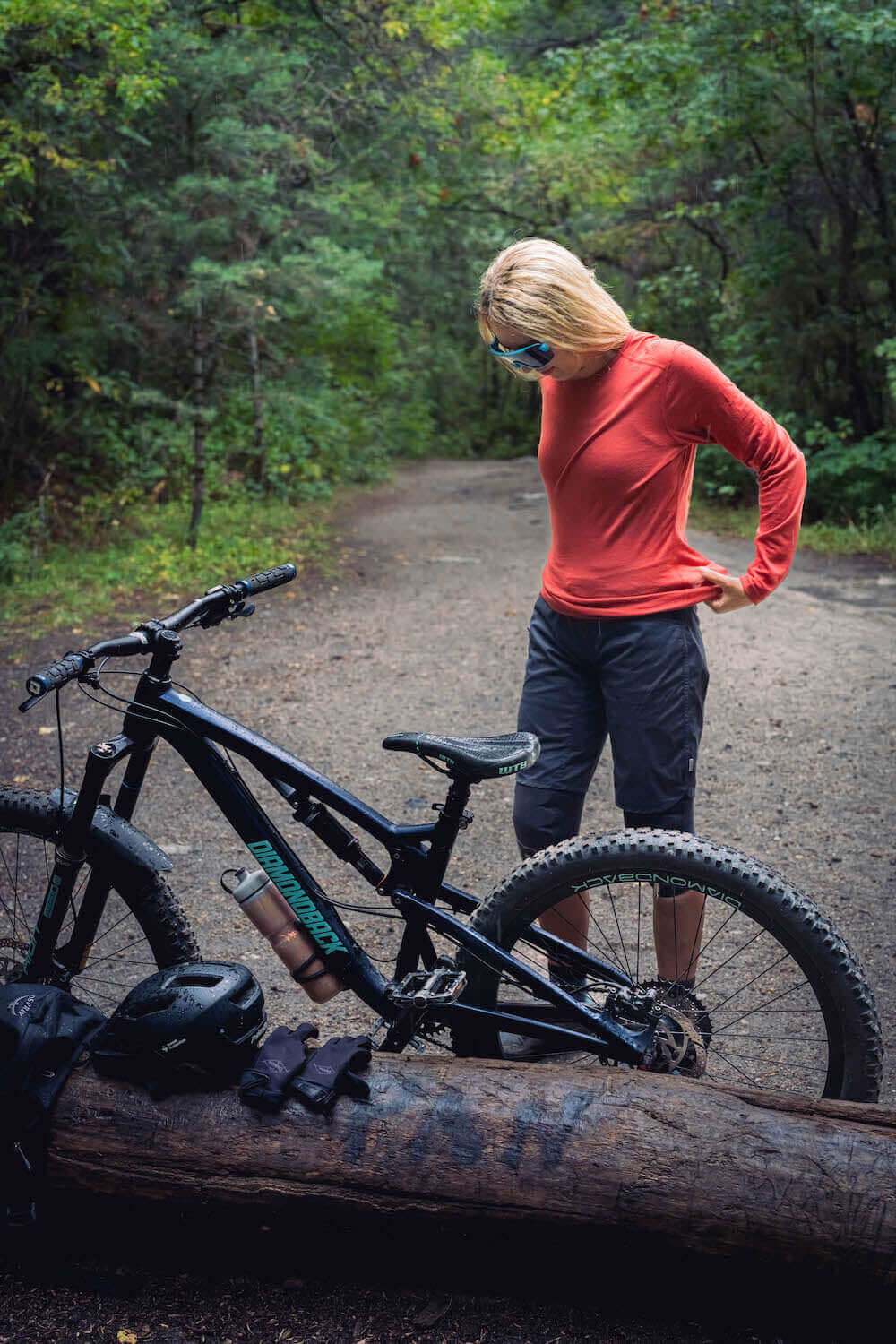
Photo: Roman Trail Outfitters
Jordan's climate demands a packing list built around the day-to-night temperature swing, the modesty expectations of a predominantly Muslim country, and the reality that most itineraries combine desert hiking, ancient site walking, casual town exploration, and possibly a Dead Sea resort in the same five-day trip. Here is what works.
Base Layers
1 to 2 Roman Trail merino wool base layers (100% Australian merino, 17.5 micron, 160 gsm). This is the most important item on this list. Desert days in Jordan reach 30-plus degrees Celsius. Desert nights drop near zero in Wadi Rum even in October. Synthetic base layers overheat in the midday sun and turn cold and clammy when you stop moving. Cotton saturates with sweat, stays wet, and provides no warmth when the temperature drops. A 100% merino base layer at 160 gsm stays comfortable across the full range without synthetic blends. After three days on the Jordan Trail, it does not smell. Worn as a modesty layer under loose pants and a light outer layer, it meets the dress expectations of every context Jordan puts you in: Petra, Wadi Rum, Amman markets, mosque visits, Bedouin camp dinners. One layer replaces three synthetic changes in pack weight. This is the most important item on this list, stated twice because it is true both times.
Mid and Outer Layers
Lightweight fleece or packable down jacket. Wadi Rum camp nights and early Petra mornings before the sun hits the canyon require warmth even in October. A 100-gram synthetic puff jacket that stuffs into its own pocket covers every cold situation in Jordan without adding meaningful weight.
Packable windproof shell. Jordan is not a wet country except in winter. But wind on exposed desert ridges is persistent and the temperature drop when a cold front moves through can be 15 degrees in under an hour. A lightweight wind layer at 150 grams or less covers this without redundancy.
Bottoms
Lightweight hiking pants with stretch. Knees covered is the respectful standard in towns, markets, and religious sites. You do not need to cover your knees at Dead Sea resorts or in the western sections of Amman, but on the street and in Petra, knees covered is the right call. A lightweight merino or wool-blend legging for camp evenings adds warmth without weight.
Footwear
Hiking boots with ankle support for all Jordan Trail sections and for Petra. The sandstone is uneven and ankle rolls are the most common injury. Sandals for Amman, camps, and rest days. Water shoes or old trainers for Wadi Mujib, where you will be wading through a canyon for several hours.
Head and Sun Protection
Wide brim hat. Non-negotiable in the desert sun. Sunglasses rated for desert UV. SPF 50 sunscreen and a lip balm with SPF. A lightweight buff or cotton scarf serves triple duty: sun protection, dust and sand in Wadi Rum jeep tours, and a head covering for mosque entry.
Documents and Admin
Passport valid for at least 6 months beyond your travel dates. Jordan Pass purchased before arrival if visiting Petra: jordanpass.jo. Requires minimum 2 nights in Jordan for visa fee waiver. Travel insurance with evacuation coverage (World Nomads covers Jordan). STEP enrollment before departure: step.state.gov. Photo copies of all documents stored separately from originals, plus digital copies in a cloud location you can access without your phone.
Health and Pharmacy
Hand sanitizer. Electrolyte tablets for hot hiking days. Prescription medications with documentation. Small first aid kit with blister treatment because Petra will create blisters on the unprepared. Diarrhea medication because tap water in Jordan is not safe to drink and even careful travelers sometimes have one bad meal.
Electronics and Navigation
Type C plug adapter (Jordan uses Type B and C; most US devices work on Type B without an adapter but verify for your specific devices). Power bank. Offline maps downloaded before arrival: Maps.me and OsmAnd both work in Jordan's remote areas where cell signal ends. The Jordan Trail app has GPX tracks for trail sections.
Water Capacity
Minimum 2-liter carrying capacity. A collapsible bottle saves pack weight when you are in a city and can refill easily. A Steripen or water purification tablets for Jordan Trail sections where you cannot carry enough water for the full day between sources.
Getting Around Jordan
The main international entry point is Queen Alia International Airport (AMM) in Amman. Royal Jordanian operates direct flights from New York (JFK) and Chicago (ORD). Connecting through European hubs (London, Frankfurt, Dubai) adds options from most US cities.
From Amman to Petra: 3 hours by car. The shared service taxi (service taxi) from Amman's South Bus Station runs to Wadi Musa, the town adjacent to Petra's entrance, for around 10 JOD. A private taxi runs 40 to 60 JOD. A rental car gives the most flexibility and roads between major sites are well-maintained. Driving in Amman itself is confident, aggressive, and confusing. Many women choose to use taxis and rental cars outside the city and hire a driver in Amman.
From Amman to Wadi Rum: 4 hours by car. Most visitors arrange transport through their camp or through an Amman tour operator. Minibus connections run to Aqaba and from there to the Wadi Rum visitor center.
From Amman to the Dead Sea: 1 hour by car. Uber operates from Amman and is reliable. Agree on a price before entering any unmarked taxi without a meter.
SIM card: buy at the airport on arrival. Zain, Orange, and Umniah all have desks in arrivals. A data SIM for 2 to 3 weeks costs 5 to 10 JOD. Coverage is good throughout Amman, Petra, and Aqaba. Expect no signal on remote Jordan Trail sections in the south.
Essential Resources for American Women in Jordan
This section exists because having these contacts before you need them is the difference between a solvable problem and a frightening one.
Emergency Contacts
- General Emergency: 911 (Jordan uses the same emergency number as the US)
- Police: 191
- Ambulance: 193
- Fire: 199
- Tourist Police: 196 (dedicated line, English spoken, available at major tourist sites)
Jordan's tourist police are genuinely useful. Their number is posted at site entrances and on hotel front desks. They are trained to assist international visitors and speak English. Use them without hesitation if you encounter any problem at Petra, Jerash, or Wadi Rum.
US Embassy in Jordan
- Address: Al-Umayyaween Street, Abdoun, Amman
- Main phone: +962-6-590-6000
- Emergency line for US citizens: +962-6-590-6500
- After hours: +962-6-590-6000 (ask for duty officer)
- Website: jo.usembassy.gov
Travel Advisories
US State Department: Jordan Travel Advisory (currently Level 3 as of March 2026). Read this before booking. The Level 3 designation is linked to regional instability following US-Iran hostilities. Tourist areas including Petra, Wadi Rum, Amman, and the Dead Sea are not named conflict areas.
UK FCDO travel advice: gov.uk/foreign-travel-advice/jordan. The UK's advisory provides a useful second perspective and often contains different detail than the State Department version.
STEP enrollment: Register at step.state.gov before departure. The Smart Traveler Enrollment Program allows the US Embassy to contact you in an emergency and your family to locate you if communication fails.
Zones to Avoid (Level 4 Do Not Travel per State Department)
- Towns of Mansheyat al Ghayyath and Ruwayshid (near the Iraq border)
- Within 3.5 kilometers of the Jordan-Syria border
- Syrian refugee camps
- Rusayfah City
Petra, Wadi Rum, Amman, the Dead Sea, Aqaba, and the Jordan Trail between Dana and Petra are not in any of these zones.
Medical Resources
- Jordan University Hospital (main public hospital, Amman): +962-6-535-3444
- The Specialty Hospital, Amman (international standard private hospital): +962-6-560-7600 | specialty-hospital.com
- WHO Jordan Country Office (health information): emro.who.int/jordan
Travel insurance with medical evacuation coverage is strongly recommended. World Nomads covers Jordan and includes evacuation. Always read the policy exclusions before purchase, particularly regarding government advisory levels and pre-existing conditions.
Built for Jordan conditions
Roman Trail Outfitters women's merino base layers. 100% Australian merino. 17.5 micron. 160gsm. Machine washable. Free two-day shipping. 2-year guarantee.
Available in 8 colors: Black, Grey, Cloud Cream, Deep Plum, Rust Ochre, Atlantic Teal, Deep Olive, Navy Blue. Sizes XS to L.
FIND YOUR COLORSafety for Women Traveling to Jordan in 2026

Photo: Pexels
The Level 3 advisory in plain language: the US State Department recommends reconsidering your trip. This recommendation was issued March 2, 2026, following US-Iran hostilities in the region. The advisory is precautionary and relates to the risk of escalation, not to incidents in Jordan's tourist areas. Petra, Wadi Rum, Amman, and the Jordan Trail are not named conflict zones. Jordan maintains diplomatic relations with the United States and the Jordanian government invests significantly in tourist safety because tourism represents a major share of the national economy.
On the ground reality: Jordan has maintained stability as a tourist destination for decades across repeated periods of regional tension. The main friction points women encounter are cultural rather than criminal. Staring is common and can feel intrusive. Persistent vendors at Petra require firm, polite decline. Crime against tourists is rare. Solo women who have traveled Jordan extensively consistently report it as one of the safer countries they have visited in the Middle East.
For solo women specifically: dress modestly in non-resort areas (shoulders and knees covered is sufficient, head covering not required except inside mosques). Use Uber or Careem in Amman rather than unmarked taxis. Book Wadi Rum camps with established operators with online reviews. Register with STEP before departure. Know the tourist police number (196) and use it without hesitation if needed.
What to monitor before your trip: the State Department advisory page linked above, news covering the region, and the status of commercial flight availability (the FAA has flagged risks in nearby airspace that could affect regional flight routing from some hubs). Check both weekly in the month before departure.
Honest recommendation for spring or autumn 2026: if your itinerary covers Petra, Wadi Rum, and Amman only, those areas are not in the zones named in the Level 3 advisory. Monitor the advisory weekly as departure approaches. Purchase travel insurance that covers trip cancellation if the government advisory level changes (not all policies cover this by default). Make your own decision with current information rather than booking or canceling on the basis of anything written here, because the situation is evolving.
Practical Information for American Visitors
Visa: Americans receive a visa on arrival at Queen Alia International Airport. Cost is 40 JOD. The Jordan Pass waives this fee if you stay a minimum of 2 nights in Jordan. Passport must be valid for at least 6 months beyond your travel dates.
Jordan Pass: The single most useful purchase before arriving. Bundles Petra entry (50 JOD value per day), 36 other sites, and the visa fee waiver. Must be purchased before arrival at: jordanpass.jo. Minimum 2-night stay required for the visa waiver to apply.
Currency: Jordanian Dinar (JOD). Approximately 1 JOD equals 1.41 USD. ATMs available at the airport and throughout Amman, Petra (Wadi Musa town), and Aqaba. Cards accepted at hotels and major restaurants. Cash required for local taxis, markets, tips, and some site services. Carry small bills (1 JOD notes, 500 fils) throughout the day.
Tipping: Expected and meaningful. Hotel staff: 1 to 2 JOD per service. Guides and drivers: 10 to 15 percent. Bedouin camp staff: 5 JOD per night is generous and appreciated. Jordan has a significant percentage of working-poor hospitality staff for whom tips are a genuine income supplement.
Dress code: Shoulders and knees covered in towns, markets, and religious sites. Dead Sea resorts and Aqaba beach are more relaxed. Swimwear at resort pools is fine throughout the country. Merino long-sleeve base layers worn as the outermost layer (rather than under something) cover the modesty standard in any market or historical site without requiring a separate garment.
Phone: Buy a local SIM at the airport on arrival. Zain, Orange, and Umniah all have desks in arrivals. A data SIM for 2 to 3 weeks costs 5 to 10 JOD. Better value and more reliable than US international roaming in remote areas.
Time zone: Jordan Standard Time (AST), UTC+3. No daylight saving. Eight hours ahead of US Eastern Time.
Electricity: 230V. Type B and C plugs. Most US two-pin devices work without an adapter on Type B sockets. Bring a universal adapter for safety.
Frequently Asked Questions About Jordan for Women Travelers
Is Jordan safe for American women to visit in 2026?
Jordan is generally considered safe for American women in its main tourist destinations: Petra, Wadi Rum, Amman, and the Dead Sea. These areas are not in the zones named in the March 2026 Level 3 advisory, which relates to regional instability near the Syria and Iraq borders rather than tourist areas. The main friction points for women are cultural (staring, persistent vendors at tourist sites) rather than criminal. Jordan has maintained tourist safety as a priority for decades. Check the current State Department advisory at travel.state.gov before booking, register with STEP before departure, and purchase travel insurance that covers advisory-level changes.
Do I need to cover my hair in Jordan as a woman?
No. Women visiting Jordan do not need to cover their hair in public areas, markets, or at tourist sites like Petra and Wadi Rum. A head covering is required inside mosques, but a lightweight scarf or buff that you carry anyway for sun and dust protection serves this purpose. The respectful standard for towns, markets, and historical sites is shoulders and knees covered. Dead Sea resorts and beach areas in Aqaba are more relaxed. A merino long-sleeve base layer with loose hiking pants meets the modesty standard in every non-resort context Jordan puts you in.
What is the Jordan Pass and is it worth it?
The Jordan Pass is a pre-purchase bundle that includes Petra entry (worth 50 JOD per day), entry to 36 other Jordanian sites, and a visa fee waiver (normally 40 JOD) if you stay a minimum of 2 nights. For most American visitors, the math is straightforward: if you visit Petra for 1 day and stay 2 nights in Jordan, the Jordan Pass (starting around 70 JOD) pays for itself before you see anything else. For two Petra days plus the visa waiver, it saves significant money. Purchase before arrival at jordanpass.jo. It cannot be purchased after you arrive in Jordan.
What is the best time of year to visit Petra?
October is the single best month to visit Petra. Temperatures are comfortable (18 to 26 degrees Celsius), the light is extraordinary, crowds are smaller than spring, and afternoon thunderstorms that can cause flash floods in the canyons are rare. March and April are a close second: the desert briefly blooms, temperatures are ideal, and the light has a quality that photographers specifically plan trips around. Avoid June through August for Petra: midday temperatures in the canyon exceed 40 degrees Celsius and the sandstone reflects heat. If you visit in summer, start at sunrise and return to your accommodation by 10 AM.
Can I visit Wadi Rum without a guide?
You can enter Wadi Rum independently and hike the marked trails near the visitor center without a guide. For anything beyond the immediate visitor center area, including any route into the deep desert, climbing jebels, or overnight camping, a guide is strongly recommended and in some areas required. The desert has no trail markings, temperatures drop to dangerous levels overnight, and navigation errors in the open sand can be serious. Most women book a 2 to 4 hour jeep tour with a local Bedouin guide as a minimum, and stay in a Bedouin camp. This combination gives you the desert experience with safety and context that independent entry cannot provide. Book through the official Wadi Rum visitor site or through your Petra or Amman accommodation.
What should I pack for the Jordan Trail?
For the Dana to Petra section (5 days, 75 km): a 100% merino wool base layer is the single most important item. The day-to-night temperature range on the trail exceeds 20 degrees Celsius and synthetic base layers accumulate odor within 2 days of sustained exertion in the heat. Merino manages the full temperature range and stays wearable for 3 to 5 days without washing. Additional kit: lightweight hiking pants (knees covered), packable puff jacket for nights, waterproof shell, hiking boots with ankle support, 3-liter minimum water capacity, electrolyte tablets, headlamp, offline maps downloaded in advance, and a first aid kit with blister treatment. Arrange a local guide through the Jordan Trail Association. The trail is unmarked in most sections and a guide is not optional for safety on the multi-day southern sections.
Jordan asks something of the women who go. It asks you to dress modestly in the medinas, to carry your own water into the desert, to read the safety advisory and make a decision based on current information rather than someone else's risk tolerance. What it gives back is proportional. The Treasury at 6 AM before the tour groups. The silence of Wadi Rum after the jeep engines shut off. The weightlessness of the Dead Sea. Arriving at Petra on foot through the back route after five days on the Jordan Trail, before anyone who drove there. These are not experiences that go quietly. Explore more of the places that ask the most in our women's travel packing guides. For everything you need to know about the base layer on every packing list, see the complete merino wool guide for women. Pack the base layer that earns its place: shop women's merino wool base layers.
Blog posts
View all-

Best Hostels in Southeast Asia for Women: Count...
Dorms from six dollars, guesthouses that undercut them, pod beds everywhere and air conditioning you cannot turn down. Country by country.
Best Hostels in Southeast Asia for Women: Count...
Dorms from six dollars, guesthouses that undercut them, pod beds everywhere and air conditioning you cannot turn down. Country by country.
-

Best Hostels in Europe for Women: City by City
Eastern Europe gives the best hostel per euro, Portugal has the best hostel culture, and Amsterdam is where you should skip the dorm. City by city.
Best Hostels in Europe for Women: City by City
Eastern Europe gives the best hostel per euro, Portugal has the best hostel culture, and Amsterdam is where you should skip the dorm. City by city.
-

What to Pack for Hostel Travel: A Women's Packi...
Hostels need six things a hotel does not: a padlock, earplugs, shower shoes, a towel, a light and a fabric you can wash in a sink. The full list.
What to Pack for Hostel Travel: A Women's Packi...
Hostels need six things a hotel does not: a padlock, earplugs, shower shoes, a towel, a light and a fabric you can wash in a sink. The full list.


Contact form

Roman Trail Outfitters
Merino Wool Women's Long Sleeve Top | Crew Neck Shirt | Deep Olive