France Travel Guide for Women: Everything You Need to Know

France is a country that rewards a plan and still leaves room for wandering. In one trip you might move from the grand boulevards of Paris to the lavender rows of Provence to the granite coastline of Brittany, and each of those places asks something different of you: different clothes, different pace, different budget. That range is exactly why women keep coming back. France is not a single destination so much as a collection of them, loosely tied together by trains, good bread, and a national habit of taking meals seriously.
This is also a country where a little preparation pays off disproportionately. Knowing that lunch service ends at 2pm, that shoulders need covering in Notre-Dame, or that the RER B to the airport is where pickpockets work hardest, will save you more stress than any guidebook's list of must-see sights. France is not a difficult country to travel in as a woman. It is a country where the small local rules matter more than usual, and where knowing them in advance lets you spend your energy on the parts of the trip that are actually memorable.
This guide covers what you actually need to know before you go: safety, timing, regions, transport, budgeting, where to sleep, what to pack, and the cultural habits that make you look like you have done this before. Everything here is written specifically for women traveling solo, with friends, or with a partner happy to let the trip move at your pace.
Is France Safe for Women Travelers
Yes. France is a well established, heavily touristed country, and millions of women travel through it alone every year without incident. Violent crime against tourists is rare. That does not mean risk free, and the specific risks in France are worth naming honestly rather than waved away with generic reassurance.
The most common real problem is petty theft, not violent crime, and Paris is where it concentrates. Pickpocketing is genuinely common on Metro line 1, on the RER B line that connects central Paris to Charles de Gaulle airport, around the base of the Eiffel Tower, at Sacre-Coeur, and in the queues outside the Louvre. Bag snatching from cafe tables happens too, usually when a bag is left on the back of a chair or on the ground rather than looped over a leg or across the body. Keep your bag zipped and worn across your body in crowds, keep your phone off the cafe table, and treat crowded Metro cars and tourist queues with the same awareness you would use on any major city's transit system.
A handful of specific scams are worth knowing by name. Near Sacre-Coeur and the Eiffel Tower, groups sometimes approach with a friendship bracelet, tying it onto a wrist before demanding payment, or a gold ring "found" on the ground moments before, asking if it is yours before pressuring you to pay for it. A clipboard petition scam, often framed as a deaf and mute charity, is designed to distract you while an accomplice works your bag. In each case, a firm no and continuing to walk resolves it. Unlicensed taxi drivers approaching tired arrivals in the CDG or Orly arrivals hall are a long running scam that specifically targets tourists; use the official taxi rank or a pre-booked transfer instead.
Catcalling and unwanted comments exist, more so in some neighborhoods of Paris and Marseille than in smaller towns, and France passed a specific law in 2018 making street harassment a finable offense, a signal of how seriously it is treated culturally even though enforcement is inconsistent. Confident body language and simply not engaging tends to end it quickly. Solo dining, walking alone at night in well lit central areas, and taking marked taxis alone are all completely normal in France.
A few areas are worth genuine caution after dark: the Chatelet-Les Halles and Gare du Nord areas of Paris can feel rough late at night, some northern arrondissements around Barbes and Stalingrad have a reputation for aggressive street activity after dark, and the Bois de Boulogne and Bois de Vincennes parks are known for solicitation and are best avoided at night regardless of your itinerary. Marseille's Vieux Port area is generally fine in the evening but some northern quarters of the city carry a higher crime rate and are not typical tourist territory anyway. None of this should overshadow what is, on balance, one of the more comfortable countries in Europe for a woman traveling on her own.
Best Time to Visit France
France's best travel window is April through June and September through October. Spring and early autumn bring mild temperatures, manageable crowds, and prices well below the summer peak, and this is also when walking cities like Paris and touring the countryside is most comfortable, before the heat of high summer sets in.
July and August are peak season nationwide, and Paris behaves in a specific way during this window: a large share of Parisians leave the city for their own summer holidays, so some smaller restaurants and family run shops close for two to four weeks, often with a handwritten sign in the window, while the city itself fills with visitors. The Riviera and Provence are at their busiest and most expensive in these two months, and temperatures in the south regularly climb into the 90s Fahrenheit. If Provence's lavender fields are the reason for your trip, note that peak bloom on the Valensole plateau runs from roughly the last week of June through the first two weeks of August, which unfortunately overlaps exactly with the most crowded, most expensive travel window.
Winter, November through March, is France's quiet season outside the Alps. Paris in winter is genuinely atmospheric, with a fraction of the summer crowds, shorter lines at major sites, and a real Christmas market season from late November through December, particularly strong in Strasbourg and Colmar in Alsace. The French Alps flip the seasonal logic entirely: this is peak season for Chamonix, Annecy, and the rest of the alpine resort towns, with the best snow conditions typically from January through March.
If hiking around Chamonix or the Tour du Mont Blanc region is on your itinerary, plan for a narrow summer window, roughly late June through mid September, since snow can persist at altitude outside those months and many mountain refuges only operate in summer. If the Provence lavender fields specifically are your priority, book accommodation in the Luberon or around Valensole months ahead, since the short bloom window creates intense local demand.
Major holidays are worth planning around. The two weeks surrounding Easter see crowds and price spikes nationally. Bastille Day, July 14th, brings fireworks and celebrations to every French city but also crowds and transport disruptions in central Paris. August itself functions almost like a national holiday, with many businesses in smaller towns closed and French domestic tourists filling the coast and countryside even as international visitors fill the cities.
Top Regions and What Each One Requires
Paris and Ile-de-France
Paris runs a temperate oceanic climate that changes its mind through the day more than visitors expect. A sunny morning can turn to a light rain shower by afternoon, and layering matters more here than the postcard weather suggests. The city demands serious walking, cobblestones and uneven pavement in the older arrondissements included, and museum visits like the Louvre and Musee d'Orsay easily eat entire days. Versailles, a half day trip from the city center, adds significant additional walking across its gardens, so budget accordingly if it is on your itinerary.
The French Alps
The Alps are genuine mountain terrain, and Chamonix in particular sits beneath Mont Blanc, the highest peak in Western Europe. Winter here means real cold, real snow, and a completely different packing list than the rest of the country: proper insulation, waterproof outerwear, and warm accessories are not optional. Summer flips the region into a hiking and trail running destination, with the Tour du Mont Blanc drawing serious hikers from across Europe, but even summer days at altitude can turn cold fast once the sun drops behind a ridge. Annecy, lower in elevation and built around its lake, offers a gentler alpine experience without demanding true mountain gear.
Provence and the French Riviera
This is France's Mediterranean climate zone: hot, dry summers and mild winters, with the mistral, a strong dry wind that can blow for days at a time, a notable feature of the Rhone valley and Provence's inland areas. Nice, Cannes, and Antibes along the Riviera trade the lavender and sunflower fields of inland Provence for glamorous coastline and rocky beaches, and the coastal towns run noticeably more upscale in both price and dress expectations than rural Provence. Inland, towns like Aix-en-Provence and Avignon offer a slower, more affordable version of the same sunshine, with the Luberon's hilltop villages a common base for exploring the lavender routes by car.
Normandy and Brittany
France's Atlantic coast runs cooler, wetter, and windier than the rest of the country, and the weather here changes fast enough that a rain jacket earns its place in your bag every single day, regardless of season. Normandy's D-Day beaches and Mont Saint-Michel, whose causeway floods with the tide twice daily, both reward visitors who check tide tables and forecasts before heading out. Brittany, further west, has its own strong regional identity, dramatic granite coastline, and a climate closer to the UK's than to Provence's, which surprises visitors who assume all of France runs Mediterranean.
What Each Region Actually Asks of Your Itinerary
Paris rewards planning your museum days around opening hours and closures. The Louvre closes on Tuesdays, the Musee d'Orsay on Mondays, and both run significantly shorter lines in the first hour after opening or the last two hours before closing than at midday. Versailles deserves a full day rather than a rushed half day; between the palace itself and the gardens, which are genuinely vast, most visitors underestimate how much walking is involved and end up cutting the trip short. Budget one day per major museum rather than trying to combine the Louvre and Orsay in a single afternoon, which is common advice online but exhausting in practice.
The Alps demand more logistics than the rest of the country. Chamonix's cable cars and lifts, including the one to the Aiguille du Midi, sell out during peak summer and winter weeks, so booking ahead matters more here than almost anywhere else in France. Weather at altitude can change within an hour, so checking the mountain forecast the morning of any hike or lift ride, not just the town forecast, is worth the extra step.
Provence rewards a car and a loose plan more than a fixed itinerary. The hill villages of the Luberon, Gordes, Roussillon, and Menerbes among them, are close enough together that a single base allows day trips to several, and the lavender routes around Valensole and Sault are best driven slowly with stops rather than rushed between two points. The Riviera towns, by contrast, are well connected by train along the coast, making Nice a workable base for day trips to Cannes, Antibes, and Monaco without needing a car at all.
Normandy and Brittany reward building in flexibility around the weather rather than fighting it. Mont Saint-Michel specifically should be visited around the tide schedule, since the experience of the causeway and the bay changes completely between low and high tide, and the tourism office publishes exact tide times for exactly this reason. Brittany's coastal towns, Saint-Malo and the Cote de Granit Rose among them, are best explored with a rain jacket already on rather than packed away, since a clear morning here says nothing about the afternoon.
What to Pack for France
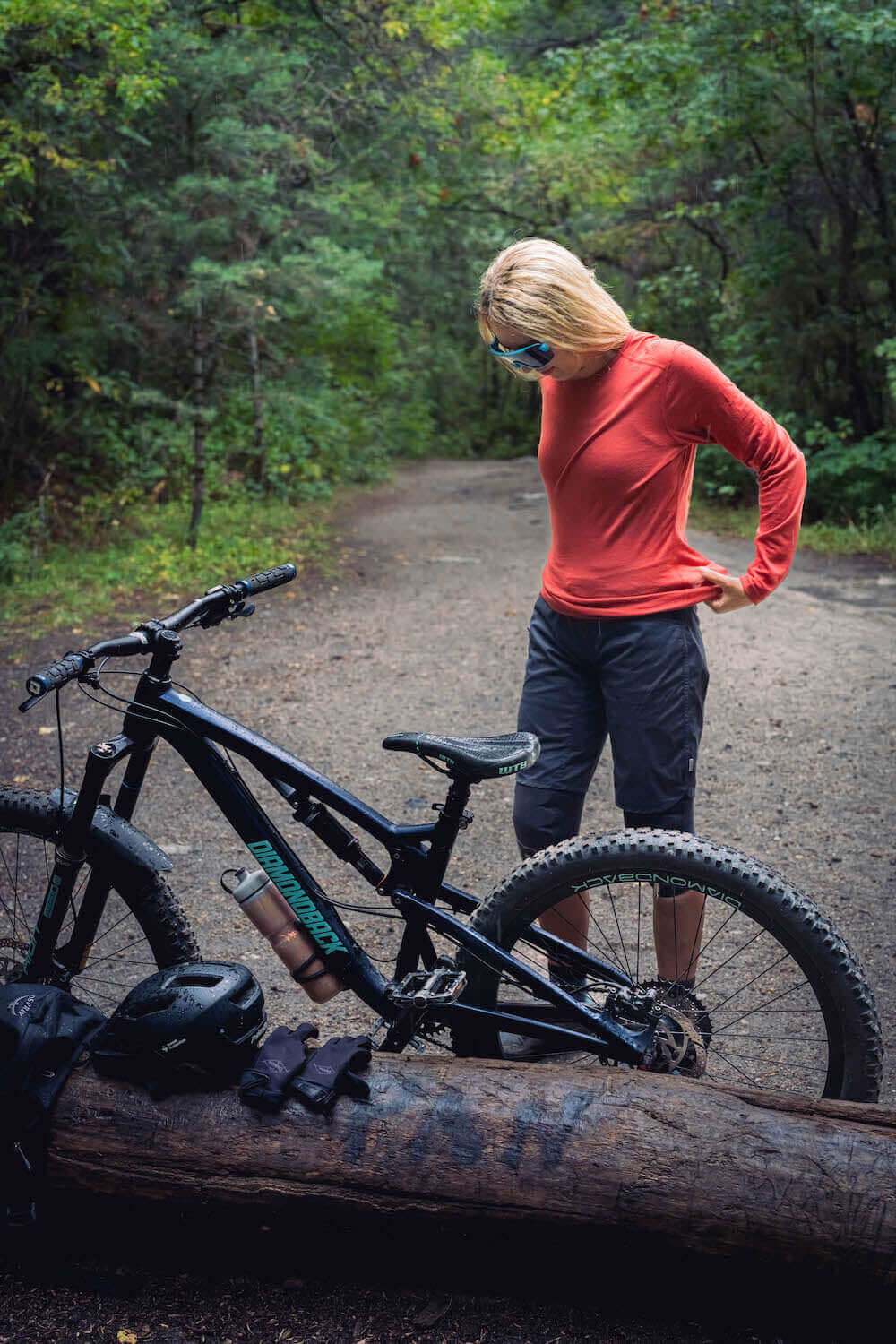
France's packing challenge is versatility across genuinely different climates within one country, sometimes within one trip. A trip that starts in Paris, moves through the Alps, and finishes in Provence asks you to dress for temperate rain, alpine cold, and Mediterranean heat within the same carry-on. A merino wool base layer is the anchor of that system: it regulates temperature across the range France throws at you, covers your shoulders for church visits in Paris and Chartres, and rewears cleanly across multiple days without odor, which matters when you are living out of one bag across several regions.
Footwear needs the same versatility thinking. Paris and most historic French towns are paved in stone and cobble that punishes unsupportive shoes, while the Alps and coastal trails in Brittany demand real hiking footwear. A supportive walking shoe, broken in before you travel, covers the cities; pack a second, sturdier pair only if the Alps or serious coastal walking are actually on the itinerary.
Documents and health basics matter more on a multi-region French trip than travelers expect. Carry a physical photocopy of your passport separate from the original, since French police and hotel check-in both occasionally ask to see identification. Travel insurance that covers both city theft and mountain activity is worth confirming before an Alps leg, since standard policies sometimes exclude hiking above a certain altitude. A basic first aid kit, sunscreen for the exposed Provence and Alps sun, and any prescription medication in its original packaging with a copy of the prescription round out the health essentials, and pharmacies, marked with a green cross, are common in every French town and staffed by pharmacists who can advise on minor issues without a doctor's visit.
For the complete category by category breakdown, including specific product recommendations for base layers, footwear, and rain protection for each region, see the full France Packing List for Women, which covers exactly what to bring for Paris, the Alps, and Provence.
Roman Trail merino wool base layers are built for exactly this kind of trip. Shop women's merino base layers.
Getting Around France
France's rail network, run primarily by SNCF, is the backbone of most itineraries and among the best in Europe. High speed TGV trains connect major cities fast: Paris to Lyon in around two hours, Paris to Marseille in about three, and Paris to Nice in roughly six. Ouigo, SNCF's budget high speed service, covers many of the same routes at a lower fare with fewer amenities, and is worth booking well in advance for the best prices. Regional TER trains, slower and cheaper, reach smaller towns that the high speed network skips, including much of Provence's countryside and Normandy's coastal towns.
Car rental makes the most sense in Provence, the Loire Valley, and rural Brittany and Normandy, where the appeal is reaching small villages, chateaux, and coastline that trains do not serve well. It is actively counterproductive in central Paris, where parking is scarce and expensive and most sights are walkable or Metro accessible, and it adds real cost in the form of tolls on the autoroute network for any longer countryside drives.
Within Paris, the Metro is extensive, cheap, and runs late, making it the default way to move around the city, with the RER suburban rail network extending out to Versailles, Disneyland Paris, and both major airports. For solo women specifically, the Metro and RER are safe during the day and generally fine in the evening in central, well used lines, though awareness in quieter stations late at night is sensible anywhere. Uber and other ride-hailing apps work reliably in Paris and other major French cities, and official Parisian taxis, identifiable by a roof light, are a safe, standard alternative.
Arriving by air, Charles de Gaulle and Orly are Paris's two main airports. The RER B connects CDG directly to central Paris but is a known pickpocket route, particularly during rush hour; the Roissybus or a pre-booked transfer are more comfortable alternatives if you are arriving with luggage after a long flight. Orly connects via the Orlyval automated train to the RER B, or the Orlybus directly into the city. As in Italy and most of Europe, only use official, marked taxis or pre-booked transfers from any French airport, since unlicensed drivers targeting tired arriving travelers operate at both CDG and Orly.
Costs: What to Budget
France spans a wide price range depending on region, season, and especially whether Paris is part of the itinerary. A budget traveler using hostels, bakery lunches, and regional trains can manage on $80 to $110 per day outside Paris, closer to $110 to $150 per day in the capital. Mid-range travel, with three-star hotels, sit-down meals, and occasional taxis, runs $180 to $280 per day. Luxury travel with boutique hotels, private guides, and the Riviera's higher-end properties can exceed $500 to $700 per day in peak season.
Accommodation ranges from $35 to $55 per night for a hostel dorm bed, $100 to $190 for a comfortable three-star hotel or guesthouse, and $280 and up for four and five-star properties, with Paris and the Riviera commanding a significant premium over comparable options in Provence's countryside or Brittany. Meals range from $8 to $15 for a bakery lunch or casual bistro plate, $30 to $55 for a sit-down dinner with wine, and considerably more at destination restaurants in central Paris or the Riviera.
Major sites carry separate entrance fees: the Louvre runs around $20, the Eiffel Tower summit around $30 to $35, and the Paris Museum Pass, which covers dozens of sites including Versailles over two to six days, costs roughly $60 to $90 depending on duration and is worth it if you are museum focused. France uses the euro. ATMs are widely available and reliable in cities and larger towns, though rural Provence and Brittany villages may have limited options, so carry some cash outside major centers. Tipping is not the norm the way it is in the United States, since French law requires service to be included in the bill (service compris). Rounding up or leaving a small amount in cash for good service is appreciated but never expected.
Where to Stay: Hostels, Guesthouses, and Hotels for Women
Paris has a strong hostel scene with well-reviewed female-only dorm options; St Christopher's Inn, with several locations around the city including one directly on the Canal Saint-Martin, and Generator Paris, near the Canal in the 10th arrondissement, are both consistently well reviewed by solo women travelers and offer keycard dorm access and secure lockers. Le Village Hostel in Montmartre offers a quieter, more residential alternative with strong reviews for solo women. Look specifically for lockers built into the bed frame, 24-hour reception, and recent reviews mentioning solo women's experiences, all easy to filter for on major booking platforms.
Mid-range travelers are well served by France's chambres d'hotes, the French take on the bed and breakfast, common throughout Provence, the Loire Valley, and rural Brittany and Normandy, often run by owners who live on site and offer a safer, more personal alternative to large anonymous hotels. Boutique hotels in central Paris, Lyon, and Aix-en-Provence occupy a similar price bracket with a more urban feel.
For luxury, the Riviera towns of Nice, Cannes, and Saint-Tropez, along with central Paris, command the country's most sought-after properties, generally booked months ahead for peak summer season. Wherever you stay, prioritize central, well-lit locations within walking distance of a Metro or train station over cheaper options on the outskirts, and check recent reviews specifically for comments from women traveling alone before booking.
Booking.com and Hostelworld both work well throughout France, with Hostelworld carrying more detailed hostel-specific reviews and filters for female-only dorms. For chambres d'hotes and countryside stays in Provence and the Loire Valley, dedicated regional booking platforms and the official France.fr accommodation listings sometimes surface properties that do not appear on the major apps, so a quick search beyond the usual platforms can turn up better value in rural areas.
French Etiquette and Cultural Norms
France does not require modest dress the way some destinations do, but it enforces one specific rule at religious sites: covered shoulders for entry into churches and cathedrals, including Notre-Dame and Sacre-Coeur in Paris and the cathedral in Chartres. A lightweight scarf solves this in seconds without requiring you to dress conservatively for the rest of the day. Outside religious sites, French dress culture leans toward put together rather than conservative; workout clothes and flip flops outside of actual exercise tend to mark you immediately as a tourist, and a couple of outfits that feel deliberate go a long way at dinner.
Greeting matters more in France than in many countries. Saying bonjour before starting any interaction, whether entering a small shop, asking a stranger for directions, or approaching a counter in a bakery, is considered basic politeness, and skipping it can genuinely come across as rude, even if you follow immediately with English. This one habit, more than fluency in the language, shapes how warmly you are received in small shops and rural towns.
English is widely spoken in Paris, major tourist areas, and hotels, less reliably so in rural Provence, Brittany, and small Alpine villages. A translation app with an offline French pack is worth having for menus in small family-run restaurants and for train station announcements outside major hubs. Basic phrases, merci, s'il vous plait, and ou sont les toilettes, are appreciated even when your accent is far from perfect, and attempting French first, before switching to English, consistently earns a warmer response than opening in English by default.
Eating and Drinking Like a Local
French meal structure runs on a fixed clock that surprises visitors used to eating whenever they are hungry. Lunch service typically runs from noon to 2pm, and kitchens in many traditional restaurants close between lunch and dinner, reopening around 7:30pm. Restaurants serving food continuously through the afternoon are usually catering specifically to tourists, and the quality and price often reflect that. Eating on the local schedule, even when it means timing a walk around a 2pm lunch deadline, generally leads to better food and a better price.
Solo dining is completely normal throughout France and carries no social stigma. Sitting at the bar in a bistro or wine bar, rather than requesting a table, is a genuinely good solo strategy, putting you closer to the staff and often leading to better recommendations. Asking for the check, l'addition s'il vous plait, is necessary since French servers consider it rude to bring it unprompted, treating your table time as yours to keep as long as you like.
Regional food differences are significant enough to plan around. Lyon is widely considered the country's culinary capital, home to bouchons serving rich, traditional dishes. Provence's cuisine leans into olive oil, herbs, and Mediterranean vegetables in a way that feels distinct from the butter and cream heavy cooking further north. Brittany is the place for crepes and galettes, along with some of the country's best seafood, given its Atlantic coastline. If food is a real priority, building a day or two around a specific region's specialty pays off more than trying to sample everything everywhere.
Essential Resources for Women in France
Emergency numbers: All emergencies (EU-wide) 112, Police 17, Ambulance (SAMU) 15, Fire (Pompiers) 18.
Tourist police: France does not operate a dedicated national tourist police unit. The Paris Police Prefecture handles reports of theft and lost documents for visitors at its central office on the Ile de la Cite. For emergencies or crime anywhere in the country, use 17.
US Embassy in Paris: 2 Avenue Gabriel, 75008 Paris. Phone: +33 1 43 12 22 22. Website: fr.usembassy.gov
Main hospital or clinic: American Hospital of Paris, 63 Boulevard Victor Hugo, 92200 Neuilly-sur-Seine, is a private hospital with English-speaking staff and a 24-hour emergency department. Lyon, Marseille, Nice, and other major cities all have well-equipped public hospitals; ask your accommodation for the nearest option when traveling outside Paris.
Official health authority: Sante publique France, santepubliquefrance.fr
US State Department travel advisory: travel.state.gov France advisory
UK FCDO travel advice: gov.uk France travel advice. The safety and security section carries the detail that the landing page only summarises, and it is the page to read before you travel.
Official tourism authority: france.fr
Solo women safety assessment: France is a comfortable, well-established destination for solo women travelers, and violent crime against tourists is rare. The real everyday risk is petty theft, concentrated on Paris's Metro line 1, the RER B airport line, and around major sights like the Eiffel Tower and the Louvre, so keep valuables secured and stay alert in crowds. A short list of scams, friendship bracelets, found rings, and clipboard petitions, target tourists near major monuments; a firm no and walking away ends all of them. Solo dining, walking in well-lit central areas at night, and using official marked taxis are all normal and low-risk throughout the country, though the Bois de Boulogne and Bois de Vincennes parks and a handful of Paris neighborhoods, including areas around Gare du Nord and Barbes, are worth avoiding after dark.
Related Reading
For the complete packing breakdown, see the France Packing List for Women. For packing guidance across every destination Roman Trail covers, visit the Women's Travel Packing Guide. You can read more about building a travel wardrobe around merino wool on the Roman Trail merino wool base layer guide.
Destination Guides for France
Every Roman Trail destination article for France, each with the packing detail specific to that city or region rather than a repeat of the country list.
- France packing list for women for a trip that crosses more than one region and season.
- Paris packing list for women the capital, its dress sense and a great deal of walking.
- Lyon packing list for women two rivers, two hills, the traboules and the bouchons.
- Marseille packing list for women the Calanques, the mistral and which streets to skip at night.
- Normandy packing list for women Mont Saint-Michel tides, the D-Day beaches and the Etretat cliffs.
- Nice packing list for women the Mediterranean coast, the pebble beaches and the old town.
- Provence packing list for women the hill villages, the ochre, and the six weeks the lavender flowers.
- Toulouse packing list for women the pink brick city, the Garonne and the Canal du Midi.
- Reims packing list for women the coronation cathedral and champagne cellars at 10C.
- Strasbourg packing list for women Alsace, the oldest Christmas market in France and real winter cold.
- Chamonix packing list for women Mont Blanc, altitude and serious mountain weather.
- Annecy packing list for women the alpine lake, the canals and the cold clean water.
- Bordeaux packing list for women the wine country, the water mirror and the Atlantic coast.
- Brittany packing list for women enormous tides, granite, and a Celtic corner of France.
- Corsica packing list for women a mountain in the sea, the GR20 and the maquis.
- Dordogne packing list for women painted caves, castles facing each other and 13C underground.
- Loire Valley packing list for women the chateaux, the cycle route and unheated Renaissance halls.
- Aix-en-Provence packing list for women fountains, plane trees, the best market days in Provence and Cezanne's studio
- Amiens packing list for women the largest Gothic cathedral in France by volume, and floating market gardens on the Somme
- Angers packing list for women a black schist fortress holding the largest surviving medieval tapestry set in the world
- Antibes packing list for women a walled Riviera town with the coast's best market and a footpath round the Cap
- Arles packing list for women a Roman arena still in use, Van Gogh's fifteen months, and the gateway to the Camargue
- Avignon packing list for women a walled papal city, the largest Gothic palace in Europe, and a July festival that fills every room
- Bayonne packing list for women the French Basque capital, where chocolate entered France, and five days in white and red
- Beziers packing list for women a fortress cathedral above the Orb and the Fonseranes staircase of canal locks
- Biarritz packing list for women an imperial resort on the Basque Atlantic, where European surfing began, with a tidal ocean
- Cannes packing list for women a Riviera resort with a medieval quarter above it and two islands offshore that are better than the mainland
- Carcassonne packing list for women a walled citadel of 52 towers, rebuilt in the nineteenth century into the shape everyone recognises
- Cassis packing list for women a fishing port under France's highest sea cliff, at the gate of the Calanques national park
- Blois packing list for women a royal chateau of four architectural styles in one courtyard, and the base for Chambord
- Collioure packing list for women a Catalan fishing port where Fauvism was born, with a royal castle standing in the water
- Colmar packing list for women original Alsatian half-timbering, the Isenheim Altarpiece and the wine route at the edge of town
- Dijon packing list for women a ducal capital with an owl trail, a free great art museum and the Burgundy grand crus to the south
- Dunkirk packing list for women a rebuilt Flemish port with a UNESCO belfry, ten kilometres of sand and a three-month carnival
- Grenoble packing list for women the flattest big city in France, ringed by three Alpine massifs, with a 1934 cable car above it
- La Rochelle packing list for women three medieval towers guarding an Atlantic harbour, arcaded streets and the Ile de Re over a bridge
- Lille packing list for women a Flemish city with France's second largest art museum and the biggest flea market in Europe
- Menton packing list for women the mildest winter in France, a February lemon festival and the Italian border along the seafront
- Metz packing list for women the largest expanse of stained glass of any cathedral in the world, and a UNESCO German imperial quarter
- Montpellier packing list for women the oldest working medical school in the western world, a medieval core and a postmodern quarter beside it
- Nantes packing list for women a ducal castle and a twelve metre mechanical elephant that walks the old shipyards
- Nimes packing list for women the best-preserved Roman arena and temple anywhere, with the Pont du Gard half an hour away
- Sete packing list for women a working fishing port on a sandbar between lagoon and sea, with canals and water jousting since 1666
- Saint-Emilion packing list for women a medieval village over a church carved from solid rock, in the first vineyard landscape UNESCO listed
- Saint-Jean-de-Luz packing list for women the only sheltered swimming bay on the French Basque coast, with Spain fifteen kilometres away
- Saint-Tropez packing list for women a fishing village of 4,000 that receives millions, with a free coast path round the whole peninsula
- Toulon packing list for women France's main naval port under a 584 metre mountain, with the best harbour view on the coast
- Versailles packing list for women an 800 hectare estate and a Trianon park that most of its eight million visitors never reach
- Villefranche-sur-Mer packing list for women one of the deepest harbours in the Mediterranean, a vaulted medieval street and Nice six minutes away
- Ajaccio packing list for women Corsica's capital and Napoleon's birthplace, with mountains behind the harbour
- Amboise packing list for women a royal chateau above the Loire and the house where Leonardo da Vinci died
- Arcachon packing list for women a Belle Epoque oyster basin, with the largest sand dune in Europe beside it
- Bayeux packing list for women the Tapestry, a Gothic cathedral and the base for the D-Day beaches
- Bonifacio packing list for women a citadel on undercut limestone cliffs at the southern tip of Corsica
- Caen packing list for women William the Conqueror's city, three quarters destroyed in 1944 and rebuilt around what survived
- Cancale packing list for women the oyster capital of France, on a bay with a fourteen metre tidal range
- Cherbourg packing list for women a naval port with one of the largest artificial harbours in the world
- Deauville packing list for women a Belle Epoque resort of parasols and timbered villas two hours from Paris
- Etretat packing list for women white chalk cliffs with natural arches, on a coast that is actively falling into the sea
- Granville packing list for women a walled haute ville on a headland, Dior's birthplace, and the boat to Chausey
- Honfleur packing list for women a slate-fronted harbour with the largest timber church in France behind it
- Le Havre packing list for women a UNESCO-listed city of reinforced concrete, rebuilt by Auguste Perret after 1944
- Lourdes packing list for women a Pyrenean sanctuary town that receives millions of pilgrims a year
- Millau packing list for women a Tarn gorges town under a bridge with the tallest towers in the world
- Pont du Gard packing list for women a three-tiered Roman aqueduct bridge still standing without mortar
- Quimper packing list for women the Cornouaille capital in Finistere, with a cathedral whose nave bends
- Rennes packing list for women the Breton capital, and one of the largest markets in France on a Saturday
- Rocamadour packing list for women a pilgrimage village stacked up a 120 metre cliff above the Alzou gorge
- Rouen packing list for women the Norman capital on the Seine, Joan of Arc's city and Monet's cathedral
- Vannes packing list for women a walled town on an inland sea of forty islands, with a tide that runs like a river
- Bastia packing list for women the Corsican port city under the Genoese citadel, and the island's working capital
- Gorges du Verdon packing list for women Europe's deepest river canyon, dammed above and released without warning
- Mont Saint-Michel packing list for women an abbey on a tidal island, in one of the largest tidal ranges in Europe
- Saint-Malo packing list for women a rebuilt corsair city inside its walls, with a thirteen metre tide at them
If the outer journey is calling you, the inner one usually is too. Explore SoulMap at romantrail.com/blogs/soulmap.
Blog posts
View all-

Packing List for Tucson, Arizona: What Women Sh...
What to pack for Tucson: a 1797 Spanish mission, giant saguaros, a UNESCO food city and a summer monsoon that fills dry washes in minutes.
Packing List for Tucson, Arizona: What Women Sh...
What to pack for Tucson: a 1797 Spanish mission, giant saguaros, a UNESCO food city and a summer monsoon that fills dry washes in minutes.
-

Packing List for Sequoia National Park: What Wo...
What to pack for Sequoia National Park: the largest trees on Earth, 13,000 feet of elevation range, mandatory bear lockers and a road with a length limit.
Packing List for Sequoia National Park: What Wo...
What to pack for Sequoia National Park: the largest trees on Earth, 13,000 feet of elevation range, mandatory bear lockers and a road with a length limit.
-

Packing List for St Augustine, Florida: What Wo...
What to pack for St Augustine: a Spanish fort built of shell stone, the oldest continuously occupied European settlement in the continental United States.
Packing List for St Augustine, Florida: What Wo...
What to pack for St Augustine: a Spanish fort built of shell stone, the oldest continuously occupied European settlement in the continental United States.


Contact form

Roman Trail Outfitters
Merino Wool Women's Long Sleeve Top | Crew Neck Shirt | Deep Olive