

Seattle is the most outdoorsy major city in America and the one where the boundary between urban life and wilderness is thinner than anywhere else in the country.
Disclosure: This post contains affiliate links. If you buy through them, Roman Trail earns a small commission at no extra cost to you.
The Pacific Northwest city of 750,000 people on Puget Sound, with the Olympic Peninsula to the west and the Cascades to the east, has Mount Rainier, the most glaciated peak in the contiguous United States, visible from the city on clear days in a landscape of extraordinary scale. Olympic National Park two hours west has the Hoh Rain Forest, the most accessible temperate rainforest in the country, Hurricane Ridge with alpine meadows above the tree line, and the Olympic coastline with its sea stacks and tide pools. North Cascades National Park two hours east has the most dramatic mountain scenery in Washington. All of this is accessible from a city that also has Pike Place Market, the most visited farmers market in America where the fish throwers have been performing since 1930, the Capitol Hill neighborhood with the densest concentration of coffee shops in the country, the Seattle Art Museum, and the Museum of Pop Culture in Frank Gehry's extraordinary titanium-clad building beside the Space Needle.
Seattle is also wet. The Pacific Northwest climate produces more overcast days and more persistent drizzle than almost any other major American city. The rain is rarely heavy. It is more of a persistent atmospheric moisture that locals navigate with practiced indifference. The Seattle freeze, the reputation for aloofness, is partly a function of weather that keeps people in their waterproof layers year round without the outdoor social culture of warmer cities.
Understanding Seattle's Climate
Seattle has a maritime climate that is more temperate than most visitors expect.
Winter from November through March: the wet season. Grey overcast skies and persistent drizzle. Temperatures from 4 to 10 degrees Celsius. Rarely freezing at sea level. Snow in the city rare and brief.
Spring from April through June: the most beautiful season as the drizzle gives way to increasing sunshine and the wildflowers bloom in the mountain parks. Temperatures from 10 to 18 degrees.
Summer from July through September: Seattle's finest season. Clear blue skies, temperatures from 22 to 28 degrees, and the outdoor culture of the city fully operational. The most visited period.
Autumn from October through November: the transition back to grey and wet, with the most beautiful foliage in the Arboretum and the mountain parks.
The statistic that surprises visitors is that Seattle gets less total rainfall per year than New York, Boston, or Miami. What it gets is far more days on which some rain falls, and far fewer hours of sun between October and April. The city is dim rather than drenched, and that distinction is exactly what the packing list has to solve.
Recommended Tours and Experiences
The One Seattle Packing Rule
Always have a rain layer. In every season. Without exception. The Marmot Women's PreCip Eco Rain Jacket ($110) lives in your bag in Seattle at all times. The drizzle arrives without announcement and stops without announcement, and the locals who never carry umbrellas survive through waterproof outer layers that are always on their person.
The Layering System for Seattle
Base Layer
The Roman Trail Women's Merino Wool Base Layer ($49-59) is the right foundation for Seattle's maritime climate. The combination of cool temperatures and persistent atmospheric moisture that characterizes the Pacific Northwest is exactly the environment where merino's moisture management and warmth retention in damp conditions outperform cotton and most synthetics. Seattle locals who hike extensively know this instinctively.
Bring two and rotate them. The property that matters most here is that wool insulates when wet. A cotton layer that has absorbed a morning of drizzle stops keeping you warm and starts actively cooling you, which is the mechanism behind most of the misery visitors report in a Seattle October.
Mid Layer
Seattle requires a mid layer for most of the year outside of the warmest summer weeks. The Columbia Women's Fast Trek II Jacket ($65) handles Seattle's cool maritime climate. The Columbia insulated hooded jacket ($279) handles the Mount Rainier day trips, where temperatures drop significantly at altitude.
Rain Shell
Mandatory. Always. Non-negotiable. See above.
Footwear for Seattle
The Merrell Women's Moab 3 Waterproof Hiking Boot ($140) handles the Olympic Peninsula trails, the Mount Rainier approach paths, and Seattle's wet streets in all conditions. One comfortable dressier pair for Capitol Hill evenings. Two pairs total.
Seattle's hills are the other consideration. Downtown climbs steeply from the waterfront up to First Hill and Capitol Hill, and the sidewalks are smooth concrete that goes slick in drizzle. Grip matters here for the same reason it does in San Francisco.
For socks the Darn Tough Women's Hiker Micro Crew Merino Socks ($28) handle Seattle's hiking and urban terrain without blisters.
Clothing List
Two merino base layer tops. Two casual quality tops. One quality evening outfit for Capitol Hill's excellent restaurant scene. Down or fleece mid layer. Compact rain shell, mandatory every season. Waterproof hiking boots. Comfortable city shoes. Three merino socks. Two casual socks.
Add a hat with a brim rather than an umbrella. It is what locals wear, it keeps drizzle off your face on a windy waterfront, and it does not need a free hand.
What Not to Bring to Seattle
Leave the umbrella. This is not a joke about local identity, though it is that too. Seattle drizzle comes sideways off the water often enough that an umbrella is genuinely less effective than a hood, and it occupies a hand you want for coffee.
Leave anything cotton you were planning to rely on outdoors, particularly denim, which absorbs Pacific Northwest damp and takes a full day to dry.
Leave the assumption that summer means shorts weather all day. Seattle summer mornings and evenings run cool even in August, and a boat trip on Puget Sound or an evening at altitude near Rainier is a different climate entirely.
Seattle by Neighborhood
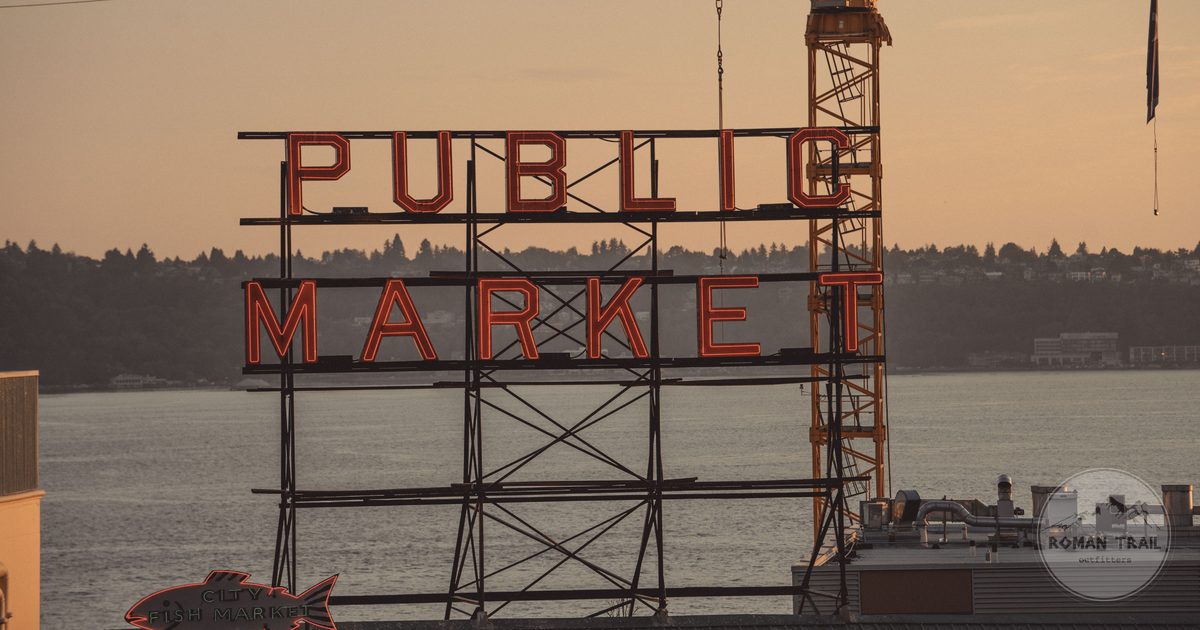
Pike Place Market on the hillside above the waterfront is the essential Seattle experience. The fish throw, the original Starbucks, the gum wall, and the market stalls of produce, flowers, and craft in the most atmospheric public market in America. Go on Saturday morning.
Capitol Hill east of downtown is the most creative and most livable neighborhood in Seattle, with the finest coffee shops, the best independent restaurants, the Cal Anderson Park social center, and the LGBTQ community that has defined its cultural character.
Ballard northwest of downtown is the most Scandinavian-influenced neighborhood in Seattle, with the Sunday Ballard Farmers Market, the finest in the city, the Nordic Museum, and the Ballard Locks, where salmon can be watched navigating the fish ladder from Puget Sound to Lake Washington.
Pioneer Square, the original downtown, has the Underground Tour of the subterranean streets buried after the 1889 fire, the First Thursday Gallery Walk, and the best sports bar concentration in the city near the stadiums.
Seattle Day Trips
Mount Rainier National Park two hours south. The Paradise Visitor Center at 1,650 meters has the finest wildflower meadows in the Cascades from July through September. The Skyline Trail around Paradise is the finest accessible alpine hike near Seattle.
Olympic Peninsula two hours west. The Hoh Rain Forest visitor center and the Hall of Mosses trail is the most magical walk in the Pacific Northwest. Hurricane Ridge has the alpine meadows above the rain forest.
The San Juan Islands by Washington State Ferry from Anacortes two hours north. The most beautiful island scenery in the Pacific Northwest, with orca whale watching from May through September.
All three require warmer layers than the city does. Paradise sits at 1,650 meters and runs 10 to 15 degrees colder than downtown Seattle, with snow lingering on the trails into July. Pack the down layer for these days even in summer.
Packing for the Coffee, the Ferries, and the Grey
Three specifically Seattle things shape the bag in ways a general city list would miss.
The coffee culture is real and it is a walking activity. Capitol Hill, Ballard, and Fremont are neighborhoods you explore on foot between cafes, often in drizzle, which means the layer you want is one you can keep on indoors without overheating. This is the argument for merino under a shell rather than a heavy sweater: you stop, you sit, you stay comfortable.
The ferries are the best cheap thing to do in Seattle, and the Bainbridge Island crossing gives the finest skyline view in the city for the price of a walk-on ticket. The passenger deck outdoors is where you want to be, and Puget Sound wind in any season is considerably colder than the temperature on land. Take the outer layer even if the city felt mild when you left.
The grey deserves an honest mention. Between October and April, Seattle gets very few hours of direct sun, and visitors who have not experienced a northern maritime winter sometimes find the flat light genuinely wearing. Pack colour into your clothing rather than the black and grey the city defaults to; it is a small thing that makes a real difference over a week of overcast.
Seattle Packing FAQ
Do locals really not use umbrellas?
True. The Seattle drizzle is light enough that waterproof outer layers handle it more conveniently than umbrellas, which become awkward in the wind. An umbrella marks you as a visitor. A waterproof jacket marks you as someone who knows how the weather works.
What is the best time to visit Seattle?
July through September for the clear skies and outdoor culture. June for the beginning of the good weather without peak season crowds. April and May for the wildflowers on the mountain trails if hiking is your priority.
Will I actually see Mount Rainier?
Not necessarily. The mountain is visible from Seattle on clear days, which locals call the mountain being out, and that happens far more often between June and September than in the grey half of the year. Do not plan a trip around the view. If you want to be certain of seeing Rainier, go to the park itself rather than hoping for it from the city.
What food should I try in Seattle?
Dungeness crab from Pike Place Market, prepared simply with butter. The oysters from the Pacific Northwest oyster beds, available at any downtown oyster bar. The salmon in every preparation from smoked to cured to grilled. Dick's Drive-In, the Seattle fast food institution with the Deluxe burger that has not changed since 1954. The ramen at Ramen Danbo. Anything at Canlis, the most beautiful dining room in Seattle, overlooking Lake Union.
For the full city plan, including safety, the neighborhoods, the Olympic Peninsula and Rainier day trips, the Link Light Rail, costs, and where to stay, see the Seattle travel guide for women.
You can read more about building a merino-first travel wardrobe on the Roman Trail merino wool base layer guide. Browse the full collection at Roman Trail women's merino base layers, available in eight colors with free two-day shipping and a two-year satisfaction guarantee.
If the outer journey is calling you, the inner one usually is too. Explore SoulMap at romantrail.com/blogs/soulmap.


