Nice Travel Guide for Women: Everything You Need to Know

Nice is the capital of the Côte d'Azur and the fifth largest city in France, a bay of deep blue backed by a city of 350,000 people that works for a living. It is not a resort. It has a university, a port, an old town that has been lived in continuously for centuries, and an airport that is the second busiest in the country.
Disclosure: This post contains affiliate links. If you buy through them, Roman Trail earns a small commission at no extra cost to you.
It was Italian until 1860. The County of Nice belonged to the House of Savoy, was ceded to France by treaty, and the evidence is everywhere: ochre and red facades in the old town, a local dialect closer to Ligurian than to French, and a cuisine that is genuinely its own thing rather than a regional variation of Provençal.
The British invented the winter Riviera here in the nineteenth century, which is why the seafront is called the Promenade des Anglais. The Russians followed, leaving an Orthodox cathedral. Matisse and Chagall came for the light and stayed.
What makes Nice worth a week rather than two days is position. Monaco is 25 minutes away by train, Cannes is 30, Menton and the Italian border are an hour, and the hill villages sit directly above the city. You can base here and never repeat a day.
This guide covers Monaco and the dress code, the markets, the museums, the beaches, the day trips, food, costs, safety and what to pack.
Nice at a Glance
Where: the Alpes-Maritimes, southeastern France, 30 kilometres from the Italian border.
Population: around 350,000 in the city, a million in the wider metropolitan area.
Getting there: Nice Côte d'Azur airport, with a tram line into the centre in about 25 minutes. TGV from Paris in around six hours.
Getting around: walkable, plus trams, a flat-fare bus network and the coastal railway.
Language: French. English is widely spoken in tourism.
Currency: euro.
Best months: May, June, September and early October.
Safety for women alone: good. Ordinary large-city pickpocketing is the main issue.
Monaco: 25 Minutes and Four Euros
The single best thing about basing in Nice. Trains from Nice-Ville run several times an hour, take around 25 minutes, and cost a few euros each way.
The practical version
Buy at the machine and validate before boarding. The Monaco-Monte Carlo station is built inside the rock with exits at different levels of the principality, so check which exit serves your destination rather than taking the first.
Monaco is two square kilometres and walkable, but vertically so. Public lifts and escalators connect the levels and are free, and using them saves a great deal of climbing.
The dress code
The Casino de Monte-Carlo enforces a dress code and turns people away daily. No shorts, no flip flops, no sportswear, no beachwear. Identification is required, there is an entry fee for the gaming rooms, and the private salons expect smart dress in the evening. The same applies to the bars of the Hôtel de Paris across the square.
If you are coming from the beach, this is the thing that catches people. Bring one outfit that clears the bar, shoes included.
What to see
Casino Square, with the Belle Époque casino by Charles Garnier, who also built the Paris opera house, the Hôtel de Paris and the Café de Paris.
The Prince's Palace on the rock, with the changing of the guard at 11.55 daily, and the old town of Monaco-Ville around it.
The Oceanographic Museum, built into the cliff face and directed for many years by Jacques Cousteau.
The Formula 1 circuit, which is simply the public roads. The Grand Prix is in late May, when the whole principality closes down and prices across the entire Riviera rise sharply.
The Japanese garden and the Larvotto beach for a quieter hour.
Monaco costs several times what Nice does for a coffee. Eat before you go or walk away from the square.
Recommended Tours and Experiences

The Markets and the Old Town
Cours Saleya is the long market square at the edge of Vieux Nice. Flowers and produce Tuesday to Sunday mornings, closing around one. Monday is the antiques market instead, which is worth knowing before planning around it. Go before ten in summer.
Vieux Nice is a dense grid of tall ochre buildings and narrow lanes behind it, with the Baroque cathedral of Sainte-Réparate, the Palais Lascaris and a great many small shops selling socca, olive oil and candied fruit. Busy, lived in, and best in the early morning or after dark.
Castle Hill, Colline du Château, rises at the eastern end. There is no castle left, but there is a waterfall, a cemetery and the view along the Baie des Anges that appears on every postcard. Climb the steps or take the free lift from the seafront.
The Promenade des Anglais runs seven kilometres along the bay, with a walking and cycling path used by the city from dawn. The Hotel Negresco with its pink dome sits about halfway along.
Matisse, Chagall and the Light
Both museums are in Cimiez, the hill neighbourhood above the city, close enough to see in one afternoon.
The Musée Matisse occupies a red seventeenth-century villa set among Roman ruins and olive trees. Matisse lived in Nice from 1917 until his death in 1954 and the collection covers his whole career, including the late paper cut-outs.
The Musée National Marc Chagall, downhill from it, was purpose-built for the Biblical Message cycle: seventeen large canvases the artist gave to the state, shown in a building designed around them, with his stained glass and a mosaic reflected in a pool.
Take bus 5 or 33 to Cimiez, see Matisse first, walk down to Chagall and continue into the city on foot. Both close one day a week and the days differ, so check before going.
Elsewhere, the Musée d'Art Moderne et d'Art Contemporain holds Nouveau Réalisme and Pop art with a roof terrace, and the Musée des Beaux-Arts occupies a Russian princess's villa.
Nearby, Saint-Paul-de-Vence has the Fondation Maeght, and Antibes has the Picasso museum in the Château Grimaldi where he worked in 1946.
The Beaches
The thing nobody mentions in the photographs: the beaches are pebble, not sand. Smooth grey stones the size of eggs, hot underfoot in July, hard to walk on barefoot, with a steep shelf into deep water.
This is entirely manageable with water shoes and a padded mat, both of which locals bring as standard, and it catches out almost every first-time visitor.
Public beaches alternate with private concessions along the Promenade. The private beaches charge for a lounger and umbrella and have showers and restaurants; the public stretches are free and busy. Lifeguards are seasonal and the flag system is observed.
For better swimming, take the train five minutes to Villefranche-sur-Mer, which has a sheltered sandy-ish bay in the most beautiful harbour on the coast, or continue to Beaulieu and the coastal path around Cap Ferrat.

Day Trips from Nice
Villefranche-sur-Mer, ten minutes by train. A deep natural harbour, a fourteenth-century old town with a covered street running under the houses, and a chapel decorated by Jean Cocteau.
Eze, a medieval village on a rock 400 meters above the sea, with a cactus garden on the summit and the Chemin de Nietzsche running down to the coast, which is a real descent and not a stroll.
Menton, an hour east on the Italian border. Lemon groves, a pastel old town, the Cocteau museum and the best gardens on the coast.
Antibes, half an hour west. Ramparts, the Picasso museum, a covered Provençal market and the largest yacht harbour in the Mediterranean.
Cannes, 30 minutes. The Croisette, the film festival in May, and the Îles de Lérins a short boat ride offshore, where one island holds a working Cistercian monastery.
Saint-Paul-de-Vence and Vence, inland by bus. Fortified hill villages, the Fondation Maeght, and the Chapelle du Rosaire, which Matisse designed entirely, from the windows to the vestments, and considered his masterpiece.
The coastal train handles everything on the water. The regional buses reach the hill villages for a couple of euros. A car is unnecessary and unhelpful in the city.
Food in Nice
Niçois cooking is its own cuisine, closer to Liguria than to Paris.
Socca, a chickpea flour pancake cooked on a large copper disc in a wood oven, scraped off and served in torn pieces with black pepper. Eat it standing, straight from the fire.
Salade niçoise, which locally contains no cooked vegetables: tomato, egg, anchovy or tuna, olives, raw broad beans and artichoke, dressed with oil. No potato and no green beans, and saying so is a local sport.
Pan bagnat, the same salad packed into a round loaf and pressed until the oil soaks through.
Pissaladière, a flat tart of long-cooked onions with anchovy and black olives.
Petits farcis, small vegetables stuffed with meat and breadcrumbs, and daube niçoise, beef braised in red wine, served with ravioli, which Nice claims to have invented.
Tourte de blettes, a sweet chard tart with pine nuts and raisins, which sounds wrong and is not.
Eat in the old town away from the Cours Saleya terraces, or in the Liberation district around the covered market, where the city actually eats.
Where to Stay
Vieux Nice for atmosphere and the market on your doorstep, and for noise until late.
The Carré d'Or, between the Promenade and the Jardin Albert 1er, for the best position and the highest prices.
Near Nice-Ville station for value and easy departures, in a scruffier neighbourhood that is fine by day and less pleasant late at night.
Cimiez for quiet, the museums and a hill walk down into the city.
Villefranche-sur-Mer if you would rather wake up in a harbour village and commute ten minutes into the city.
What Nice Costs
Expensive by French standards, cheaper than Paris, far cheaper than Monaco.
Accommodation: hostels 35 to 60 euros, mid-range hotels 100 to 190, higher in July, August and during the Cannes and Monaco events in May.
Eating: a bistro lunch menu 18 to 28 euros, dinner 30 to 50 a head with wine, socca a few euros, coffee 2 to 4.
Transport: a flat-fare ticket on the tram and bus network of around 1.70 euros covers the whole department including Eze and Menton. Trains to Monaco a few euros each way.
Museums: around 10 to 12 euros each, with a city museum pass available that pays for itself after three.
Beach: free on the public stretches, 20 to 40 euros for a lounger on a private concession.
When to Visit
May and June: 20 to 26 degrees, everything open, the sea warm enough by late May. Avoid the last week of May, when the Monaco Grand Prix distorts prices along the whole coast.
July and August: 24 to 30 degrees, humid, at capacity, and the warmest sea. The Nice Jazz Festival is in July.
September and early October: the best window. Warm sea, thinning crowds, excellent light. October brings short violent storms.
November to March: 9 to 15 degrees, mild, wet, quiet and fully functioning. The Carnival in February fills the city again.
Arriving and Getting Around
Nice Côte d'Azur airport sits on reclaimed land at the western end of the bay, about seven kilometres from the centre. Tram line 2 runs from both terminals to the port and the city centre for the standard flat fare, taking around 25 minutes, and it is the obvious choice over a taxi at four or five times the price. It runs from early morning until late evening.
Within the city, two tram lines and an extensive bus network share one flat-fare ticket that is valid across the whole Alpes-Maritimes department, which is why a bus to Eze or Menton costs the same as a tram across town. Buy a carnet of tickets rather than singles, validate on boarding every time, and be aware that inspectors do check.
The coastal railway is separate and ticketed separately. It is the fast way east and west along the water, stopping at Villefranche, Beaulieu, Monaco, Menton, Antibes and Cannes, and services run roughly two to four times an hour through the day.
The city centre itself is flat and compact enough that most days involve no transport at all beyond the walk in and out of the old town.
Safety for Women in Nice
Nice is a large, safe European city with ordinary large-city problems.
Pickpocketing and bag snatching are the main issue, concentrated on the Promenade, at the Cours Saleya, on the tram and around Nice-Ville station. Bags taken from cafe tables and from the back of chairs are the most common report.
The station area is scruffier after dark than the rest of the centre, without being dangerous.
The beaches shelve steeply and the pebbles make exiting awkward in any swell. Lifeguards are seasonal only.
Scooters in traffic and a general local approach to pedestrian crossings require attention.
Harassment is comparable to other Mediterranean cities: some attention around the old town bars late, mostly verbal, easily left behind.
What to Pack for Nice
The full list is in the Nice packing list for women. The essentials:
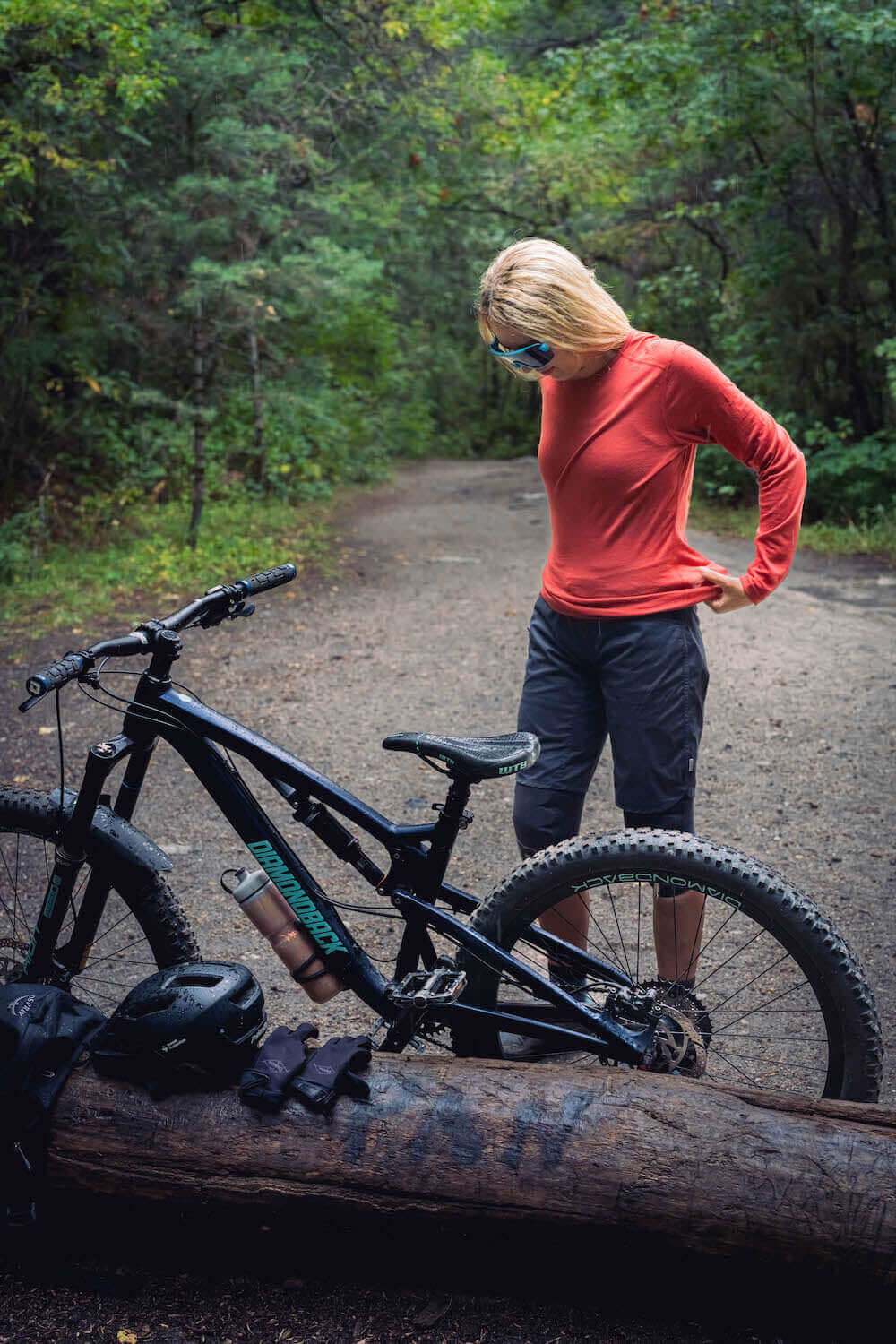
Base layers. Two Roman Trail Women's Merino Wool Base Layers ($49-59) in long sleeve. Spring and autumn mornings on the coastal path are cool and the afternoons are not, and merino covers the swing without a mid-day change. They also read as an ordinary top for dinner.
Rain shell. The Marmot Women's PreCip Eco Rain Jacket ($110) for the autumn storms, which arrive hard and briefly rather than as drizzle.
Fleece. The Columbia Women's Fast Trek II Jacket ($65) from November to March and for evenings in the shoulder seasons, when the sea breeze turns cold after dark.
Water shoes. The ELETON Barefoot Hiking and Water Shoes ($23.99). The pebble beaches are the single most common complaint from first-time visitors and the easiest thing on this list to solve.
Socks. The Darn Tough Women's Hiker Micro Crew Merino Socks ($28), two pairs, for the hill villages and the Cap Ferrat path.
Packing cubes. The Eagle Creek Pack-It Compression Cubes ($39.95), to keep the beach half of the wardrobe apart from the half that has to clear the Monaco dress code.
Plus a walking shoe with grip for Castle Hill and Eze, one smart flat for the evening and for Monaco, a sun hat, sunglasses, high-factor sunscreen, a folding tote for the market and some cash for the small producers.
Essential Resources for Nice
Emergency numbers in France: 112 for the European emergency line, 15 for medical, 17 for police, 18 for fire, and 114 by text for the deaf and hard of hearing.
Police: France has no separate tourist police, but the Police Municipale and the Police Nationale both operate in the city centre, and theft reports for insurance can be filed at any commissariat. Nice also runs a large municipal CCTV network along the seafront and in the old town.
US consular services: the US Consulate General in Marseille covers southeastern France, including Nice, with the embassy in Paris behind it. Contact details and emergency arrangements are at fr.usembassy.gov.
Medical care: the Centre Hospitalier Universitaire de Nice operates the Hôpital Pasteur 2 and the Hôpital l'Archet, both with 24-hour emergency departments. Pharmacies display a green cross and a rota for the duty pharmacy at night. EU and UK visitors should carry a European Health Insurance Card or its UK equivalent; everyone else needs travel insurance.
Monaco is a separate country with its own emergency numbers: 112 also works, with 17 for police and 18 for fire and ambulance within the principality. Carry identification, which is required at the casino and can be asked for by Monegasque police.
Official tourism information: the French national tourism site at france.fr, and the city office at explorenicecotedazur.com.
Health authority: Sante publique France at santepubliquefrance.fr.
US State Department travel advisory for France: current advisory level and detail.
UK FCDO travel advice for France: entry requirements, safety and health guidance.
Solo women travel assessment: Nice is one of the easier solo destinations in southern Europe. It is a real city rather than a resort, which means normal rhythms: people walking the Promenade at seven in the morning, the market busy by eight, restaurants where eating alone attracts no comment. The coastal train is frequent, well used and runs late enough to get back from Monaco or Menton after dinner. The genuine risks are property rather than personal: keep your bag closed and on your lap at the Cours Saleya and on the tram, and do not leave it hanging on a cafe chair, which is where most visitor thefts happen. The station district is worth avoiding late at night on foot. Beyond that, walk the Promenade after dark like everybody else does, and give the pebble beaches the water shoes they require.
Nice FAQ
How many days do I need? Four minimum. A week is better, using Nice as a base for Monaco, Villefranche, Eze, Menton and Antibes without repeating a day.
Is Monaco worth a day? Half a day. It is small, and the train makes it trivially easy. Combine it with Eze or Menton on the same trip out.
Are the beaches really pebbles? Yes, all of them in the city. Villefranche has the nearest thing to sand. Water shoes solve it.
Nice or Cannes as a base? Nice, without much argument. It is larger, cheaper, more interesting outside the season, better connected and has the airport.
Do I need a car? No. The coastal train and the department bus network cover everything, and parking in Nice is expensive.
How much French do I need? Very little in tourism, though starting with bonjour rather than a question is the local minimum and noticeably changes the response.
Reading On
Nice is the best base on the French Riviera. The France travel guide for women covers the country, and the Paris travel guide for women the other end of the TGV line. The Italian border is 30 minutes away, and the Italy travel guide for women picks up from there. For the reasoning behind packing two long-sleeve layers for a trip that runs from a pebble beach to a dinner in Monte Carlo, the merino wool base layer guide explains the fibre. The full collection is at Roman Trail women's merino base layers.
If the outer journey is calling you, the inner one usually is too. Explore SoulMap at romantrail.com/blogs/soulmap.
Blog posts
View all-

Packing List for Aguadilla, Puerto Rico: What W...
What to pack for Aguadilla in north west Puerto Rico. A surf coast where the season runs October to April, with reef shoes, rip currents and earthquake country.
Packing List for Aguadilla, Puerto Rico: What W...
What to pack for Aguadilla in north west Puerto Rico. A surf coast where the season runs October to April, with reef shoes, rip currents and earthquake country.
-

Packing List for Yaounde, Cameroon: What Women ...
What to pack for Yaounde, Cameroon. A capital on seven hills at 750m, in the one part of the country the travel advice does not warn you away from.
Packing List for Yaounde, Cameroon: What Women ...
What to pack for Yaounde, Cameroon. A capital on seven hills at 750m, in the one part of the country the travel advice does not warn you away from.
-

Packing List for Lake Malawi: What Women Should...
What to pack for Lake Malawi. Africa's third largest lake, more fish species than any lake on earth, and a bilharzia risk no travel advisory mentions.
Packing List for Lake Malawi: What Women Should...
What to pack for Lake Malawi. Africa's third largest lake, more fish species than any lake on earth, and a bilharzia risk no travel advisory mentions.


Contact form

Roman Trail Outfitters
Merino Wool Women's Long Sleeve Top | Crew Neck Shirt | Deep Olive