Meteora Travel Guide for Women: Everything You Need to Know

Meteora rises above the town of Kalabaka in Thessaly, central Greece: a cluster of sandstone and conglomerate pillars standing up to 400 meters above the plain. The rock is the compacted remains of a river delta laid down around 60 million years ago, uplifted by tectonic movement and then carved by water and wind into isolated towers with vertical walls.
Disclosure: This post contains affiliate links. If you buy through them, Roman Trail earns a small commission at no extra cost to you.
Hermits lived in the caves from about the ninth century. From the fourteenth, monks began building on the summits, driven there by Ottoman advances and by a wish for isolation, and reached them at first by rope ladders and later by nets winched up by hand. Stairways were not cut into the rock until the 1920s. At the peak there were twenty-four monasteries. Six remain active and open to visitors.
The name means suspended in the air, and UNESCO inscribed the site in 1988 under both cultural and natural criteria, which is uncommon.
For a woman planning a visit, one requirement dominates and it is unusual enough to state at the outset.
The monasteries require women to wear a skirt or dress below the knee. Trousers are refused. This is not the general Mediterranean convention about covering shoulders and knees. These are working Greek Orthodox monasteries, and the tradition expects women in a skirt rather than trousers, however modest the trousers. Wrap skirts are lent free at each entrance, and bringing your own is considerably more comfortable than queueing at a box of communal wraps at six separate gates.
This guide covers the dress code, all six monasteries, the rotating closing days, the walking paths that most visitors miss, Kalabaka, transport, costs and packing.
The Dress Code, Precisely
Women: a skirt or dress below the knee, shoulders covered. No trousers, including loose linen. No shorts, no sleeveless tops, nothing sheer.
Men: long trousers and covered shoulders. Shorts refused, and wraps lent for them too.
What is provided: a rail or box of wrap skirts at each entrance, free, returned as you leave, and ranging from adequate to threadbare and frequently damp.
The practical solution: wear hiking trousers for walking and carry a long lightweight packable skirt in a daypack, pulling it on at each gate. This is what many visitors do, it is entirely accepted, and it means you are neither hiking in a skirt nor borrowing a shared wrap six times.
Inside: photography is prohibited inside the churches and generally allowed in courtyards, and it is signed. Silence is expected. Monks and nuns live and worship here, and this is not a museum complex.
Recommended Tours and Experiences

The Six Monasteries, and the Closing Days
Every monastery closes on a different day of the week, and the days change between the summer and winter schedules. No monastery opens every day. A poorly chosen Tuesday costs you half the site, so check current days before you fix an itinerary, and expect some to take a midday break and all to close in the early to mid afternoon.
Great Meteoron, the Holy Monastery of the Transfiguration, is the largest and oldest, founded in the fourteenth century by Athanasios the Meteorite. Around 300 steps, a substantial museum, the original rope-and-net hoist and windlass, and the most visitors by some margin.
Varlaam, immediately adjacent and for many people the better visit, with outstanding sixteenth-century frescoes by Frangos Katelanos, the original winch tower, and a preserved barrel that carried water up the rock.
Rousanou, low on its own narrow pillar and reached by a short bridge, now a working nunnery. It is the one most photographed from a distance and among the easiest to enter.
St Nicholas Anapausas, the closest to Kalabaka, small and vertical, with frescoes by the Cretan master Theophanes Strelitzas. A short but steep climb and often quiet.
St Stephen, a nunnery on the southern edge, reached almost level by a bridge, which makes it the accessible option for anyone who cannot manage long staircases, with views straight down over the town.
Holy Trinity, the most dramatically sited of all, on an isolated tower reached by a path and a tunnel cut through the rock. It appeared in the Bond film For Your Eyes Only. The hardest to reach and the most rewarding.
How many in a day: three or four is comfortable, six is a route march. The usual pattern is three in the morning from opening, a break through the midday heat, and one or two in the late afternoon.
Is Meteora Safe for Women Travelers
Yes, straightforwardly. Greece has low violent crime, Kalabaka is a small friendly town, the monasteries are staffed and busy, buses and trains are reliable, and a woman visiting alone is entirely unremarkable. Greek hospitality towards solo travellers is genuine and often insistent.
The difficulties here are physical and procedural.
The steps. Several hundred worn stone steps across a day, uneven, often without a continuous handrail, and slippery in rain. This is the main cause of trouble for visitors and it is a question of footwear and pacing rather than danger.
Heat. Thessaly is among the hottest parts of Greece, regularly above 35 degrees in July and August, and the courtyards and staircases are unshaded stone that radiates. Morning visiting is about heat as much as crowds.
The monks' paths. The old routes between the monasteries are the best way to see Meteora and almost nobody uses them. They are rocky, steep in places, unmarked in others, and phone coverage in the gullies is patchy. Tell someone your route, carry water, and take proper shoes.
Climbing. Meteora is a world-class conglomerate climbing destination with hundreds of bolted routes and its own long ethic. Not something to attempt casually, and insurance should name it if you intend to.
Emergency numbers: 112 generally, 166 ambulance, 100 police, with Greek tourist police on 1571 in English.
Best Time to Visit Meteora
April, May, September and October
The best windows. 18 to 27 degrees, comfortable on the staircases, clear light on the rock, with spring wildflowers across the Thessalian plain or autumn colour. Late April and late September are ideal.
June to August
30 to 38 degrees and genuinely hard work on unshaded stone. Coach parties arrive mid-morning from Athens and Thessaloniki. Go at opening, stop by noon, and use the afternoon for the town or the shade.
November to March
2 to 12 degrees, quiet, cheap, and for some photographers the only time worth coming, because mist wraps the pillars and the monasteries appear to float, which is the image the name refers to. Snow is possible on the rocks. Opening hours shorten and closures increase, so verify before travelling.
Kalabaka and Kastraki
Kalabaka is the town at the foot of the rocks: a working Thessalian town of about 8,000 people, unremarkable in itself, with the railway station, the bus station, restaurants and most of the accommodation. Its Byzantine church of the Assumption is genuinely old and worth twenty minutes, with an unusual internal pulpit.
Kastraki, two kilometres closer and directly beneath the pillars, is the better base: a village rather than a town, with rocks rising behind the houses, guesthouses with terraces facing them, and the trailheads for the monks' paths on the doorstep. Quieter, prettier, and a fifteen-minute walk from Kalabaka's amenities.
The Theopetra Cave, ten minutes south, has evidence of continuous human occupation over roughly 130,000 years and contains what is claimed to be the oldest known human-built structure, a stone wall dated to about 23,000 years ago. Small, easily missed, and remarkable.
What to Pack for Meteora: Women's Packing List
The full detail is in the Meteora packing list for women. The essentials:
The monastery outfit, assembled deliberately. A long lightweight skirt below the knee that packs small and pulls on over other clothing, plus a sleeved top or a scarf for your shoulders. Keep them together in one packing cube. This is the single most important thing you bring, because without it you are dependent on borrowed wraps at every gate.
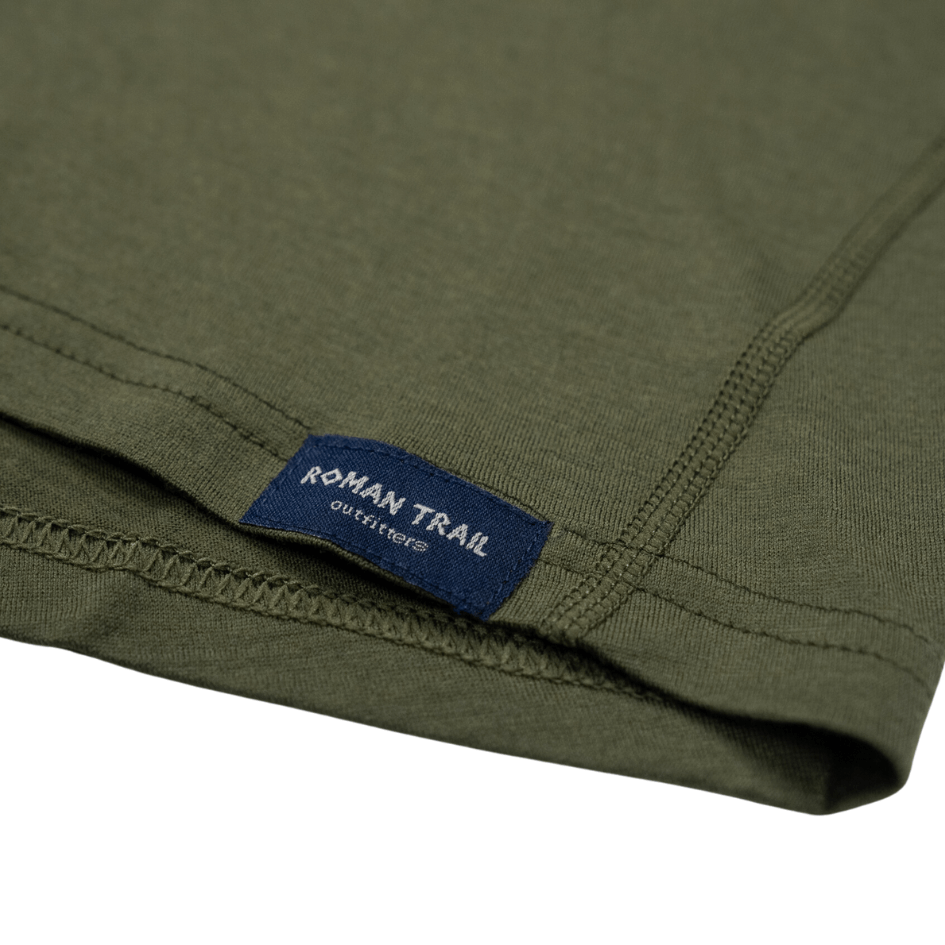
Base layers. Two Roman Trail Women's Merino Wool Base Layers ($49-59) in long sleeve. Merino at 17.5 micron and 160 gsm handles a 35-degree Thessalian afternoon better than cotton, because it moves moisture off the skin instead of holding it, and it does not smell after a day of staircases in heat. The long sleeve covers your shoulders for the monasteries without a separate layer.
Mid layer. The Columbia Women's Fast Trek II Jacket ($65). Meteora sits at 300 to 600 meters, Thessaly has cold winters with snow on the rocks, and mornings and stone interiors are cool in every season.
Rain shell. The Marmot Women's PreCip Eco Rain Jacket ($110) for spring and autumn, when Thessaly gets real rain and the stone steps become slick.
Footwear. Comfortable walking shoes with a grippy sole for worn stone staircases, and trainers or light boots for the monks' paths, which are rocky and steep. The Darn Tough Women's Hiker Micro Crew Merino Socks ($28), two pairs, because several hundred steps in heat is where blisters start.
Sun and water. A Wide Brim Sun Hat Women UPF 50 ($25), high-factor sunscreen and sunglasses, since the courtyards and staircases are unshaded stone. Two litres of water capacity, with kiosks at some monasteries and nothing on the paths between.
Organisation. The Eagle Creek Pack-It Cube Set ($59) and a daypack, since you will carry the skirt, water and a layer all day.

The Monks' Paths, Which Almost Nobody Walks
This is the recommendation that most changes a Meteora visit.
Nearly every visitor moves between monasteries by car, tour coach or the local bus, which means seeing six courtyards and a road. There is an older network of footpaths cut and worn by the monks themselves, linking the monasteries through the gaps and gullies between the pillars, and it is almost empty.
From Kastraki you can walk up to St Nicholas, continue to Varlaam and Great Meteoron, and drop back down, spending most of the day off tarmac and in the rock itself. Paths also run to the hermitages and to the Doupiani rock viewpoint, which gives the classic panorama at sunset.
Practicalities: some paths are signed and some are not, the surfaces are rock and loose stone, and a local map or a GPS track is worth having. Guided walking tours run from Kastraki and are genuinely worthwhile for route-finding and for the history. Carry water, start early, and wear real shoes.
The sunset viewpoints along the road above Kastraki are where everyone gathers, and they are justly famous. Arriving thirty minutes early gets you a place on the rock.
Getting There and Getting Around
By train: the most pleasant approach. Trains run from Athens to Kalabaka in about four and a half to five hours, usually with a change at Palaiofarsalos, and from Thessaloniki in about three. The station is in the centre of Kalabaka. Book through the Hellenic Train site.
By bus: KTEL services from Athens and Thessaloniki take four to five hours, and from Trikala there are frequent local connections.
By car: about four and a half hours from Athens on the A1 and E65, three from Thessaloniki. A car makes the monastery circuit easy and parking at each is small and fills mid-morning.
The local bus runs from Kalabaka up to the monasteries a few times a day in season, which is cheap and workable with planning but infrequent.
Taxis in Kalabaka will do a monastery circuit by the hour at a reasonable rate, which is the practical option without a car.
Walking from Kastraki to the nearest monasteries is entirely feasible and is the best way to do it.
Costs: What to Budget
Meteora is inexpensive by Greek standards, and the monastery fees are small.
Budget, 45 to 70 euros a day: a guesthouse room in Kalabaka or Kastraki at 30 to 50, taverna meals at 12 to 18, the local bus, and two or three monastery entries.
Mid-range, 90 to 150 euros a day: a good guesthouse with a rock view at 55 to 95, restaurant meals at 20 to 30, a taxi circuit or a hire car, a guided walk.
Higher end, 200 euros and up: the better boutique hotels in Kastraki, private guiding, and a climbing day with an instructor.
Specific costs: each monastery charges around 5 euros, paid separately at each gate in cash; a guided walking tour of the paths 30 to 60; a taxi monastery circuit 40 to 70 for a few hours; a hire car 35 to 60 a day; the train from Athens 20 to 35; a taverna main 9 to 15; a guesthouse double 40 to 80.
Money: the euro. Cards work in hotels and most restaurants. The monasteries take cash only, so carry small notes and coins for six entries. ATMs are in Kalabaka and not up at the rocks. Tipping: round up or leave 5 to 10 percent. Current opening days and hours at visitgreece.gr and locally posted at each monastery.
Where to Stay: Guesthouses and Hotels for Women
Kastraki is the recommendation: a village directly beneath the pillars, with guesthouses whose terraces face the rock, the monks' paths starting at the edge of the village, and a quieter evening than the town. Fifteen minutes' walk from Kalabaka's restaurants and station.
Kalabaka is the practical base, with the station, the bus station, the widest choice of accommodation and food, and more life in the evening. Unremarkable to look at.
Rock-view rooms are worth paying for in either. Waking up with a monastery lit on a pillar outside the window is most of the reason to stay overnight rather than day-tripping from Athens.
Hostels: Meteora has a small hostel scene concentrated in Kalabaka, with female dorms and organised sunset and walking tours, which is the easiest way to find company for the paths.
What to check as a woman travelling alone: whether the room faces the rocks, which is the point; whether breakfast is early enough for an opening-time start; whether the property is in Kastraki, which means walking rather than driving to the nearest monasteries; and whether they can arrange a taxi circuit, which most will.
Essential Resources for Women in Meteora
Emergency numbers in Greece: 112 is the European emergency line, 166 ambulance, 100 police, 199 fire.
Tourist police: Greece runs a dedicated tourist police service on 1571, with English-speaking officers handling visitor complaints and disputes, and there is a police presence in Kalabaka.
Mountain and climbing rescue: through 112. Relevant if you walk the monks' paths or climb, since the rock is steep and coverage in the gullies is patchy. Local guides and the Greek climbing community handle most incidents on the towers.
US consular services: the US Embassy in Athens covers Greece, four and a half hours south, with no post in Thessaly. Contact details and the after-hours emergency number are at gr.usembassy.gov.
Main hospitals: the Kalabaka health centre handles minor problems, the nearest general hospital is in Trikala about 25 minutes away, and the regional referral hospital is in Larissa, an hour and a half. EU visitors should carry a European Health Insurance Card and UK visitors a GHIC, both covering public treatment; everyone else needs travel insurance, and it should name climbing if you intend to climb.
Official health authority: the Greek Ministry of Health at moh.gov.gr.
Official tourism authority: visitgreece.gr, which carries current monastery opening days and hours. These change between summer and winter schedules and are the single most important thing to verify before you travel.
US State Department travel advisory for Greece: current advisory level and detail.
UK FCDO travel advice for Greece: entry requirements, safety and health guidance.
Solo women safety assessment: Meteora is an easy and welcoming place to visit alone. Greece has low violent crime, Kalabaka and Kastraki are small and friendly, the monasteries are busy and staffed, and trains and buses are reliable and safe. Greek hospitality towards a woman travelling by herself is warm and frequently insistent. The real considerations are practical. Several hundred worn stone steps in a day is what tires and occasionally injures visitors, so wear shoes with grip and pace the monasteries rather than attempting six. Check the rotating closing days before you fix your dates, because no monastery opens every day and a wrong assumption loses you half the site. Unshaded stone at 37 degrees in August is punishing, so start at opening. Bring your own long skirt rather than relying on borrowed wraps. And if you walk the monks' paths, which is genuinely the best way to experience the place, tell someone your route, carry water, and accept that coverage in the gullies is poor.
Reading On
Meteora is the most extraordinary religious site in Greece, and the one place on this site where what you pack determines whether you get through the door. The Meteora packing list for women has the gear detail including the skirt. The Greece travel guide for women covers the country, with the Athens travel guide for women four and a half hours south and the usual arrival, and the Santorini, Mykonos and Crete guides covering the islands. The travel packing guide for women is the parent for every destination. For why merino handles 35-degree heat and a monastery dress code together, the merino wool base layer guide explains it, and the full range is at Roman Trail women's merino base layers.
If the outer journey is calling you, the inner one usually is too. Explore SoulMap at romantrail.com/blogs/soulmap.
Blog posts
View all-

Packing List for Skardu, Pakistan: What Women S...
What to pack for Skardu, Pakistan: the capital of Baltistan, the cold desert, Deosai plains, the road head for K2, and how to get there legally.
Packing List for Skardu, Pakistan: What Women S...
What to pack for Skardu, Pakistan: the capital of Baltistan, the cold desert, Deosai plains, the road head for K2, and how to get there legally.
-

Packing List for Naran, Pakistan: What Women Sh...
What to pack for Naran, Pakistan: the Kaghan valley, Saiful Muluk lake, the Babusar Pass as the compliant road north, and the permission you need before you go.
Packing List for Naran, Pakistan: What Women Sh...
What to pack for Naran, Pakistan: the Kaghan valley, Saiful Muluk lake, the Babusar Pass as the compliant road north, and the permission you need before you go.
-

Packing List for Multan, Pakistan: What Women S...
What to pack for Multan, Pakistan's city of saints: the Sufi shrines, the blue tilework, the mango orchards, and heat that reaches the high forties.
Packing List for Multan, Pakistan: What Women S...
What to pack for Multan, Pakistan's city of saints: the Sufi shrines, the blue tilework, the mango orchards, and heat that reaches the high forties.


Contact form

Roman Trail Outfitters
Merino Wool Women's Long Sleeve Top | Crew Neck Shirt | Deep Olive