Dublin Travel Guide for Women: Everything You Need to Know

Dublin is the most literary capital in the English-speaking world, and it is not close. Four Nobel laureates in literature came out of a city of barely half a million people at the time. Joyce set an entire novel across one day of its streets, and you can still walk that day. It is a UNESCO City of Literature, and the ninth century Book of Kells sits in a library at the middle of it under a barrel-vaulted room of two hundred thousand books.
It is also a small, wet, sociable, expensive city where the actual pleasure is conversational rather than architectural. Dublin has no great skyline and few grand vistas. What it has is a pub two hundred metres from wherever you are standing in which a stranger will talk to you, and a coastline thirty minutes out on a suburban train where you can walk a cliff path above the Irish Sea and eat crab that came off a boat that morning.
Disclosure: This post contains affiliate links. If you buy through them, Roman Trail earns a small commission at no extra cost to you.
For a woman travelling alone it is close to an ideal first solo trip: everything in English, one of the lowest violent crime rates in Europe, walkable, and a drinking culture in which a woman on her own in a pub is entirely unremarkable. This guide covers the seasons, the sites worth booking ahead, the music, transport, costs, where to stay, and how to pack for a climate defined by a rain layer.
Is Dublin Safe for Women Travelers
Dublin is among the safest capital cities in Europe. Violent crime against visitors is rare, Gardai are unarmed and approachable, and the practical experience of most solo women here is entirely uneventful. The absence of a language barrier removes most of the friction that makes solo travel tiring elsewhere.
The honest caveats are minor and worth knowing rather than worrying about.
The north inner city at night. Antisocial behaviour and street drinking have become more visible around O'Connell Street, Talbot Street, Parnell Street and the north quays in recent years, and Dubliners themselves are vocal about it. It is intimidating rather than dangerous, but there is no reason to walk through it after midnight when a taxi costs ten euros.
Pickpocketing. Grafton Street, Temple Bar and crowded buses. Standard precautions suffice.
Temple Bar. Safe, but it is a tourist trap rather than a night out. Pints cost close to double what they do three streets away, the music is played for visitors rather than by locals for each other, and Dubliners do not drink there. Go once, briefly, then go somewhere real.
Drink safety. Spiking has been reported, as in any city with a large pub scene. Keep your drink with you.
Bike theft is endemic if you hire one. Use two locks.
Taxis are metered, licensed and reliable, and the Free Now app works well. There is no meaningful taxi scam culture here.
Ireland has no dedicated tourist police. Report anything at Pearse Street or Store Street Garda stations in the city centre.
Best Time to Visit Dublin
The temperature range across a Dublin year is roughly what a continental European city goes through in a single day. Summer highs sit near 19C, winter lows near 3C, and it very rarely freezes. So the question is not warmth but daylight, rain and crowds.
May and September are the best months. May is often the sunniest and among the driest of the year, and September holds warmth without the summer crowds and prices. Both give long enough days to do the coast properly.
Summer, June to August. Long evenings, light until nearly eleven in June, the busiest and most expensive stretch, and the only time Trinity and Kilmainham genuinely require booking a week ahead. It still rains.
Autumn and winter, October to February. Wet, windy and dark, with the sun down before half past four in December. It is also cheap, atmospheric, and the season in which the pubs make the most sense. Christmas in Dublin is genuinely lovely, and the city empties completely for the few days after.
St Patrick's Day, 17 March, transforms the city into a five day festival. Book months ahead or avoid deliberately, because there is no middle ground.
Bloomsday, 16 June, marks the day on which Ulysses is set, with readings, costumes and walking routes across the city. Worth timing a literary trip around.
Top Areas and What Each One Requires
Trinity College and the Book of Kells
Trinity was founded in 1592 and its cobbled front square sits in the middle of the city. The Book of Kells, a ninth century illuminated gospel manuscript made by Columban monks, is displayed in the Old Library, and above it runs the Long Room: 65 metres of barrel-vaulted oak holding 200,000 of the library's oldest books, marble busts down both sides. It is the single most photographed interior in Ireland.
What it requires: advance booking with a timed slot, which sells out days ahead in summer. A layer, because the Long Room is unheated and cool year round. Note the Long Room has undergone a major conservation project in recent years with books removed in phases, so check what is currently on view.
The Guinness Storehouse and the Liberties
Seven floors inside a converted fermentation plant at St James's Gate, ending in the Gravity Bar, a circular glass room with a 360 degree view over the city to the Wicklow Mountains. It is the most visited attraction in Ireland and unashamedly a brand experience, but the building is remarkable and the view is the best in Dublin.
The surrounding Liberties is the oldest part of Dublin, with the Teeling and Roe and Co whiskey distilleries, St Patrick's Cathedral and Christ Church nearby.
What it requires: comfortable shoes for a long walk around the exhibit, and the Gravity Bar is standing room only.
Kilmainham Gaol and Kilmainham
The prison where the leaders of the 1916 Easter Rising were held and executed, and where many figures of Irish republicanism were imprisoned across a century and a half. The East Wing, a Victorian panopticon of iron walkways under a glass roof, is extraordinary. The stonebreakers' yard, where the executions took place, is not something you forget.
Nearby, the Irish Museum of Modern Art occupies the seventeenth century Royal Hospital Kilmainham, and is free.
What it requires: guided tour only, and advance booking that sells out further ahead than anything else in Dublin, often a week or more. The building is stone, unheated and genuinely cold in every season. Bring a mid layer even in August.
Trad Sessions and the Pubs

The distinction that matters: a session is musicians playing for each other in a circle, not a band playing at an audience. The Cobblestone in Smithfield is the one musicians actually go to, a small front bar where conversation drops when the players start and where the sign asks you to respect that. O'Donoghue's on Merrion Row is the other classic, where the Dubliners played. Both fill early and both mean standing.
For pubs generally: Kehoe's, the Long Hall, Grogan's and the Palace Bar are the ones Dubliners name. The Dublin Literary Pub Crawl, led by actors performing between stops, is genuinely good and moves outdoors in all weather.
What it requires: something you are comfortable standing in for three hours, and a coat you do not mind putting on a wet floor.
Howth and the Coast

Thirty minutes north on the DART from Connolly or Tara Street, and the best half day in Dublin. Howth is a working fishing village on a headland, with a looped cliff path around the head, the Baily Lighthouse below, and views on a clear day to the Mountains of Mourne. The seafood restaurants along the harbour front are why many Dubliners go out at all, and the fish is landed there.
To the south, the DART runs to Dun Laoghaire, Dalkey and Bray, and the Bray to Greystones cliff walk is the southern equivalent.
What it requires: proper waterproofs and boots. The path is exposed, the wind is a different order of magnitude to the city, sections are muddy after rain and there are unfenced drops. This is genuine coastal walking, not a promenade.
The Museums
Dublin's best museums are free, which visitors consistently fail to exploit. The Chester Beatty Library in Dublin Castle holds one of the finest collections of Islamic and East Asian manuscripts in the world and is regularly voted the best museum in Ireland. The National Museum of Ireland at Kildare Street holds the Iron Age bog bodies and the Tara Brooch. The National Gallery holds Caravaggio's Taking of Christ, found by accident in a Jesuit dining room in Dublin in 1990.
What to Pack for Dublin, Women's Packing List
One rule dominates: the rain layer is not optional in any month. Everything else is straightforward, because the temperature range is narrow and nothing requires formality.
Base layers
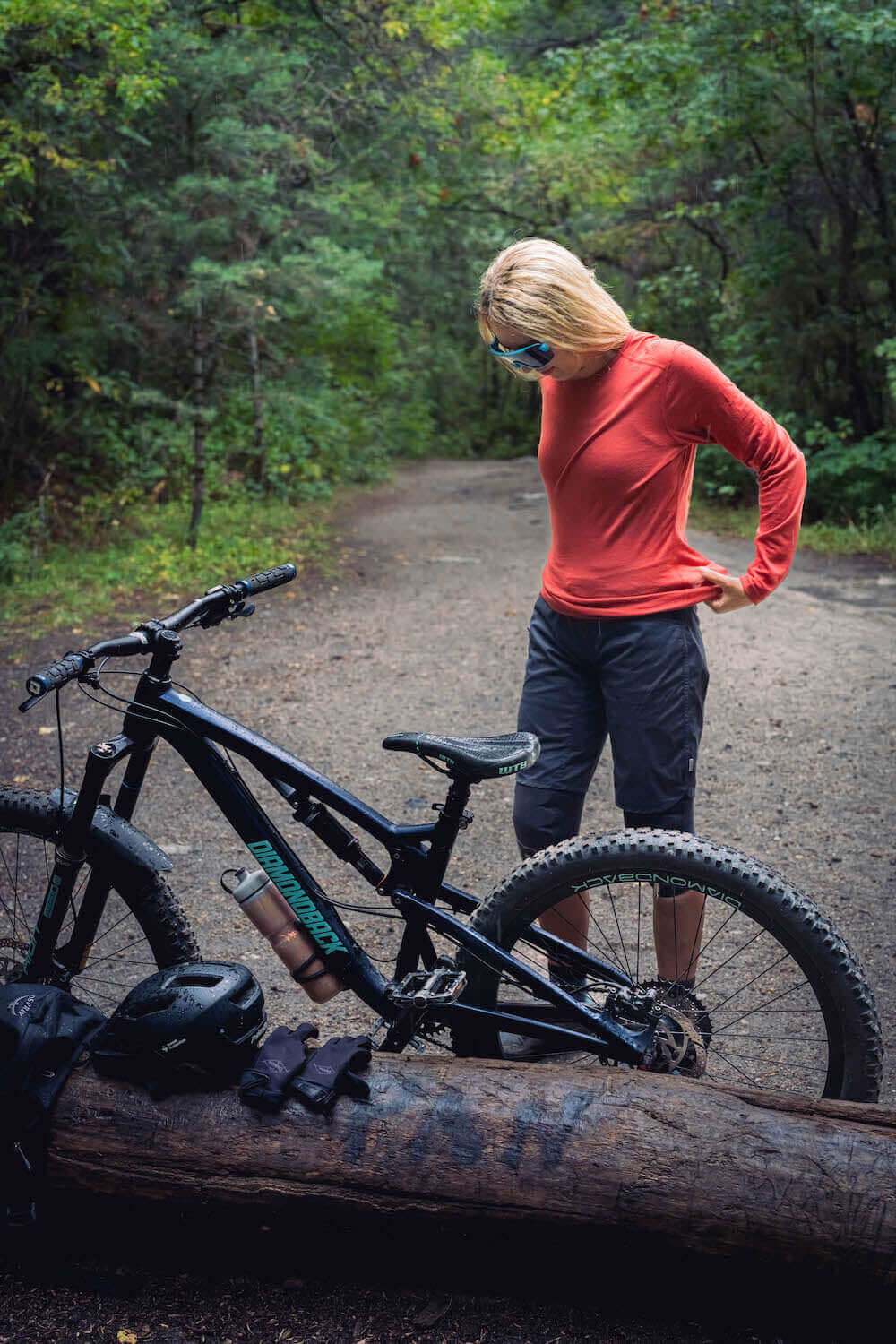
Merino matters in a damp maritime climate for a reason that is easy to miss: wool keeps insulating when it is damp, and cotton does not. Given that you will be lightly rained on most days, that is the whole argument. A merino wool base layer for Dublin at 160gsm covers the entire year here. Two tops for a week.
Mid layers
From October to April, real insulation that packs down, because Dublin pubs and museums are heated hard while the street outside is 6C and wet, and you will be carrying your coat indoors constantly. A Columbia insulated hooded jacket handles that and the Howth cliffs. In summer a light fleece is enough, but bring one, because July evenings still fall to 12C.
Outer layers
The most important item in the bag. A waterproof hooded rain jacket for Ireland that packs small enough to live in your day bag rather than your hotel room. Hooded, because the wind off the Irish Sea will destroy an umbrella on the quays. Genuinely waterproof rather than water resistant, because the latter fails by day three of persistent drizzle.
Footwear
waterproof boots for the Howth cliff walk handle both the wet city pavements and the exposed, muddy coastal paths, and waterproof is the operative word: wet feet on day one of a short trip ruins it. Add merino wool socks for wet weather walking, four pairs rather than three, which keep insulating when damp and dry overnight on a radiator. One comfortable second pair for pubs and dinner. No heels.
Accessories, documents and health
A day bag that closes and is ideally water resistant, or a dry bag liner for electronics. A universal adaptor for Irish Type G sockets, which match the UK and differ from continental Europe, and which visitors arriving from Paris or Amsterdam regularly forget. A refillable bottle, since the tap water is safe and good.
Ireland is in the EU but not in Schengen, and it operates a Common Travel Area with the UK, so check your own visa position rather than assuming a Schengen visa covers you. EU visitors should carry an EHIC and UK visitors a GHIC.
Getting Around Dublin
On foot. The city centre is small and this is how you will do most of it. Trinity to the Guinness Storehouse is a 25 minute walk.
The DART. The coastal suburban rail line, and the single most useful thing for a visitor: north to Howth, south to Dun Laoghaire, Dalkey and Bray, all in under 45 minutes. Scenic, cheap and frequent.
Luas. Two tram lines, red and green, crossing the city. Clean and easy, though they do not serve every visitor destination.
Dublin Bus. Extensive and the way to reach the Guinness Storehouse, Kilmainham and the Phoenix Park. Buy a Leap Card at any convenience store, which caps daily spend and works across bus, Luas and DART.
Taxis. Metered, licensed and plentiful. The Free Now app is what people use.
From the airport. Dublin Airport is 10 kilometres north with no rail link, which surprises people. The Airlink and Aircoach buses run to the centre in 30 to 45 minutes for a few euros. A taxi is roughly 25 to 35 euros.
Bikes. Dublinbikes is cheap and the city is flat, though traffic is heavy and cycle infrastructure is patchy. Bike theft is endemic.
Day trips. Glendalough and the Wicklow Mountains are an hour south and best done by tour. Newgrange, a passage tomb older than the pyramids, is an hour north.
Costs, What to Budget
Dublin is expensive. Accommodation in particular has risen steeply and now rivals the most costly cities in Europe, driven by a genuine housing shortage rather than tourism alone. Budget more than you would for most of the continent.
Budget: 90 to 130 euros a day. Hostel dorm at 35 to 55 euros, supermarket and cafe food, Leap Card, and the free museums, which are excellent.
Mid-range: 180 to 300 euros a day. A hotel or guesthouse at 130 to 220 euros, pub meals and one good dinner, paid attractions, occasional taxis.
Luxury: 450 euros a day and up. The Merrion, the Shelbourne or the Westbury from 350 euros, tasting menus, private tours.
Accommodation runs 35 to 55 euros for a hostel dorm, 130 to 220 for a mid-range double, and 350 and up at the top end. This is the line item that will surprise you, and it spikes hard around St Patrick's Day, rugby internationals at the Aviva and major concerts.
Meals. Pub food is 16 to 24 euros a main. A mid-range restaurant dinner is 30 to 50. A pint of Guinness is 6 to 7 euros in an ordinary pub and 9 or more in Temple Bar, which tells you most of what you need to know about Temple Bar. Coffee is 3.50 to 4.50.
Attractions. The Book of Kells and Old Library is around 25 euros. The Guinness Storehouse is around 30 euros, cheaper booked online. Kilmainham Gaol is around 8 euros and the best value in the city. The Chester Beatty Library, the National Museum, the National Gallery and IMMA are all free.
Currency and tipping. Ireland uses the euro, unlike Northern Ireland which uses sterling. Cards are accepted everywhere and contactless is universal. Tipping is modest: 10 to 12 percent in restaurants, and nothing at all at the bar in a pub, where tipping is not the custom. Official visitor information is at ireland.com.
Where to Stay: South City Centre, Portobello and Smithfield
South city centre, Dublin 2. The area around Grafton Street, St Stephen's Green, Merrion Square and Camden Street. Central, safe at all hours, walking distance to nearly everything, and where most visitors should look first. It is also the most expensive.
Portobello and Rathmines. Just south of the canal, twenty minutes on foot from Grafton Street. Residential, quieter, better value, and full of good cafes and restaurants along Camden Street and Richmond Street. An excellent choice for solo travellers wanting a real neighbourhood.
Smithfield and Stoneybatter. North of the river and west, and the most interesting part of Dublin right now: independent coffee, good restaurants, the Cobblestone, the Jameson Distillery and the Phoenix Park nearby. Cheaper than the south side and increasingly where Dubliners in their thirties live.
Ballsbridge and Donnybrook. Leafy, embassy-lined, quiet and safe, twenty five minutes on foot or ten by bus from the centre. Good value for the quality and where the larger traditional hotels sit.
Temple Bar. Central and convenient, and extremely loud until three in the morning every night of the week. Only worth it if you intend to be part of the noise.
North inner city around O'Connell Street. Cheapest and most central, and the area where antisocial behaviour is most visible after dark. Fine by day, and worth weighing carefully if you will be coming back late alone.
Hostels. Dublin has a good hostel scene, with the best concentrated around Temple Bar, Smithfield and Gardiner Street. Look for female-only dorms, keycard access, in-room lockers and reviews from recent months mentioning the immediate street at night.
Essential Resources for Women in Dublin
Emergency numbers: 999 or 112, both of which reach all emergency services in Ireland and both of which work from mobiles. Operators speak English.
Tourist police: Ireland has no separate tourist police force. An Garda Siochana handle everything and are unarmed and approachable. The main city centre stations are Pearse Street, Dublin 2, and Store Street, Dublin 1, and you can file a report at either for insurance purposes.
US Embassy in Dublin: 42 Elgin Road, Ballsbridge, Dublin 4, telephone +353 1 668 8777. Website ie.usembassy.gov.
Main hospitals: St James's Hospital, James's Street, Dublin 8, +353 1 410 3000, and the Mater Misericordiae University Hospital, Eccles Street, Dublin 7, +353 1 803 2000, both operate 24 hour emergency departments. Emergency department waiting times in Ireland can be very long, so for anything non-urgent use a walk-in clinic, a VHI SwiftCare centre or a pharmacy first. Pharmacists in Ireland can advise on a wide range of minor complaints.
Official health authority: Health Service Executive, hse.ie. EU visitors should carry an EHIC card and UK visitors a GHIC, which cover state treatment.
US State Department travel advisory: Ireland travel advisory.
UK FCDO travel advice: gov.uk/foreign-travel-advice/ireland UK FCDO safety and security: gov.uk/foreign-travel-advice/ireland/safety-and-security.
Official tourism authority: ireland.com, the official tourism site for the island of Ireland.
Solo women safety assessment: Dublin is among the safest capitals in Europe for a woman travelling alone and is close to an ideal first solo destination: everything is in English, violent crime against visitors is rare, Gardai are unarmed and approachable, and a woman eating or drinking alone in a pub attracts no attention whatsoever, which is genuinely not true across much of Europe. The realistic concerns are minor. Antisocial behaviour and street drinking have become more visible in the north inner city, around O'Connell Street, Talbot Street, Parnell Street and the north quays, and while it is intimidating rather than dangerous there is no reason to walk through it late at night when a taxi is ten euros. Pickpocketing occurs on Grafton Street, in Temple Bar and on crowded buses. Keep your drink with you in the pubs, as you would anywhere. Taxis are metered and regulated with no scam culture, and the Free Now app is what locals use.
Book Tours and Experiences
Related Reading
For the season by season packing detail, see the Dublin packing list for women. For the country as a whole, see the Ireland travel guide for women. For packing across every destination we cover, see the travel packing guide for women.
You can read more about building a merino-first travel wardrobe on the Roman Trail merino wool base layer guide. Browse the full collection at Roman Trail women's merino base layers, available in eight colors with free two-day shipping and a two-year satisfaction guarantee.
If the outer journey is calling you, the inner one usually is too. Explore SoulMap at romantrail.com/blogs/soulmap.
Blog posts
View all-

Packing List for Calais, France: What Women Sho...
What to pack for Calais: the French town that was English for 211 years, with Rodin's Burghers, a lace museum and a mechanical dragon on the seafront.
Packing List for Calais, France: What Women Sho...
What to pack for Calais: the French town that was English for 211 years, with Rodin's Burghers, a lace museum and a mechanical dragon on the seafront.
-

Packing List for Vasto, Abruzzo: What Women Sho...
What to pack for Vasto: an Abruzzo hill town above the Adriatic with fishing machines on stilts below it and a church portal standing where a landslide left it.
Packing List for Vasto, Abruzzo: What Women Sho...
What to pack for Vasto: an Abruzzo hill town above the Adriatic with fishing machines on stilts below it and a church portal standing where a landslide left it.
-

Packing List for Catalina Island, California: W...
What to pack for Catalina Island: an hour from Los Angeles, no visitor cars, a herd of bison, and a conservancy that owns most of the land you want to...
Packing List for Catalina Island, California: W...
What to pack for Catalina Island: an hour from Los Angeles, no visitor cars, a herd of bison, and a conservancy that owns most of the land you want to...


Contact form

Roman Trail Outfitters
Merino Wool Women's Long Sleeve Top | Crew Neck Shirt | Deep Olive