Torres del Paine Travel Guide for Women: Everything You Need to Know

Torres del Paine National Park covers roughly 1,800 square kilometres of Chilean Patagonia in the Magallanes region, 112 kilometres north of Puerto Natales and about 2,000 kilometres south of Santiago. It became a national park in 1959, a UNESCO Biosphere Reserve in 1978, and it is the most visited protected area in Chile, taking something in the order of 300,000 people a year.
Disclosure: This post contains affiliate links. If you buy through them, Roman Trail earns a small commission at no extra cost to you.
The three towers are granite: a magma intrusion that cooled beneath the surface around twelve million years ago, later stripped of its overlying sedimentary rock and carved by successive glaciations into near-vertical pillars, the tallest reaching about 2,850 meters. The dark caps on the Cuernos del Paine, the horns, are the remnant of that older sedimentary layer sitting on pale granite, which is why they look as though they have been dipped in something.
The park holds guanaco, Andean condor, the endangered huemul deer, and a puma population that is among the most studied and most reliably seen in the world.
Two facts govern a visit here more than anything about the scenery. The wind, which regularly reaches 80 to 100 kilometres per hour and is capable of knocking a person over. And the booking system, which is fragmented across three operators and will defeat a trip planned late.
This guide covers the booking reality first because it is the thing that goes wrong, then safety, seasons, the routes, transport, costs, accommodation and the packing list.
The Booking System, Which Defeats More Trips Than the Weather
You cannot walk the W or the O spontaneously. Every night inside the park must be spent at a pre-booked refugio or campsite, and reservations are checked at the entrance.
Three separate operators run the accommodation, on separate websites, opening their booking windows at different times:
Las Torres covers the eastern sector, including Refugio Central, Chileno and Las Torres. Vertice covers the western sector, including Paine Grande, Grey and Dickson. CONAF runs the free campsites, which are limited, basic and fill instantly.
Add a park entry reservation through CONAF, which is separate again, and the catamaran across Lake Pehoé if your route needs it.
For the December to February peak, start booking in June to August, roughly six months out. Chileno and Grey go first because the route geometry forces most itineraries through them. A single missing night breaks the whole chain, since there is nowhere legal to sleep between stages.
The guided alternative: an operator handles every booking, the catamaran, the transfers and the food. It costs substantially more and removes the failure mode entirely, which for a trip flown halfway around the world is a reasonable trade.
Recommended Tours and Experiences

Is Torres del Paine Safe for Women Travelers
Very, in the ordinary sense. Chile is among the safest countries in South America, crime inside the park is effectively not a factor, the W is busy in season, refugios are communal, and you will see the same people at each stop. Trekking here alone is easy and often more sociable than doing it with one companion.
The risks are environmental and they deserve to be taken seriously.
Wind. The defining hazard. Patagonia sits in the path of the Southern Hemisphere westerlies with no landmass to slow them, and gusts of 80 to 100kph are a normal afternoon. People are blown off their feet on exposed ridges and lake shores every season. When the forecast is bad, change the day rather than walk it, and be aware that the park closes sections for wind.
The moraine climb to the Mirador Las Torres. The final kilometre to the towers gains about 240 meters over a boulder and scree field marked by cairns with no real path, steep and loose, worse in wet or snow. It injures people regularly and the descent is harder than the ascent. Poles help materially. Skipping it in poor conditions is the right call rather than a failure.
Hypothermia in summer. Entirely possible: get wet, get windblown, have no shell, stop moving. Summer temperatures of 5 to 18 degrees plus wind chill go below freezing on an exposed section.
UV. The ozone layer over southern South America is thinner than at comparable northern latitudes, and with snow, ice and lake reflection the UV here is severe. People burn badly on cold grey days, which is when they stop applying sunscreen.
Communications. Mobile coverage in the park is patchy to absent. The refugio and ranger radio network is the actual emergency system. Register at the entrance, tell your refugio your plan for the day, and do not walk the remote O sections alone.
Fire. Open fires are banned outright. Visitor-caused fires burned substantial areas of the park in 2005 and 2011, and cooking is permitted only in designated shelters. This is enforced and taken personally by rangers.
Pumas are present and attacks on people are vanishingly rare. Guidance is to keep distance, never run, and not walk at dawn or dusk alone in the eastern sector where sightings concentrate.
Emergency numbers: 131 ambulance, 132 fire, 133 police.
Best Time to Visit Torres del Paine
December to February, summer
5 to 18 degrees, daylight until nearly eleven at night, everything open, and the strongest winds of the year. Busiest and most expensive, with bookings going six months ahead. The trade-off is long days, which matter for a trek.
November and March, the shoulders
For many walkers the better choice. 3 to 14 degrees, noticeably less wind, far fewer people, full facilities still running, and in late March the lenga beech turns red and orange across the whole park. Weather is less settled and the daylight shorter.
April and October
Cold, unpredictable, with reduced services and some sections closed. Very quiet, and only for flexible travellers.
May to September, winter
Restricted access, guided only on much of the park, most refugios closed, snow and short days. A specialist trip, and the puma tracking season, which is genuinely the best time for that.
The Routes
The W Trek
About 80 kilometres over four to five days, tracing a rough W between three valleys. Walked in either direction, and east to west puts the towers on day one while your legs are fresh and gives you Grey Glacier at the end.
The three arms: the Mirador Las Torres and its moraine climb; the French Valley, with a hanging glacier that calves audibly and the Británico viewpoint at its head; and Grey Glacier, with suspension bridges and the option of a boat or kayak among the icebergs.
The O Circuit
About 130 kilometres over eight to nine days, adding the remote northern back side. It is anticlockwise only, has stricter seasonal dates, and includes the John Gardner Pass, the hardest section in the park, where the wind coming over the top is at its most serious and where the first sight of the Grey Glacier icefield opens up below you.
Fewer facilities, fewer people, and a genuinely wilder experience.
Day walks
A large share of visitors never sleep in the park. Day trips from Puerto Natales reach the Mirador Las Torres, Lake Grey and the Salto Grande waterfall. The towers as a day walk is a long, hard day of about 18 to 20 kilometres, and it is a completely legitimate way to see the best of the park.
The catamaran
The Lake Pehoé crossing links the western sections and runs to a fixed timetable that governs the shape of the whole day. Check it, book it, and do not miss the last sailing.
What to Pack for Torres del Paine: Women's Packing List
The full detail is in the Torres del Paine packing list for women. The essentials:
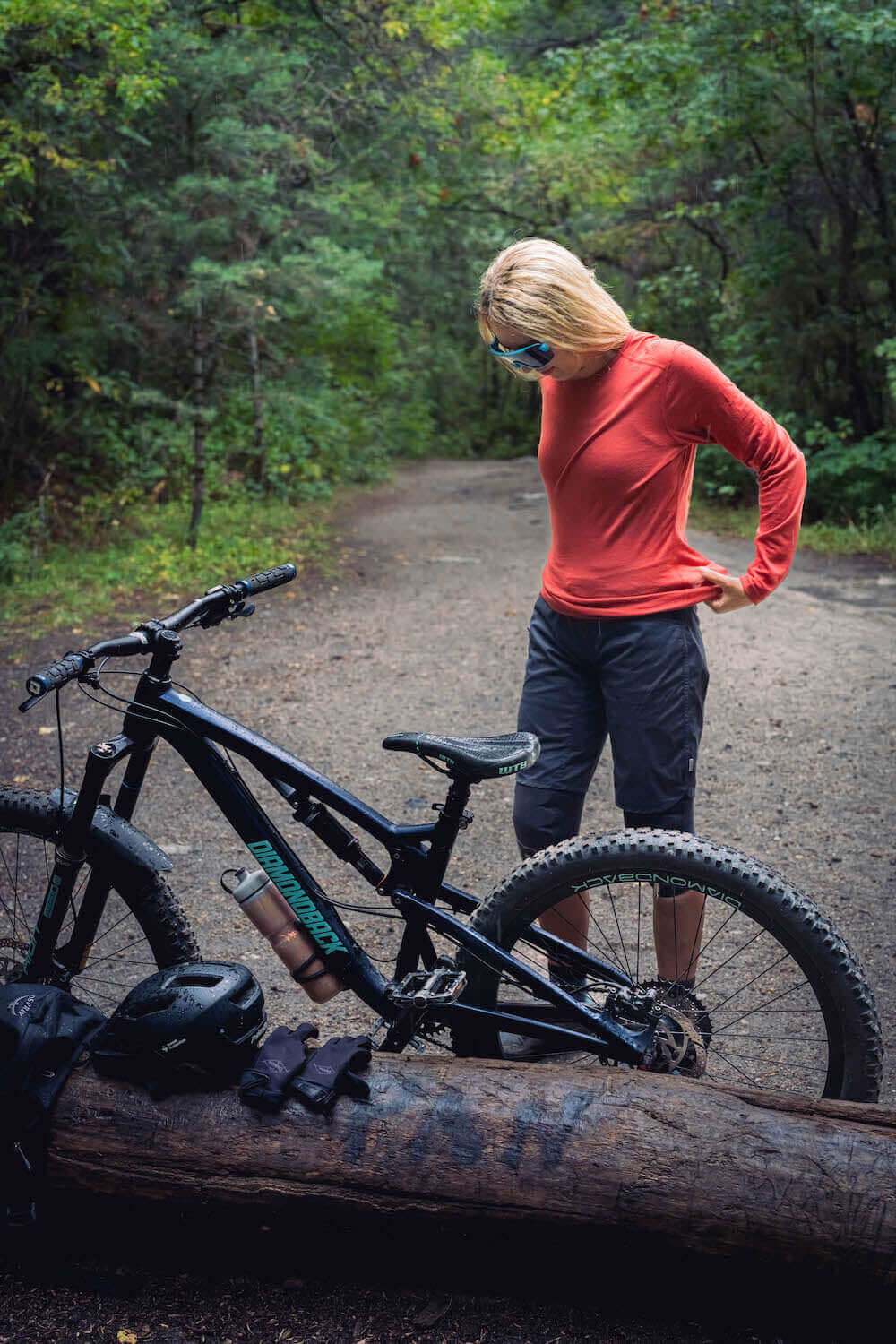
Base layers. Three Roman Trail Women's Merino Wool Base Layers ($49-59) in long sleeve plus merino bottoms. Three, because a five-day trek has no laundry. Merino at 17.5 micron and 160 gsm matters here for two specific reasons: it keeps insulating when damp, which is constant when you sweat climbing and then stand still in 80kph wind, and it does not acquire the smell synthetics develop across five nights in a refugio dormitory.
Mid layer. The Columbia Women's Fast Trek II Jacket ($65), plus an insulated jacket for evenings and pre-dawn starts. Refugios are heated and campsites are not, and a summer night camping here is near freezing.
The shell, which carries the system. The Marmot Women's PreCip Eco Rain Jacket ($110), hooded, plus waterproof overtrousers, which are not optional. Its first job is wind and its second is rain: wind passes straight through fleece and strips body heat, and an exposed section in a gale without a shell is how people get dangerously cold in January.
Footwear. The Merrell Women's Moab 3 Waterproof Hiking Boot ($140), thoroughly broken in, for ankle support on the moraine and waterproofing on trails that hold water and cross streams. The Darn Tough Women's Hiker Micro Crew Merino Socks ($28), four pairs for the W, because blisters end more treks here than weather does. Light camp shoes.
Poles and sun. Black Diamond Women's Trail Trekking Poles ($87.88), which on this trek are a safety item rather than a comfort: they keep you upright in wind and save your knees on the moraine descent. A wide-brimmed hat with a chin strap, which will not survive without one, sunglasses with genuine UV protection, and high-factor sunscreen applied even when it is grey.
Organisation and documents. The Eagle Creek Pack-It Cube Set ($59) with a cube for wet kit, a dry bag or liner inside the rucksack because a pack cover does not stop horizontal rain, a sleeping bag liner for refugios, a headlamp, a power bank since refugio charging is limited and queued, and earplugs for the dormitory. Printed booking confirmations and the CONAF entry reservation, which are checked.
Water: park streams run clean off the glaciers and are generally drunk untreated, which is standard practice among guides here and means carrying one litre rather than three.

Getting There and Getting Around
The route in: fly Santiago to Punta Arenas, about three and a half hours, then a three-hour bus to Puerto Natales, which is the staging town for the park. Buses from Puerto Natales to the park entrances take about two hours and run to a schedule built around the trek, usually a morning and an afternoon departure.
Puerto Natales is where you sort everything: gear hire, food, booking confirmations, and the mandatory CONAF briefing some operators run. Give yourself a night there before and after rather than trying to connect the same day.
From Argentina: El Calafate is about five hours by bus, which makes combining Torres del Paine with El Chaltén and the Perito Moreno glacier a natural circuit, and this is how many people do Patagonia. The border crossing is straightforward and adds an hour or two.
Inside the park: you walk. Shuttle vans connect the Laguna Amarga entrance to the Las Torres sector, and the catamaran crosses Lake Pehoé. There is no road network serving the trek.
Gear hire in Puerto Natales is extensive and good: tents, sleeping bags, poles, stoves and packs, which is worth knowing if you are flying in with limited baggage.
Costs: What to Budget
Torres del Paine is expensive for what it is, because everything inside the park is supplied by road and boat and the operators have no competition.
Budget, $70 to $120 a day: camping at CONAF or paid sites at $15 to $35, carrying your own food, bus transfers, and park entry. The cheapest legitimate way to walk the W.
Mid-range, $180 to $300 a day: refugio dormitory beds at $80 to $140 a night, some meals bought in the refugios, transfers and the catamaran.
Guided, $250 to $450 a day: a full package with bookings, guide, meals and transfers handled. The premium buys the removal of the booking risk.
Higher end, $600 and up: the lodges inside and around the park, including some genuinely remarkable ones, with guided day walks and full board.
Specific costs: park entry around 35,000 to 49,000 Chilean pesos for foreign visitors depending on season, a refugio dormitory bed 70,000 to 120,000 pesos, a refugio dinner around 25,000, the Lake Pehoé catamaran around 30,000 each way, the Grey Glacier boat around 100,000, a Puerto Natales to park bus around 15,000 each way, gear hire for a tent and bag around 15,000 a day.
Money: the Chilean peso. Carry cash. Card facilities inside the park are unreliable and connectivity is patchy, ATMs exist in Puerto Natales and not beyond it, and refugios sometimes cannot process cards. Withdraw before you go in. Tipping is not obligatory and a guide who has looked after you for five days is normally tipped. Park fees and reservations at conaf.cl.
Where to Stay: Refugios, Camping and Lodges for Women
Refugios are the standard: mountain lodges with dormitory bunks of four to eight, bedding provided, hot showers, a dining room and meals available. Heated, sociable, and booked six months ahead. For a woman travelling alone these are comfortable and easy, and dormitories are mixed, which is normal here and unremarkable in practice.
Paid campsites sit alongside the refugios with access to the same showers and dining rooms, at a fraction of the cost, and some rent pre-pitched tents with mats and bags, which is the best value in the park.
CONAF free campsites are basic, limited in number, and disappear from the booking system immediately.
Lodges in and around the park, including the Las Torres and Explora properties, offer full board and guided day walks for people who want the park without the dormitory.
Puerto Natales has a deep supply of hostels and guesthouses, and its hostel scene is genuinely good, oriented entirely around the trek, with gear hire, food storage, route advice and other walkers to share transfers with.
What to check as a woman travelling alone: whether your booking is for a bed or a tent, which people confuse on the Vertice site; whether meals are included, because buying them separately in the park is expensive and carrying five days of food is heavy; whether there are drying facilities, which matter enormously; and whether the operator has confirmed every single night, since one gap breaks the itinerary.
Essential Resources for Women in Torres del Paine
Emergency numbers in Chile: 131 ambulance, 132 fire, 133 police. 112 also routes from mobiles.
In-park emergencies: CONAF administers the park and its rangers are the first responders, with stations at the main sectors and radio contact at refugios. Mobile coverage is patchy to absent, so the radio network is the real emergency system. Registering at the entrance is mandatory and is how anyone knows you are inside.
Park authority and conditions: CONAF handles entry reservations and route rules and closes sections for wind or fire risk at short notice, sometimes on the morning itself.
US consular services: the US Embassy in Santiago covers Chile; there is no post in Magallanes. Contact details and the after-hours emergency number are at cl.usembassy.gov.
Main hospitals: the nearest facility is in Puerto Natales, two hours from the park entrance. The regional referral hospital is Hospital Clínico de Magallanes in Punta Arenas, three hours beyond that, and serious cases fly to Santiago. That distance is why travel insurance covering multi-day trekking and medical evacuation is essential here, and why you should read the exclusions rather than assume.
Official health authority: the Chilean Ministry of Health at minsal.cl.
Official tourism authority: chile.travel, with park rules, fees and reservations at conaf.cl.
US State Department travel advisory for Chile: current advisory level and detail.
UK FCDO travel advice for Chile: entry requirements, safety and health guidance.
Solo women safety assessment: This is one of the easiest great treks in the world to do alone. The W is busy through the season, refugios are communal and you will fall in with the same group of walkers at every stop, and Chile is among the safest countries on the continent. Crime is not a consideration. What should shape your decisions is weather and terrain. Wind is the principal hazard, strong enough to knock you down on exposed ground, and the correct response to a bad forecast is to change the day. The moraine climb to the towers injures walkers every season, so take poles, descend slowly, and turn back in bad conditions without treating it as defeat. Summer hypothermia is real if you get wet and windblown without a shell. Assume no phone signal: register at the entrance, leave your day plan with the refugio, and do not walk the remote O sections alone. Confirm before booking that your insurance names multi-day trekking and evacuation, because the nearest hospital is two hours from the gate.
Reading On
Torres del Paine is the best trekking in South America and the destination on this site that most rewards booking six months out. The Torres del Paine packing list for women has the gear detail. The Patagonia travel guide for women covers the region across both countries, and the Chile travel guide for women and Santiago travel guide for women cover the country. Across the border, El Chaltén is five hours away and almost always combined with this, with Bariloche further north and the Argentina travel guide for women covering the country. For the other great ranges, see Everest Base Camp and Chamonix. The travel packing guide for women is the parent for every destination. For why merino handles sweating uphill then standing in a gale, the merino wool base layer guide explains it, and the full range is at Roman Trail women's merino base layers.
If the outer journey is calling you, the inner one usually is too. Explore SoulMap at romantrail.com/blogs/soulmap.
Blog posts
View all-

Packing List for Skardu, Pakistan: What Women S...
What to pack for Skardu, Pakistan: the capital of Baltistan, the cold desert, Deosai plains, the road head for K2, and how to get there legally.
Packing List for Skardu, Pakistan: What Women S...
What to pack for Skardu, Pakistan: the capital of Baltistan, the cold desert, Deosai plains, the road head for K2, and how to get there legally.
-

Packing List for Naran, Pakistan: What Women Sh...
What to pack for Naran, Pakistan: the Kaghan valley, Saiful Muluk lake, the Babusar Pass as the compliant road north, and the permission you need before you go.
Packing List for Naran, Pakistan: What Women Sh...
What to pack for Naran, Pakistan: the Kaghan valley, Saiful Muluk lake, the Babusar Pass as the compliant road north, and the permission you need before you go.
-

Packing List for Multan, Pakistan: What Women S...
What to pack for Multan, Pakistan's city of saints: the Sufi shrines, the blue tilework, the mango orchards, and heat that reaches the high forties.
Packing List for Multan, Pakistan: What Women S...
What to pack for Multan, Pakistan's city of saints: the Sufi shrines, the blue tilework, the mango orchards, and heat that reaches the high forties.


Contact form

Roman Trail Outfitters
Merino Wool Women's Long Sleeve Top | Crew Neck Shirt | Deep Olive