Seville Travel Guide for Women: Everything You Need to Know

Seville is the most intensely itself of any Spanish city. The Andalusian capital of 688,000 people on the Guadalquivir River holds the largest Gothic cathedral in the world, a Moorish palace still used by the Spanish royal family, the neighborhood where flamenco was born, and two annual events, Semana Santa and Feria de Abril, that between them define what southern Spain means. It is also the hottest major city in Europe, and that single fact shapes when you go and what you bring more than anything else in this guide.
Disclosure: This post contains affiliate links. If you buy through them, Roman Trail earns a small commission at no extra cost to you.
This guide covers what a woman planning a Seville trip actually needs: how safe the city is, how genuinely extreme the summer heat gets and how to work around it, how the neighborhoods differ, how Semana Santa and Feria actually work and how far ahead to book, where to see real flamenco rather than the tourist version, how to get around a city built for walking, what a week costs, where to stay, and what to pack.
The packing challenge is heat and coverage. Seville summer runs 40 to 45 degrees, the historic churches expect shoulders covered, the Santa Cruz lanes are cobblestone, and Semana Santa means standing outdoors for hours at night. Fabric that moves moisture and shoes that handle uneven stone are the two decisions that matter.
Is Seville Safe for Women Travelers
Seville is a safe city for women travelers, and Spain overall carries a Level 1 US State Department advisory, exercise normal precautions, which is the lowest rating issued and the same one applied to most of Western Europe.
The historic center, Santa Cruz, El Arenal, La Macarena, Alameda, and Triana are all comfortable to walk during the day and well into the evening. Spanish social life runs late, so streets that would be empty at 11pm in an American city are still busy here with families and diners, which makes solo evening walking genuinely unremarkable. Solo dining at a tapas bar counter is the normal way to eat in this city and attracts no attention at all.
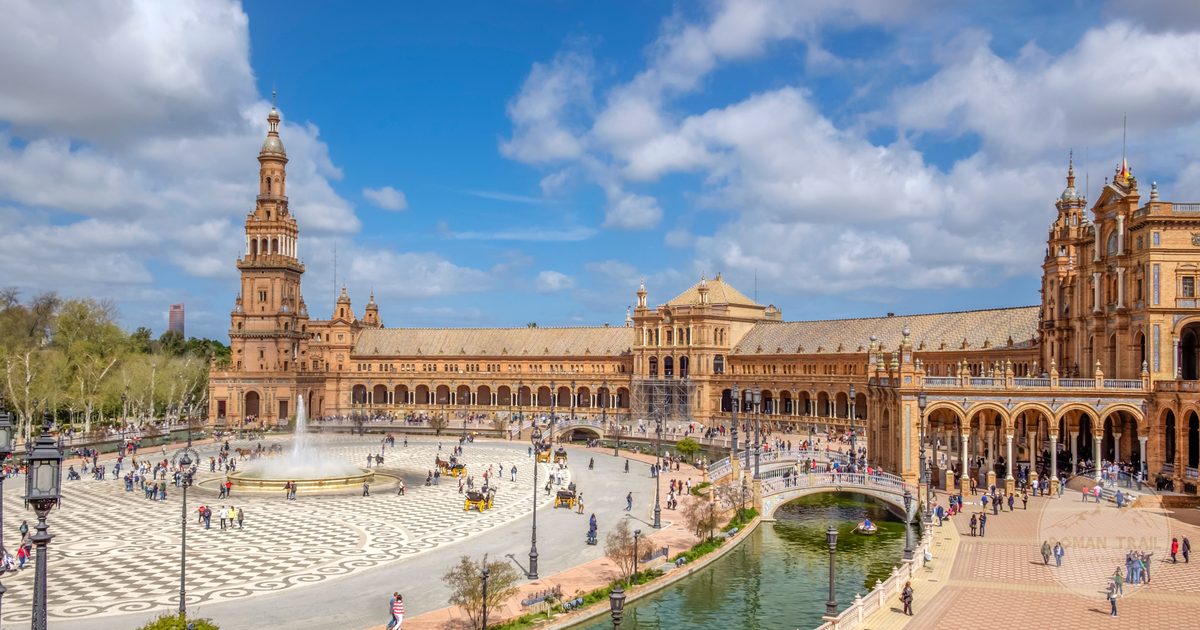
The realistic risk is pickpocketing rather than anything violent, and it concentrates in exactly the predictable places: the crowds around the Cathedral and Alcazar entrances, Plaza de Espana, the Santa Cruz lanes at peak hours, and above all the dense crowds during Semana Santa and Feria, which are prime working conditions for pickpockets. A zipped crossbody worn in front handles nearly all of it. Do not put a phone in a back pocket, and be alert to the distraction routines that operate near the Cathedral, where someone offers you a sprig of rosemary and then demands payment.
Two situational notes. The Alameda de Hercules area is the nightlife center and is fine, but the streets north of it quieten considerably late. And during Feria, the caseta tents are mostly private, entry is by invitation, and a great deal of drinking happens over a very long week, so the ordinary festival cautions apply.
Emergency number across Spain is 112 for everything. Seville has a tourist-facing municipal police presence in the historic center, and the Policia Nacional handles crime reports for visitors.
The Heat, and When to Go
Seville's summer deserves a genuine warning rather than a line in a table. The city regularly records the highest temperatures in continental Europe, with July and August afternoons reaching 40 to 45 degrees. This is not a figure to push through with determination. It is dangerous for sustained outdoor activity, and the city itself simply stops: shops close from roughly 2pm to 5pm, the streets empty, and life restarts after dark.
If you must visit in summer, work with that rhythm rather than against it. Sightsee from 8am to noon, spend the afternoon indoors or asleep, and go out again from 8pm. Carry water constantly, use the shaded routes, and know that Seville's historic center was designed with narrow lanes precisely to create shade.
Spring, March through May, is the best time to visit and it is not close. Temperatures run 18 to 28 degrees, the orange blossom scents the entire city in March and April, and both Semana Santa and Feria de Abril fall in this window. It is also the most expensive and most booked period of the year.
Autumn, October through November, is the quiet alternative: 18 to 26 degrees, the heat broken, the crowds gone, and hotel prices substantially lower. If you want Seville without the crush, this is the window.
Winter, December through February, is mild at 8 to 16 degrees, with comfortable days and genuinely cool evenings. The city is quiet, the Alcazar has no queue, and the light on the Andalusian architecture is beautiful. It rains more in winter than in any other season, though the totals remain modest.
Semana Santa: How It Actually Works
Holy Week in Seville is the most extraordinary public event in Spain and it is a religious observance rather than a festival, which changes how a visitor should approach it.
Sixty brotherhoods, the hermandades, each process from their home church to the Cathedral and back between Palm Sunday and Good Friday. Each carries pasos, enormous floats of religious sculpture, borne on the necks and shoulders of costaleros hidden beneath them, accompanied by nazarenos in the pointed capirote hoods that startle first-time visitors and have no connection whatsoever to their later appropriation elsewhere. Some processions run 14 hours.
The madrugada, the small hours of Good Friday morning, is the most intense night, when the most revered brotherhoods including La Macarena and El Gran Poder process from midnight until dawn and the city does not sleep at all.
Book accommodation a year in advance. Rates triple and availability disappears entirely for the final week. Beyond that: the official programme with routes and timings is published in advance and widely available in the city; the carrera oficial, the shared final stretch toward the Cathedral, requires a paid seat booked far ahead, but the rest of every route is free to watch from the street; and rain cancels processions outright, decided by each brotherhood hours beforehand, which locals follow obsessively.
Dress matters here. Sevillanas dress up rather than down, dark and smart is the convention, and on Holy Thursday and Good Friday many women wear black formally, some with the lace mantilla worn only on those two days. Visitors are not expected to wear a mantilla, but shorts and beachwear read badly. Expect to stand for hours on cobblestone in dense crowds.
Feria de Abril
Two weeks after Semana Santa, Seville does the complete opposite. The Feria de Abril is a week of pure celebration on a purpose-built fairground across the river in Los Remedios, with a thousand casetas, private party tents, filled with Sevillanas dancing, flamenco, sherry, and horses.
The honest thing to know: most casetas are private, belonging to families, businesses, and clubs, and entry is by invitation. A visitor without local connections cannot simply walk into most of them. There are, however, public casetas run by the city and by political and district associations, which anyone can enter, and the fairground itself, the horse parades each afternoon, and the atmosphere are all free and open.
The traje de flamenca, the ruffled flamenco dress, is worn by Sevillana women all week. Visitors who wear one are genuinely welcomed rather than tolerated. Rental shops throughout the city fit them, and the outfit is completed with flat flamenco shoes, hair up, and a flower. Wear flats regardless: the fairground is sand, and heels are unworkable.
The drink is rebujito, manzanilla sherry with lemon soda, served by the jug. The week runs late, peaks after midnight, and accommodation books out as thoroughly as it does for Semana Santa.
Flamenco in Seville
Seville is where flamenco lives rather than where it is performed for export, and the distinction is worth understanding before you book.
Triana across the Guadalquivir is the historic heart of it, the old Roma quarter that produced generations of singers and dancers. The penas, the flamenco clubs, are members' associations that sometimes admit visitors and offer the most authentic experience available without a personal connection.
The tablaos are the professional venues and the realistic option for most visitors. Casa de la Memoria and La Casa del Flamenco in Santa Cruz are small, serious, and focused entirely on the performance rather than on dinner. Book several days ahead; they seat perhaps fifty people. The Museo del Baile Flamenco, founded by dancer Cristina Hoyos, combines a museum with evening performances.
Etiquette: arrive early for a seat near the front, do not photograph or film during the performance, and do not clap along, because flamenco palmas are a skilled rhythmic element rather than audience participation. The shout of ole is welcome when it is earned. Dress smart casual; the rooms are small and often warm, so bring a layer you can remove.
Seville by Neighborhood
Barrio de Santa Cruz
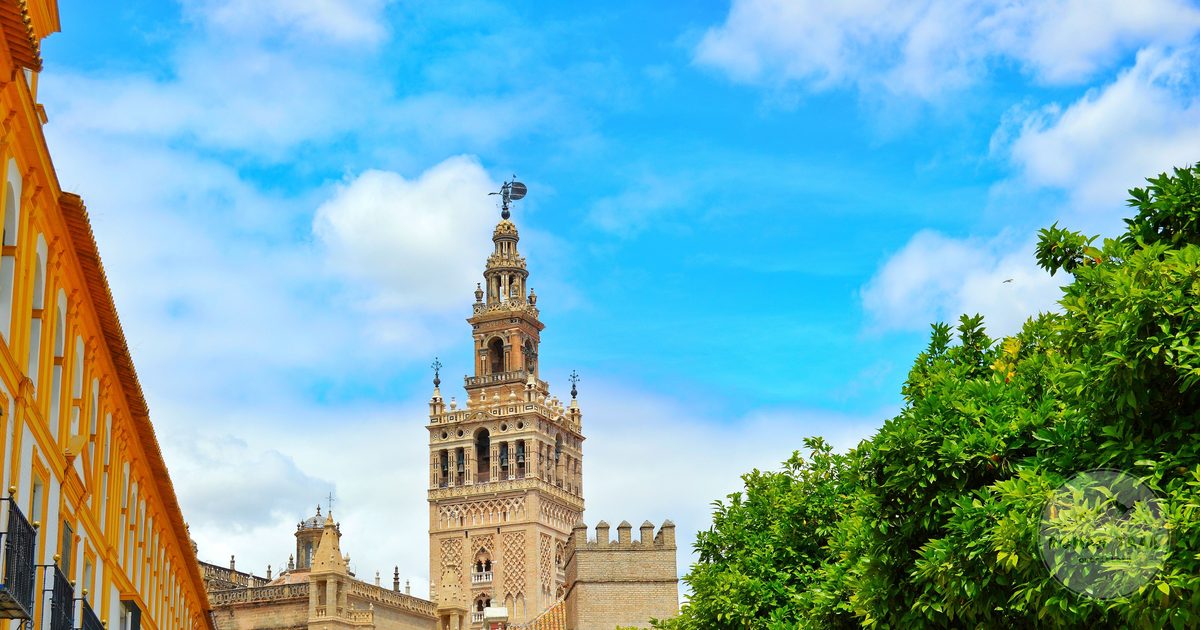
The former Jewish quarter east of the Cathedral is the most atmospheric urban neighborhood in Spain: whitewashed lanes barely wide enough for two people, orange trees, and courtyards visible through open doors. It holds the Cathedral, the Giralda, and the Real Alcazar, and it is also the most touristed part of the city, so eat a few streets further out.
Triana
Across the river, Triana has the flamenco history, the ceramic workshops that produced the azulejo tiles covering half of Seville, the Mercado de Triana in the old castle foundations, and the best tapas bars in the city along Calle San Jacinto. It feels lived-in rather than curated.
La Macarena and Alameda
North of the center, La Macarena has the basilica holding the Virgen de la Macarena, the most beloved image in the city, and the longest surviving stretch of the Almohad city walls. The Alameda de Hercules nearby is the nightlife and alternative culture center, with the best bar scene for a younger crowd.
El Arenal and Santa Catalina
El Arenal between the Cathedral and the river has the Maestranza bullring, the Torre del Oro, and the riverside walk. Santa Catalina and the streets around Calle Feria have the Thursday flea market, El Jueves, running since the 13th century.
Getting Around Seville
Seville is a walking city and that is the whole answer for most visitors. The historic center is compact, entirely flat, and largely pedestrianised, and the distance from the Cathedral to Triana or to the Alameda is fifteen to twenty minutes on foot.
It is also one of the best cycling cities in Europe. Seville built more than 180 kilometers of separated bike lanes in the space of a few years, and the SEVici public bike share is inexpensive and covers the whole center. Cycling along the Guadalquivir at sunset is one of the genuine pleasures of the city.
The tram, Metrocentro, runs a single short line from the Cathedral to San Bernardo and is useful for very little. The single Metro line serves commuters rather than visitors. Buses are comprehensive but rarely necessary in the center.
From the airport, the EA special bus runs to the center for about 4 euros in 35 minutes, and a taxi is a fixed fare of roughly 25 euros. Seville is on the high-speed AVE rail network, and Madrid is two and a half hours away, Cordoba forty-five minutes, and Malaga under two hours.
What Seville Costs
Seville is among the more affordable major cities in Western Europe outside of its two festival weeks.
Budget travel runs 60 to 95 euros per day: a hostel bed at 20 to 35 euros, tapas and menu del dia lunches at 25 to 35 euros, walking everywhere, and free entry to several churches plus the Alcazar's free hour for EU residents.
Mid-range runs 140 to 220 euros per day: a hotel room at 90 to 150 euros, 50 to 70 euros on food including a proper dinner, Alcazar and Cathedral admission at around 15 to 20 euros each, and a tablao ticket at 20 to 35 euros.
Luxury starts around 350 euros per day, with the historic palace hotels in Santa Cruz running 250 to 600 euros per night.
Semana Santa and Feria weeks are a different calculation entirely, with accommodation at three to four times normal rates and minimum-stay requirements.
Tipping in Spain is modest and not obligatory. Rounding up or leaving 5 to 10 percent for good service in a restaurant is generous by local standards, and nobody tips at a tapas bar counter. VAT is included in displayed prices, so the number on the menu is the number you pay.
Where to Stay in Seville
Santa Cruz and the streets immediately around the Cathedral put you inside the postcard, within walking distance of everything, in converted palace houses with courtyards. The tradeoff is tourist density and some noise. Expect 90 to 200 euros per night.
El Arenal and the area toward the river is slightly quieter, equally central, and often better value at 80 to 170 euros. Alfalfa and Santa Catalina, just north of Santa Cruz, are where the city feels most like itself while staying entirely walkable, at 70 to 150 euros.
Triana across the river is the best choice for atmosphere over convenience, at 65 to 140 euros, with a ten-minute walk across the Isabel II bridge into the center and considerably better and cheaper eating.
For solo women specifically: Spanish hotels and the small palace guesthouses of Santa Cruz almost universally have staffed reception, and the historic center is well lit and busy late. Look for a place on a street wide enough to have some foot traffic rather than deep inside the narrowest Santa Cruz lanes, which are atmospheric by day and disorienting at 1am. Air conditioning is non-negotiable from May onward, so confirm it exists rather than assuming.
What to Pack for Seville
Seville packs for heat, for church coverage, and for a great deal of walking on old stone.
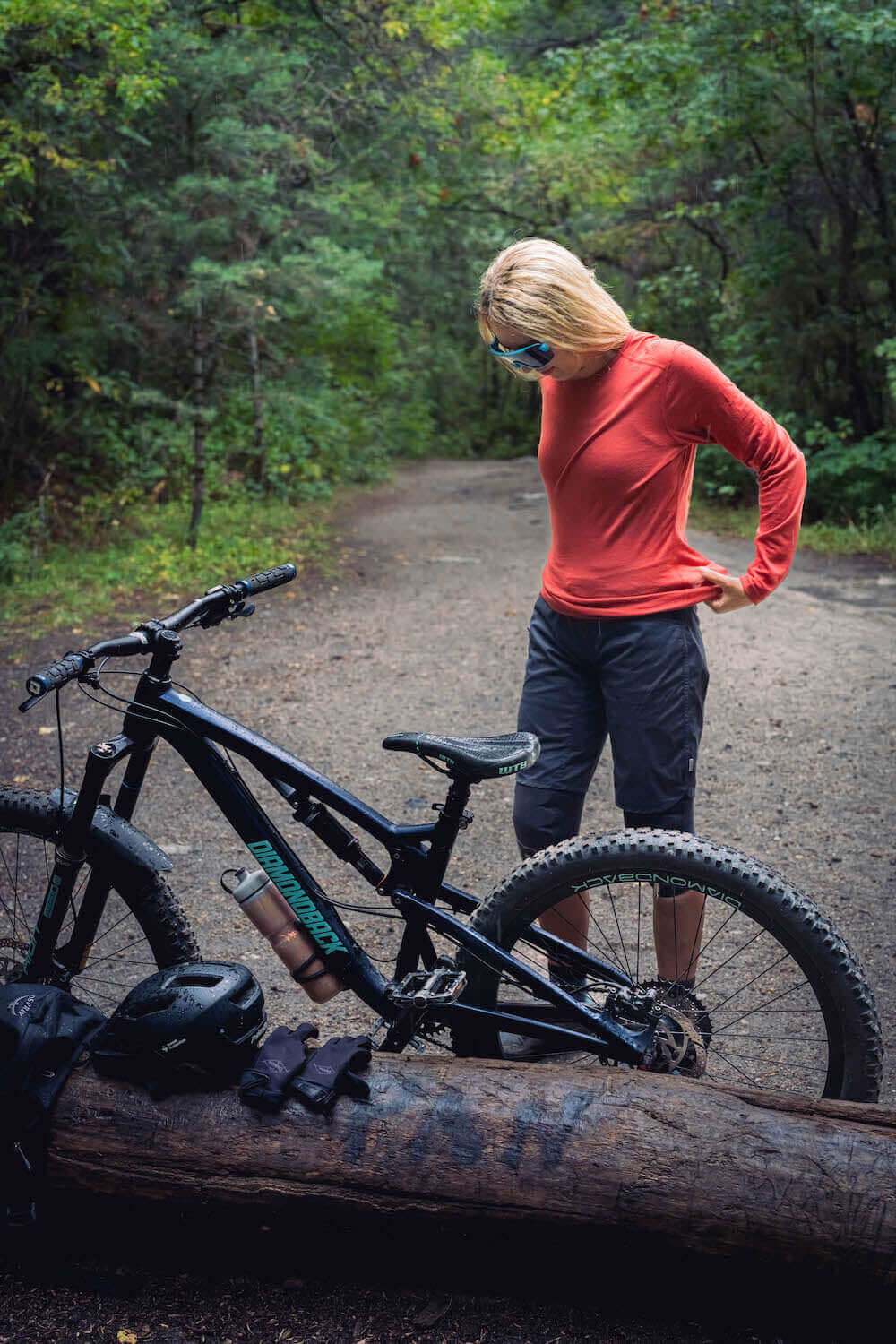
The Roman Trail Women's Merino Wool Base Layer ($49-59) is the foundation, and merino at 42 degrees surprises people who associate wool with winter. The 160gsm weight moves moisture away from the skin before it accumulates, which is precisely what cotton fails to do in Andalusian heat, and it does not develop odor after a long hot day. It also solves the coverage question: the Cathedral and most churches expect shoulders covered, and a light merino layer handles that without a separate garment to carry. Two of them cover a week.
The Columbia Women's Fast Trek II Jacket ($65) covers the cool winter evenings and the aggressive air conditioning that every Seville restaurant runs in summer. The Marmot Women's PreCip Eco Rain Jacket ($110) handles the winter and spring rain, which matters more than the annual totals suggest because wet weather cancels Semana Santa processions outright.
Footwear decides how much of Seville you see. Santa Cruz is cobblestone, the Alcazar grounds are uneven, the Feria fairground is sand, and Semana Santa means hours standing on stone at night. The Salomon Women's X Ultra 4 GTX ($165) handles all of it, paired with Darn Tough Women's Hiker Micro Crew Merino Socks ($28). Add one dressier flat for tapas evenings. Leave the heels entirely; Sevillanas wear flats to the Feria for exactly this reason.
For summer add a wide brim hat, SPF 50, and a folding fan, which is not a novelty here but standard equipment carried by most local women.
The full season-by-season list, including what to wear for Feria and Semana Santa, is in the Seville packing list for women.
Browse the Roman Trail women's merino base layer collection, the layer that handles Andalusian heat and church coverage at once, available in eight colors with free two-day shipping and a two-year satisfaction guarantee.
Day Trips from Seville
Cordoba is forty-five minutes by high-speed train and holds the Mezquita, the former Great Mosque with its forest of red and white arches and a cathedral built inside it, which is among the most extraordinary buildings in Europe. Go early.
Cadiz, an hour and a half by train, is the oldest continuously inhabited city in Western Europe, on a peninsula surrounded by Atlantic beaches. Jerez de la Frontera, an hour away, is the home of sherry and of the Royal Andalusian School of Equestrian Art. Ronda, two hours southeast, sits split by a gorge with the most dramatic setting of any town in Andalusia. Italica, twenty minutes north, has the Roman amphitheatre where parts of Game of Thrones were filmed.
Essential Resources for Women in Seville
Emergency number: 112 for all emergencies across Spain (police, ambulance, fire). 091 for Policia Nacional, 092 for local police.
US Consular Agency Seville: Plaza Nueva 8, Seville, +34 954 218 751. Full services are handled by the US Embassy in Madrid, Calle de Serrano 75, +34 91 587 2200, es.usembassy.gov
Hospitals: Hospital Universitario Virgen del Rocio, Avenida Manuel Siurot, +34 955 012 000, the main public hospital. Hospital Universitario Virgen Macarena, Avenida Doctor Fedriani 3, +34 955 008 000. EU visitors should carry the European Health Insurance Card; everyone else needs travel insurance.
Official health authority: Servicio Andaluz de Salud, sspa.juntadeandalucia.es
Official tourism authority: Turespana, spain.info, and Visita Sevilla, visitasevilla.es
US State Department travel advisory: travel.state.gov Spain advisory
UK FCDO travel advice: gov.uk foreign travel advice for Spain. The safety and security section carries the detail that the landing page only summarises, and it is the page to read before you travel.
Solo women safety assessment: Seville is a safe city for solo women travelers, and Spain carries a Level 1 US State Department advisory, exercise normal precautions, the lowest rating issued. Spanish social hours mean the historic center, Santa Cruz, Triana, and the Alameda stay busy with families and diners well past midnight, so solo evening walking and solo dining at a tapas counter are entirely unremarkable here. The realistic risk is pickpocketing rather than anything violent, concentrated around the Cathedral and Alcazar queues, Plaza de Espana, and above all the dense Semana Santa and Feria crowds, so wear a zipped bag in front, keep your phone out of a back pocket, and decline the rosemary sprig pressed on you near the Cathedral, which is a paid-demand routine rather than a gift.
Ready to plan your wardrobe for the trip? The complete Seville packing list for women covers the heat, the cobblestones, and what to wear for Semana Santa and Feria.
Related Reading
Seville sits inside the wider country guide, so start with the Spain travel guide for women for regions beyond Andalusia, and the Barcelona travel guide for women if you are combining the two. The Roman Trail travel packing guide for women covers the packing system behind every destination on this site, and the guide to the best merino wool base layers for women explains why merino works in extreme heat. For Seville specifically, the Seville packing list for women has the full detail.
Book Tours and Experiences
If the outer journey is calling you, the inner one usually is too. Explore SoulMap at romantrail.com/blogs/soulmap.
Blog posts
View all-

Packing List for Tucson, Arizona: What Women Sh...
What to pack for Tucson: a 1797 Spanish mission, giant saguaros, a UNESCO food city and a summer monsoon that fills dry washes in minutes.
Packing List for Tucson, Arizona: What Women Sh...
What to pack for Tucson: a 1797 Spanish mission, giant saguaros, a UNESCO food city and a summer monsoon that fills dry washes in minutes.
-

Packing List for Sequoia National Park: What Wo...
What to pack for Sequoia National Park: the largest trees on Earth, 13,000 feet of elevation range, mandatory bear lockers and a road with a length limit.
Packing List for Sequoia National Park: What Wo...
What to pack for Sequoia National Park: the largest trees on Earth, 13,000 feet of elevation range, mandatory bear lockers and a road with a length limit.
-

Packing List for St Augustine, Florida: What Wo...
What to pack for St Augustine: a Spanish fort built of shell stone, the oldest continuously occupied European settlement in the continental United States.
Packing List for St Augustine, Florida: What Wo...
What to pack for St Augustine: a Spanish fort built of shell stone, the oldest continuously occupied European settlement in the continental United States.


Contact form

Roman Trail Outfitters
Merino Wool Women's Long Sleeve Top | Crew Neck Shirt | Deep Olive