

Seville is the most passionate city in Spain and the one that most completely delivers the Andalusian cultural experience of flamenco, tapas, oranges, and heat that the imagination associates with southern Spain.
Disclosure: This post contains affiliate links. If you buy through them, Roman Trail earns a small commission at no extra cost to you.
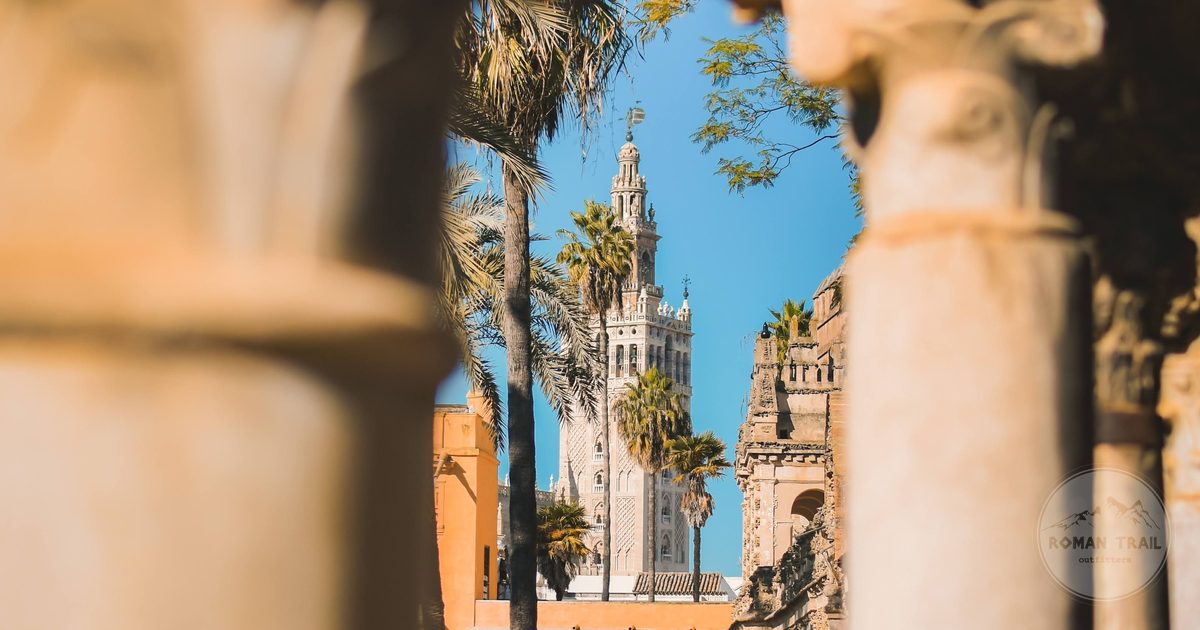
The Andalusian capital of 688,000 people on the Guadalquivir River has the most important Gothic cathedral in the world, the Cathedral of Seville, with Columbus's tomb inside its baroque interior. The Real Alcazar is the royal palace complex built by Moorish craftsmen for Christian kings in the 14th century, still used as the official Seville residence of the Spanish royal family, containing some of the finest examples of Mudejar architecture in existence. The Barrio de Santa Cruz, the medieval Jewish quarter of whitewashed lanes and orange blossom scented courtyards, is the most atmospheric urban neighborhood in Spain. The Plaza de Espana, the semicircular pavilion built for the 1929 Ibero-American Exposition, has canal boat rides and the ceramic tile provinces of Spain lining its curved walls in the most impressive single public space in Seville.
Flamenco. The authentic tablao flamenco of Seville is different from the tourist flamenco shows of Madrid and Barcelona. In Seville flamenco is a living cultural expression, not a performance for export. The neighborhood of Triana across the Guadalquivir has been the center of flamenco culture for centuries, and the tablaos and penas, the flamenco clubs of Triana, present the most genuine flamenco accessible to visitors outside the private juerga context where the art form reaches its highest expression.
Semana Santa, Holy Week, is the most extraordinary public event in Spain. The 60 brotherhoods of Seville carry their floats of religious sculpture through the streets from Palm Sunday through Good Friday in processions that last up to 14 hours, with the nazarenos, the hooded penitents, and the costaleros, the float bearers, creating a spectacle of extraordinary religious intensity that draws a million visitors to the city. Book accommodation a year in advance.
Understanding Seville's Climate
Seville has the most extreme climate of any major European city.
Summer from June through September: extremely hot with temperatures regularly reaching 40 to 45 degrees Celsius. July and August are genuinely dangerous for sustained outdoor activity at midday. The hottest city in Europe. Not recommended for first-time visitors.
Spring from March through May: the finest season. Temperatures from 18 to 28 degrees, orange blossom filling the streets with scent, and Semana Santa and Feria de Abril making it the most festive season. The absolute best time to visit Seville.
Autumn from October through November: pleasant with temperatures from 18 to 26 degrees and the summer crowds gone.
Winter from December through February: mild with temperatures from 8 to 16 degrees. Cold evenings but comfortable days. Seville in winter is quietly beautiful.
The summer figure deserves emphasis rather than a passing mention. Seville regularly records the highest temperatures in continental Europe, and 45 degrees is not a freak reading but a normal July afternoon. The city responds by shutting down: shops close from roughly 2pm to 5pm, the streets empty, and life resumes after dark. A visitor who tries to sightsee through a Seville summer afternoon is working against the entire city.
Recommended Tours and Experiences
The Layering System for Seville
Base Layer
The Roman Trail Women's Merino Wool Base Layer ($49-59) handles Seville's extreme heat in a way that surprises visitors expecting cotton to be the obvious choice. In 40-degree Seville summer heat, merino's moisture management keeps you significantly cooler than cotton by wicking moisture before it accumulates. In spring and autumn it handles the daily temperature variation. In winter it provides warmth for the cool Seville evenings.
Bring two and rotate them. The other advantage in Andalusia is coverage: the Cathedral and several churches expect shoulders covered, and a light merino layer solves that without adding a separate garment to carry in the heat.
Mid Layer
Seville's winter evenings and the aggressive air conditioning of Seville's restaurants make a mid layer worth carrying outside of peak summer. The Columbia Women's Fast Trek II Jacket ($65) handles Seville's cool season.
Rain Shell
Seville receives occasional rain, particularly in winter and spring. The Marmot Women's PreCip Eco Rain Jacket ($110) handles it without adding meaningful weight. Spring rain matters more than the annual totals suggest, because a wet Semana Santa can cancel processions outright, which the brotherhoods decide hours in advance.
Seville Style and the Feria de Abril
Seville has a specific dress culture that reaches its peak during Feria de Abril, the April Fair held two weeks after Semana Santa. The Feria is a week of casetas, private party tents on the fairground, where Sevillanas dancing, flamenco, horses, and all-day drinking create the most specifically Andalusian cultural event in Spain.
For the Feria: the traje de flamenca, the ruffled flamenco dress, is worn by Sevillana women throughout the week. Visitors who wear one are enthusiastically welcomed. Rental is available throughout the city. Flat flamenco shoes. Hair up with a flower. This is not costume appropriation. It is participation in a living tradition, and locals genuinely appreciate visitors who make the effort.
For everyday Seville: quality casual, with the knowledge that Seville's tapas bar culture takes place standing at a bar counter and the dress code is relaxed.
Footwear for Seville
The Barrio de Santa Cruz has cobblestone lanes that are beautiful and warm in the summer heat. The Alcazar grounds are uneven. Comfortable flat shoes handle Seville's terrain. The Salomon Women's X Ultra 4 GTX ($165) handles Seville's urban terrain in all weather. One dressier flat for the tapas bar evenings. Two pairs total.
For socks the Darn Tough Women's Hiker Micro Crew Merino Socks ($28) handle Seville's sustained walking without blisters.
A note for Semana Santa specifically: processions run for hours and the crowds mean long periods standing on cobblestone with no chance to sit. Whatever you wear that week is the single decision that determines how much of it you can actually watch.
Clothing List
Spring and Autumn Seville
Two merino base layer tops. Two quality casual tops. One flamenco dress or festive outfit if visiting during Feria. Compact rain shell for spring rain. Comfortable flat shoes. Dressier flats for tapas bar evenings. Three merino socks.
Summer Seville
Two merino base layer tops in lightest weight. Two breathable casual tops. Wide brim sun hat, mandatory. Sunscreen SPF 50, mandatory. Compact rain shell. Flat sandals. Portable fan, widely used by locals. Loose lightweight pants for the Alcazar and cathedral.
Winter Seville
Two merino base layer tops. Two quality casual tops. Fleece mid layer. Compact rain shell. Comfortable waterproof shoes. Three merino socks.
What Not to Bring to Seville
Leave the heels. Santa Cruz, the Alcazar grounds, and the Feria fairground are all against you, and Sevillanas themselves wear flats to the Feria for exactly this reason.
Leave the heavy fabrics entirely if you are visiting between June and September. Denim and anything lined becomes unwearable within twenty minutes outdoors at 42 degrees.
Leave the assumption that Spain means late-night energy every night. It does, but it also means the city genuinely closes in the afternoon, and fighting the siesta rhythm rather than joining it is how visitors end up exhausted and eating badly.
Seville by Neighborhood
Barrio de Santa Cruz, the former Jewish quarter east of the cathedral, has the most atmospheric lanes in Spain, with whitewashed houses, orange trees, and flower-filled patios visible through the open doors of residential courtyards.
Triana across the Guadalquivir has the flamenco culture, the ceramic tile workshops that have supplied the azulejos of Seville's buildings for centuries, and the Mercado de Triana, the finest food market in the city.
La Macarena north of the historic center has the Basilica de la Macarena, where the most beloved of Seville's Semana Santa floats, the Virgen de la Macarena, resides and receives devotion year round.
El Arenal between the cathedral and the river has the Plaza de Toros de la Maestranza, the most beautiful bullring in Spain, and the Flamenco Dance Museum.
Dressing for Semana Santa
Holy Week has its own quiet dress conventions, and knowing them makes the difference between watching from the edge and feeling part of it.
Sevillanas dress up for the processions rather than down. Dark, smart, and modest is the convention, and on Holy Thursday and Good Friday many women wear black formally, some with the mantilla, the lace veil over a high comb, which is worn only on those two days. Visitors are not expected to wear a mantilla, but arriving in shorts and a vest top to a Good Friday madrugada procession reads as badly here as it would in any place of worship.
Practically, plan for a long night outdoors. The madrugada processions run from midnight through dawn, temperatures drop into single figures, and you will stand on cobblestone for hours in dense crowds with no seating. A merino base layer under something smart, a packable layer for the small hours, flat shoes, and a small zipped bag is the entire kit. Bring cash for the chairs the city rents along the main routes if you want a guaranteed seat.
Seville Packing FAQ
What is the best time to visit Seville?
Late March through May for Semana Santa and Feria in temperatures that do not kill you. October and November for pleasant weather without the summer extreme. Avoid June through August unless you specifically enjoy extreme heat.
Do I need to book Seville attractions in advance?
Yes for the Alcazar, particularly during spring and summer. Book at alcazarsevilla.org. The Cathedral and Giralda tower recommend advance booking. Semana Santa viewing requires no booking but accommodation must be reserved a year ahead.
What should I actually wear to a flamenco tablao?
Smart casual is right and nothing more formal is expected. The venues in Triana and Santa Cruz are small, often warm, and frequently without air conditioning, so a light layer you can remove beats anything heavy. Book ahead for the serious tablaos, arrive early for a seat close to the stage, and do not photograph during the performance, which is genuinely resented.
What food should I try in Seville?
Tapas are not a side dish in Seville. They are the entire meal, taken standing at a bar counter over the course of several hours and several bars. Jamon iberico, the acorn-fed Iberian ham. Gambas al ajillo, garlic shrimp. Salmorejo, the thick cold tomato soup topped with jamon and egg. Montaditos, the small open-faced bread bites at any bar in the Barrio de Santa Cruz. Rebujito, the Feria drink of manzanilla sherry and lemon soda.
For the full city plan, including safety, the seasons, Semana Santa and Feria logistics, flamenco, getting around, costs, and where to stay, see the Seville travel guide for women.
You can read more about building a merino-first travel wardrobe on the Roman Trail merino wool base layer guide. Browse the full collection at Roman Trail women's merino base layers, available in eight colors with free two-day shipping and a two-year satisfaction guarantee.
If the outer journey is calling you, the inner one usually is too. Explore SoulMap at romantrail.com/blogs/soulmap.


