New Orleans Travel Guide for Women: Everything You Need to Know

New Orleans does not operate like the rest of the United States, and that is the entire reason to go. A city of 383,000 people at a bend in the Mississippi River, 160 kilometers from the Gulf of Mexico, shaped by French and Spanish colonial rule, by the largest enslaved African population of any American city, by Haitian Revolution refugees who brought Vodou and Creole cooking, and by the particular relationship with joy and mortality that develops in a place that floods and rebuilds and floods again.
Disclosure: This post contains affiliate links. If you buy through them, Roman Trail earns a small commission at no extra cost to you.
This guide covers what a woman planning a New Orleans trip actually needs: an honest safety assessment including the French Quarter after dark, what the subtropical seasons mean for your bag, how the neighborhoods differ, how Mardi Gras and Jazz Fest actually work and how far ahead to book, what a second line is and how to join one, how to use the streetcars, what a week costs, where to stay, and what to pack.
The packing challenge here is heat, humidity, and the gap between the street and the interior. New Orleans summer runs above 80 percent humidity, which means sweat does not evaporate and a 33-degree afternoon is genuinely hard work. Every bar and restaurant then runs the air conditioning at full power. Add uneven cobblestone and brick underfoot and long nights on your feet, and the two decisions that matter most are your fabric and your shoes.
Is New Orleans Safe for Women Travelers
New Orleans requires more awareness than most American cities its size, and it deserves specifics rather than either reassurance or alarm.
The city has a genuinely elevated violent crime rate by American standards. That crime is heavily concentrated in residential neighborhoods a visitor has no reason to enter, but New Orleans differs from Chicago in one important way: the tourist areas and the rougher blocks sit closer together, and the boundary can change within a block or two rather than across a district.
The French Quarter is safe and busy during the day and into the evening. Bourbon Street late at night is the specific caution. It is crowded, heavily intoxicated, and the pickpocketing and opportunistic theft that follow are the most common problems visitors report. Stay on the well-lit and populated blocks between Canal and St Ann, keep a zipped bag in front of you, and be deliberate about how you get home. The quiet residential edges of the Quarter, particularly toward Rampart Street and north of St Philip, empty out quickly after dark and are where visitors most often get into trouble by walking a few blocks too far.
Practical rules that cover most of the realistic risk: take a rideshare rather than walking back at 2am, even for distances that look short on a map. Do not walk alone through Louis Armstrong Park or the cemeteries after dark, and visit the above-ground cemeteries with a tour rather than alone at any hour. Never leave anything in a parked car. Drink spiking on Bourbon Street is a real and reported issue, so watch your drink being poured and do not accept one from a stranger.
The Garden District, Uptown, the Marigny along Frenchmen Street, and the Warehouse District are all comfortable with ordinary urban awareness. Solo dining is completely unremarkable, and New Orleans is one of the friendlier American cities toward a person alone at a bar, which is genuinely part of its culture rather than an exception to it.
Emergency number is 911. NOLA-311 handles non-emergency city services. The New Orleans Police Department maintains an increased presence in the French Quarter, and the state police also patrol it during major events.
Best Time to Visit New Orleans
The season shapes a New Orleans trip more than in almost any other American city, because the calendar is built around events rather than weather.
Spring, February through May, is the peak and the best. Mardi Gras falls in February or early March, Jazz Fest runs the last weekend of April into the first weekend of May, French Quarter Fest is in April, and the weather in March and April is close to perfect at 18 to 27 degrees. It is also the most expensive and most crowded period by a wide margin.
Autumn, October through November, is the quieter, cheaper alternative and genuinely excellent. The summer humidity breaks in October, temperatures settle at 15 to 26 degrees, the second line season restarts, and hotel rates fall well below spring. If you want the city without the crowds, this is the window.
Winter, December through February, is mild at 8 to 18 degrees, occasionally cold enough for frost, and the best season for simply walking the city. Carnival season begins on January 6th and builds through parade after parade, so late January already has festivity without full Mardi Gras pricing.
Summer, June through September, is genuinely difficult. Temperatures of 32 to 36 degrees with humidity above 80 percent make midday outdoor activity exhausting, and afternoon thunderstorms arrive almost daily. Hurricane season runs June through November and peaks in August and September. It is the cheapest season for a reason. If you go, structure the day around an early start, a long indoor afternoon, and an evening out, which is how locals handle it.
Mardi Gras: How It Actually Works
Mardi Gras is not a single day and it is not only Bourbon Street. Carnival season opens on January 6th, Epiphany, and builds for weeks. The large parades run for roughly the final two weeks, with the biggest, Endymion, Bacchus, Zulu, and Rex, in the final weekend and on Mardi Gras day itself, which falls 47 days before Easter and moves between early February and early March.
Book accommodation a year in advance for the final week. This is not an exaggeration. Rooms sell out and rates triple or quadruple, with multi-night minimums standard. If you decide late, look at the weekends earlier in the season, which have real parades, real crowds, and a fraction of the price.
The parades run on St Charles Avenue through the Garden District and Uptown, not through the French Quarter, which is too narrow for floats. The St Charles route is the family-friendly one and where most locals watch. Catching throws, meaning beads and cups and the prized Zulu coconuts, is the point of standing there.
Practical notes: there are almost no public toilets on the routes, so plan around bars and restaurants. Bring a bag for throws. Wear purple, green, and gold, and wear a costume if you have any inclination, because the effort is rewarded here in a way it is nowhere else. Streets close and rideshare surges enormously, so expect to walk further than planned, which makes the shoe choice matter.
Jazz Fest and the Music Calendar
The New Orleans Jazz and Heritage Festival runs the last weekend of April into the first weekend of May at the Fair Grounds Race Course. It is a daytime outdoor festival across roughly a dozen stages, and despite the name the programme spans jazz, blues, gospel, zydeco, funk, rock, and major headliners, alongside the best festival food in the United States.
Tickets are cheaper bought in advance than at the gate. The Fair Grounds have very little shade and the ground turns to mud when it rains, so sun protection, a hat, and shoes you do not mind ruining are the standard kit. Locals bring a small folding chair.
Outside of festival season, live music runs every night of the year. Frenchmen Street in the Marigny is where to go: the Spotted Cat, d.b.a., and Snug Harbor sit within two blocks and most have no cover or a small one. Preservation Hall in the French Quarter is the traditional jazz institution, with short sets, no drinks, and no air conditioning, and it is worth every bit of the queue. Tipping the band is expected everywhere.
Second Line Parades
A second line is the most distinctive thing New Orleans does and the best reason to be in the city on a Sunday. A brass band leads, the sponsoring social aid and pleasure club dances in front as the first line, and the second line is everyone else, the community that follows and dances behind, twirling umbrellas and handkerchiefs.
The tradition grew out of the mutual aid societies that provided burial insurance to Black New Orleanians excluded from other institutions, and it remains community-organized rather than staged for visitors. The season runs Sundays from late August through June. The route and time are published weekly, most reliably through WWOZ radio's community calendar.
Visitors are welcome to join. The etiquette is straightforward: follow behind rather than in front of the band, do not obstruct the club members, buy something from the vendors along the route, and dance. Three hours of walking is normal, so wear the shoes accordingly.
New Orleans by Neighborhood
The French Quarter
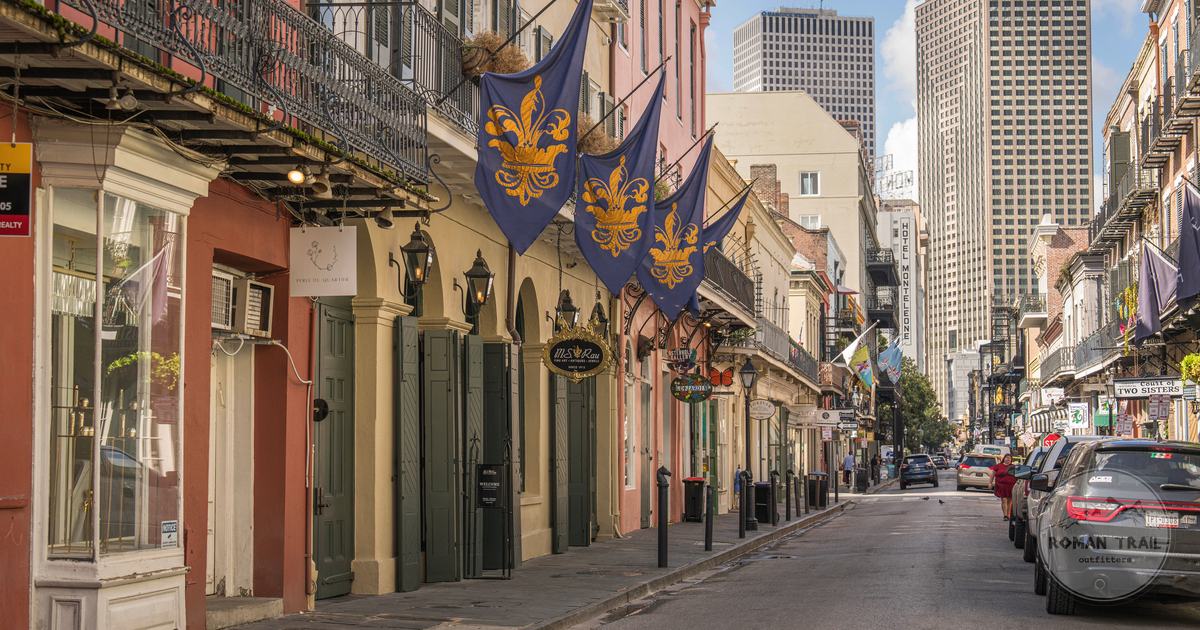
The oldest urban neighborhood in America, continuously inhabited since 1718, with the most concentrated French and Spanish colonial architecture in the country. Jackson Square, St Louis Cathedral, Cafe Du Monde, and the French Market anchor it. Royal Street is the more rewarding parallel to Bourbon, with antique shops, galleries, and the street musicians who represent the genuine music tradition. Walk Bourbon once for the spectacle and then spend your time on Royal, Chartres, and Decatur.
The Garden District and Uptown
Across the St Charles streetcar line, the Garden District holds the grandest antebellum mansions in the American South on tree-canopied streets. Lafayette Cemetery No. 1 and Commander's Palace sit at its center. Uptown further along the line has Magazine Street, which runs for ten kilometers of independent boutiques, restaurants, and coffee shops and is the best shopping in the city.
The Marigny and Bywater
East of the Quarter, the Marigny has Frenchmen Street and the most authentic live music scene in New Orleans, in an atmosphere that is local rather than touristic. Bywater beyond it has the brightly painted shotgun houses, Crescent Park along the river with the best skyline view in the city, and the most interesting new restaurants.
Treme
Northwest of the Quarter, Treme is the oldest African American neighborhood in the United States and the birthplace of jazz. The Backstreet Cultural Museum documents the Mardi Gras Indian tradition and second line culture, and it is the single most illuminating small museum in the city.
Getting Around New Orleans
The French Quarter is roughly thirteen blocks by six and entirely walkable, which is how most visitors spend most of their time. Beyond it, the streetcars do the work.
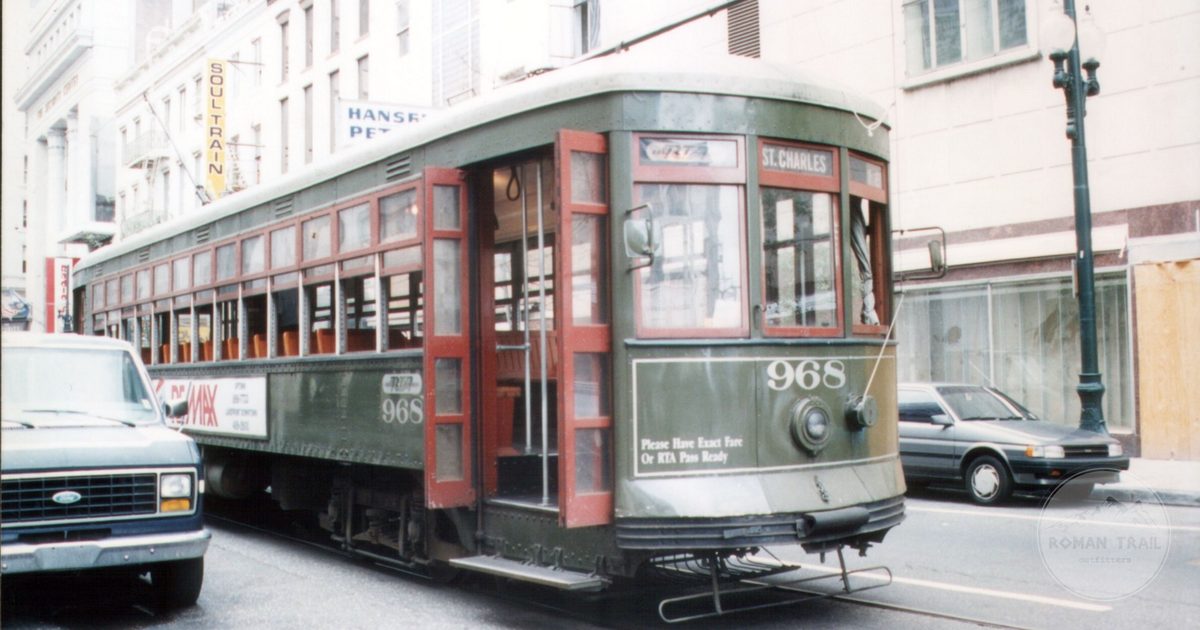
The St Charles Avenue line is the oldest continuously operating street railway in the world, running from Canal Street through the Garden District and out to Audubon Park in olive-green cars from the 1920s. It is transport and sightseeing at once. The Canal Street and Riverfront lines cover the other main routes. A single ride is $1.25 and a Jazzy Pass giving unlimited rides is $3 for one day or $9 for three, bought through the Le Pass app or at machines.
Rideshare is plentiful and reasonably priced, and it is the right answer for getting home late at night regardless of distance. Do not rent a car for a city trip: French Quarter parking is expensive and difficult, and street flooding after heavy rain is a genuine hazard.
From the airport, Louis Armstrong International is about 30 minutes from the Quarter. A flat-rate taxi is $36 for one or two passengers, rideshare is usually similar, and the 202 airport bus is $1.50 for the patient.
What New Orleans Costs
New Orleans is inexpensive by major American city standards outside of festival season, when it becomes one of the most expensive places in the country.
Budget travel runs $110 to $170 per day: a hostel bed at $35 to $70, food from po-boy shops, Cafe Du Monde, and neighborhood restaurants at $35 to $50, streetcar at $3, and free attractions including the Quarter itself, Crescent Park, and most live music on Frenchmen Street.
Mid-range runs $250 to $400 per day: a hotel room at $150 to $280, $80 to $110 on food including one proper Creole dinner, a cocktail or two at $14 to $18 each, and tours or museums at $25 to $40.
Luxury starts around $550 per day, with French Quarter and Garden District boutique hotels at $350 to $700 and tasting menus at the city's best restaurants at $150 to $250 per person.
Festival pricing is a different calculation entirely. Mardi Gras and Jazz Fest weekends see rates triple or quadruple with multi-night minimums.
Tipping is not optional. Restaurants expect 18 to 22 percent, bartenders $1 to $2 per drink, and live music venues expect a tip in the band's bucket, which is how most musicians here are actually paid. Louisiana sales tax in New Orleans is 9.45 percent, added at the register.
Where to Stay in New Orleans
The French Quarter is the obvious first choice and the right one for most visitors: walkable to nearly everything, atmospheric, and well served by rideshare. The tradeoff is noise. If you book here, ask specifically for a courtyard-facing room and avoid anything within two blocks of Bourbon unless you intend to be out until it closes. Expect $150 to $350 per night.
The Garden District and Uptown offer the quietest and most beautiful stay, with the streetcar into town in 20 to 30 minutes, at $140 to $300. This is the best choice for a traveler who wants to sleep.
The Warehouse and Arts District, between the Quarter and the Garden District, has the modern hotels, the National WWII Museum, and a short walk to Canal Street, at $150 to $300. The Marigny has the guesthouses and small inns closest to the Frenchmen Street music, at $120 to $250.
For solo women specifically: New Orleans hotels have staffed reception as standard, and the French Quarter's guesthouse tradition means many small properties with courtyards and secure gates. Check that the entrance is on a well-lit commercial block rather than a residential side street, since that difference matters more here than the hotel's own rating. India House and Auberge NOLA are the hostels most consistently well reviewed by women traveling alone.
What to Pack for New Orleans
New Orleans packs for humidity, air conditioning, and a great deal of walking on uneven ground.
The Roman Trail Women's Merino Wool Base Layer ($49-59) is the foundation, and the reason is the gap between the street and the interior. Outdoors in summer runs 33 degrees at over 80 percent humidity; every bar and restaurant runs the air conditioning near 20. Merino moves moisture away from the skin rather than trapping it, insulates when damp, and does not develop odor after a humid day, which matters when you go from a French Quarter afternoon straight to dinner without returning to the hotel. Two of them cover a week.
The Columbia Women's Fast Trek II Jacket ($65) handles the mild winter and the year-round air conditioning, and it is the layer most visitors leave at home and then wish they had. The Marmot Women's PreCip Eco Rain Jacket ($110) covers the near-daily summer thunderstorms, which arrive fast, drop a lot of water, and flood the street corners while they do it.
Footwear decides the trip. The French Quarter is cobblestone and uneven brick laid centuries before anyone considered ankles, the surfaces are often wet, and a full day here runs eight to twelve kilometers before a night out on top of it. The Salomon Women's X Ultra 4 GTX ($165) handles it in all weather, paired with Darn Tough Women's Hiker Micro Crew Merino Socks ($28). Add one dressier flat for Commander's Palace or a Magazine Street dinner. Leave the heels at home entirely.
Pack colour. This is a city that rewards being seen, and a festive outfit earns you more of New Orleans than a neutral one does. Purple, green, and gold for Mardi Gras.
The full clothing list, season by season, plus the Mardi Gras and Jazz Fest specifics, is in the New Orleans packing list for women.
Browse the Roman Trail women's merino base layer collection, the layer that handles Gulf Coast humidity and full-power air conditioning in the same afternoon, available in eight colors with free two-day shipping and a two-year satisfaction guarantee.
Day Trips from New Orleans
The Barataria Preserve, part of Jean Lafitte National Historical Park, is 40 minutes south and the most accessible swamp in Louisiana, with boardwalk trails through cypress and reliable alligator sightings. Swamp tours from Slidell and Marrero cover the same landscape from a boat.
The River Road plantations between New Orleans and Baton Rouge are the region's most significant historical sites. The Whitney Plantation is the only one in Louisiana told entirely from the perspective of the enslaved people who lived there, and it is the one worth your time. Oak Alley an hour upriver has the famous avenue of live oaks.
The Gulf Coast beaches at Bay St Louis and Pass Christian in Mississippi are 90 minutes east, and Lafayette in Cajun country, two and a half hours west, has the zydeco dance halls and the best boudin in Louisiana.
Essential Resources for Women in New Orleans
Emergency number: 911 for all emergencies (police, ambulance, fire).
Non-emergency city services: 311, or nola.gov, for city services and non-emergency reports. New Orleans Police non-emergency: +1 504 821 2222.
Hospitals: University Medical Center New Orleans, 2000 Canal Street, +1 504 702 3000, the region's Level 1 trauma center and closest to the French Quarter. Ochsner Medical Center, 1514 Jefferson Highway, +1 504 842 3000. Touro Infirmary, 1401 Foucher Street, Uptown, +1 504 897 7011. All have 24-hour emergency departments.
Official health authority: Louisiana Department of Health, ldh.la.gov
Hurricane information: National Hurricane Center, nhc.noaa.gov
Official tourism authority: New Orleans and Company, neworleans.com
Travel advisories: US citizens travelling domestically need no advisory. International visitors should check their own government's United States advice, including the UK FCDO travel advice for the USA.
Solo women safety assessment: New Orleans has a genuinely elevated violent crime rate for an American city its size, and unlike most US cities the safe and unsafe blocks sit close together, so the boundary can shift within a block or two rather than across a district. The French Quarter, Garden District, Uptown, Marigny, and Warehouse District are comfortable with ordinary awareness during the day and evening; the specific caution is Bourbon Street late at night, where crowding and heavy intoxication drive most reported pickpocketing and theft, and where drink spiking is a real issue, so watch your drink poured and refuse one from a stranger. Take a rideshare home after dark even for distances that look walkable, avoid Louis Armstrong Park and the residential edges of the Quarter toward Rampart Street at night, and visit the above-ground cemeteries with a tour rather than alone.
Ready to plan your wardrobe for the trip? The complete New Orleans packing list for women covers the humidity, the cobblestones, and what to wear for Mardi Gras.
Related Reading
Start with the Roman Trail travel packing guide for women for the packing system behind every destination on this site, and the guide to the best merino wool base layers for women for why merino works in subtropical humidity as well as it does in the cold. For New Orleans specifically, the New Orleans packing list for women has the full detail.
Book Tours and Experiences
If the outer journey is calling you, the inner one usually is too. Explore SoulMap at romantrail.com/blogs/soulmap.
Blog posts
View all-

Trondheim Packing List for Women: Nidaros, Bakk...
What to pack for Trondheim, Norway's medieval capital, where the coronation cathedral stands over a student city with a lift for bicycles.
Trondheim Packing List for Women: Nidaros, Bakk...
What to pack for Trondheim, Norway's medieval capital, where the coronation cathedral stands over a student city with a lift for bicycles.
-

Puebla Packing List for Women: Talavera Tiles a...
What to pack for Puebla, a UNESCO city of tiled facades under an active volcano, where mole poblano was invented and the Cinco de Mayo battle was fought.
Puebla Packing List for Women: Talavera Tiles a...
What to pack for Puebla, a UNESCO city of tiled facades under an active volcano, where mole poblano was invented and the Cinco de Mayo battle was fought.
-

Palenque Packing List for Women: Maya Ruins in ...
What to pack for Palenque, the Maya city in the Chiapas rainforest where Pakal's tomb was found intact under a pyramid in 1952.
Palenque Packing List for Women: Maya Ruins in ...
What to pack for Palenque, the Maya city in the Chiapas rainforest where Pakal's tomb was found intact under a pyramid in 1952.


Contact form

Roman Trail Outfitters
Merino Wool Women's Long Sleeve Top | Crew Neck Shirt | Deep Olive