Doha Travel Guide for Women: Everything You Need to Know

Qatar is a peninsula roughly the size of Yorkshire pushing north into the Persian Gulf, almost entirely flat, almost entirely desert, and holding one of the largest natural gas reserves on earth. Doha contains around 80 percent of the country's three million residents, of whom roughly twelve percent hold Qatari citizenship. The rest are expatriate workers, mostly from South Asia, and that demographic fact shapes everything about how the city feels.
Disclosure: This post contains affiliate links. If you buy through them, Roman Trail earns a small commission at no extra cost to you.
Within living memory this was a pearling town. The industry collapsed in the 1930s when Japanese cultured pearls arrived, the country was briefly destitute, and oil was found in 1939. What exists now was built in about thirty years, and it shows both in the skyline and in a certain deliberateness: the museums, the university campus, the sports infrastructure and the airline all read as decisions about national identity rather than as accidents of growth.
For a visitor, Doha is a two to four day city with two world-class museums, a restored souq, a desert an hour away where the sea meets the dunes, and a climate that is the single biggest factor in whether you enjoy it. From November to March it is delightful. From May to September, outdoor life stops.
This guide covers dress, safety and the local laws honestly, the seasons, the districts and the trips out, transport, costs, accommodation and the packing list.
Is Doha Safe for Women Travelers
Doha is among the safest cities in the world for a woman travelling alone, and that is not a hedge. Violent crime is very rare, theft is rare, street harassment is close to non-existent, and the metro and taxis are safe at any hour. Many women report feeling more comfortable walking alone here at midnight than in most European capitals.
What requires attention falls into three categories, and none of them is personal danger.
Heat
The real risk. Between May and September, daytime highs run 40 to 46 degrees with Gulf humidity on top, and night temperatures do not drop below 30. Qatar legally bans outdoor work during the hottest hours of summer. Heat exhaustion and dehydration are what actually send visitors to hospital here. Carry water constantly, use the air-conditioned metro rather than walking, and restrict outdoor activity to before nine and after seven.
The dress code
Qatar asks visitors to cover shoulders and knees in public, displayed on signs at malls, museums and public buildings. No head covering is required outside mosques. This is a social expectation rather than a policed law, and nobody will be arrested for a bare shoulder, but security in malls does occasionally ask people to cover up. Dressing to it makes you invisible in the best sense; ignoring it makes you conspicuous.
Local laws that differ from Western norms
These are worth reading before you book rather than discovering later.
Same-sex sexual activity is illegal in Qatar and carries a prison sentence, with no anti-discrimination protections on grounds of sexual orientation or gender identity. LGBTQ+ travellers do visit, and both the US State Department and the UK FCDO advise discretion. Public displays of affection between same-sex partners carry genuine legal risk, and dating apps have been monitored.
Public displays of affection between any couple are frowned upon, and kissing in public has resulted in arrests.
Sex outside marriage is technically a criminal offence, which in practice becomes relevant only in the context of another complaint.
Alcohol is served only in licensed hotel venues, cannot be imported, and being drunk in public is a criminal offence.
Vapes and e-cigarettes are banned. CBD products are treated as controlled substances. Several visitors a year are detained over prescription medicines, so carry everything in original packaging with a prescription and check the controlled substances list before flying.
Photography of people without permission, and of government, military or industrial sites, is a problem. Drones need a permit.
Swearing, offensive gestures, and criticising the state or Islam on social media are all prosecutable offences.
Tourist police operate at the souq, the corniche and the main sites, in distinctive uniforms, and speak English.
Best Time to Visit Doha
November to March
The only genuinely comfortable season, and the reason to plan around the calendar. 18 to 26 degrees, dry, clear and sunny, with December and January evenings dropping to 14 or 15 and feeling properly cool with wind off the water. Everything outdoors works: the corniche, the souq in the evening, the desert, dhow trips, and the events calendar.
April and October
28 to 36 degrees. Early mornings and evenings are pleasant, the middle of the day is not. Fewer visitors and lower rates.
May to September
40 to 46 degrees, humid, with nights above 30. An indoor visit by necessity: museums, malls, hotel pools and the metro. If you come in this window, accept that and plan around it rather than fighting it. Hotel rates fall substantially.
Ramadan
The dates shift each year. During daylight, eating, drinking and smoking in public are prohibited for everyone including non-Muslims, many restaurants close until sunset, and opening hours change across the city. Evenings are extraordinary, with iftar tents and a city that comes alive after dark. Check the dates before booking, because it changes the trip entirely.
Recommended Tours and Experiences

Top Regions and What Each One Requires
The Corniche and the museum island
A seven-kilometre waterfront promenade curving around Doha Bay, with the skyline of West Bay on one side and the dhow harbour on the other. At its southern end, on an artificial island, the Museum of Islamic Art.
Give that museum three hours and preferably four. I. M. Pei came out of retirement at 91 to design it, travelling the Muslim world for months before settling on the geometry of the ninth-century Ibn Tulun mosque in Cairo. The collection spans 1,400 years and three continents: Qur'ans, Iznik ceramics, Mughal jades, Persian carpets, astrolabes, and a room of scientific instruments that reframes the history of astronomy. Entry is free and it closes one day a week.
The National Museum of Qatar, by Jean Nouvel and shaped as interlocking discs modelled on a desert rose crystal, is the other essential, and takes two hours.
Terrain: flat, paved, and almost entirely without shade.
Pack: hat, water, covered shoulders and knees for the museums.
Souq Waqif and the old centre
A restored traditional market on the site of the original Bedouin trading ground, rebuilt in mud-rendered style in the 2000s. Spices, textiles, sheesha cafes, Qatari restaurants, and a falcon souq with a dedicated falcon hospital next door, which is one of the more memorable things in the Gulf.
Go in the evening. It is dead in the afternoon heat and full of life after dark.
Terrain: narrow lanes, uneven paving, considerable walking.
Pack: closed comfortable shoes, covered clothing, cash for the smaller stalls.
West Bay, Katara and the Pearl
West Bay is the skyline: towers, hotels, the Tornado and the twisted Doha Tower. Katara Cultural Village is a purpose-built arts district with an amphitheatre, galleries, a mosque covered in Persian tilework and a beach. The Pearl is an artificial island of marinas, apartments and restaurants, more Mediterranean than Gulf in feel.
Terrain: flat, modern, walkable in winter and not in summer.
Pack: the public dress code still applies, more relaxed in practice at the Pearl.
The desert and the Inland Sea
Khor Al Adaid, the Inland Sea, is a UNESCO-recognised natural reserve in the far south where the Gulf pushes inland between dunes, reachable only by 4x4 across soft sand. It is the best day out in Qatar. Trips include dune driving, camel rides, sandboarding and usually a camp meal.
Also in the interior: the Al Zubarah fort and archaeological site, a UNESCO World Heritage listing on the northwest coast, and the Richard Serra sculpture, four steel plates standing alone in the desert an hour west, which is worth the drive for the silence.
Terrain: soft sand, no shade, no phone signal in places.
Temperature: hotter than the city by day, and genuinely cold at night in winter.
Pack: loose long clothing, a scarf against blown sand, a warm layer for the evening, shoes you can empty, and a licensed operator rather than a self-drive attempt.
What to Pack for Doha: Women's Packing List
The full detail is in the Doha packing list for women. The essentials:
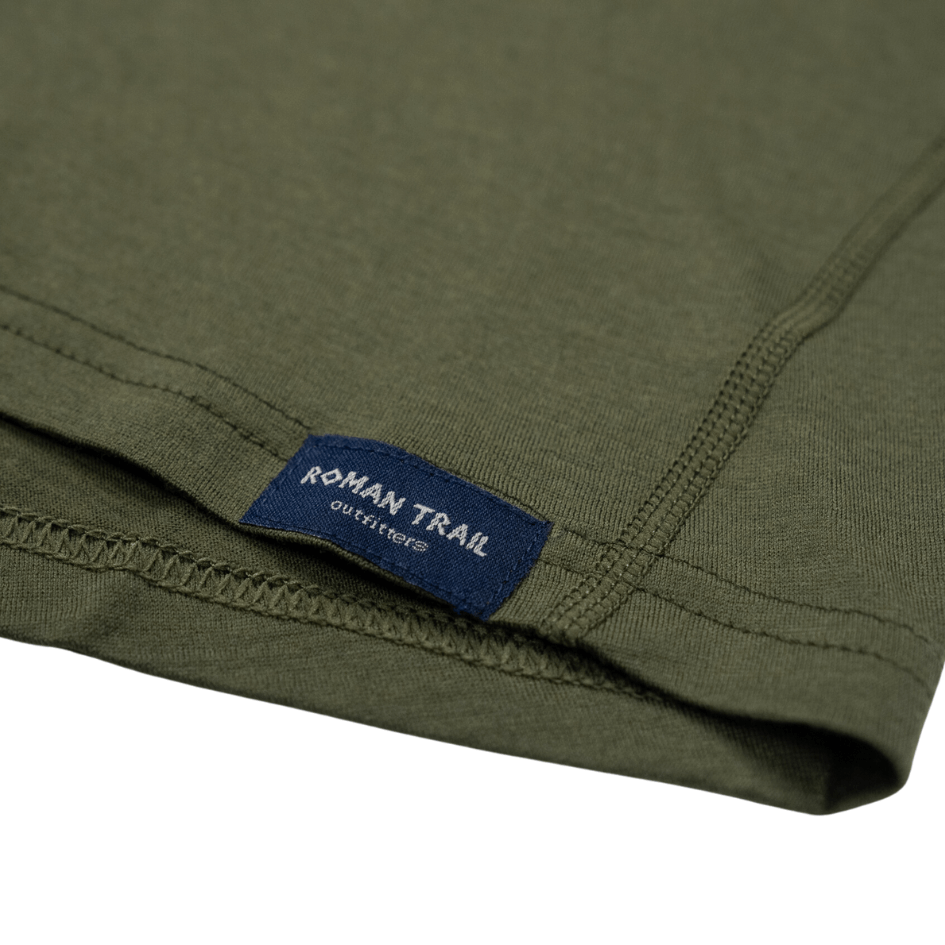
Base layers. Two Roman Trail Women's Merino Wool Base Layers ($49-59) in long sleeve. Merino in desert heat works on the same principle as merino in the tropics: at 17.5 micron and 160 gsm it moves moisture off the skin instead of holding it there, which is what actually keeps you cool, and it resists odour across repeated wear at 40 degrees. The long sleeve also satisfies the modest dress code without a second garment, which is the practical reason it belongs at the top of this list.
Sun layer. The Columbia Women's Benton Spring II Long Hoodie ($59), loose and hooded, for the desert, the corniche and dhow trips.
Warm layer. The Columbia Women's Fast Trek II Jacket ($65). This surprises people. Desert nights in December and January are cold, a night at a desert camp is colder still, and every interior in Qatar is air conditioned to around 20 degrees, which after a day at 40 is a shock.
Covered clothing. Linen or loose cotton trousers, wide-leg, two or three pairs. A maxi or midi skirt. Tops with sleeves. One dressier outfit for a hotel restaurant, because Doha dresses well in the evening. A light scarf for shoulders, mosques and sun.
Footwear. Closed comfortable walking shoes for the museums and souq, which involve more distance than expected, plus sandals for the heat. The Darn Tough Women's Hiker Micro Crew Merino Socks ($28), two pairs, because merino handles sweat in heat far better than cotton.
Sun protection. A Wide Brim Sun Hat Women UPF 50 ($25), high-factor sunscreen and sunglasses. There is no shade in the desert, on the corniche, or at the Pearl.
Health and hygiene. Two litres of water capacity minimum and more in summer, rehydration salts, which matter more here than almost anything else, hand cream and lip balm for the dry air, and all medication in original packaging with a prescription, having checked Qatar's controlled substances list.
Organisation and documents. The Eagle Creek Pack-It Cube Set ($59). Passport, with visa waiver eligibility checked by nationality in advance at visitqatar.com, plus a printed hotel booking, which immigration sometimes asks to see.

Getting Around Doha
The Doha Metro is the best thing about moving around this city. Three lines, opened in 2019, driverless, spotlessly clean, extremely cheap, air conditioned to the point of cold, and reaching the airport, the souq, West Bay, Katara and Education City. There is a Gold Club carriage at a premium and a dedicated women and children carriage on every train. Free Metrolink shuttle buses connect stations to nearby destinations.
For a woman travelling alone, the metro is safe at every hour and the simplest way to see the city without walking in heat.
Karwa taxis are the official turquoise metered cabs, plentiful and inexpensive. Uber and Careem both operate and are widely used. Avoid unmarked private cars offering rides.
Walking is pleasant from November to March along the corniche and around the souq, and genuinely unsafe in the middle of a summer day.
Hire car: unnecessary for a city visit given the metro, and useful for the north of the country, Al Zubarah and the Serra sculpture. Driving standards are fast and assertive. Do not attempt the Inland Sea dunes without experience and a second vehicle; use an operator.
Airport: Hamad International is 15 minutes from the centre and on the metro. It is also a major transit hub, and Qatar Airways offers free or heavily discounted stopover hotel packages, which is how a great many people first see Doha.
Costs: What to Budget
Doha is expensive for accommodation and cheap for transport and food, with a large seasonal swing.
Budget, $70 to $110 a day: a hostel or budget hotel at $40 to $70, which is the floor here, food from the South Asian and Middle Eastern restaurants in the older districts at $15 to $25 a day, metro travel at a few dollars, and the free museums.
Mid-range, $180 to $300 a day: a four-star hotel at $110 to $200, restaurant meals at $50 to $80, taxis, a desert trip.
Higher end, $500 and up: the West Bay and Pearl five-stars from $300, hotel restaurants with alcohol, private desert tours, spa.
Specific costs: the Museum of Islamic Art is free, the National Museum around 50 riyals, a metro journey 2 to 6 riyals, a day pass around 6 riyals, a half-day desert safari 250 to 450 riyals, a dhow trip around 50 to 100 riyals, a beer in a hotel bar 45 to 60 riyals which is the single most expensive thing in Qatar relative to elsewhere, and a good meal in the souq 80 to 150 riyals.
Money: the Qatari riyal, pegged to the US dollar at about 3.64. Cards are accepted everywhere, ATMs are plentiful, and small souq stalls prefer cash. Tipping is not obligatory: a 10 percent service charge is often already added, and rounding up a taxi fare or leaving 10 percent for good service is normal and appreciated. Prices and current visa rules are published at visitqatar.com.
Where to Stay: Hostels, Guesthouses and Hotels for Women
Doha is a hotel city. It has very little in the way of guesthouses or family-run accommodation, and the hostel scene is small.
West Bay is where the international chains sit, with skyline views, pools that matter in summer, and metro access. Reliable, safe and characterless.
Souq Waqif has the best atmosphere in the city, with a group of boutique heritage hotels built in traditional style within the souq itself. Walking distance to the corniche and the museum, and the most interesting choice.
Msheireb, the regenerated old downtown beside the souq, has newer design hotels on the metro line and is excellent value relative to West Bay.
The Pearl and Lusail are further out, marina-focused, and better for a longer stay than a short visit.
Budget options cluster around Al Sadd and the older commercial districts. They are safe, plain, and mostly used by regional business travellers. A handful of hostels exist with female dorms.
What to check as a woman travelling alone: whether the hotel has a pool you can use comfortably, which varies, whether it is on the metro, and whether it has a licensed restaurant if that matters to you, since alcohol exists only in licensed hotels. Security in Qatari hotels is uniformly good and this is not a destination where you need to scrutinise door locks. If you are transiting, check the Qatar Airways stopover programme first, which frequently beats booking directly.
Essential Resources for Women in Doha
Emergency number in Qatar: 999, covering police, ambulance and fire, with English-speaking operators.
Tourist police: a dedicated service operating at Souq Waqif, the corniche and the main attractions, in distinctive uniforms and English-speaking. The Ministry of Interior general line is 2347444.
US consular services: the US Embassy in Doha is in the Al Luqta district. Contact details, hours and the after-hours emergency number are at qa.usembassy.gov.
Main hospitals: Hamad General Hospital is the principal public hospital with a 24-hour emergency department, and Al Ahli Hospital and Sidra Medicine are the widely used private options. Emergency treatment is provided regardless of insurance; anything else requires payment or cover. Medical standards are high and English is spoken throughout.
Official health authority: the Qatar Ministry of Public Health at moph.gov.qa.
Official tourism authority: visitqatar.com, which also carries current visa waiver eligibility by nationality.
US State Department travel advisory for Qatar: current advisory level and detail.
UK FCDO travel advice for Qatar: entry requirements, safety, local laws and health guidance, which has the fullest account of the legal points above.
Solo women safety assessment: Doha is about as safe as a city gets for a woman travelling alone. Violent crime is negligible, street harassment is close to absent, the metro has a women and children carriage and is safe at any hour, and a woman eating alone or walking at night is treated with formal courtesy rather than curiosity. The things that will actually cause you trouble are heat and law. Between May and September, walking outdoors at midday risks heat exhaustion, which is the most common reason visitors need medical help here; carry water, use the metro, and confine outdoor plans to early and late. Dress to the modest code and you will be comfortable and unremarked. Read the local laws before arriving, particularly on alcohol, public affection, vapes, prescription medicines and the criminalisation of same-sex activity, because they are enforced and they differ from what you may assume.
Reading On
Doha is the most rewarding short stop in the Gulf, and its museums justify the trip on their own. The Doha packing list for women has the gear detail, and the Qatar travel guide for women covers the country. For the region, the Dubai travel guide for women is the obvious comparison, Oman is the mountain and wadi alternative, and Jordan has Petra and Wadi Rum. The travel packing guide for women is the parent for all destinations. For why merino is the right fibre in 40-degree heat and under a modest dress code at once, the merino wool base layer guide explains it, and the full range is at Roman Trail women's merino base layers.
If the outer journey is calling you, the inner one usually is too. Explore SoulMap at romantrail.com/blogs/soulmap.
Blog posts
View all-

Packing List for Skardu, Pakistan: What Women S...
What to pack for Skardu, Pakistan: the capital of Baltistan, the cold desert, Deosai plains, the road head for K2, and how to get there legally.
Packing List for Skardu, Pakistan: What Women S...
What to pack for Skardu, Pakistan: the capital of Baltistan, the cold desert, Deosai plains, the road head for K2, and how to get there legally.
-

Packing List for Naran, Pakistan: What Women Sh...
What to pack for Naran, Pakistan: the Kaghan valley, Saiful Muluk lake, the Babusar Pass as the compliant road north, and the permission you need before you go.
Packing List for Naran, Pakistan: What Women Sh...
What to pack for Naran, Pakistan: the Kaghan valley, Saiful Muluk lake, the Babusar Pass as the compliant road north, and the permission you need before you go.
-

Packing List for Multan, Pakistan: What Women S...
What to pack for Multan, Pakistan's city of saints: the Sufi shrines, the blue tilework, the mango orchards, and heat that reaches the high forties.
Packing List for Multan, Pakistan: What Women S...
What to pack for Multan, Pakistan's city of saints: the Sufi shrines, the blue tilework, the mango orchards, and heat that reaches the high forties.


Contact form

Roman Trail Outfitters
Merino Wool Women's Long Sleeve Top | Crew Neck Shirt | Deep Olive