

Athens is the most historically overwhelming city in the world and the one where the weight of civilization presses most directly on the present moment.
Disclosure: This post contains affiliate links. If you buy through them, Roman Trail earns a small commission at no extra cost to you.
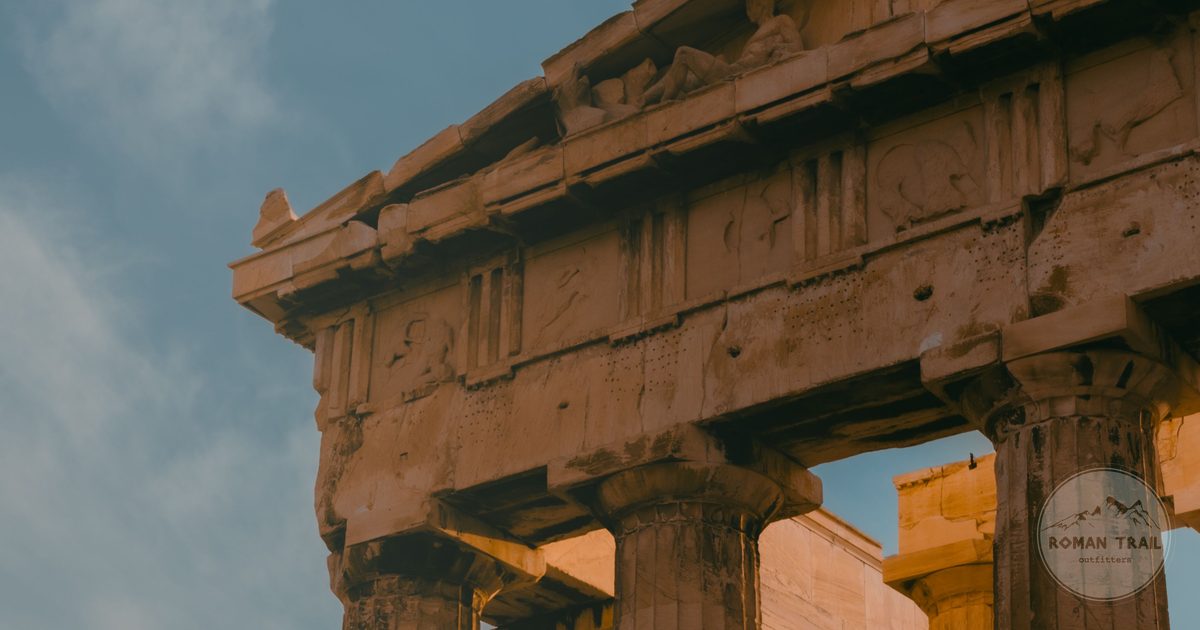
The Greek capital of 3.7 million people in the greater metropolitan area has been continuously inhabited for 3,400 years, and the evidence of that inhabitation is visible simultaneously in every part of the city. The Acropolis, the sacred hill above the city with the Parthenon, the most important building in Western civilization, built in 447 BC from Pentelic marble in the Doric order that defined architecture for 2,500 years, is visible from virtually everywhere in central Athens at all times. The Acropolis Museum at the base of the hill, designed by Bernard Tschumi, holds the surviving sculptures of the Parthenon in a building oriented directly toward the temple it documents, in one of the finest museum experiences in Europe. The Ancient Agora, the civic centre of ancient Athens where Socrates taught and Athenian democracy was practised, has the Temple of Hephaestus, the best-preserved ancient Greek temple in the world.
Plaka, the oldest continuously inhabited neighbourhood in Athens, beneath the Acropolis, has the most atmospheric lanes of neoclassical houses in the city in the shadow of the Parthenon. Monastiraki, the flea market neighbourhood adjacent to Plaka, has the most concentrated antique and secondhand culture in Greece in daily market activity that peaks on Sunday mornings. Syntagma Square has the Parliament building and the Evzones, the ceremonial guards in traditional uniform performing the Changing of the Guard every hour in their extraordinary traditional costume.
Athens is also the ferry hub for the Greek island network. Piraeus port, 30 minutes from the city centre, connects Athens to every significant Greek island from Santorini to Mykonos to Crete to Rhodes, on ferry routes that have been operating in some form since antiquity.
Understanding Athens's Climate
Athens has a Mediterranean climate with hot dry summers and mild wet winters.
Summer from June through September: hot and dry with temperatures from 30 to 38 degrees Celsius. The Acropolis in July at midday is genuine heat exposure. Go at opening time.
Autumn from October through November: the finest season with temperatures from 18 to 25 degrees and the summer crowds entirely gone. October in Athens is extraordinary.
Winter from December through February: mild with temperatures from 8 to 14 degrees and occasional rain. Athens in winter has an atmospheric quality that summer crowds obscure.
Spring from March through May: warming, with the most beautiful light of the year and comfortable temperatures for the sustained walking that Athens demands.
The figure the forecast hides is the marble. The Acropolis is a bare limestone hill with almost no shade, and the ancient marble underfoot and around you reflects heat upward as well as absorbing it, so the site in July runs meaningfully hotter than the streets below. Greece has also had genuine heatwaves in recent summers where the Acropolis was closed during the hottest afternoon hours for visitor safety, which is worth knowing before you build a July itinerary around it.
Recommended Tours and Experiences
The Layering System for Athens
Base Layer
The Roman Trail Women's Merino Wool Base Layer ($49-59) handles Athens's summer heat for the Acropolis and Agora visits better than cotton. In winter it provides warmth against the Mediterranean cool. The quality that merino communicates fits the Athens that rewards visitors who take it seriously.
Bring two and rotate them. The other reason it earns its place is coverage: Athens has active Orthodox churches throughout the centre, including the Metropolitan Cathedral and the tiny Byzantine chapels scattered through Plaka and Monastiraki, and shoulders covered is the expectation at all of them.
Mid Layer
The Columbia Women's Fast Trek II Jacket ($65) handles Athens's winter and cool spring and autumn evenings.
Rain Shell
The Marmot Women's PreCip Eco Rain Jacket ($110) handles Athens's winter and spring rain.
Footwear for Athens
The Acropolis approach involves climbing on ancient marble steps that are worn smooth and become genuinely slippery. The Agora terrain is uneven archaeological ground. Plaka's lanes are steep cobblestone. Comfortable shoes with serious grip are essential. The Salomon Women's X Ultra 4 GTX ($165) handles Athens's challenging terrain in all weather. One dressier pair for the excellent taverna culture of the Psirri neighbourhood. Two pairs total.
The marble deserves its own warning. Two and a half thousand years of feet have polished the approach to the Propylaia to a genuine shine, and it is slick even when completely dry, worse in the lightest rain. Smooth-soled shoes are the single worst choice you can make in this city, and people fall on that slope every week.
For socks the Darn Tough Women's Hiker Micro Crew Merino Socks ($28) handle Athens's terrain without blisters.
Clothing List
Two merino base layer tops. Two quality casual tops. One dressier outfit for rooftop taverna evenings with Acropolis views, which are among the finest dining experiences in Europe. Fleece or down mid layer for winter and cool evenings. Compact rain shell. Waterproof grippy city shoes. Dressier shoes for evening. Wide brim sun hat for summer Acropolis visit. Sunscreen SPF 50, mandatory. Three merino socks. Two casual socks.
Add a full water bottle and treat it as required equipment rather than an extra. There is a fountain at the Acropolis entrance and essentially nothing on the hill itself, and the combination of no shade, reflected heat, and a sustained climb catches out more visitors here than anywhere else in the city.
What Not to Bring to Athens
Leave the smooth-soled shoes and the heels entirely. The Acropolis marble, the Agora's archaeological ground, and Plaka's cobbles are all against you.
Leave the heavy suitcase if you are island-hopping onward. Piraeus ferry terminals involve long walks between gates and boarding ramps that are not built for wheeled luggage.
Leave the assumption that Athens is only a stopover on the way to the islands. Two days is the minimum this city deserves, and three is better.
Athens by Neighbourhood
Plaka, the oldest neighbourhood under the Acropolis, has the most tourist-facing restaurants on Kydathinaion Street and the more authentic residential lanes of Anafiotika, the tiny Cycladic-style neighbourhood built by island workers who came to Athens in the 19th century.
Monastiraki, the flea market area, has Monastiraki Square with the Tzistarakis Mosque and the Ancient Agora entrance, the Sunday flea market on Ifaistou Street, and the most concentrated street food culture in central Athens.
Psirri, the neighbourhood between Monastiraki and Omonia, has the most genuine local restaurant and bar culture in central Athens, with the tavernas that Greeks actually eat at rather than the tourist-facing Plaka establishments.
Kolonaki, the upscale neighbourhood east of Syntagma, has the Benaki Museum, the most important collection of Greek art and history outside the National Archaeological Museum, the Cycladic Art Museum, and the finest independent boutiques in Athens.
What to Wear at the Acropolis
The Acropolis is the one place in Athens where the packing decisions actually matter, so it is worth being specific.
It is a climb, not a visit. From the ticket gate to the Parthenon is roughly 80 metres of ascent on marble and stone, and the site itself is a bare hilltop with essentially no shade anywhere on it. Plan for an hour and a half to two hours on the rock.
What that asks for: shoes with real grip, since the approach through the Propylaia is polished marble that is slick dry and treacherous wet. A hat, because the sun on the hill is unfiltered and the marble reflects it back at you. Sunscreen applied before you start rather than halfway round. A full water bottle, since there is a fountain at the entrance and nothing above it. And a layer with sleeves, both for sun cover and because the wind on an exposed hilltop is stronger than in the streets below.
Go at opening. In summer that is 8am, and the difference between 8am and 11am is the difference between a quiet site in beautiful raking light and a crowded one in punishing heat. In recent heatwave summers the site has closed during the hottest afternoon hours entirely.
Athens Style and the Rooftop Evening
Athens dresses better than most visitors expect, and the rooftop taverna evening is the one occasion worth packing something for. A string of restaurants in Plaka, Monastiraki, and Psirri have terraces with the floodlit Acropolis directly in view, and they are among the finest dining settings in Europe.
Nothing formal is required, but smart casual is the norm and shorts and hiking clothes look out of place. One good outfit and a dressier flat covers every evening you will have. Evenings cool meaningfully once the sun goes, even in August, so bring the light layer with you rather than leaving it at the hotel.
Athens Packing FAQ
When should I visit the Acropolis?
At opening time, which is 8am in summer. The Parthenon in the early morning light before the tour groups arrive is a completely different experience from the midday crowds. The light on the marble in the first hour after opening is the finest of the day. Book tickets in advance at etickets.tap.gr. The combined ticket covers the Acropolis, Agora, and five other archaeological sites.
Is Athens safe for solo women travelers?
Athens is generally safe. The Acropolis area and central Athens are comfortable for solo women. Standard awareness applies in Omonia Square and certain outer neighbourhoods at night. Pickpocketing occurs on the metro, particularly on Line 1. Solo women travel Athens comfortably with standard urban awareness.
What should I know about the ferry to the islands?
Piraeus is 30 minutes from central Athens by metro Line 1 to Piraeus station, and the port is enormous, with gates spread over several kilometres, so allow an hour before departure and check your gate number on the ticket. High-speed catamarans reach Santorini in about five hours and conventional ferries in eight. Book ahead in July and August. Deck seating is exposed and the Aegean wind is genuinely cold at speed, so a layer belongs in your day bag even in August.
What food should I try in Athens?
Souvlaki, the grilled meat skewer, from any of the souvlaki stands near Monastiraki for a couple of euros, the finest value meal in the Mediterranean. Spanakopita, spinach and feta in phyllo, from any bakery. Fresh octopus grilled on a charcoal fire from any waterfront taverna in Piraeus. Greek yogurt with honey and walnuts for breakfast. Loukoumades, the honey-drenched fried dough balls, from Loukoumades on Aiolou Street.
For the full city plan, including the seasons, the neighbourhoods, Acropolis booking and timing, the island ferries, the metro, costs, and where to stay, see the Athens travel guide for women.
You can read more about building a merino-first travel wardrobe on the Roman Trail merino wool base layer guide. Browse the full collection at Roman Trail women's merino base layers, available in eight colors with free two-day shipping and a two-year satisfaction guarantee.
Reading On
The islands and the mainland sites this city is the gateway to have their own lists. The Delphi packing list covers the oracle site north west, the Heraklion, Chania and Rethymno packing lists Crete, the Kefalonia and Lefkada packing lists the Ionian islands, and the Monemvasia and Kythira packing lists the Peloponnese and the quieter Aegean. The Greece travel guide for women carries the country as a whole. For why wool earns its place here, read the guide to merino wool base layers for women. Every destination we cover is indexed at the travel packing guide for women, and the base layers are at the Roman Trail collection.
If the outer journey is calling you, the inner one usually is too. Explore SoulMap at romantrail.com/blogs/soulmap.



