Sardinia Travel Guide for Women: Everything You Need to Know

Sardinia is the second largest island in the Mediterranean, roughly 24,000 square kilometres of granite and limestone west of the Italian peninsula, with 1.6 million people and about 1,900 kilometres of coastline. It has been Italian since 1861 and Sardinian for considerably longer, and the distinction matters to the people who live there.
Disclosure: This post contains affiliate links. If you buy through them, Roman Trail earns a small commission at no extra cost to you.
The island has two reputations. The first is the Costa Smeralda, invented from empty scrubland by the Aga Khan in 1962 and now among the most expensive stretches of coast in Europe. The second is the beaches generally, which are the best in the Mediterranean by most reckonings and which draw Italians in enormous numbers through July and August.
Both are accurate and both miss what makes Sardinia genuinely unusual: a Bronze Age civilisation that left 7,000 stone towers and no writing, a language that is the closest surviving relative of Latin, a mountainous interior where shepherd culture persists, and one of the world's few documented Blue Zones, where an improbable number of people live past a hundred.
This guide covers the seasons, the coasts and how to choose between them, Cala Goloritzé and the booking system, the Nuraghe, the Supramonte, driving, costs, safety and what to pack.
Sardinia at a Glance
Where: the western Mediterranean, south of Corsica and west of mainland Italy.
Size and population: about 24,000 square kilometres, 1.6 million people, 1,900 kilometres of coast.
Getting there: airports at Olbia, Cagliari and Alghero. Ferries from Civitavecchia, Genoa, Livorno, Naples and Corsica, many overnight and taking vehicles.
Getting around: a hire car, without exception.
Language: Italian, with Sardinian widely spoken and Catalan still current in Alghero.
Currency: euro.
Best months: late May, June, September and early October.
Safety for women alone: excellent. One of the safest regions in Italy.
When to Visit
Late May and June
22 to 28 degrees, the sea warm enough to swim from about the second week of June, the interior still green, and the beaches empty compared with what follows. The best all-round window.
September and early October
The sea is at its warmest after a full summer of heating, the light softens, the Italian holidays end abruptly in the first days of September, and prices drop sharply. Many people consider September the best month on the island.
July and August
30 to 36 degrees. This is the Italian holiday season and Sardinia is where Italy goes. Costa Smeralda prices become genuinely absurd, beach car parks fill by nine in the morning, and ferries and flights need booking months ahead. The water is beautiful and everything is open.
April and October
The best hiking weather for the Supramonte and the clearest water of the year, with the sea too cold for comfortable swimming. Wildflowers in April are exceptional.
November through March
12 to 17 degrees on the coast and genuinely cold in the mountains, which take snow. Most coastal businesses close entirely. Cagliari and Alghero function year round.
The mistral
The northwesterly wind blows hard and frequently, particularly on the west coast, and it defines Sardinian weather more than temperature does. It cools the beaches, kicks up surf, makes windsurfing excellent, and cancels boat trips. Check the forecast before booking anything on the water.
Recommended Tours and Experiences

Choosing Your Coast
The island is too large to tour comfortably in a week. Olbia to Cagliari is about three hours. Pick a region.
The northeast, Gallura and the Costa Smeralda. Granite headlands, the famous turquoise water, Porto Cervo's marina and the highest prices in Italy. Base at Olbia, San Teodoro or Palau. The Maddalena archipelago, a national park of granite islands reached by ferry from Palau, is the highlight and best seen by boat.
The east, Ogliastra and the Gulf of Orosei. The most dramatic coastline: limestone cliffs dropping into the sea with coves accessible only by boat or on foot, including Cala Goloritzé, Cala Mariolu and Cala Luna. Base at Cala Gonone, Santa Maria Navarrese or Dorgali, which is also the gateway to the Supramonte.
The northwest, Alghero and Stintino. Alghero was ruled by Catalonia for centuries and the language survives in the streets. La Pelosa at Stintino has the island's most photographed shallow water, and Asinara, a former prison island, is now a national park. Windier than elsewhere.
The south, Cagliari and Chia. The capital with its Castello quarter above the port, the eight-kilometre Poetto beach on the city's doorstep, and the dune coast at Chia and Tuerredda. Warmest, driest and least internationally visited.
The interior, Barbagia and the Supramonte. Mountain villages, shepherd culture, Orgosolo's political murals and the Gorropu canyon. Almost nobody goes, and it is where Sardinia is most itself.
Cala Goloritzé and the Access Rules
Cala Goloritzé is a UNESCO-designated natural monument on the Ogliastra coast: white limestone pebbles, water in improbable gradations of blue, and the 143-meter Aguglia spire rising from the sea at one end. It was formed by a landslide in 1962.
There is no road. Access is by boat from Santa Maria Navarrese or Cala Gonone, with landing restricted so you swim or tender the last stretch, or on foot from the Golgo plateau above Baunei: about 3.5 kilometres each way with 500 meters of descent, ninety minutes down and longer back up on rough, loose limestone with no shade on the upper section.
Numbers are capped and booking is required in advance, with a fee. The cap exists because the cove is small and the ecosystem fragile. The beach also closes in rough sea.
The same applies elsewhere: La Pelosa at Stintino caps daily visitors, charges entry and requires booking, and bans towels directly on the sand to protect the dunes, so a mat is required.
Check and book before driving anywhere. Turning up on the day increasingly does not work.
The Nuraghe Civilisation
Around 7,000 nuraghi survive, dry-stone conical towers built between roughly 1900 and 730 BCE, unique to Sardinia and found nowhere else on earth. The civilisation that built them left no writing, and their purpose remains genuinely unsettled: fortifications, temples, elite residences and astronomical observatories have all been argued by serious archaeologists.
Su Nuraxi di Barumini, UNESCO listed, is the most thoroughly excavated: a central tower of several storeys surrounded by four bastions and a village of stone huts. Guided tour only, and worth the inland detour.
Related sites round out the picture. The Giants' Tombs, tombe dei giganti, are collective burial monuments with dramatic curved forecourts. The sacred wells, particularly Santa Cristina near Paulilatino, have stonework cut so precisely that the joints are nearly invisible, and the well is aligned so that moonlight reaches the water at specific points in an 18-year lunar cycle.
Practically: many nuraghi are unstaffed and on farmland, entrances are low and interiors dark and uneven. Bring a torch and closed shoes.
The Interior and the Supramonte
The limestone massif behind the Gulf of Orosei is the wildest country in Italy and almost entirely unvisited.
The Gorropu canyon is among the deepest in Europe, with walls reaching 500 meters. The standard walk in from Sa Barva bridge takes a couple of hours each way; going deeper into the boulder-choked section requires a guide and some scrambling.
Tiscali is a Nuragic village built inside a collapsed cave in the mountainside, invisible until you are at the entrance, reached by a demanding walk.
The Selvaggio Blu is a multi-day traverse along the Gulf of Orosei clifftops, frequently called the hardest trek in Italy, requiring abseiling and a guide.
Orgosolo, a Barbagia village once known for banditry, has around 150 murals on its walls dating from 1969, covering Sardinian autonomy, land rights and international politics.
The Blue Zone research centres on these mountain villages, where an unusual concentration of centenarians has been linked to diet, terrain, and family structure rather than anything exotic.

The Water, and Protecting It
Sardinian water is clear because of Posidonia oceanica, the endemic Mediterranean seagrass that filters it, oxygenates it and stabilises the seabed. It grows about a centimetre a year, some meadows are thousands of years old, and it is in decline from anchoring, pollution and sunscreen chemicals.
Use mineral sunscreen with non-nano zinc oxide or titanium dioxide as the only active ingredient, and read the back of the bottle rather than the marketing on the front.
The banks of dried seagrass that wash up on some beaches are not rubbish. They protect the sand from erosion and are increasingly left in place deliberately.
Do not take sand, pebbles or shells. Sardinia enforces this with fines running to several thousand euros, airport security screens for it, and confiscated sand is returned to the beaches. It is a genuine legal matter rather than a request.
Driving and Getting Around
A car is essential. Buses connect the towns and not the beaches, trains are limited and slow, and the good coves sit at the end of unmarked gravel turnings.
Roads are generally good and empty outside July and August. Coastal routes are narrow and winding, and the approaches to wild beaches are frequently unsealed, which argues for a small car rather than a large one.
Distances take longer than the map suggests: Olbia to Cagliari about three hours, Olbia to Alghero two and a half, Cagliari to Cala Gonone about three.
Ferries from the mainland take vehicles, which suits a longer trip. Book well ahead for August.
Fuel stations in the interior close for lunch and on Sundays, and the automatic pumps do not always accept foreign cards.
Sardinian Food
Sardinian cooking is pastoral rather than maritime, which surprises people on an island. Historically the coasts were malarial and raided, so the population lived inland and kept sheep. Sardinia still has more sheep than people.
Culurgiones, the pleated parcels of potato, pecorino and mint from Ogliastra, hand-sealed in a pattern that looks like a wheat ear. The signature pasta of the island.
Porceddu, suckling pig roasted slowly over myrtle and juniper, which is the celebration dish and appears at every agriturismo dinner.
Pane carasau, the paper-thin crisp flatbread baked twice so it keeps for months, made for shepherds away with the flocks. Softened with water and layered with sauce and egg it becomes pane frattau.
Fregola, small toasted semolina pellets somewhere between pasta and couscous, usually with clams.
Bottarga, cured grey mullet roe, grated over pasta. Sardinia and Sicily both claim it.
Pecorino sardo, and the island's more notorious cheese, casu marzu, which contains live insect larvae and is technically illegal to sell. It exists, people eat it, and nobody will serve it to you unless you ask persistently.
Seadas, fried pastry filled with fresh cheese and drenched in bitter honey, which is the correct end to a Sardinian meal.
Wine: Cannonau, the Sardinian name for Grenache, is the red, and the island's Blue Zone reputation has been loosely attached to it. Vermentino di Gallura is the white and the only Sardinian wine with the top DOCG classification. Mirto, myrtle berry liqueur, is served cold after dinner and is offered everywhere.
Where to Stay
Agriturismi inland are the best value on the island and serve food from the farm, usually at a set time and often extraordinary.
Coastal towns like Cala Gonone, Villasimius, Bosa and Castelsardo offer mid-range hotels and a real town rather than a resort.
The Costa Smeralda for luxury, at prices that reflect it.
Alghero and Cagliari for a city base with an old town, restaurants and year-round life.
Self-catering works well here given the distances and the quality of the local produce.
What Sardinia Costs
Moderate outside the Costa Smeralda, which is a separate economy.
Accommodation: agriturismi 70 to 130 euros, coastal hotels 90 to 200, Costa Smeralda 400 upwards in season and several times that at the top.
Eating: an agriturismo dinner 30 to 45 euros including wine and usually enormous, a trattoria meal 25 to 40, a coffee at the bar around 1.20.
Car hire: 40 to 90 euros a day, considerably more in August, and worth booking months ahead for summer.
Beach access: Cala Goloritzé and La Pelosa charge single-figure entry fees plus booking. Boat trips to the Gulf of Orosei coves 40 to 70 euros.
Ferries: vary enormously with season and whether you take a vehicle.
Safety for Women in Sardinia
Sardinia is among the safest places covered in this guide. Crime against visitors is very low, rural villages are welcoming, and driving alone is straightforward. The banditry that gave the Barbagia its historical reputation ended decades ago and never involved tourists.
Everything that requires attention is environmental:
Sun and heat on exposed limestone with no shade. The Cala Goloritzé return climb in afternoon heat is the single most common way visitors get into difficulty here.
Currents and the mistral. West coast beaches have genuine rip currents in wind and no lifeguards on most of them.
Sea urchins on rocky entries, which is the argument for water shoes.
Phone signal disappears in the Supramonte and along much of the wild coast. Download offline maps and tell someone your plan before a mountain walk.
Driving on narrow coastal roads, gravel approaches and unlit rural routes at night, with wild boar and deer active at dusk.
Boat trips cancelled or rough in a mistral. Do not push an operator who says no.
What to Pack for Sardinia
The full list is in the Sardinia packing list for women. The essentials:
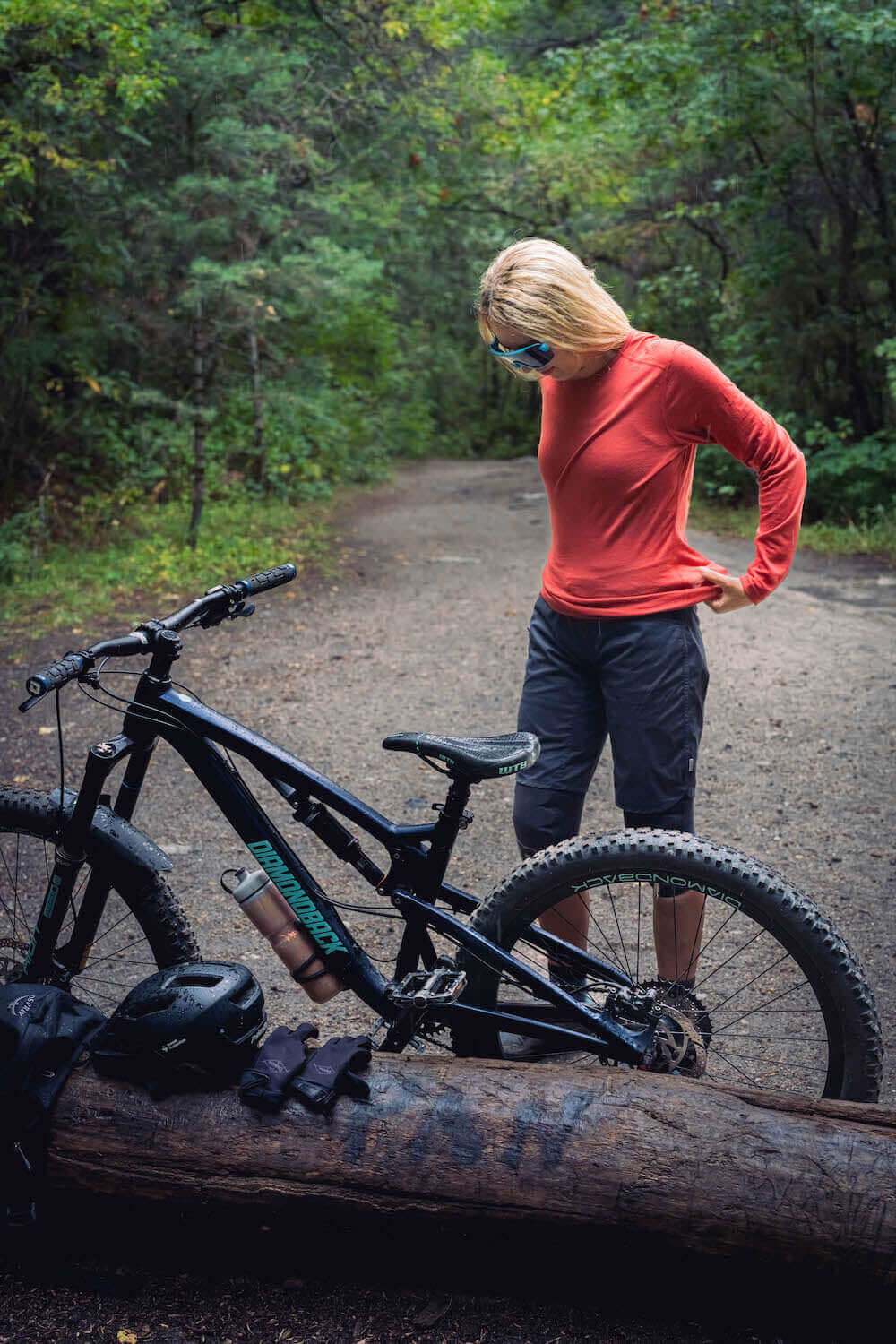
Base layers. Two Roman Trail Women's Merino Wool Base Layers ($49-59) in long sleeve. Sun cover on exposed limestone, shoulder coverage for churches and Nuraghe visits, a thermal base for a Supramonte morning, and wind protection on a boat deck.
Fleece. The Columbia Women's Fast Trek II Jacket ($65) for evenings, which stay cool year round with the mistral, and for the mountains.
Wind shell. The Marmot Women's PreCip Eco Rain Jacket ($110) for spring and autumn rain and against the mistral.
Boots. The Merrell Women's Moab 3 Waterproof Hiking Boot ($140) for the Cala Goloritzé descent, Gorropu and the Supramonte, where the limestone is sharp and loose.
Water shoes. The ELETON Barefoot Hiking and Water Shoes ($23.99), because many beaches are pebble or rock and sea urchins are common.
Socks. The Darn Tough Women's Hiker Micro Crew Merino Socks ($28), three pairs.
Plus mineral reef-safe sunscreen, a wide-brimmed hat, a dry bag, a beach mat for La Pelosa, two litres of water capacity, offline maps and a torch for the nuraghi.
Essential Resources for Sardinia
Emergency number in Italy: 112, covering police, ambulance and fire. 118 reaches medical services directly.
Mountain and coastal rescue: 112, with the Soccorso Alpino operating in the Supramonte and the Guardia Costiera on 1530 for incidents at sea.
US consular services: the US Embassy in Rome covers Sardinia. There is no consulate on the island. Details and emergency arrangements are at it.usembassy.gov.
Medical care: the main hospitals are in Cagliari, Sassari and Olbia, with smaller facilities in the coastal towns and a guardia medica out-of-hours service in rural areas. Response times in the interior are long. EU and UK visitors should carry a European Health Insurance Card or its UK equivalent; others need travel insurance, and it should cover hiking if you intend to walk in the Supramonte.
Beach bookings: Cala Goloritzé and La Pelosa both operate official booking platforms with daily caps. Book through the municipal sites rather than resellers.
Official tourism information: the Italian national board at italia.it, and the regional board at sardegnaturismo.it.
Health authority: the Italian Ministry of Health at salute.gov.it.
US State Department travel advisory for Italy: current advisory level and detail.
UK FCDO travel advice for Italy: entry requirements, driving rules and health guidance.
Solo women travel assessment: Sardinia is an easy and welcoming place to travel alone. Crime is minimal, the villages are friendly, agriturismo hosts take an interest in solo guests, and driving by yourself is straightforward on quiet roads. Nothing here requires the kind of urban vigilance that a mainland Italian city does. What you genuinely need to manage is the outdoors: sun on shadeless limestone, the return climb from Cala Goloritzé in afternoon heat, rip currents on an unlifeguarded west coast in a mistral, and the complete absence of phone signal in the Supramonte. Download offline maps, tell your accommodation where you are walking, carry more water than feels necessary, and book the capped beaches before you drive to them.
Sardinia FAQ
How many days do I need? Seven for one region properly. Ten to fourteen to combine two coasts and the interior without living in the car.
Sardinia or Sicily? Sardinia for beaches, water and wild landscape. Sicily for archaeology, cities and food. Sardinia is the better swim, Sicily the richer trip.
Is the Costa Smeralda worth it? The beaches are genuinely exceptional and publicly accessible. The resorts and the marina are priced for a different clientele entirely. You can enjoy the first without paying for the second.
Can I visit without a car? Only if you stay in Cagliari or Alghero and accept that you will miss the coast. It is not a realistic way to see the island.
What is a Blue Zone? One of a handful of regions with unusually high numbers of centenarians. Sardinia's Barbagia is one of the original five, and the research points at diet, daily physical activity from mountainous terrain, and strong family and community structures.
Can I drink the tap water? Generally yes, though many Sardinians drink bottled and supply in some rural areas is variable. Ask locally.
Reading On
Sardinia stands alone as a trip but sits within Italy. The Italy travel guide for women covers the country as a whole, and the Sicily travel guide for women covers the other great island, which makes an obvious comparison. For mainland pairings there are guides to Rome and Naples, both ferry ports for the island. For the wardrobe reasoning underneath a trip spanning beaches and limestone mountains, the merino wool base layer guide explains the fibre choice. The full collection is at Roman Trail women's merino base layers.
If the outer journey is calling you, the inner one usually is too. Explore SoulMap at romantrail.com/blogs/soulmap.
Blog posts
View all-

Packing List for Incheon: What Women Should Bring
What to pack for Incheon. South Korea's port and gateway city, with a built-from-nothing smart district, the country's only Chinatown, and a nine-metre tide.
Packing List for Incheon: What Women Should Bring
What to pack for Incheon. South Korea's port and gateway city, with a built-from-nothing smart district, the country's only Chinatown, and a nine-metre tide.
-

Packing List for Huacachina: What Women Should ...
What to pack for Huacachina. A desert oasis in southern Peru ringed by enormous dunes, where the buggy ride is the whole point and the FCDO names it by name.
Packing List for Huacachina: What Women Should ...
What to pack for Huacachina. A desert oasis in southern Peru ringed by enormous dunes, where the buggy ride is the whole point and the FCDO names it by name.
-

Packing List for Ollantaytambo: What Women Shou...
What to pack for Ollantaytambo. A living Inca town in Peru's Sacred Valley, the railhead for Machu Picchu, and the right place to sleep off the altitude.
Packing List for Ollantaytambo: What Women Shou...
What to pack for Ollantaytambo. A living Inca town in Peru's Sacred Valley, the railhead for Machu Picchu, and the right place to sleep off the altitude.


Contact form

Roman Trail Outfitters
Merino Wool Women's Long Sleeve Top | Crew Neck Shirt | Deep Olive