Lombok and the Gili Islands Travel Guide for Women: Everything You Need to Know

Lombok lies immediately east of Bali across the Lombok Strait, in the Indonesian province of West Nusa Tenggara. It has about 3.7 million people, a 3,726 meter active volcano at its centre, and off its northwest coast three small coral-fringed islands, the Gilis, where no motor vehicles are permitted at all.
Disclosure: This post contains affiliate links. If you buy through them, Roman Trail earns a small commission at no extra cost to you.
It is routinely described as Bali's quieter neighbour, which is true and slightly misses the point. Lombok is genuinely different rather than simply emptier. It is predominantly Muslim where Bali is Hindu, it sits in a rain shadow so it is drier, it is the home of the Sasak people and their own distinct culture, and it happens to have both the best accessible turtle snorkelling in Indonesia and the country's second highest peak.
The Lombok Strait between the two islands is also the Wallace Line, the boundary biologists draw between Asian and Australasian fauna, which is why the wildlife changes as you cross.
This guide covers the Gili Islands and how the three differ, the reef-safe sunscreen rules that are actually enforced, the Mount Rinjani trek and its mandatory guide requirement, the Pink Beach and the south coast, Sasak culture, getting there, where to stay, costs, safety for women travelling alone, and what to pack.
Lombok at a Glance
Where: West Nusa Tenggara, Indonesia, immediately east of Bali across the Lombok Strait.
Population: around 3.7 million, predominantly Sasak and predominantly Muslim.
High point: Mount Rinjani, an active volcano at 3,726 meters, the second highest in Indonesia.
The Gilis: Gili Trawangan, Gili Meno and Gili Air, off the northwest coast. No motor vehicles on any of them.
Getting there: Lombok International Airport, or a fast boat from Bali in about two hours.
Language: Indonesian and Sasak. English is widely spoken on the Gilis and in tourist areas.
Currency: Indonesian rupiah. Cash matters, especially on the Gilis.
Best months: May, June and September.
Safety for women alone: good, with drink caution on the Gilis and modest dress on Lombok.
When to Visit
Dry season, May through September
The right window. 27 to 32 degrees, humidity low for Indonesia, calm seas and the clearest underwater visibility of the year. July and August are driest and busiest, so May, June and September give the same weather with fewer people and lower prices. This is also when Mount Rinjani is open and safe.
Wet season, October through April
28 to 33 degrees with high humidity and heavy afternoon and evening rain. Snorkelling visibility drops, fast boat crossings from Bali are rough and sometimes cancelled, and the island is green and quiet and cheap. Perfectly viable for a Gili beach trip; not viable for Rinjani.
The Rinjani season
Rinjani National Park closes the mountain during the wet season, roughly January through March, and the trekking season runs about April to November. The closure is real and sensibly motivated: wet volcanic ash and scree on steep exposed ground is dangerous, and visibility on the summit push disappears. Operators offering to work around a closure should be declined.
Ramadan
Worth planning around rather than against. Lombok is observant, and during Ramadan many local restaurants close during daylight and the atmosphere is quieter and more reflective. The Gilis, being tourist islands, are largely unaffected. Eid at the end is a major celebration.
Recommended Tours and Experiences

The Gili Islands
Three small islands within sight of each other and of Lombok, each with a genuinely different character. All three are ringed by reef, all three have turtles, and none of them has a car.
No motor vehicles
This is the defining fact. There are no cars, motorbikes or scooters on any of the three islands. Transport is on foot, by bicycle, or by cidomo, the small horse-drawn cart. The result is a quiet that is genuinely unusual in Southeast Asia and the single thing most visitors remember.
Two practical consequences. You will walk your luggage along a sandy path from the boat, so bring a bag you can carry rather than wheel. And on the welfare of the cidomo horses, which has drawn sustained criticism: conditions vary, some are poorly treated, and walking or cycling instead is a reasonable choice on islands you can cross in half an hour.
Gili Trawangan
The largest and most developed, walkable end to end in under two hours. It has the dive schools, the widest food choice, the sunset bars on the west side and the only real nightlife. Busy, sociable, and the easiest island to arrive on alone because there are always people to talk to.
Gili Meno
The smallest and quietest, with the fewest places to stay and eat, a salt lake in the middle and the best turtle snorkelling of the three. Traditionally the honeymoon island. There is very little to do, which is precisely why people who love it love it.
Gili Air
The middle option and many people's favourite: a genuine local community alongside good snorkelling, decent restaurants, a handful of bars, and none of Trawangan's volume. If you want one island for several days, this is the usual answer.
Getting between them
Island-hopping boats run a scheduled loop, taking 10 to 20 minutes between islands, and private charters are easy to arrange. Many visitors stay on two.
The Reef, the Turtles, and Reef-Safe Sunscreen
The Gili reef is one of the best places in the world to snorkel with green sea turtles from the shore without diving. Turtle Point off Gili Meno and the reefs off Gili Air routinely deliver sightings, and there are hatchery and conservation projects on the islands.
The reef has also had a hard two decades: bleaching events including severe episodes in 2016 and since, damage from the 2018 Lombok earthquakes, and historic dynamite fishing. Substantial coral restoration work is under way, with artificial structures in the shallows you will be swimming over.
Reef-safe sunscreen is required, and it is enforced. Oxybenzone and octinoxate contribute to bleaching at concentrations a popular snorkelling site reaches easily. Operators and marine conservation rules on the Gilis expect mineral sunscreen: non-nano zinc oxide or titanium dioxide as the only active ingredient. Read the ingredients, not the marketing claim, and buy before you leave home because the selection on the islands is limited and expensive.
The rest of the etiquette: do not touch or stand on coral, do not chase or attempt to ride turtles, do not feed fish, and carry your rubbish off the islands, where waste management on a car-free island is exactly as hard as it sounds. Bringing your own mask and snorkel is worth it, because rental quality varies and a leaking mask spoils the water.
Mount Rinjani
Rinjani is an active stratovolcano rising to 3,726 meters, the second highest peak in Indonesia, with the crescent-shaped Segara Anak crater lake about 2,000 meters up inside its caldera and the smaller active cone of Gunung Barujari within it. It last erupted in recent decades and remains monitored.
The standard trek
Three days and two nights, starting from Sembalun or Senaru. Day one climbs through savanna and forest to the crater rim. Day two is the pre-dawn summit push, then down into the caldera to the lake and hot springs. Day three walks out. Two-day and four-day variants exist, as does a shorter crater-rim-only trip for people who do not want the summit.
A guide is mandatory
Rinjani National Park requires a licensed guide for every trek and enforces it at the gates. Book through the park office at Sembalun or Senaru or a registered operator. Porters are standard and are what makes the trip achievable for most people; they carry tents, food, water and cooking equipment. This is the local economy, so pay properly and tip.
How hard it actually is
Harder than most marketing suggests, and worth saying plainly. The summit push starts around 2am and is roughly three hours of loose volcanic ash on a steep exposed slope where each step slides back, at altitude, in the cold and the dark. People turn around, and turning around at the crater rim is a perfectly good outcome. The descent through deep ash is where ankles get turned.
The crater rim camps sit around 2,600 meters and drop to about 5 degrees overnight with wind, after a day of sweating in tropical heat. This is the detail that catches out trekkers who packed for an island holiday. An insulated jacket, a warm hat and gloves are not optional.
There is no vehicle evacuation from the caldera. Anything serious comes out on foot or on a stretcher, which is worth factoring into your insurance and your honesty about your own fitness.

Lombok Beyond the Gilis
The Pink Beach
Pantai Merah, on the southeastern coast, takes its colour from fragments of red coral ground into white sand, producing a genuinely rose-tinted waterline. It is reached by boat or a long rough drive, and it is best in the morning before the day boats arrive. Snorkelling offshore is good.
The south coast
Kuta Lombok, which has nothing to do with Kuta in Bali, is the base for a string of bays: Selong Belanak for learning to surf, Mawun and Tanjung Aan for swimming, and Gerupuk for reef breaks. The coast is emptier and less developed than anywhere comparable in Bali, though that is changing quickly around the Mandalika development and the motorcycle circuit built there.
Sasak culture
The Sasak are the indigenous people of Lombok and the traditional villages of Sade and Ende preserve the distinctive thatched and bamboo architecture and ikat weaving. They are on the tour circuit and can feel staged; going with a guide who has a genuine relationship with the village, dressing modestly and buying textiles directly from the weavers all improve the exchange.
Pura Lingsar near Mataram is a temple complex used by both Balinese Hindus and the Sasak Wetu Telu community, whose practice blends Islam with older local tradition. It is one of the most interesting religious sites in Indonesia for exactly that reason.
Waterfalls
Sendang Gile and Tiu Kelep near Senaru, on Rinjani's northern flank, are the best in Lombok. Reaching Tiu Kelep involves wading a river, which is another use for water shoes. Go with a local guide; the path is not obvious.
Getting There and Around
By air. Lombok International Airport in the south of the island has domestic connections including frequent short hops from Bali, plus some regional international routes. From the airport to the Gili ports in the north is about two hours by road.
Fast boat from Bali. The common approach, running from Padang Bai, Sanur or Serangan to the Gilis in roughly two hours. Choose an operator on reputation rather than price: the Bali to Gili fast boat route has a mixed safety record, and you want visible life jackets and a boat that is not overloaded. Crossings are rough in the wet season and cancellations happen.
Public ferry. The slow ferry from Padang Bai to Lembar on Lombok takes four to five hours and is very cheap.
On Lombok. Hire a car with a driver for a day, which is inexpensive and removes the stress, or rent a scooter if you are experienced. Lombok roads are quieter than Bali's but the surface varies and helmets matter.
On the Gilis. Feet, bicycle or cidomo. Bicycles are cheap to rent and the correct way to get about, though sand traps you in places.
Where to Stay
Gili Air for the best all-round balance, with everything from cheap homestays to boutique beach bungalows.
Gili Trawangan for the widest choice, the diving and the social scene. The east side is busier, the west side is quieter with the sunsets.
Gili Meno for quiet and turtles, with limited options and very little nightlife.
Senggigi on Lombok's west coast is the older resort strip, convenient for the Gili boats and a reasonable base if you want a mainland night.
Kuta Lombok for the south coast surf and beaches, with a growing range of guesthouses and hostels.
Senaru or Sembalun for a night before a Rinjani trek, which most operators arrange as part of the package.
On the Gilis specifically: freshwater is scarce and many places use salt or brackish water in showers, air conditioning is not universal, and power can be intermittent. Read the details rather than the photographs.
What Lombok Costs
Cheaper than Bali across the board, and among the better value destinations in Indonesia.
Accommodation: Gili homestays from USD 15 to 30, mid-range bungalows USD 40 to 90, boutique from USD 120. Lombok mainland is cheaper again.
Eating: a local warung meal USD 2 to 4, a Gili restaurant meal USD 6 to 15, a beach barbecue with fresh fish USD 8 to 18.
Rinjani trek: roughly USD 150 to 300 for the three-day trip with guide, porters, food and equipment, depending on group size and operator. Paying at the bottom of that range usually means someone is being underpaid.
Diving: Gili fun dives around USD 35 to 45, open water certification USD 350 to 450.
Boats: fast boat from Bali USD 25 to 50 each way, island hopping a few dollars.
Cash: Gili ATMs are unreliable and charge heavily. Withdraw rupiah on Lombok or Bali before crossing.
Safety for Women in Lombok and the Gilis
Lombok and the Gilis are generally comfortable for a woman travelling alone. The Gilis in particular suit solo travel well: they are tiny, you know the place within a day, the traveller population is large and international, and hostels and dive schools make company easy to find. Violent crime against visitors is uncommon.
The specific things worth knowing:
Drinks on the Gilis. There is a documented history of drink spiking and, more seriously, of methanol poisoning from adulterated arak, the local spirit, in parts of Indonesia including the Gilis. Stick to bottled beer or spirits you see poured from a sealed branded bottle, avoid cheap cocktail buckets and free-pour arak, and watch your drink. This is the single most important safety point on these islands.
Boat crossings. The Bali to Gili fast boat route has had accidents. Choose the operator on safety record, check for life jackets, and do not travel in conditions that look marginal.
Modest dress on Lombok. Lombok is considerably more conservative than Bali. Swimwear is for the beach and the Gilis. In villages, towns and anywhere near a mosque, cover shoulders and knees. The difference in how you are received is clear.
The water. Currents between the islands are strong, and the channel is not a swim. Snorkel where boats are not, and note that boat propeller injuries do happen where snorkellers stray into channels. Sea urchins on rocky shallows argue for water shoes.
Rinjani. The mountain, not the people, is the risk. Altitude, cold, loose ground in the dark, and no vehicle evacuation.
Scooters. The most common way travellers get injured in Indonesia. Helmet, no night riding on unfamiliar roads, and check that your insurance covers it and that you hold the right licence.
Mosquitoes. Dengue occurs in Indonesia, so repellent is a health measure rather than a comfort. Malaria risk in Lombok is low but not zero; ask a travel clinic.
What to Pack for Lombok
The full list is in the Lombok and Gili Islands packing list for women. The essentials:
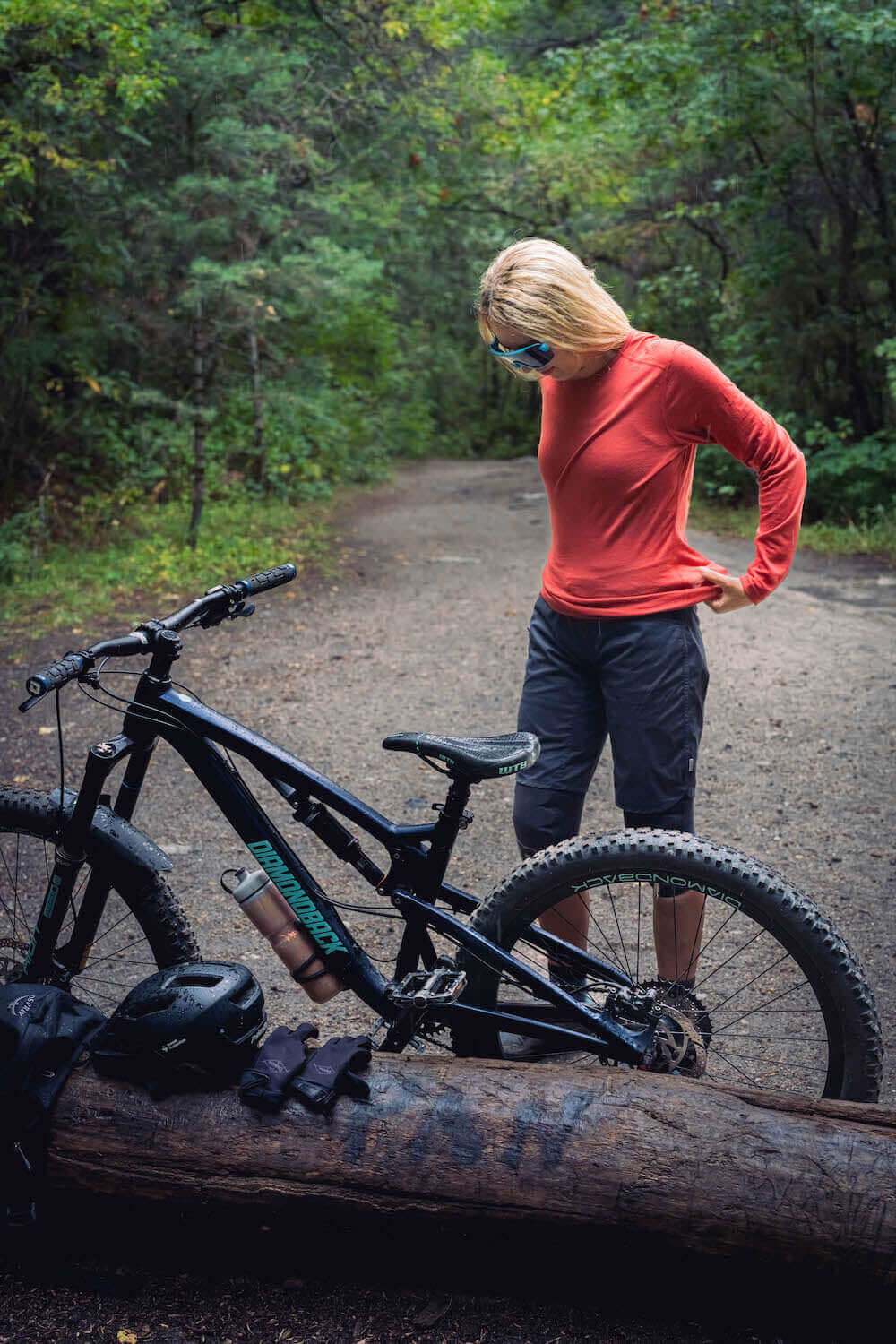
Base layers. Two Roman Trail Women's Merino Wool Base Layers ($49-59) in long sleeve. One garment covering three jobs here: sun protection on the reef without reapplying lotion with wet salty hands, modest shoulder coverage for Sasak villages and mosques, and a thermal base layer on the Rinjani crater rim where it drops to 5 degrees.
Insulated jacket. The Columbia Women's Powder Lite II Hooded Jacket ($115), essential if you are trekking Rinjani and unnecessary if you are not. The crater rim camp and the pre-dawn summit push are properly cold at altitude.
Rain shell. The Marmot Women's PreCip Eco Rain Jacket ($110) for the wet season and as a windproof on the exposed rim in any season.
Trekking boots. The Merrell Women's Moab 3 Waterproof Hiking Boot ($140), broken in beforehand. Volcanic scree and deep ash on a steep descent is where ankles go.
Water shoes. The ELETON Barefoot Hiking and Water Shoes ($23.99) for Gili boat landings onto coral rubble, the Pink Beach, sea urchins on rocky shallows and the Tiu Kelep river wade.
Socks. The Darn Tough Women's Hiker Micro Crew Merino Socks ($28). Three pairs for Rinjani.
Plus mineral reef-safe sunscreen bought before you fly, two swimsuits, a rash guard, your own mask and snorkel, a dry bag, a wide-brimmed hat, a headtorch with spare batteries for Rinjani, gloves and a warm hat for the summit, a power bank, insect repellent, a filter bottle, flip-flops, and rupiah in cash withdrawn before you reach the Gilis.
Essential Resources for Lombok and the Gili Islands
Emergency numbers in Indonesia: 110 for police, 118 or 119 for ambulance, 113 for fire. The unified emergency number 112 also works in many areas.
Search and rescue: BASARNAS, the national search and rescue agency, on 115, which covers marine incidents and mountain rescue including Rinjani.
Tourist police: Indonesia operates tourist police units in the main visitor areas, and your accommodation or dive operator is usually the fastest route to help on the Gilis, where there is no permanent police post on every island.
US consular services: the US Embassy in Jakarta covers Indonesia, and the US Consular Agency in Bali in Denpasar is the nearest presence to Lombok. There is no US consulate on Lombok. Contact details and emergency arrangements are at id.usembassy.gov.
Medical care: the Gili Islands have small clinics adequate for minor injuries, cuts and stings only. Anything more serious means Lombok, where Mataram has the main hospitals, or evacuation to Bali or Singapore. There is a hyperbaric chamber in Mataram and in Bali, which matters if you are diving. Travel insurance with medical evacuation cover is a genuine requirement here rather than a formality, and it must explicitly cover diving and high-altitude trekking if you intend to do either.
Official tourism information: the Indonesian Ministry of Tourism at indonesia.travel.
Health authority: the Indonesian Ministry of Health at kemkes.go.id.
Volcano status: Indonesia's volcanology agency publishes current alert levels for Rinjani at magma.esdm.go.id, worth checking before a trek.
US State Department travel advisory for Indonesia: current advisory level and regional detail.
UK FCDO travel advice for Indonesia: entry requirements, regional safety and health guidance.
Solo women travel assessment: the Gili Islands are among the easier places in Southeast Asia to travel alone. They are small enough to feel familiar within a day, the traveller population is large and sociable, dive schools and hostels make company automatic, and harassment is not a notable feature. Lombok itself is more conservative and more traditional, where modest dress away from the beaches makes a visible difference to how you are received. The three things that genuinely require attention are drinks, specifically adulterated arak and spiking, which is the most serious risk on these islands; the fast boat crossing from Bali, where operator choice matters; and Rinjani, where the mountain and the cold are the danger rather than the people. Handle those, cover up on the mainland, and this is a straightforward and rewarding solo destination.
Lombok FAQ
How many days do I need? Four nights for the Gilis alone, which is enough for two islands and several snorkel sessions. Add four more for Rinjani including travel and a recovery day. Eight to ten nights covers the Gilis, Rinjani and the south coast.
Which Gili should I choose? Air for the best balance, Trawangan for diving and nightlife, Meno for quiet and turtles. Many people split between two.
Lombok or Bali? Bali for temples, food, culture and infrastructure. Lombok for emptier beaches, better snorkelling, a serious volcano and lower prices. They are an hour apart and the obvious answer is both.
Can I do Rinjani without a guide? No. The park requires a licensed guide and enforces it, and the route genuinely warrants one.
Is the Pink Beach actually pink? Noticeably rose-tinted at the waterline, particularly in good light, rather than vividly pink. Worth going for the snorkelling as much as the sand.
Is there alcohol on Lombok? Available in tourist areas and on the Gilis, less so in local towns given Lombok's observant Muslim majority. Be careful with arak as above.
Can I drink the tap water? No. Bottled or filtered, and on the Gilis freshwater is genuinely scarce, so a filter bottle is both practical and considerate.
Reading On
Lombok is almost always reached via Bali. The Indonesia travel guide for women covers the wider archipelago, and there are dedicated guides to Ubud and south Bali, plus Flores for anyone continuing east towards Komodo. For the wardrobe reasoning underneath a trip that spans a reef and a volcano, the merino wool base layer guide explains why one fibre covers both. The full collection is at Roman Trail women's merino base layers.
If the outer journey is calling you, the inner one usually is too. Explore SoulMap at romantrail.com/blogs/soulmap.
Blog posts
View all-

Packing List for Skardu, Pakistan: What Women S...
What to pack for Skardu, Pakistan: the capital of Baltistan, the cold desert, Deosai plains, the road head for K2, and how to get there legally.
Packing List for Skardu, Pakistan: What Women S...
What to pack for Skardu, Pakistan: the capital of Baltistan, the cold desert, Deosai plains, the road head for K2, and how to get there legally.
-

Packing List for Naran, Pakistan: What Women Sh...
What to pack for Naran, Pakistan: the Kaghan valley, Saiful Muluk lake, the Babusar Pass as the compliant road north, and the permission you need before you go.
Packing List for Naran, Pakistan: What Women Sh...
What to pack for Naran, Pakistan: the Kaghan valley, Saiful Muluk lake, the Babusar Pass as the compliant road north, and the permission you need before you go.
-

Packing List for Multan, Pakistan: What Women S...
What to pack for Multan, Pakistan's city of saints: the Sufi shrines, the blue tilework, the mango orchards, and heat that reaches the high forties.
Packing List for Multan, Pakistan: What Women S...
What to pack for Multan, Pakistan's city of saints: the Sufi shrines, the blue tilework, the mango orchards, and heat that reaches the high forties.


Contact form

Roman Trail Outfitters
Merino Wool Women's Long Sleeve Top | Crew Neck Shirt | Deep Olive