Lima Travel Guide for Women: What to Know Before You Go

Lima is South America's most underrated capital, a coastal desert city that has quietly become the culinary capital of the entire hemisphere while most visitors still treat it as a one-night layover before Cusco and Machu Picchu. That reputation deserves to change. Lima has three of the world's fifty best restaurants, a pre-Columbian art collection unmatched anywhere in the Americas, a Pacific coastline of dramatic clay cliffs, and a bohemian arts district that rivals any in South America, all sitting inside a city that most travelers give a single night before moving on.
This guide covers everything a woman traveler needs to plan a real Lima trip: the unusual garua winter climate and how it differs completely from the summer sun, neighborhood breakdowns for Miraflores, Barranco, the Historic Center, and Pueblo Libre, the food scene that has made Lima famous, the Larco Museum and Lima's pre-Columbian history, getting around by taxi and rideshare, where to stay, safety with honest guidance, and what to pack for a city where the sky and the temperature can be genuinely difficult to predict from home.
Is Lima Safe for Women Travelers
Lima's safety picture deserves real nuance rather than either extreme, the outdated warning to avoid the city entirely or an uncritical assumption that all of Lima is equally comfortable. The truth is neighborhood-specific. Miraflores and Barranco, the two districts that cover the great majority of what a visitor actually wants to see and do, are genuinely safe and comfortable for solo women travelers, with a heavy police and security presence, well-lit streets, and a constant flow of both locals and tourists at nearly all hours.
The Historic Center requires more standard urban awareness, particularly once the museums and government buildings close for the evening. It is well worth visiting during the day, when the Plaza Mayor and the colonial churches are busy and well monitored, but it is not a district to wander alone after dark the way Miraflores or Barranco are. The Callao port area and several outer districts to the north and east of the city are not recommended for independent tourist visits at all, and nothing covered in this guide requires going anywhere near them.
Pickpocketing is the most common issue for visitors, concentrated in crowded markets, on public transit, and around major tourist sites, and standard precautions, a bag worn across the body rather than over one shoulder, phones kept out of back pockets, and extra care in the Historic Center, address the great majority of the actual risk. Street taxis hailed directly off the curb are best avoided; Uber, InDriver, or a taxi called by your hotel are the standard, sensible defaults throughout this guide, and this single habit does more to reduce risk than almost anything else a visitor can control. Many thousands of solo women travel Lima successfully every year, spending most of their time in Miraflores and Barranco, and describe it as one of the most rewarding and most comfortable cities in South America to explore independently.
Understanding Lima's Climate
Lima's climate is genuinely unusual and catches most first-time visitors off guard. The city sits on a narrow strip of coastal desert, one of the driest deserts on earth, cooled by the Humboldt Current running up the Pacific from Antarctica. The result is a city that receives almost no rainfall at all, under 10 millimeters a year, while still spending roughly half the year under a persistent blanket of grey cloud.
That grey season is called the garua, running roughly from June through November. Low coastal fog and cloud sit over the city for weeks at a stretch, temperatures run from about 12 to 18 degrees Celsius, and the sun can genuinely disappear for days at a time even though it never actually rains. The humidity from the fog is real and persistent, and the damp chill of a garua morning in Miraflores feels considerably colder than the thermometer suggests, which is exactly the kind of condition merino wool is built for and cotton is not.
Summer, from December through April, is a different city entirely: clear skies, genuine sun, temperatures from about 18 to 26 degrees Celsius, and a full beach culture along the Costa Verde below the Miraflores cliffs. Christmas and New Year in Lima are warm-weather, beach-adjacent celebrations, a detail that surprises visitors who associate the holidays with cold weather. The shoulder months, May and November to December, sit somewhere between the two extremes and are genuinely difficult to predict from week to week, which is its own argument for packing layers rather than committing fully to either a summer or winter wardrobe.
Because the garua season is so persistent and so different from what most visitors expect of a Pacific coastal city, checking which season a trip actually falls into, rather than assuming Lima behaves like a typical beach destination, is one of the more valuable planning steps for a first visit.
Lima's Neighborhoods
Miraflores, perched on the Pacific cliffs, is Lima's most polished and most visitor-friendly district. It has the Parque del Amor overlooking the Costa Verde beach below, the Larcomar shopping and dining complex built directly into the cliffside, the Huaca Pucllana pre-Inca pyramid rising unexpectedly in the middle of the residential streets, and the highest concentration of quality restaurants, supermarkets, and comfortable mid-range hotels anywhere in the city. It is the natural base for a first visit and the neighborhood most visitors spend the majority of their time in.
Barranco, immediately south of Miraflores, is Lima's bohemian arts district, all colorful colonial-era buildings, independent galleries, and a nightlife scene that draws both locals and visitors. The Bridge of Sighs, the Puente de los Suspiros, is the neighborhood's signature landmark, along with the Municipal Library gardens and the Bajada de Banos leading down toward the ocean. Barranco has Lima's most atmospheric streets for an evening walk and its finest concentration of independent restaurants and bars, and it pairs naturally with Miraflores as a walkable second base or an easy taxi ride away for an evening out.
The Historic Center, Lima's colonial core, holds the Plaza Mayor, the Cathedral, the Archbishop's Palace, and the extraordinary Monastery of San Francisco, whose catacombs contain the bones of an estimated 70,000 colonial-era Lima residents arranged in geometric patterns by 19th century archaeologists. This is the district for Lima's colonial architecture and history, best visited during daylight hours as a dedicated half-day or full-day excursion from Miraflores or Barranco rather than a base to stay in.
Pueblo Libre, a quieter residential district a short taxi ride from Miraflores, is home to the Larco Museum, Lima's single finest cultural attraction and one of the best pre-Columbian collections anywhere in the Americas. The neighborhood itself is unhurried and largely residential, worth combining with a Larco Museum visit rather than treating as its own extended stop.
The Larco Museum and Lima's Pre-Columbian History
The Museo Larco occupies an 18th century vice-royal mansion in Pueblo Libre, built over a 7th century pre-Columbian pyramid, and holds the most complete collection of pre-Columbian art in Peru, spanning more than 3,000 years and the full range of cultures that preceded and coexisted with the Inca, the Moche, the Chimu, the Nazca, and others. The museum's storage gallery, open to visitors rather than hidden away, displays tens of thousands of additional ceramic pieces in a way few museums anywhere attempt, giving a genuine sense of the sheer scale of pre-Columbian craft production along the Peruvian coast.
The museum's separate erotic gallery, housing a collection of Moche ceramics depicting sexuality with a directness that still surprises visitors today, is the single most visited room in the museum and worth seeking out specifically rather than skipping out of assumed discomfort; the pieces are presented with serious historical context rather than shock value; the collection is treated as a genuine, respected part of understanding Moche cosmology and daily life rather than a curiosity tucked away for its own sake. The museum's garden restaurant, set among restored colonial architecture, is one of the more pleasant lunch settings in Lima and worth booking ahead for a sit-down meal that turns the visit into a half-day outing. Budgeting at least two hours for a proper visit, and closer to three for visitors with a genuine interest in pre-Columbian art, is realistic given the collection's depth.
Booking Lima's World-Class Restaurants
Lima's food scene is the primary reason a growing number of travelers now plan entire trips around the city rather than treating it as a Cusco stopover. Central, Maido, and Astrid y Gaston are all regularly ranked among the fifty best restaurants in the world, and all three require serious advance planning. Virgilio Martinez's tasting menu at Central is organized by altitude, moving diners through courses sourced from Peru's coastal desert, its Andean highlands, and its Amazon rainforest in a single meal that functions as an edible tour of the country's extraordinary biodiversity. Maido, led by Mitsuharu Tsumura, built its reputation on Nikkei cuisine, the fusion of Japanese technique and Peruvian ingredients that has become one of Lima's defining culinary movements. Astrid y Gaston, one of the pioneers of modern Peruvian cuisine going back to the 1990s, remains one of the most consistently excellent tasting menus in the city.
Reservations for all three typically need to be made two to three months in advance for a specific evening date, through each restaurant's own website rather than a general booking platform, with new dates often released on a rolling monthly basis worth checking regularly. Lunch seatings are frequently easier to secure on shorter notice than dinner, and several of these restaurants offer a shorter, more accessible tasting menu at midday for meaningfully less than the full evening experience, a genuinely useful option for a visitor planning a Lima trip without months of lead time. Dress leans smart rather than formal at any of these restaurants; a quality dress or a well put together top and trousers covers it comfortably, which is exactly why this guide's companion packing list includes one dedicated dressier outfit rather than assuming a casual travel wardrobe will do.
Beyond the headline names, Lima's everyday food culture is just as remarkable in its own way. The ceviche stands of the Surquillo market serve some of the freshest, most affordable ceviche in the city from families that have run the same stall for decades. Barranco's anticucho carts, grilling beef heart skewers over charcoal on street corners in the evening, are a genuine Lima institution rather than a tourist novelty. Pollo a la brasa, Peruvian rotisserie chicken, originated in Lima and has since spread to become one of the most popular chicken preparations in the United States, and a plate from a neighborhood chicken joint in Miraflores or Barranco is worth seeking out on its own merits rather than only as a budget option between fine-dining reservations.

Getting Around Lima
Lima is a large, traffic-heavy city, and taxis and rideshare apps are the standard way to move between neighborhoods for the great majority of visitors. Uber and the local app Cabify both operate reliably throughout Lima and are the recommended default over hailing a street taxi directly, since fares and driver identity are both confirmed in advance. Traffic can be genuinely severe during peak commuting hours, particularly along the Costa Verde highway connecting Miraflores to the Historic Center, and building extra time into any cross-city plan during those windows is worth doing.
Within Miraflores and within Barranco, walking is entirely pleasant and often the best way to experience either neighborhood, and the two districts are close enough to walk between in good weather, roughly 20 to 30 minutes along the coastal parks, though a short taxi ride is the more common choice for an evening out. The Metropolitano, Lima's rapid bus system running in dedicated lanes, connects Miraflores to the Historic Center efficiently and cheaply, though it requires a prepaid card and is generally less convenient for visitors than a rideshare app for anything beyond a single well-planned trip. Getting to and from Jorge Chavez International Airport, roughly 45 minutes to an hour from Miraflores depending on traffic, is most reliably handled through an official airport taxi service or a pre-booked rideshare rather than an unlicensed driver soliciting inside the terminal.

What Lima Costs
Lima offers excellent value relative to Western capitals, with meaningful range depending on how much of the city's high end a visitor wants to experience. A comfortable mid-range hotel in Miraflores or Barranco runs roughly $60 to $130 per night depending on season and specific location. A casual meal, a bowl of ceviche at a local spot or a plate of pollo a la brasa, runs $6 to $15 per person, while a tasting menu at Central, Maido, or Astrid y Gaston runs considerably more and should be budgeted as a dedicated splurge rather than a typical dinner. A short Uber ride within Miraflores or between Miraflores and Barranco typically runs just a few dollars, making rideshare an affordable default rather than a costly upgrade over walking or public transit. Larco Museum admission is modest by international museum standards, and Huaca Pucllana's guided entry, included with the ticket price, is similarly reasonable. Coffee culture has grown considerably in Lima in recent years, and a specialty pour-over at a serious Barranco or Miraflores coffee shop remains inexpensive relative to equivalent cafes in North America or Europe.
Where to Stay in Lima
Miraflores is the natural default base for a first Lima visit, offering the highest concentration of comfortable hotels, the best security presence, and easy access to Larcomar, the Costa Verde parks, and Huaca Pucllana, all within easy walking distance of most accommodation in the district. Barranco suits visitors prioritizing nightlife, art galleries, and a more bohemian, less polished atmosphere, at the cost of a slightly smaller selection of hotels and a bit more distance from some of Miraflores's practical conveniences like large supermarkets. Staying in Barranco and taking a short Uber into Miraflores for daytime errands, or the reverse for an evening out, is a genuinely common and comfortable pattern for visitors who want a taste of both neighborhoods. Staying in the Historic Center is not generally recommended for a typical visitor; it is better treated as a day or half-day excursion from a Miraflores or Barranco base, given the more limited hotel selection and the after-dark safety considerations covered above.
Browse the Roman Trail women's merino base layer collection, the foundation layer for Lima's damp garua chill and its warmer summer evenings alike, available in eight colors with free two-day shipping and a two-year satisfaction guarantee.
Day Trips from Lima
The Paracas National Reserve and the Ballestas Islands, roughly three to four hours south of Lima along the Pan-American Highway, offer a genuine desert-meets-ocean landscape and a boat tour past sea lion colonies, Humboldt penguins, and dense colonies of seabirds, often described as a more accessible alternative to the Galapagos for visitors without the time or budget for Ecuador. The nearby Huacachina oasis, a genuine natural lagoon ringed by towering sand dunes, offers sandboarding and dune buggy tours and pairs naturally with a Paracas excursion as an overnight trip rather than a rushed single day. Pachacamac, a pre-Inca archaeological complex roughly 40 minutes south of Lima along the coast, was one of the most important pilgrimage and oracle sites on the entire Peruvian coast before the Inca absorbed it into their empire, and its scale and coastal desert setting make it a genuinely worthwhile half-day trip for visitors with an extra day in Lima who are not planning to see Machu Picchu or other major Inca sites elsewhere in Peru.
Lima's Markets and Shopping
The Surquillo Central Market, a short distance from Miraflores, is where many of Lima's top chefs source their own ingredients, and browsing its stalls of exotic fruit, fresh seafood, and prepared foods offers a genuine window into Peruvian daily food culture beyond the restaurant scene. Indian Market in Miraflores, despite its somewhat dated name, is Lima's best concentration of alpaca textiles, silver jewelry, and Peruvian crafts under one roof, and remains a reasonable place to buy quality alpaca sweaters and scarves, though prices and quality both benefit from comparing a few stalls before committing to a purchase. Barranco's boutiques, particularly around the Bajada de Banos and the streets near the Bridge of Sighs, favor smaller, independent designers over mass-produced souvenirs, and the neighborhood's weekend art fairs are worth timing a visit around for genuinely original, locally made pieces. Larcomar, the shopping center built into the Miraflores cliffside, has both international brands and a curated selection of Peruvian designers, along with the city's most dramatic ocean views from nearly any of its restaurants and cafes.
Lima's Museums and Art Scene Beyond Larco
Lima's museum scene runs considerably deeper than the Larco Museum alone, and visitors with more than three days genuinely benefit from exploring further into it. The MALI, the Museo de Arte de Lima, sits in a striking Beaux-Arts exhibition palace in the Historic Center and holds the most comprehensive survey of Peruvian art spanning three thousand years, from pre-Columbian textiles and ceramics through colonial religious painting to a genuinely strong contemporary collection, making it a useful counterpart to the Larco Museum's narrower pre-Columbian focus. The MAC, Lima's museum of contemporary art in Barranco, occupies a striking modernist building and focuses specifically on Peruvian and Latin American work from the mid-20th century to the present, a natural stop for visitors already spending an afternoon in the neighborhood's gallery district. The Museo de la Nacion, in San Borja, traces the full sweep of Peruvian history from the earliest pre-ceramic cultures through the Spanish conquest and into the republican era, with a scale-model recreation of Machu Picchu useful for visitors who will not make it to Cusco on the same trip. The Metropolitan Museum of Lima, housed in a converted 19th century electrical plant, uses immersive multimedia exhibits to walk visitors through Peruvian history in a format considerably more accessible than a traditional glass-case museum, and it has become a popular stop specifically for visitors traveling with teenagers or anyone who finds a more traditional museum format less engaging.
Beyond the formal museum circuit, Barranco's gallery scene deserves its own dedicated browsing time. Small independent galleries cluster around the streets near the Bridge of Sighs and the Barranco Municipal Library, showing contemporary Peruvian painting, photography, and sculpture at a scale and price point considerably more accessible than the commercial galleries of larger art capitals, and a slow afternoon spent wandering in and out of them, without a fixed itinerary, is one of the more rewarding unstructured ways to spend time in the neighborhood.
Surfing and the Costa Verde
Lima sits on one of the more storied surf coastlines in South America, and the Costa Verde beaches below the Miraflores and Barranco cliffs, Waikiki and Makaha among them, have a genuine year-round surf culture that many visitors never realize exists just a short walk down from the clifftop parks. The waves are consistent enough that Lima hosts regular local and national surf competitions, and several surf schools along the Costa Verde offer lessons and board rental aimed specifically at beginners and visitors, typically in the calmer, more forgiving stretches of the beach rather than the sections favored by experienced local surfers.
Water temperatures, cooled by the same Humboldt Current that shapes Lima's climate overall, run cold year round by tropical standards, cold enough that a wetsuit is standard practice even during the warmer summer months, and any surf school renting boards will include a wetsuit as part of the lesson package. Even for visitors with no interest in getting in the water, walking or cycling the paved paths along the Costa Verde, with the Miraflores and Barranco cliffs rising on one side and the Pacific on the other, is one of the more pleasant free activities in Lima, and it pairs naturally with sunset, when the light along the water shifts through the same warm tones that give Lima's golden hour its particular reputation among photographers.
Language and Basic Etiquette
Spanish is Lima's dominant language, and English proficiency, while common in Miraflores's hotels, restaurants, and tourist-oriented businesses, is considerably less universal outside those specific contexts. A handful of basic Spanish phrases go a genuine distance toward warmer interactions, particularly at the Surquillo market or with taxi drivers, and downloading an offline translation app before arrival is a sensible practical step for visitors without conversational Spanish.
Limenos are generally warm and hospitable, and greetings matter; a brief verbal greeting before launching into a request, whether at a shop counter or with a taxi driver, is standard courtesy and noticeably improves the interaction. Tipping around ten percent at sit-down restaurants is customary and appreciated, though it is not always automatically included the way it sometimes is elsewhere, so checking the bill before adding an additional tip is worth doing. Street vendors and casual food stalls generally do not expect a tip, and rounding up rather than calculating a precise percentage is the normal local approach in those settings.
A Sample Three-Day Lima Itinerary
Day one covers Miraflores in full: a morning at Huaca Pucllana, an afternoon at Larcomar and the Parque del Amor along the cliffside, and dinner at a well-reviewed ceviche restaurant to start the trip with Lima's signature dish.
Day two is dedicated to culture and Barranco: the Larco Museum in Pueblo Libre in the morning, allowing a full two to three hours, followed by an afternoon and evening walking Barranco's streets, the Bridge of Sighs, and dinner at one of the neighborhood's independent restaurants.
Day three covers the Historic Center as a dedicated half-day excursion, the Plaza Mayor, the Cathedral, and the Monastery of San Francisco's catacombs, ideally finishing by early evening to be back in Miraflores or Barranco before dark, followed by whichever of Central, Maido, or Astrid y Gaston has a confirmed reservation, or a final evening exploring one of Lima's less formal but equally excellent neighborhood restaurants.
What to Pack for Lima
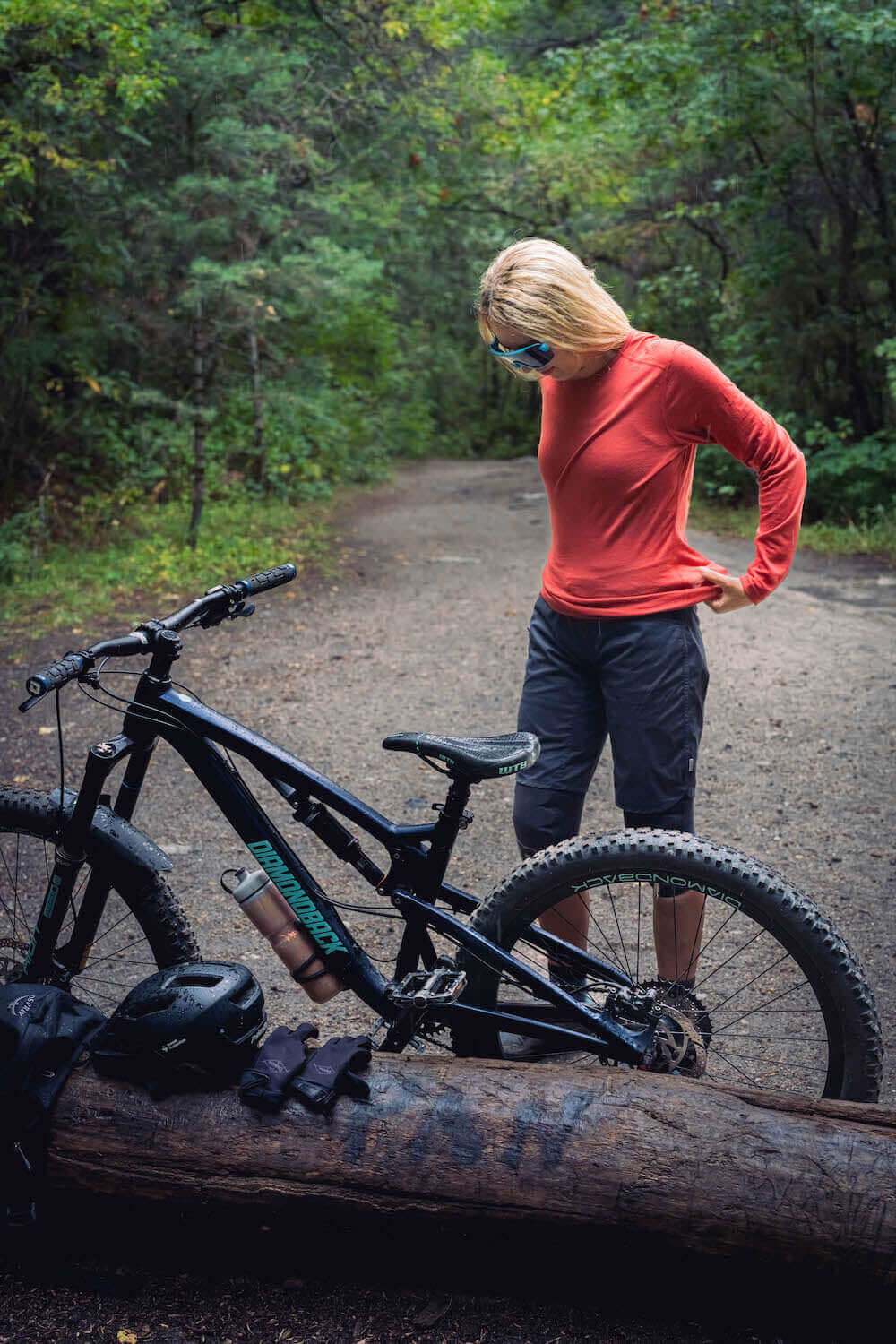
Lima's packing list is shaped almost entirely by its unusual coastal desert climate: a persistent, damp garua chill for roughly half the year, a genuine sunny warmth the other half, almost no rainfall in any season, and daily temperature swings that are moderate compared to a highland city like Bogota but still real, particularly between a foggy morning and a milder afternoon during the garua months. A merino base layer top handles the damp winter chill without the clamminess of synthetic fabrics, and a compact wind layer addresses the Pacific breeze along the Costa Verde in both seasons.
The complete seasonal layering breakdown, including specific product recommendations for base layers, mid layers, footwear, and the one dressier outfit worth packing for Lima's world-class restaurant scene, is covered in the Lima packing list for women.
Essential Resources for Women in Lima
Emergency numbers: 105 for police, 106 for ambulance, 116 for fire.
US Embassy in Lima: Av. La Encalada cuadra 17 s/n, Surco, Lima, +51 1 618 2000, pe.usembassy.gov
Official tourism authority: Peru Travel (PROMPERU), peru.travel
US State Department travel advisory: travel.state.gov Peru advisory
UK FCDO travel advice: gov.uk Peru travel advice
Solo women safety assessment: Lima is genuinely comfortable for solo women travelers who concentrate their time in Miraflores and Barranco, both well-lit, well-patrolled, and busy with locals and visitors at nearly all hours. The Historic Center is fine by day but warrants more caution after dark, and Callao and several outer districts are not recommended for independent tourist visits at all. Uber or InDriver rather than a street-hailed taxi is the single most effective safety habit for getting around, and many thousands of solo women travel Lima successfully every year while describing it as one of South America's most rewarding and most underrated capitals.
Ready to plan your wardrobe for the trip? The complete Lima packing list for women covers exactly what to bring for the garua chill and the layering system that Lima's unusual climate genuinely requires.
You can also explore more of what to expect across the region in the Roman Trail travel packing guide, and browse the merino wool base layer guide for more on why it works so well across Lima's two very different seasons.
Recommended Tours and Experiences
If the outer journey is calling you, the inner one usually is too. Explore SoulMap at romantrail.com/blogs/soulmap.
Blog posts
View all-

Packing List for Punta del Diablo: What Women S...
What to pack for Punta del Diablo. A former shark-fishing village on Uruguay's wild east coast, with sand streets, Atlantic surf and nothing open in winter.
Packing List for Punta del Diablo: What Women S...
What to pack for Punta del Diablo. A former shark-fishing village on Uruguay's wild east coast, with sand streets, Atlantic surf and nothing open in winter.
-

Packing List for Colonia del Sacramento: What W...
What to pack for Colonia del Sacramento. A Portuguese smuggling town of 1680 that is now a UNESCO quarter, an hour by ferry from Buenos Aires.
Packing List for Colonia del Sacramento: What W...
What to pack for Colonia del Sacramento. A Portuguese smuggling town of 1680 that is now a UNESCO quarter, an hour by ferry from Buenos Aires.
-

Packing List for Watamu: What Women Should Bring
What to pack for Watamu. A marine park on the Swahili coast with turtle nesting beaches, coral gardens and the ruins of a lost city behind it.
Packing List for Watamu: What Women Should Bring
What to pack for Watamu. A marine park on the Swahili coast with turtle nesting beaches, coral gardens and the ruins of a lost city behind it.


Contact form

Roman Trail Outfitters
Merino Wool Women's Long Sleeve Top | Crew Neck Shirt | Deep Olive