Lake Como Travel Guide for Women: Everything You Need to Know

Lake Como is a glacial lake in Lombardy, about 50 kilometres north of Milan, shaped like an inverted Y with three arms meeting at Bellagio. It is 46 kilometres long, up to 410 meters deep, which makes it the deepest lake in Italy, and it has 170 kilometres of shoreline packed with villages built vertically up the hillsides.
Disclosure: This post contains affiliate links. If you buy through them, Roman Trail earns a small commission at no extra cost to you.
People have been coming here for the same reason since Pliny the Younger built two villas on it in the first century: the combination of deep water, mountains rising straight out of it, and a microclimate mild enough to grow citrus and subtropical plants at 46 degrees north. The villa gardens that make Como famous are a direct product of that climate.
The thing most guides under-report is how physical a Como trip is. There is no useful road around the lake, the ferry is the transport, and the villages are staircases. You will climb a great deal more than a glamour destination implies.
This guide covers the geography and the three arms, when to come, the villages and which to base yourself in, the villas and gardens, the ferry system, walking, getting there from Milan, costs, safety for women travelling alone, and what to pack.
Lake Como at a Glance
Where: Lombardy, northern Italy, about an hour from Milan.
Shape: an inverted Y. The Como arm to the southwest, the Lecco arm to the southeast, and the single northern arm towards Colico. The three meet at Bellagio.
Depth: up to 410 meters, the deepest lake in Italy.
Getting there: trains from Milan to Varenna take about an hour, to Como about 40 minutes.
Language: Italian. English is widely spoken in the tourist villages.
Currency: euro. Cards are accepted almost everywhere.
Best months: late April through early June, and September.
Safety for women alone: very good. A small-town environment with low crime.
Understanding the Geography
This matters more than it sounds, because the shape of the lake determines how you move around it and where it makes sense to stay.
The central triangle of Bellagio, Varenna and Menaggio, where the three arms meet, is where most visitors spend their time and where the ferries cross constantly. If you are here for a few nights, base yourself in this triangle.
The Como arm to the southwest holds Como town, the largest settlement, with a cathedral, a funicular to Brunate and good transport links, but the least lake-like atmosphere. It also holds Cernobbio and the grand hotels.
The Lecco arm to the southeast is wilder, steeper and much less visited, with the Grigne mountains rising above it. This is the arm of Manzoni's novel The Betrothed.
The northern arm towards Colico and Domaso is windier, which makes it the centre of Como's windsurfing and kitesurfing, and considerably cheaper.
When to Visit Lake Como
Late April through early June
The best window. Days of 17 to 25 degrees, and the villa gardens at their absolute peak: the azaleas and rhododendrons at Villa Carlotta in late April and May are the single best reason to time a trip. Crowds are manageable, prices are below summer, and the mountains still have snow on them, which is the classic Como view. Expect some rain.
September and early October
The other strong season. September holds 18 to 25 degrees, the lake is still warm enough to swim in for the first half of the month, and the low autumn light on the water is exceptional. Prices and crowds both drop after the Italian holidays end in August. October brings more rain and shorter days but stays beautiful.
July and August
Hot at 27 to 32 degrees, humid, and crowded, with Bellagio in August genuinely uncomfortable in the middle of the day. Afternoon and evening thunderstorms are frequent and can be dramatic. The compensation is that lake swimming is at its best and everything is open with full ferry timetables.
November through March
2 to 10 degrees, damp, often foggy, and quiet. This is the honest caveat: many hotels and restaurants close, ferry services drop to a reduced timetable, and most of the villas and gardens shut entirely from about November to March. Come for atmosphere and low prices, not for the gardens. Christmas in Como town is pleasant.
Recommended Tours and Experiences

The Villages
Varenna
On the eastern shore, and the best base for most people. It is a fishing village of pastel houses stacked above a small harbour, with the lakeside Passeggiata degli Innamorati walkway, two villa gardens, and the ruined Vezio Castle above. Critically, it has a railway station on the Milan to Tirano line, which makes arriving and leaving straightforward without a car. It is smaller and less overrun than Bellagio, and the lanes are essentially staircases.
Bellagio
On the promontory where the arms divide, and the most famous village on the lake. Cobbled stepped lanes, the gardens of Villa Melzi and Villa Serbelloni, and the best position for the ferry network. It is also the busiest and most expensive, and the central streets in August are shoulder to shoulder. Worth staying in if you want to be in it; worth visiting early or late if you are not.
Menaggio
On the western shore opposite Varenna and Bellagio, and the best value of the three. A real working town with a proper lido, a good hostel, and immediate ferry access to the other two. Less picturesque, more livable.
Tremezzo and Cadenabbia
On the western shore, home to Villa Carlotta and the Grand Hotel Tremezzo, with the best westward views across to Bellagio. Quieter than Bellagio and well placed for the Greenway.
Lenno
A small village with a good swimming beach and the access point for Villa del Balbianello.
Como town
The largest settlement, at the southern tip. It has a genuinely fine Gothic and Renaissance cathedral, a silk museum reflecting the town's industrial history, the Brunate funicular for the view, and a lakefront promenade. It is a city rather than a lake village, which makes it the least atmospheric base but the most practical if you want restaurants, shops and transport.
The Villas and Gardens
These are the core of a Como trip and they are all terraced, which is worth knowing before you choose footwear.
Villa del Balbianello at Lenno is the finest, a former Franciscan monastery on a wooded promontory with a loggia over the water and a garden of sculpted holm oaks. Reached by boat or a 20 minute lakeside walk from Lenno. The interior requires a guided tour booked in advance, and opening days are restricted, so check before building a day around it. It has appeared in Star Wars and James Bond films, which is why it looks familiar.
Villa Carlotta at Tremezzo has the best botanical collection on the lake, with an azalea and rhododendron display in late April and May that is worth timing a trip for, plus a bamboo garden, ferns and citrus. The garden climbs steeply behind the house. Allow two hours.
Villa Melzi at Bellagio is smaller, flatter and quieter, with a neoclassical garden running along the shore towards Loppia and a good orangery.
Villa Monastero at Varenna has a long terraced garden strung out along the water with statuary, citrus and cypresses, and a house museum.
Villa Serbelloni at Bellagio is a Rockefeller Foundation study centre. The gardens can be visited only on a guided tour at set times with limited places, booked through the Bellagio tourist office.
Getting Around: The Ferry Is the System
There is no road that usefully circles Lake Como, and the shore roads are narrow, congested and slow, frequently reduced to one lane by tunnels and bends. The ferry network operated by Navigazione Laghi is the actual transport system and using it well is the key to a good trip.
The central triangle of Bellagio, Varenna, Menaggio and Cadenabbia has frequent crossings including car ferries, and journeys between them take 10 to 20 minutes.
Slow boats and hydrofoils both run the length of the lake. The slow boat is better: more deck space, better views, and not much slower on short hops.
Tickets. A central lake day pass pays for itself in two or three crossings. Buy at the ticket office on the pier.
The timetable matters. Services are frequent in summer and thin considerably in the shoulder and winter seasons, and evening crossings stop earlier than people expect. Check the last boat before committing to dinner across the water.
Practical consequence for luggage: you will hand-carry your bag up and down gangways, pier steps and village staircases. Varenna's station sits well above the village. A bag you can carry, not one you drag, is the right choice.

Walking on Lake Como
The Greenway del Lago di Como is the standout: about 10 kilometres from Colonno to Cadenabbia on a mix of mule tracks, old lanes and lakeside paths through the villages of the western shore. Easy walking with some steps, well signposted, roughly four hours at a relaxed pace, and you can join or leave it at several ferry stops. It shows how people actually live here.
Vezio Castle and the Greenway dei Patriarchi above Varenna give the classic view down over the roofs to the lake. Short and steep.
Fiumelatte, at around 250 meters the shortest river in Italy, flows only from spring to autumn and makes an easy twenty minute walk from Varenna.
Brunate, reached by funicular from Como town, has ridge walks with views over the whole southern lake and on clear days towards Monte Rosa.
The mountains behind rise to 2,400 meters in the Grigne above the Lecco arm, with a full network of marked trails and rifugi. That is genuine alpine walking and needs a proper kit list rather than this one.
Getting There from Milan
To Varenna: trains from Milano Centrale towards Tirano or Sondrio reach Varenna-Esino in about an hour. This is the easiest arrival and the reason Varenna suits car-free trips.
To Como: trains from Milano Centrale to Como San Giovanni take about 40 minutes, and from Milano Cadorna to Como Nord Lago about an hour, the latter arriving right on the lakefront.
To Bellagio: no railway. Either train to Varenna and ferry across, or train to Como and a slow boat or bus down the lake.
Driving: possible and usually not worth it. Parking in the villages is limited and expensive, the shore roads are slow, and you cannot take a car usefully around the lake anyway. If you do drive, park once and use the ferries.
From the airports: Milan Malpensa has a direct coach to Como. Bergamo and Linate both connect via Milan.
Where to Stay
Varenna for most people: charming, walkable, on the railway, with good mid-range hotels and B&Bs and easy ferry access. The best single choice for a first trip.
Bellagio if being in the famous village matters and you accept the crowds and the prices.
Menaggio for value, with a well-regarded hostel that makes solo travel here affordable, plus a lido and good ferry links.
Tremezzo or Cadenabbia for the westward views and proximity to Villa Carlotta and the Greenway.
Como town for the largest range of accommodation, the best restaurant choice and the easiest transport, at the cost of atmosphere.
The northern arm around Domaso and Gravedona for the cheapest rooms and the watersports, if you do not mind being away from the villas.
Book well ahead for May, June and September. Lake Como is a small destination with limited beds and it sells out.
What Lake Como Costs
Como has a reputation as an expensive destination, which is true at the top and much less true in the middle.
Accommodation: hostel dorms around EUR 30 to 45, B&Bs and mid-range hotels EUR 110 to 220, lakefront rooms with a view EUR 250 upwards, and the grand hotels several times that.
Eating: a cafe breakfast EUR 4 to 8, a trattoria lunch EUR 15 to 25, a restaurant dinner EUR 35 to 60. Prices on the Bellagio waterfront carry a clear premium over one street back.
Transport: single ferry hops EUR 3 to 5, a central lake day pass around EUR 15 to 20, the train from Milan about EUR 7 to 12.
Villas: EUR 10 to 15 each, sometimes with separate garden and house tickets.
Free: every walk, the lakefront promenades, the Greenway, and swimming off the rocks.
Safety for Women in Lake Como
Lake Como is a comfortable and low-risk destination for a woman travelling alone. The villages are small, the visiting population is mostly couples, families and older travellers rather than nightlife, violent crime is rare, and walking back to a hotel in Varenna or Menaggio in the evening is unremarkable. Northern Italy generally is straightforward, and street harassment is noticeably less of a feature here than in some southern Italian cities.
The practical concerns:
The steps, especially wet. Cobbles polished by centuries are genuinely slippery, and Como's lanes are steep with drops. This is the most likely way to get hurt here. Shoes with grip, and slow down after rain.
The lake. It is 410 meters deep, drops away fast from the shore, and stays cold even in August. Swim from the lidos or from places locals swim, and be realistic about your ability in cold water.
Petty theft. Minimal in the villages, a real consideration at Milano Centrale and on the trains in and out. Keep your bag closed and in front of you in the station.
Summer storms. Thunderstorms arrive fast and the lake amplifies wind. If a storm is coming in, do not be on the water or on an exposed ridge.
Roads. The shore roads are narrow with blind bends and no pavement in places. Walking along them is genuinely unsafe. Use the ferries and the marked paths.
Church dress codes. Covered shoulders and knees are enforced at Como cathedral and expected elsewhere.
What to Pack for Lake Como
The full list is in the Lake Como packing list for women. The essentials:
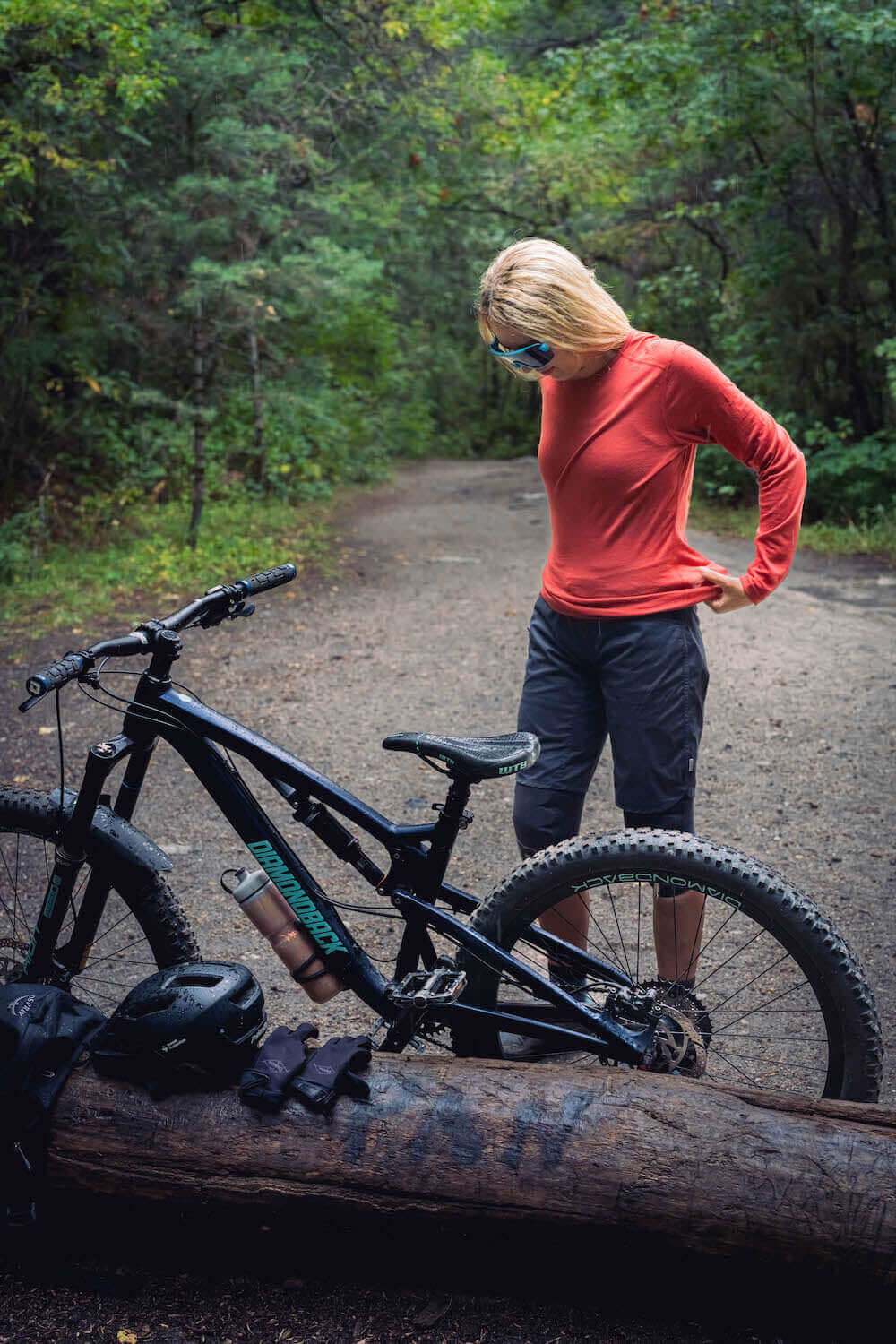
Base layers. Two Roman Trail Women's Merino Wool Base Layers ($49-59). They handle the humidity on a summer climb up Varenna's steps in a way cotton does not, and a merino base layer leaves you appropriately covered for a church without carrying a separate shawl.
Fleece. The Columbia Women's Fast Trek II Jacket ($65) for ferry decks, mornings and evenings on the water, and all of the shoulder seasons.
Rain shell. The Marmot Women's PreCip Eco Rain Jacket ($110), packed small. Summer storms are sudden and an umbrella is close to useless on an exposed deck.
Walking shoes. The Salomon Women's X Ultra 4 GTX Hiking Shoes ($165). These are the item that decides whether you enjoy Como, because the stairs and polished cobbles are the whole terrain, and they also cover the Greenway and the Vezio climb.
Socks. The Darn Tough Women's Hiker Micro Crew Merino Socks ($28), two or three pairs.
Packing cubes. The Eagle Creek Pack-It Cube Set ($59), because a Como trip usually means moving between two or three villages and repacking repeatedly.
Plus one outfit you would happily wear to dinner, flat shoes for the evening, swimwear and a quick-dry towel, sunglasses and sunscreen, and a bag you can carry up a long flight of steps rather than one you drag.
Essential Resources for Lake Como
Emergency number in Italy: 112, the single European emergency line, for police, ambulance and fire. 118 reaches medical emergency services directly.
Tourist police: Italy does not run a separate tourist police force, but the Carabinieri and Polizia di Stato both handle visitor matters and stations in Como, Bellagio and Menaggio are used to dealing with foreign visitors. For theft, ask for a denuncia, the written report insurers require.
US consular services: the US Consulate General in Milan is the nearest mission, roughly an hour from the lake, and covers Lombardy. Contact details and emergency arrangements are at it.usembassy.gov.
Medical care: Ospedale Sant'Anna in Como is the main hospital for the lake, and Ospedale Alessandro Manzoni in Lecco serves the eastern arm. Both are modern and well equipped. Smaller clinics operate in Menaggio and Gravedona. EU visitors should carry a European Health Insurance Card; everyone else needs travel insurance, and Italian pharmacies are excellent for minor problems.
Lake rescue: call 112. Como has a lake rescue service, and the depth and cold of the water make incidents serious quickly.
Official tourism information: the Italian national tourist board at italia.it, and the regional lake site at lakecomo.is.
Ferry timetables: Navigazione Laghi at navigazionelaghi.it, which is the authoritative source and worth checking the morning of travel.
Health authority: the Italian Ministry of Health at salute.gov.it.
US State Department travel advisory for Italy: current advisory level and detail.
UK FCDO travel advice for Italy: entry requirements, safety and health guidance.
Solo women travel assessment: Lake Como is an easy and pleasant destination alone. The villages are small enough to feel known within a day, the ferry system means you are never dependent on a car or a taxi, restaurants are used to solo diners, and the atmosphere is domestic rather than nightlife-driven. Eating alone on a terrace here is completely normal. Harassment is uncommon. The genuine risks are physical rather than personal: wet cobbled stairs, deep cold water, narrow roads with no pavement, and fast summer storms. Bring shoes with grip, use the ferries rather than walking the shore roads, and watch the sky in July and August.
Lake Como FAQ
How many days do I need? Three nights covers Varenna, Bellagio and two villas properly. Four or five lets you add the Greenway, Como town and a day doing nothing on a lido, which is arguably the correct use of the lake.
Lake Como, Garda or Maggiore? Como for the villa gardens, the dramatic steep-sided scenery and proximity to Milan. Garda is larger, warmer, better for families and watersports, and has more beaches. Maggiore has the Borromean islands and is quieter. Como is the most photogenic and the most vertical.
Can I do it as a day trip from Milan? Yes, and many people do: train to Varenna, ferry to Bellagio, ferry back. It works but it is rushed, and the lake is at its best early and late in the day when the day-trippers are not there.
Is it worth it in winter? Only if you want quiet and low prices. Most villas and gardens close from about November to March and ferry services are reduced.
What food is local? Lake fish, especially persico, perch, served with risotto, and missoltini, sun-dried shad. Pizzoccheri, the buckwheat pasta with cabbage and cheese from nearby Valtellina. Risotto generally, as this is rice-growing country, and Valtellina red wines.
Is the tap water drinkable? Yes, including from the public fountains in the villages. Carry a refillable bottle.
Do I need to book the villas? Villa del Balbianello's interior tour, yes, well ahead. Villa Serbelloni's gardens, yes, through the Bellagio tourist office. Villa Carlotta and Villa Monastero, no.
Reading On
Lake Como is usually part of a northern Italian trip. The Italy travel guide for women covers the country end to end, and there are dedicated guides to Cinque Terre and the Dolomites, both of which pair naturally with Como. For the wardrobe logic underneath it, the merino wool base layer guide explains why one fibre covers a humid climb and a cool ferry deck. The full collection is at Roman Trail women's merino base layers.
If the outer journey is calling you, the inner one usually is too. Explore SoulMap at romantrail.com/blogs/soulmap.
Blog posts
View all-

Packing List for Incheon: What Women Should Bring
What to pack for Incheon. South Korea's port and gateway city, with a built-from-nothing smart district, the country's only Chinatown, and a nine-metre tide.
Packing List for Incheon: What Women Should Bring
What to pack for Incheon. South Korea's port and gateway city, with a built-from-nothing smart district, the country's only Chinatown, and a nine-metre tide.
-

Packing List for Huacachina: What Women Should ...
What to pack for Huacachina. A desert oasis in southern Peru ringed by enormous dunes, where the buggy ride is the whole point and the FCDO names it by name.
Packing List for Huacachina: What Women Should ...
What to pack for Huacachina. A desert oasis in southern Peru ringed by enormous dunes, where the buggy ride is the whole point and the FCDO names it by name.
-

Packing List for Ollantaytambo: What Women Shou...
What to pack for Ollantaytambo. A living Inca town in Peru's Sacred Valley, the railhead for Machu Picchu, and the right place to sleep off the altitude.
Packing List for Ollantaytambo: What Women Shou...
What to pack for Ollantaytambo. A living Inca town in Peru's Sacred Valley, the railhead for Machu Picchu, and the right place to sleep off the altitude.


Contact form

Roman Trail Outfitters
Merino Wool Women's Long Sleeve Top | Crew Neck Shirt | Deep Olive