

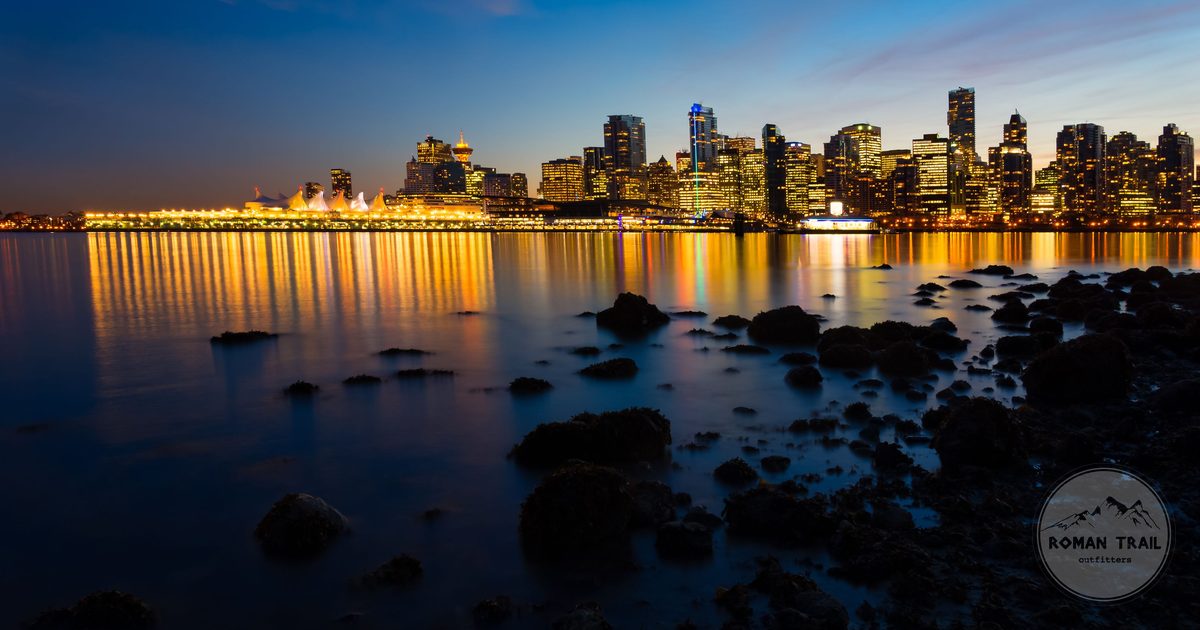
Vancouver is the most beautiful city in Canada and the one that most directly places its residents and visitors at the intersection of ocean, mountains, forest, and urban sophistication in a setting of extraordinary natural drama.
Disclosure: This post contains affiliate links. If you buy through them, Roman Trail earns a small commission at no extra cost to you.
The British Columbia city of 675,000 people on the Pacific coast, with the North Shore Mountains rising immediately above the city and the Strait of Georgia stretching to Vancouver Island to the west, has Stanley Park, the 400-hectare forested park on a peninsula surrounded by ocean, with the 9-kilometre seawall walk that is the most beloved urban outdoor experience in Canada. Granville Island, the former industrial site converted to a public market, art studios, restaurants, and theatres under the Granville Bridge, is the finest public market destination in western Canada. Gastown, the original Vancouver neighbourhood with its Victorian buildings, its steam clock, and the cobblestone streets of Water Street, is the most atmospheric historic neighbourhood in the city. Whistler, two hours north, has the finest skiing in North America at Whistler Blackcomb with 8,171 acres of skiable terrain accessible as a day trip from Vancouver.
The North Shore Mountains, directly accessible by SeaBus and local transit from downtown Vancouver, have the Grouse Mountain skiing and the Grouse Grind, the most demanding accessible hiking trail in Vancouver, climbing 853 metres in 2.9 kilometres, the Capilano Suspension Bridge, and the Deep Cove kayaking inlet that provides the finest accessible paddling near any major city in Canada.
Understanding Vancouver's Climate
Vancouver has a mild maritime climate that is wetter than visitors expect.
Winter from November through March: mild by Canadian standards with temperatures from 2 to 8 degrees Celsius in the city. Rain is persistent and frequent. Snow in the city is rare, but the mountains above receive extraordinary snowfall, creating the skiing conditions that make Whistler the finest resort in North America. The famous Vancouver grey is real and persistent from November through March.
Spring from April through June: gradually improving with increasing sunshine and the cherry blossoms in late March making Vancouver briefly the most beautiful city in Canada.
Summer from July through September: the finest season with temperatures from 22 to 28 degrees Celsius and reliably clear skies. The city's outdoor culture peaks with sailing, kayaking, hiking, and the festivals that fill every summer weekend.
Autumn from October through November: cooling with increasing rain and the North Shore Mountains beginning to receive snow.
The number that misleads is the annual rainfall. Vancouver gets around 1,200mm, which is a lot, but it arrives as persistent light drizzle across roughly 160 days rather than as downpours. The city is damp and dim from November through March rather than drenched, and that distinction is exactly what the packing list has to solve.
Recommended Tours and Experiences
The Vancouver Rain Reality
Pack a rain shell in every season. The Marmot Women's PreCip Eco Rain Jacket ($110) lives at the top of your bag in Vancouver from October through June. In July and August it stays in the bag most days but earns its space on the occasional rainy summer day that arrives without warning.
Prioritise the hood. Vancouverites do not use umbrellas any more than Seattleites do, for the same reason: drizzle comes sideways off the water and a hood leaves both hands free.
The Layering System for Vancouver
Base Layer
The Roman Trail Women's Merino Wool Base Layer ($49-59) handles Vancouver's maritime climate. The Pacific Northwest combination of cool temperatures and persistent moisture rewards merino's warmth retention in damp conditions. For the Grouse Grind and the North Shore trails, merino's moisture management handles the exertion and the cool mountain air at the top simultaneously.
Bring two and rotate them. The property that matters here is that wool insulates when wet and cotton does the opposite: a cotton layer soaked through on the Grind stops warming you the moment you stop climbing, which at the top of a 853-metre ascent in cool mountain air is genuinely unpleasant.
Mid Layer
Vancouver requires a mid layer for most of the year outside of peak summer. The Columbia Women's Fast Trek II Jacket ($65) handles Vancouver's maritime cool. The Columbia insulated hooded jacket ($279) handles the Whistler day trip and the North Shore mountain skiing conditions.
Rain Shell
Mandatory from October through June. Useful year round.
Footwear for Vancouver
The Merrell Women's Moab 3 Waterproof Hiking Boot ($140) handles the Grouse Grind, the North Shore trails, and Vancouver's wet streets in all seasons. One comfortable dressier pair for Gastown and Granville Island evenings. Two pairs total.
Gastown deserves a specific note. Its cobblestones are genuinely uneven and turn slick in drizzle, which is most of the year, so grip matters there as much as it does on the trails.
For socks the Darn Tough Women's Hiker Micro Crew Merino Socks ($28) handle Vancouver's hiking terrain without blisters.
Clothing List
Two merino base layer tops. Two casual quality tops. One quality evening outfit for the excellent Vancouver restaurant scene. Down or fleece mid layer. Compact rain shell, mandatory. Waterproof hiking boots. Comfortable city shoes. Three merino socks. Two casual socks. Swimsuit for the summer ocean and pool culture.
Add a brimmed hat rather than an umbrella, and pack layers you can shed easily, because a Vancouver day that starts at 9 degrees and grey routinely finishes at 20 and clear.
What Not to Bring to Vancouver
Leave the umbrella. It marks you as a visitor and loses to wind off the water.
Leave cotton as your outdoor layer, especially denim, which absorbs Pacific Northwest damp and takes a full day to dry.
Leave anything formal. Vancouver is the most casually dressed major city in Canada, and outdoor brands are ordinary daily wear here rather than gear. Even the best restaurants are comfortable with smart casual.
Vancouver by Neighbourhood
Gastown, the original Vancouver neighbourhood, has the steam clock, the cobblestones of Water Street, and the most concentrated independent restaurant and bar scene in Vancouver in the Victorian building stock.
Granville Island under the Granville Bridge has the Public Market, the finest food market in western Canada, the Emily Carr University of Art and Design, and the Net Loft craft market.
Kitsilano, the beachside neighbourhood west of downtown, has Kits Beach, the finest urban beach in Vancouver, the Kitsilano Pool, the 137-metre outdoor seawater pool that is the longest in Canada, and the independent restaurant culture of West 4th Avenue.
Commercial Drive, the most international neighbourhood in Vancouver, has the Italian espresso culture of the original Italian community, the Latin American restaurants and groceries, and the independent bookshops that make the Drive the most intellectually alive street in the city.
Packing for Stanley Park and the Seawall
The Stanley Park seawall is the single thing most visitors do in Vancouver, and it asks for a little more than a stroll.
The full seawall loop around the park is roughly 9 kilometres and flat, taking two to three hours on foot or about an hour by bike. It is entirely exposed to the water on one side, which means the wind off Burrard Inlet makes it noticeably cooler than the streets you left, in every season. Take a layer you would not think you needed.
The interior of the park is different again: 400 hectares of temperate rainforest with trails that stay damp and shaded even in a dry August. Shoes with grip matter more in there than on the paved seawall.
Packing for the Ocean and the Islands
Vancouver is a water city and at least one day of any trip usually ends up on it. The SeaBus across to North Vancouver, the ferry to Granville Island, the BC Ferries crossing to Victoria, and the kayaking at Deep Cove all put you on open water where the wind runs several degrees colder than on land.
The pattern is the same as the seawall, only more so: a windproof shell earns its place on every boat day regardless of the forecast, and a warm layer underneath is worth carrying even in July. If kayaking at Deep Cove is on the plan, add something quick-drying and shoes you do not mind getting wet, since the launch is off a beach rather than a dock.
Vancouver Packing FAQ
Is the Grouse Grind worth it?
The Grouse Grind is a 2.9-kilometre vertical trail climbing 853 metres through the rainforest to the Grouse Mountain resort. It is genuinely difficult and takes most visitors 1.5 to 2.5 hours. The view from the top over Vancouver and the Strait of Georgia justifies the effort. Take the gondola down. Waterproof hiking boots are essential, as the trail is frequently wet and the wooden steps are slippery.
What is the best day trip from Vancouver?
Whistler, two hours north on the Sea to Sky Highway, for skiing November through April or hiking and mountain biking May through October. The Sea to Sky Highway itself through Squamish, with Shannon Falls and the Stawamus Chief rock climbing destination, is one of the most beautiful drives in Canada. Victoria on Vancouver Island, 90 minutes by BC Ferries from Tsawwassen, for the finest British colonial atmosphere in Canada.
What should I pack for a Whistler day trip?
More than the city forecast suggests. Whistler village sits at 675 metres and the lifts go to 2,180, where conditions are routinely 10 to 15 degrees colder than Vancouver with wind. Take the down layer and the shell even on a mild city day, plus proper gloves and a hat in winter. Most people rent skis and boots in resort rather than travelling with them.
What food should I try in Vancouver?
The finest sushi outside of Japan at any of the Japanese restaurants in Richmond, the suburb south of Vancouver with the largest Japanese and Chinese communities in Canada. Dungeness crab from the Granville Island Public Market fish vendors. The dim sum at any of the Richmond restaurants, the finest in North America outside Hong Kong. Salmon in every preparation, from the Pacific salmon species that define west coast Canadian food culture.
For the full city plan, including the seasons, the neighbourhoods, Stanley Park and the North Shore, the Whistler day trip, the SkyTrain and SeaBus, costs, and where to stay, see the Vancouver travel guide for women.
You can read more about building a merino-first travel wardrobe on the Roman Trail merino wool base layer guide. Browse the full collection at Roman Trail women's merino base layers, available in eight colors with free two-day shipping and a two-year satisfaction guarantee.
If the outer journey is calling you, the inner one usually is too. Explore SoulMap at romantrail.com/blogs/soulmap.


