

Phnom Penh is the most complex capital in Southeast Asia and the one that requires visitors to hold the full weight of history while also being present to the city's genuine energy and beauty.
Disclosure: This post contains affiliate links. If you buy through them, Roman Trail earns a small commission at no extra cost to you.
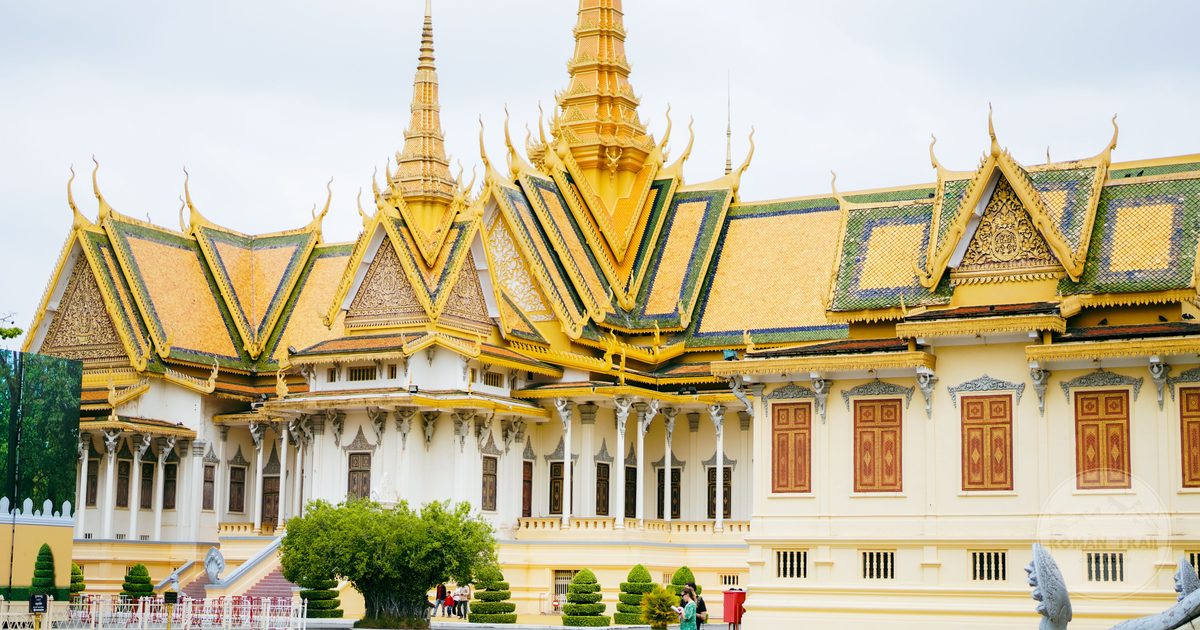
The Cambodian capital of 2.3 million people at the confluence of the Mekong, Tonle Sap, and Bassac rivers has the Royal Palace, the most elaborate surviving example of Khmer royal architecture, with the Silver Pagoda floored in 5,000 silver tiles containing the Emerald Buddha and the baccarat crystal Buddha among its extraordinary treasures. The National Museum holds the finest collection of Khmer sculpture in the world in a red-painted Khmer pavilion on the riverfront, containing the masterpieces of the Angkor period.
And the history that cannot be separated from the present. The Tuol Sleng Genocide Museum, in the former Khmer Rouge interrogation centre where around 17,000 people were processed before execution between 1975 and 1979, is one of the most important and most affecting historical memorials in the world. The Killing Fields at Choeung Ek, 15 kilometres from the city centre, where the Tuol Sleng prisoners were executed and buried in mass graves, has an audio guide narrated by survivors that provides the most direct and most human account of what happened in Cambodia between 1975 and 1979.
These sites are not optional on a Phnom Penh visit. They are the reason to understand Cambodia before visiting Angkor Wat. Without engaging with the recent history, the temples become scenery. With it, they become something else entirely.
What Makes Phnom Penh Different to Pack For
Three things, and only one of them is the heat.
Modest dress is enforced at the Royal Palace and expected at the pagodas. Shoulders and knees covered, and the palace turns people away at the gate rather than lending a robe. Sarongs are sold outside at inflated prices to visitors who arrive unprepared.
Tuol Sleng and Choeung Ek ask for something too. These are memorial sites at places where mass murder happened, and Cambodians visit them as places of mourning. Dressing as you would for a funeral or a place of worship, rather than for a hot day of sightseeing, is the baseline. Covered shoulders, nothing brief, nothing loud.
The heat is tropical and unrelenting. Phnom Penh sits at 11 degrees north and runs 30 to 35 degrees year round with humidity that rarely drops. There is no cool season to plan around, only a wetter one.
Understanding Phnom Penh's Climate
Phnom Penh is tropical with two seasons and very little variation in temperature between them.
Dry season from November through April is the main visiting window. November through February is the most comfortable stretch of the year, with temperatures of 26 to 32 degrees and lower humidity. March and April are the hottest months in Cambodia, regularly reaching 38 degrees, and genuinely hard work outdoors.
Wet season from May through October brings heavy afternoon downpours rather than all-day rain. They arrive fast, flood the streets within minutes because drainage is limited, and clear. The countryside is at its greenest, prices drop, and the Mekong runs high.
The wet season detail worth knowing: Phnom Penh floods readily. An hour of rain can leave streets ankle-deep, and tuk-tuks keep running through it. Waterproof footwear matters more here than a rain jacket does.
The Packing System for Phnom Penh
Base Layer
The Roman Trail Women's Merino Wool Base Layer ($49-59) handles the tropical heat and covers shoulders automatically for the Royal Palace, which requires covered shoulders and knees and enforces it at the gate. In 33 degrees at high humidity, merino moves moisture away from the skin rather than holding it there, which is exactly where cotton fails, and it does not develop odour after a sweaty day.
Bring two and rotate them.
Rain Shell
The Marmot Women's PreCip Eco Rain Jacket ($110) handles the wet season downpours. Realistically you will shelter for the half hour it takes one to pass rather than walk through it, so the shell is for moving between buildings.
Insect Protection
Sawyer Permethrin clothing treatment ($16) and DEET insect repellent ($12) are not optional. Dengue is endemic across Cambodia and the Aedes mosquito that carries it bites during daylight hours, in the city as much as the countryside. Malaria is not a significant risk in Phnom Penh itself but is present in rural and forested areas, so if you are travelling on beyond the city, treat clothing in advance and use repellent on exposed skin.
Footwear for Phnom Penh
Easy on-off shoes matter here, because you will remove them at the Silver Pagoda, at the pagodas, and at many guesthouses. Comfortable sandals cover most of the city.
For the wet season, and for Choeung Ek where the paths are packed earth that turns to mud, the Salomon Women's X Ultra 4 GTX ($165) is the more practical choice. Phnom Penh pavements are also genuinely poor in places, with open drains, missing slabs, and frequent parked motorbikes forcing you into the road.
For socks the Darn Tough Women's Hiker Micro Crew Merino Socks ($28) manage heat and moisture better than cotton on a long day of walking.
The Complete Clothing List
Two merino base layer tops. Two modest casual tops with sleeves. Long lightweight trousers or a long skirt as your default. One lightweight scarf, which covers shoulders instantly and doubles as an air conditioning layer. Compact rain shell. Easy on-off sandals for temple entry. Closed shoes for the wet season and Choeung Ek. Wide brim sun hat. Sunscreen SPF 50. Insect repellent. Three merino socks.
Add a light cardigan or fleece for the air conditioning, which in Cambodian restaurants, malls, and long-distance buses is set aggressively cold against the outside heat.
What to Wear at the Key Sites
The Royal Palace and Silver Pagoda. Shoulders and knees covered, strictly enforced. Shoes off inside the Silver Pagoda. No photography inside the pagoda itself. Go early, before the heat peaks, since the complex is largely open ground with limited shade.
Tuol Sleng and Choeung Ek. Dress as you would for a memorial, because that is what these are. Covered shoulders, nothing brief, nothing with a loud slogan. Both sites expect quiet. At Choeung Ek the audio guide is the point, so bring headphones you can wear comfortably for two hours, and allow yourself the time to sit down partway through, because most people need to.
The pagodas and Wat Phnom. Same coverage standard as the palace, shoes off inside.
The riverfront and the Russian Market. No dress code, but the market is hot, crowded, and has a low corrugated roof that traps heat, so go early and carry water.
What Not to Bring to Phnom Penh
Leave anything sleeveless or short as your main daytime kit. It will keep you out of the Royal Palace and read badly at the memorial sites.
Leave heavy fabrics. Denim in 33 degrees at high humidity is a mistake you make once.
Leave the expensive-looking jewellery and the bag you carry loose in one hand. See the safety note below.
Phnom Penh Highlights
The Royal Palace and Silver Pagoda in the morning before the heat peaks. The National Museum adjacent to the palace. Tuol Sleng Genocide Museum, which needs a full morning and emotional preparation. The Killing Fields at Choeung Ek, which needs a half day and the full audio guide. The riverfront at Sisowath Quay at sunset. The Russian Market, Psar Tuol Tom Pong, for the finest craft and textile shopping in Phnom Penh.
Practical Notes for the Memorial Sites
Beyond what to wear, a few practicalities make these visits work better.
Tuol Sleng opens at 8am and the first hour is the quietest. The audio guide is included in the ticket and is narrated in part by two of the very small number of survivors; it is the difference between walking through rooms and understanding them. Allow three hours. There is a shaded courtyard where people sit, and using it is normal rather than a failure of nerve.
Choeung Ek is 15 kilometres out, roughly 40 minutes by tuk-tuk each way, and most drivers will wait. The audio guide there runs about 90 minutes and includes testimony from a survivor and from a former guard. The site is largely open ground with sun and dust, and the paths run between the excavated grave pits. Fragments of bone and cloth still surface after heavy rain, and the site asks visitors to stay on the walkways for that reason.
Many people do both in a single day because tour operators sell it that way. If your schedule allows, do not. Split them across two mornings, and plan something undemanding for the rest of each day.
Phnom Penh Beyond the History
It would be a mistake to visit Phnom Penh only for what happened here, because the living city is genuinely good.
The riverfront at Sisowath Quay in the late afternoon fills with families, exercise classes, and food vendors, and the confluence of three rivers in front of you is a real spectacle at sunset. The Russian Market is the best craft and textile shopping in Cambodia, particularly for silk and kramas, the checked cotton scarves that are worn universally here and make the single most useful thing you can buy locally: sun cover, shoulder cover, towel, and bag all at once.
The city's cafe and restaurant scene has grown considerably, much of it in restored French colonial buildings around BKK1, and several of the best places are social enterprises training young Cambodians in hospitality. Wat Phnom, the hill temple that gives the city its name, is a short walk from the riverfront and is a working local temple rather than a monument.
Phnom Penh FAQ
How should I prepare for Tuol Sleng and the Killing Fields?
Read about the Khmer Rouge period before visiting. The Killing Fields film from 1984 provides historical context. Tuol Sleng has photographs of every prisoner processed through the facility. Allow yourself an emotional response rather than trying to process these sites intellectually. The audio guide at Choeung Ek is narrated by survivors and is the most important thing to listen to carefully. Do not do both in one day if you can avoid it, and do not schedule anything demanding for the afternoon afterwards.
Is Phnom Penh safe for solo women travelers?
Phnom Penh requires more awareness than some Southeast Asian capitals. Bag snatching from passing motorbikes is the primary risk and the most commonly reported crime affecting visitors, and injuries happen when people hold on and are pulled off their feet. Keep bags on the side away from traffic or across your body, and do not resist. Use Grab rather than negotiating with street tuk-tuks after dark. The riverfront tourist areas are comfortable. Research current conditions before travel.
How do I get around?
Grab and PassApp are the ride apps and both work well for cars and tuk-tuks, fixing the fare in advance and removing the negotiation. Tuk-tuks flagged on the street will quote inflated fares to visitors. The city is flat but not pleasant to walk far in, given the heat and the state of the pavements.
What food should I try?
Fish amok, the Cambodian national dish of fish in coconut curry steamed in a banana leaf. Lok lak, stir-fried beef with a lime and pepper dipping sauce. Fresh river fish from the Mekong at any of the riverfront restaurants. Num banh chok, the Cambodian rice noodle soup eaten for breakfast, from a street vendor in the morning.
For the full city plan, including safety and the bag snatching to watch for, the Royal Palace and National Museum, how to approach Tuol Sleng and Choeung Ek, ethical travel in Cambodia, getting around, costs, and where to stay, see the Phnom Penh travel guide for women.
You can read more about building a merino-first travel wardrobe on the Roman Trail merino wool base layer guide, and see the Cambodia travel guide for women for the wider country including Angkor. Browse the full collection at Roman Trail women's merino base layers, available in eight colors with free two-day shipping and a two-year satisfaction guarantee.
If the outer journey is calling you, the inner one usually is too. Explore SoulMap at romantrail.com/blogs/soulmap.


