

Luang Prabang is the most peaceful town in Southeast Asia and the one that most completely creates the experience of a place where time moves differently from the world outside.
Disclosure: This post contains affiliate links. If you buy through them, Roman Trail earns a small commission at no extra cost to you.
The UNESCO-listed former royal capital of Laos, on a peninsula where the Nam Khan River meets the Mekong, has 33 Buddhist temples in a town of 56,000 people, giving it the highest temple density of any town in Southeast Asia. The spiritual atmosphere that results is not theatrical. It is genuine, and it permeates everything from the dawn alms giving ceremony to the evening at the night market.
The tak bat, the alms giving ceremony, happens every dawn when the saffron-robed monks of the 33 wats process through the main street receiving sticky rice from local residents who have risen before dawn to prepare and offer it. The ceremony has been continuous for centuries. It is the most moving and most authentic daily cultural experience accessible to visitors in Southeast Asia. Approach it with silence and respect. Photography with a long lens from a respectful distance is appropriate. Joining the offering line is welcomed when done respectfully.
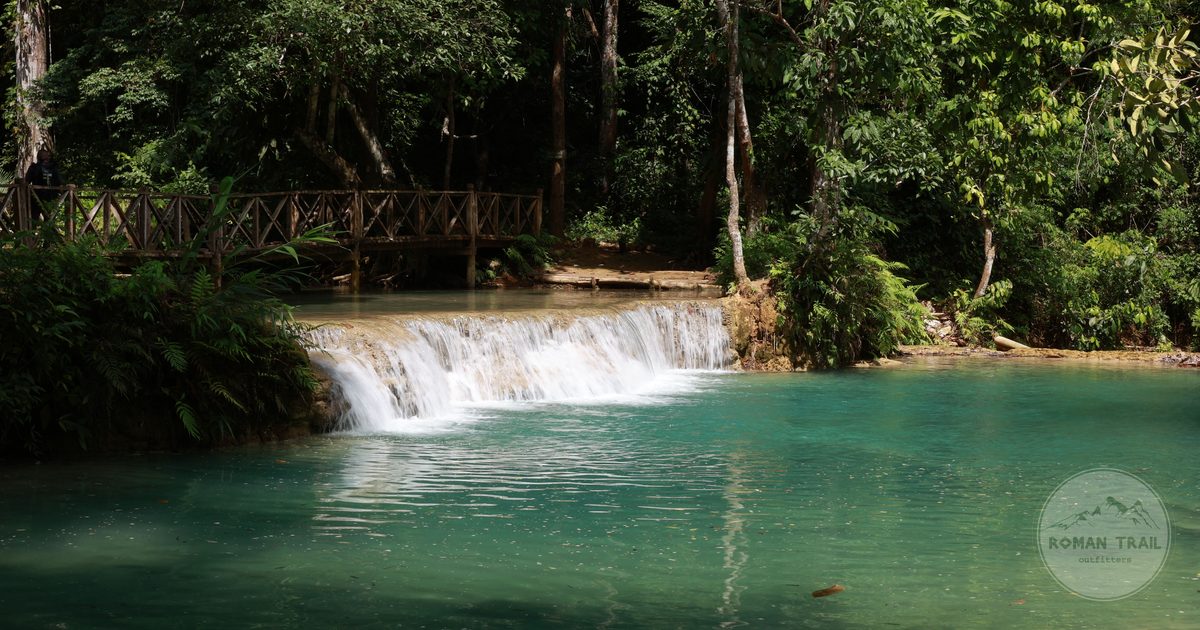
Kuang Si Falls, 29 kilometres south of town, has the most beautiful waterfall accessible from Luang Prabang, in a series of turquoise travertine pools that are swimmable throughout the year. The colour of the water is caused by the high calcium carbonate content of the limestone geology, and it produces a shade of turquoise that photographs consistently fail to capture accurately.
The Mekong River sunsets from the bars and restaurants along the riverfront north of the town centre are the finest river sunsets in Southeast Asia. The slow boat journey from Luang Prabang up the Mekong to the Thailand border at Huay Xai over two days is one of the finest river journeys in Asia.
Understanding Luang Prabang's Climate
Luang Prabang has two seasons.
Dry season from November through April is the most popular, with clear skies, temperatures from 20 to 32 degrees, and the lowest humidity. November through February is cool, with pleasant evenings requiring a layer.
Wet season from May through October brings rain that turns the surrounding hills intensely green and the waterfalls to their most powerful. Temperatures are warm and the town is significantly quieter.
The detail that catches people out is the cool season. Luang Prabang sits at around 700 metres in a river valley ringed by hills, and from December through February the temperature can drop to 12 or 13 degrees before dawn. That matters because the alms ceremony happens at first light, and visitors who packed only for tropical Southeast Asia find themselves genuinely cold kneeling on a pavement at 5:45am.
The other seasonal note is burning season. From roughly March through April, agricultural burning across northern Laos and the wider region can push air quality to genuinely poor levels and obscure the hills entirely. If you have a respiratory condition, that window is worth avoiding.
Recommended Tours and Experiences
Modest Dress in Luang Prabang
Luang Prabang is a Buddhist town and the most devout in Laos. Covered shoulders and covered knees are required at all temple visits and appropriate throughout the town. For the alms giving ceremony, modest dress and a silent, respectful presence are essential.
This is not a formality that gets waved through. Luang Prabang is a working religious town rather than a museum of one, and the standard here is noticeably higher than in Bangkok or Hanoi. Loose long trousers or a long skirt as your default, tops with sleeves, and a scarf you can put over your shoulders covers everything.
The Layering System for Luang Prabang
Base Layer
The Roman Trail Women's Merino Wool Base Layer ($49-59) covers shoulders automatically for temple visits while managing the tropical heat and humidity. In the cool season evenings from November through February it provides genuine warmth at 700 metres altitude.
Bring two and rotate them. It is doing two jobs here that would otherwise need two garments: modesty coverage at 33 temples and a dozen daily shoe-removals, and thermal regulation across a range that runs from 13 degrees before dawn to 32 by mid-afternoon in the same December day.
Mid Layer
The Columbia Women's Fast Trek II Jacket ($65) handles the cool season evenings and the aggressive air conditioning of Luang Prabang's better restaurants.
Rain Shell
The Marmot Women's PreCip Eco Rain Jacket ($110) handles the wet season rain and is worth carrying in the dry season for the occasional shower.
Footwear for Luang Prabang
Easy on-off shoes for constant temple shoe removal. The Water Shoes Women Aqua Socks ($25) handle the Kuang Si Falls swimming pools and the Mekong river boat boarding. Comfortable sandals for the town's flat walking. Two pairs total.
The shoe-removal point is not a small one. You will take your shoes off and put them back on ten or fifteen times in a temple-circuit day, and anything with laces turns that into a genuine irritation. Slip-ons are the right answer here more than anywhere else on this site.
At Kuang Si the travertine underfoot is smooth limestone worn by water and is genuinely slippery, both in the pools and on the paths between them, which is why water shoes beat bare feet or flip flops.
For socks the Darn Tough Women's Hiker Micro Crew Merino Socks ($28) handle any trekking terrain around Luang Prabang without blisters.
Clothing List
Two merino base layer tops. Two modest casual tops. Long skirt or loose pants as default. Lightweight scarf for temple visits. Light fleece for cool season evenings. Compact rain shell. Easy on-off sandals. Water shoes for Kuang Si. Three merino socks. Two casual socks.
Add insect repellent, since dengue is present in Laos and mosquitoes arrive at dusk along the rivers, and a small torch, because Luang Prabang's side streets are genuinely dark and you will be walking to the alms ceremony before sunrise.
What Not to Bring to Luang Prabang
Leave anything sleeveless or short as your main daytime wear. It works at a riverside bar and it will keep you out of the temples that are the reason to be here.
Leave the lace-up shoes. See above.
Leave the drone. Luang Prabang is a UNESCO World Heritage site with restrictions, and flying one over the alms ceremony or the temples would be the single most disrespectful thing a visitor could do here.
Luang Prabang Highlights
The tak bat alms giving ceremony at dawn, approached with silence and respect. Kuang Si Falls for the turquoise swimming pools. The Mekong sunset from the Utopia or 3 Nagas riverside bars. The night market on Sisavangvong Road for Lao handicrafts, silk, and street food. The Pak Ou Caves, accessible by boat up the Mekong, for the Buddha statue cave temple. Phousi Hill, the temple-topped hill in the centre of town, for the finest view of the Mekong and Nam Khan confluence. The slow boat to the Thai border if you have two days.
Packing for Kuang Si and the River
Two Luang Prabang days need a slightly different bag from the temple circuit.
Kuang Si is 29 kilometres south, usually reached by shared tuk-tuk or minivan in about 45 minutes, and it is a half day at minimum. The pools are genuinely swimmable and genuinely cold, since the water comes off limestone rather than sitting in the sun. Take a swimsuit, something to change into, a quick-drying towel, and water shoes, because the travertine is smooth and slick both in the water and on the paths. There are changing huts but they are basic. Going early, before the mid-morning arrivals, gives you the upper pools almost alone.
The Mekong days are the other kind. A slow boat to the Pak Ou Caves takes about two hours upriver, and the full slow boat to the Thai border is two days with an overnight at Pakbeng. Boat decks are open and the river breeze is cooler than the town, particularly in the cool season and particularly at dawn, so a layer belongs in the day bag. Wooden bench seating on the longer routes is unforgiving, and most regulars bring a cushion.
The Cool Season Nobody Warns You About
Most packing advice for Laos assumes uniform tropical heat, and for most of the year that is right. From late November through February it is not.
Luang Prabang sits at roughly 700 metres in a valley that traps cold air overnight, and pre-dawn temperatures in December and January routinely fall to 12 or 13 degrees, occasionally lower. Guesthouses in the old town are often open-sided or minimally heated, because they are built for the other ten months of the year. Visitors who packed only shorts and vest tops spend those mornings genuinely uncomfortable, and the alms ceremony is precisely when it bites, since you are standing or kneeling still on a pavement at first light.
The fix is small: a merino base layer and a packable fleece. Both weigh almost nothing, both earn their place at 5:45am, and both come off by nine when the valley warms.
Luang Prabang Packing FAQ
How should I behave at the alms giving ceremony?
Arrive before dawn and stand quietly on the pavement away from the monks' path. Do not use flash photography. Do not thrust a camera into the faces of the monks or the offering givers. Do not speak loudly. Buy sticky rice from the local women selling it on the street if you want to participate in the offering. The ceremony is a genuine spiritual practice, not a performance. Your presence is tolerated rather than invited, so act accordingly with the deepest respect.
What should I actually wear to the alms ceremony?
Shoulders and knees covered without exception, and a layer over the top, because a December dawn in Luang Prabang can be 13 degrees. If you are kneeling to offer rice, which is the position local women use, a long skirt or loose trousers is the practical as well as the respectful choice. Remove your shoes if you are participating in the offering, and keep your head lower than the monks' alms bowls as they pass.
Is Luang Prabang safe for solo women travelers?
Luang Prabang is one of the safest destinations in Southeast Asia. Solo women travel the town with complete comfort at all hours. Standard awareness applies after dark on the quieter streets.
What food should I try in Luang Prabang?
Laap, the minced meat salad with herbs and toasted rice powder that is the national dish of Laos, in its most authentic Luang Prabang form. Or tam, the Lao version of green papaya salad. Khao niao, the sticky rice eaten with the fingers from a bamboo basket that accompanies every Lao meal. Lao coffee, the French-influenced drip coffee served with sweetened condensed milk. And kaipen, the thin dried green river weed fried with sesame and served with a dipping sauce, from any of the restaurants in the old town.
For the full plan, including the two seasons, the alms ceremony etiquette in detail, Kuang Si, the temple circuit, the slow boat, and where to stay, see the Luang Prabang travel guide for women.
You can read more about building a merino-first travel wardrobe on the Roman Trail merino wool base layer guide. Browse the full collection at Roman Trail women's merino base layers, available in eight colors with free two-day shipping and a two-year satisfaction guarantee.
If the outer journey is calling you, the inner one usually is too. Explore SoulMap at romantrail.com/blogs/soulmap.



