

Hoi An is the most beautiful small town in Vietnam and the one that delivers the atmosphere of ancient Southeast Asian trading culture most completely in a setting of extraordinary visual richness.
Disclosure: This post contains affiliate links. If you buy through them, Roman Trail earns a small commission at no extra cost to you.
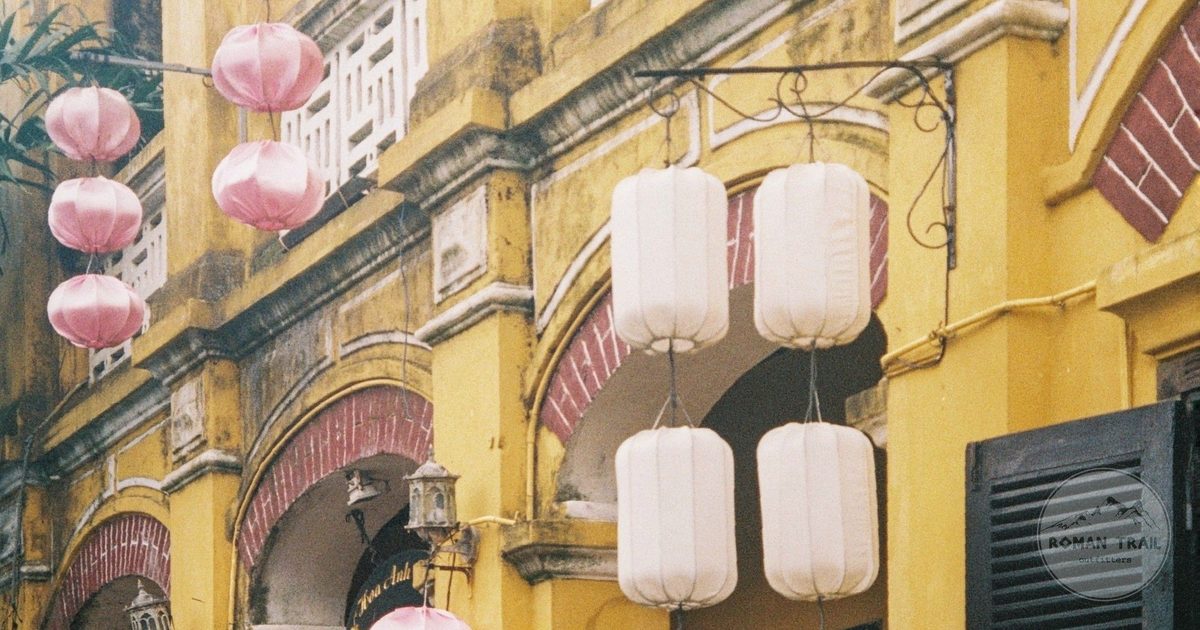
The UNESCO-listed Ancient Town of Hoi An on the Thu Bon River in central Vietnam was one of the most important trading ports in Southeast Asia from the 15th through 18th centuries, where Japanese, Chinese, Portuguese, and Dutch merchants maintained warehouses and residences that created the extraordinary architectural mixture preserved today. The Japanese Covered Bridge, connecting the Japanese merchant quarter to the Chinese quarter, was built in 1593 and still crosses the canal in its beautiful covered wooden form. The Assembly Halls built by Chinese merchant communities from Fujian, Guangdong, and Hainan provinces are decorated with extraordinary carved woodwork and ceramic tile work. The Ancient Town lanes of yellow-washed merchant houses with their wooden shutters and hanging silk lanterns create the most photographed streetscape in Vietnam.
The Full Moon Lantern Festival falls on the 14th day of each lunar month, when electric lights are turned off throughout the Ancient Town and thousands of silk lanterns illuminate the streets and float on the Thu Bon River in the most atmospheric monthly event accessible to visitors in Southeast Asia.
The tailoring culture. Hoi An has hundreds of tailoring shops producing custom clothing in 24 to 48 hours from any design a customer brings or chooses from their portfolio. The skill level ranges significantly between shops, and the best tailors produce work of genuine quality. Many women visit Hoi An specifically to have clothes made.
Understanding Hoi An's Climate
Hoi An's central Vietnam location gives it a complex climate distinct from both north and south Vietnam.
Dry season from February through July: the finest time to visit, with warm temperatures from 24 to 32 degrees and reliable sunshine.
Rainy season from August through November: heavy rain, particularly from September through November, with the possibility of flooding in the Ancient Town, which sits on the flood plain of the Thu Bon River. Typhoon risk from October through December.
The best visiting window is March through June, or August with awareness of the increasing rain risk as the season progresses.
The flooding is worth understanding rather than glossing over. The Ancient Town floods most years, sometimes to the point where the riverside streets are navigated by boat, and the shops along Bach Dang keep their stock on upper shelves for exactly this reason. It is usually brief and locals treat it as routine, but if you are travelling in October or November it is worth checking conditions before committing to riverside accommodation.
Recommended Tours and Experiences
The Tailoring Consideration
If you are visiting Hoi An specifically for tailoring, bring reference photos of styles you want reproduced and arrive with enough days to allow for fittings. The standard process is measurement on day one, first fitting on day two, final fitting on day three, with collection on day four. Allow at least four days for tailored items of any complexity.
Cotton and synthetic fabrics are produced most reliably. The tailors work with whatever fabric the customer brings or chooses from their selection.
Two practical notes that save disappointment. First, silk sold as silk is not always silk, and a burn test on a thread, which reputable shops will allow, distinguishes real silk from polyester. Second, budget for the extra weight and space on the way home, or arrange shipping, which most established shops handle.
The Layering System for Hoi An
Base Layer
The Roman Trail Women's Merino Wool Base Layer ($49-59) handles Hoi An's tropical heat and the cycling excursions to the rice paddies outside the Ancient Town. It covers shoulders automatically for the Assembly Halls and pagodas that require modest dress.
Bring two and rotate them. Central Vietnam humidity sits high year round, and merino's advantage over cotton here is that it keeps moving moisture rather than becoming saturated and staying wet, which matters on a bicycle in 32 degrees.
Rain Shell
The rainy season makes a compact rain shell essential from August through November. The Marmot Women's PreCip Eco Rain Jacket ($110) handles Hoi An's tropical rain reliably.
Mid Layer
The Columbia Women's Fast Trek II Jacket ($65) handles the aggressive air conditioning of Hoi An's restaurants and the occasional cool evening.
Footwear for Hoi An
Hoi An is primarily flat and the Ancient Town lanes are narrow and even. Comfortable sandals handle most of Hoi An. The Water Shoes Women Aqua Socks ($25) handle An Bang beach 4 kilometers from the Ancient Town and the boat trips on the Thu Bon River. For cycling rice paddy tours, comfortable closed-toe shoes are preferable to sandals on the uneven rural tracks. Two pairs total.
For socks the Darn Tough Women's Hiker Micro Crew Merino Socks ($28) handle Hoi An's cycling terrain without blisters.
Clothing List
Two merino base layer tops. Two casual lightweight tops. One or two items for tailoring reference if planning custom clothing. Swimsuit for An Bang beach. Compact rain shell for rainy season. Comfortable sandals. Water shoes for beach and boat. Closed-toe shoes for cycling. Three merino socks. Two casual socks.
Add insect repellent and sun protection and treat both as required. Central Vietnam has mosquitoes year round and dengue is present, and the sun at 15 degrees north is stronger than the temperature suggests, particularly on a bicycle with no shade across open paddy.
What Not to Bring to Hoi An
Leave the bulky wardrobe. This is the one destination on this site where packing light is actively rewarded, because you will almost certainly leave with more clothing than you arrived with.
Leave anything that needs dry cleaning or careful laundering. Hoi An laundry services are cheap, fast, and everywhere, and they wash everything the same way.
Leave the heels. The Ancient Town is flat but the paving is old, the riverside is often wet, and you will be on a bicycle more than you expect.
Hoi An by Experience
The Ancient Town walk is best in the early morning before 9am and in the evening when the lanterns are lit. The midday heat drives most visitors inside, and the morning and evening light on the yellow walls is extraordinary.
The Full Moon Lantern Festival falls on the 14th day of the lunar calendar, roughly monthly. The evening when electric lights are extinguished and the town fills with candlelit silk lanterns floating on the river is the most atmospheric single evening experience in Vietnam. Plan your visit to coincide if possible.
The rice paddy cycling tours leaving from the Ancient Town reach the rural villages and wetlands west of Hoi An in 2 to 3 hours of flat cycling through working rice agriculture and traditional Vietnamese rural life.
My Son Sanctuary 45 kilometers southwest has the most significant Cham civilization Hindu temple complex in Vietnam, the remnants of a centuries-long civilization that produced extraordinary sandstone sculpture before its destruction during the Vietnam War.
An Bang Beach 4 kilometers by bicycle from the Ancient Town has the finest beach accessible from Hoi An, with the laid-back beach restaurant culture that makes it the best beach day within reach of the Ancient Town.
What to Wear for the Lantern Festival and the Paddy Ride
Two Hoi An experiences shape the bag in ways a general tropical list would miss.
The Full Moon evening is warm, crowded, and largely spent on foot along the riverbank and over the bridges. The Ancient Town closes to vehicles, the electric lights go off, and the light comes almost entirely from candles and silk, which is beautiful and also means uneven, dim footing on old paving. Flat shoes with some grip, a small zipped bag, and something with sleeves for the mosquitoes that arrive with dusk by the water. Many visitors buy an ao dai in town and wear it for the evening, which is welcomed rather than side-eyed here.
The rice paddy ride is two to three hours on a single-speed bicycle in full sun with essentially no shade. Nothing about it is difficult, but the exposure catches people out. Closed-toe shoes for the rutted tracks between paddies, a brimmed hat under or instead of the helmet, sunscreen reapplied halfway, and considerably more water than you think. Merino rather than cotton against the skin is the difference between arriving back merely hot and arriving back soaked.
Hoi An Packing FAQ
How do I find a good tailor in Hoi An?
Research before arrival. The most consistently recommended tailors are Yaly Couture, A Dong Silk, and Bebe Tailor for women's clothing of quality. Bring reference photos of exactly what you want. Be prepared for negotiation on price. Inspect the first fitting carefully and be specific about adjustments. The quality varies significantly between establishments.
What is the best way to get around Hoi An?
Bicycle. The Ancient Town is compact and flat, and a bicycle from any of the rental shops at approximately 1 to 2 USD per day handles everything within Hoi An and the surrounding rice paddy countryside. Motorbike taxi for My Son Sanctuary. Walking for the Ancient Town itself.
What should I wear to the Assembly Halls and pagodas?
Shoulders and knees covered. This is expected at the Assembly Halls, the Quan Cong Temple, and the pagodas, and enforcement is polite but real. A light merino layer and loose lightweight trousers or a longer skirt handle it without carrying a separate cover-up in the heat, which is the practical reason a base layer earns its place in a tropical packing list.
What food should I try in Hoi An?
Cao lau, the Hoi An-specific dish of thick rice noodles with pork, crispy croutons, and herbs, which can only be made authentically with water from a specific ancient well in town. White rose dumplings, the delicate steamed rice paper dumplings filled with shrimp. Banh mi from Banh Mi Phuong on Phan Chau Trinh, which Anthony Bourdain called the best banh mi in the world. Corn ice cream from the cart outside the night market.
For the full plan, including the climate and typhoon season, the tailoring guide, the lantern festival, My Son, An Bang, getting around, and where to stay, see the Hoi An travel guide for women.
You can read more about building a merino-first travel wardrobe on the Roman Trail merino wool base layer guide. Browse the full collection at Roman Trail women's merino base layers, available in eight colors with free two-day shipping and a two-year satisfaction guarantee.
If the outer journey is calling you, the inner one usually is too. Explore SoulMap at romantrail.com/blogs/soulmap.


